
News
The Battle for Integrity at FUHSO: Why Idoma Must Not Remain Silent

- /home/naijuinz/public_html/wp-content/plugins/mvp-social-buttons/mvp-social-buttons.php on line 27
https://naijablitznews.com/wp-content/uploads/2024/11/IMG-20241114-WA0029-1000x600.jpg&description=The Battle for Integrity at FUHSO: Why Idoma Must Not Remain Silent', 'pinterestShare', 'width=750,height=350'); return false;" title="Pin This Post">
- Share
- Tweet /home/naijuinz/public_html/wp-content/plugins/mvp-social-buttons/mvp-social-buttons.php on line 72
https://naijablitznews.com/wp-content/uploads/2024/11/IMG-20241114-WA0029-1000x600.jpg&description=The Battle for Integrity at FUHSO: Why Idoma Must Not Remain Silent', 'pinterestShare', 'width=750,height=350'); return false;" title="Pin This Post">


By Edwin Adakole.
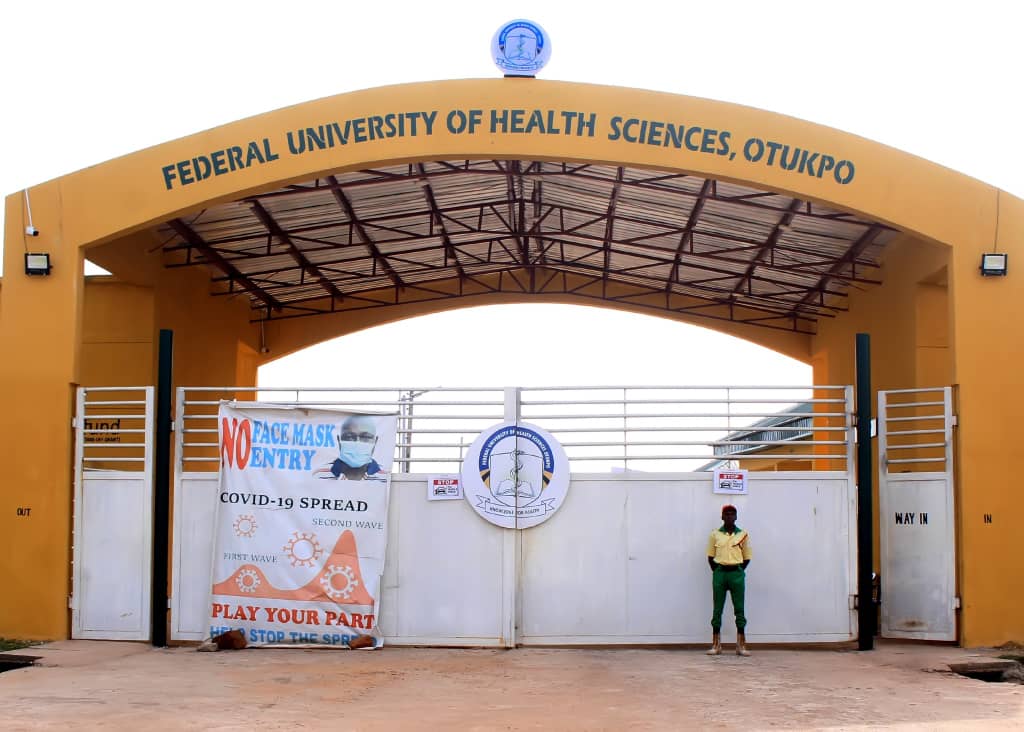
The Federal University of Health Sciences, Otukpo (FUHSO), once hailed as a symbol of promise and progress for the Idoma people, now teeters on the edge of institutional collapse. In what should be a time of growth and development, FUHSO is instead embroiled in a crisis driven by lawlessness, disregard for protocol, and, alarmingly, silence from key figures within the Idoma community.
This ongoing crisis centers around the imposition of Prof. Ediga Agbo, who, despite not being a staff member or a Deputy Vice-Chancellor (DVC), was appointed Acting Vice-Chancellor (VC) in violation of the clear directives set forth by the National Universities Commission (NUC). This disregard for established protocols not only tarnishes FUHSO’s reputation but also erodes the foundational principles upon which the university was built.
The Disregard for NUC Protocols: A Blow to Institutional Integrity
The National Universities Commission (NUC) has mandated a clear protocol for leadership transition across Nigerian universities: when a VC’s term ends, they must hand over to the most senior Deputy Vice-Chancellor. In the case of FUHSO, Prof. Stephen Abah, an accomplished academic and bonafide son of Idoma, holds the position of DVC (Academics) and ranks highest in seniority. His appointment as Acting VC was, therefore, not only rightful but also aligned with NUC guidelines.
FUHSO is no ordinary university. It was established as a specialized institution dedicated to the health sciences—a vital part of Nigeria’s higher education landscape, and a stepping stone for Idoma’s future in medical and scientific excellence. It’s a university whose primary mandate is to produce medical professionals, and its standards must reflect that specialized purpose. Yet, in a shocking turn of events, Prof. Ediga Agbo—neither a member of FUHSO’s staff nor a qualified medical professional was imposed on the university as Acting VC.

This act was not just a violation of protocol; it was a direct affront to due process and transparency. How can an unqualified leader hope to sustain or improve an institution that is already struggling with its own growth and development?
The Ripple Effect of Negligence and Impunity
The consequences of Agbo’s leadership reach far beyond administrative challenges. Agbo’s tenure thus far has included the removal of respected faculty members from critical meetings, the seizing of official vehicles from staff without justification, and even the locking of university gates in an attempt to prevent rightful university leaders from entering. Reports indicate that police and hired thugs now roam the campus, harassing and intimidating any staff members perceived as loyal to the legitimately reinstated Vice-Chancellor, Prof. Innocent Ujah.
This hostility and lawlessness have turned FUHSO from a sanctuary of learning into a militarized zone where students and faculty alike live in fear. Campus facilities remain virtually abandoned due to the fear of violence. Every day the crisis persists, Idoma loses one more step toward self-reliance, development, and a brighter future.

Crisis in Leadership: How FUHSO’s Governing Council Threatens Its Future
Governing councils are meant to guide universities towards growth and stability, but at the Federal University of Health Sciences, Otukpo (FUHSO), the council under Engr. Ohieku Abdulsalami has brought about chaos instead.
Rather than respecting established protocols, the council appears to be running amok, blurring lines of authority and encroaching on daily operations in ways that threaten FUHSO’s core mission and integrity.
This overreach has manifested in decisions that defy both protocol and law. The appointment of Prof. Ediga Agbo as Acting Vice-Chancellor, despite him not being a staff member or the institution’s most senior Deputy Vice-Chancellor, starkly violates National Universities Commission (NUC) protocols, which require an outgoing VC to hand over to the most senior DVC. At FUHSO, this is Prof. Stephen Abah, DVC (Academics), who was rightfully elected by the university senate. Yet the council bypassed him, imposing Agbo and creating a leadership crisis that has sparked tension and disrupted campus life.
The effects of this turmoil are undeniable. Faculty and students operate under fear of reprisal, classrooms stand empty, and security forces now patrol a campus once dedicated to research and teaching. FUHSO’s mission—to advance health sciences and serve as a beacon for Idoma and the nation—is jeopardized by this instability. The governing council’s actions are not merely administrative missteps; they are active threats to the institution’s future.
It’s time for accountability. The FUHSO governing council must answer for these disruptive actions, which risk not only the university’s reputation but its very ability to function. Silence from community leaders and stakeholders is no longer an option. FUHSO’s future depends on a return to order, respect for university governance, and a commitment to its foundational mission. Anything less risks destroying what this university stands for.
The Targeted Attacks on Prof. Stephen Abah: A Tribal Undercurrent
Prof. Stephen Abah’s character and qualifications make him a natural leader for FUHSO, an institution that serves as a beacon for the Idoma people. Yet, his ascension to Acting VC has made him a target. It’s been noted that Prof. Abah, an “Enone”—a sub-clan within Idoma—faces attacks from those who deem leadership within FUHSO the exclusive domain of “Enochi.” The caste-driven conflict is preventing an Idoma institution from fostering unity and excellence, damaging the credibility of a university that should be a pillar for all Idoma, not a select few.
Agbo’s appointment and the ensuing attacks on Prof. Abah represent more than just a leadership crisis; they signify a perilous tribal and political power struggle. This struggle, bolstered by a wealthy “Enochi” financier, has fostered an environment in which due process is subverted, unity is eroded, and impunity reigns.
The Dire Consequences of Silent Complicity
This unchecked lawlessness poses severe consequences for FUHSO, the Idoma people, and Nigeria’s higher education landscape. Without urgent action to restore order, FUHSO will be unable to fulfill its mission as a specialized health sciences institution.
Here’s what Idoma stands to lose:
1. Credibility in Health Sciences Education:
Allowing an unqualified Acting VC to lead FUHSO risks diluting the university’s focus on health sciences, hindering its ability to attract qualified staff and deliver top-tier education.
2. Threat to Students and Staff Safety:
The administration’s use of thugs and police to intimidate those supporting Prof. Abah has created a climate of fear on campus. Reports of harassment, gate lockouts, and confrontations have left the campus desolate, disrupting academic activities and posing a threat to students and faculty alike.
3. Erosion of Idoma’s Legacy:
FUHSO was built to serve as a lasting legacy for the Idoma people—a source of pride and a pathway for the next generation of medical and scientific professionals. Failure to uphold due process and unity erodes this legacy, reducing FUHSO to a mere pawn in personal and political agendas.
4. Stifling of Idoma’s Growth and Unity:
Silence from Idoma’s leaders in the face of such blatant injustice does more than allow chaos to continue; it implies acceptance. This crisis represents a critical moment for Idoma leadership, a chance to assert the value of integrity, unity, and excellence over division and impunity.
A Call for Accountability: Idoma’s Leaders Must Speak Up
The current trajectory of FUHSO’s administration, enabled by silence from within Idoma, puts the institution’s survival at risk. Idoma leaders—cultural, political, and community figures alike—must rise to the occasion. By remaining silent, they tacitly allow FUHSO’s future to be dictated by outsiders and undermine the very institution built to empower their youth.
The law, the NUC’s mandate, and the will of the FUHSO community unequivocally recognize Prof. Stephen Abah as the legitimate Acting VC. Agbo’s imposition, lacking any legal or ethical grounding, must be contested by all who value the rule of law.
This crisis is a defining moment for FUHSO and for Idoma itself. Will its leaders defend the principles of unity and integrity, or will they allow the erosion of a vital educational institution? Silence is not neutrality; it is complicity in the destruction of an institution that could empower generations.
(Adakole, President of Idoma Integrity Network, writes from Otukpo)



President Bola Tinubu has asked the senate to approve a constitutional amendment bill seeking to establish state police across Nigeria as part of efforts to strengthen the country’s security architecture.
The request was contained in a letter dated June 15, 2026, and read on the floor of the senate on Tuesday by Godswill Akpabio.
In the correspondence, Tinubu said the proposed Constitution of the Federal Republic of Nigeria (Alteration) State Police Bill, 2026, seeks to amend the 1999 constitution to provide a legal framework for the creation of state police services.
The president said the bill is designed to address Nigeria’s evolving security challenges by introducing a dual policing structure that would allow both federal and state policing systems to operate within a constitutional framework.
According to him, the proposal builds on previous legislative efforts by both chambers of the national assembly and contains additional safeguards to ensure effective implementation.
“This bill builds on the significant work already done in this regard by the House of Representatives and the Senate, and incorporates additional safeguards to ensure that the creation of a dual policing structure to address our nation’s evolving national security challenges, will be achieved quickly and effectively to the benefit of all Nigerians,” Tinubu said.
The president described the proposed legislation as a key component of his administration’s broader plan to reform Nigeria’s security system and improve the protection of lives and property.
“The proposed legislation is a critical component of our administration’s strategy to reorganize Nigeria’s security architecture to better protect our citizens, and I’m confident that the Senate will act quickly to consider and pass this bill,” he added.
Read Also: Amnesty International Demands Immediate Release of Omoyele Sowore, Condemns Detention
Tinubu urged lawmakers to give the proposal expeditious consideration.
Following the reading of the letter, Akpabio referred the bill to the senate committee on constitution review for further legislative action.
The committee was directed to report back to the chamber on the next legislative day.
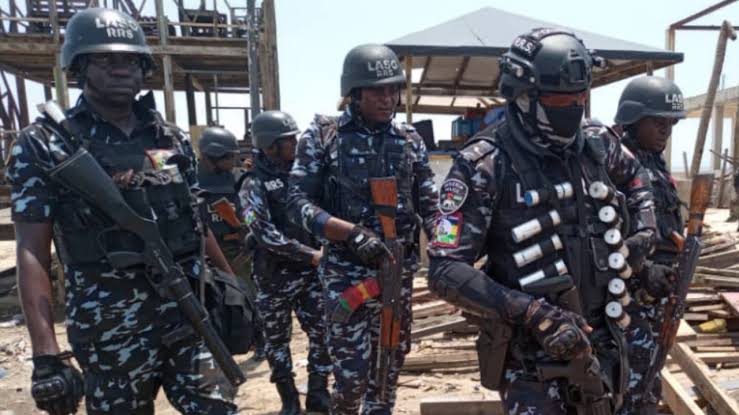
The Nigerian Senate has fixed Wednesday for the passage of the state police bill.
The lawmakers had cut short their recess to consider the bill, which seeks to amend the 1999 Constitution and decentralise Nigeria’s policing system in response to worsening security challenges
President Bola Tinubu on Tuesday transmitted an executive version of the bill to the Senate through a letter dated June 15, 2026.
The proposed legislation seeks to establish a dual policing system in which federal and state police forces operate alongside each other.
At the plenary on Tuesday, Senate President Godswill Akpabio described the proposal as a key step towards restructuring Nigeria’s security framework.
The proposed legislation was immediately referred to the Senate Ad Hoc Committee on Constitution Review, chaired by Deputy Senate President Barau Jibrin, which is expected to present its report for consideration and voting.
Akpabio called on senators to be present for the exercise, stressing the need for broad support to secure its passage.
“Every senator should endeavor to come tomorrow to be part of this exercise.
“We are going to be live tomorrow and your constituents will be seeing what you are doing,” he added.
The Independent National Electoral Commission, INEC, has presented Certificates of Return to candidates who emerged victorious in the by-elections conducted on June 20, 2026, across Rivers, Enugu, Nasarawa, Ondo and Kano States.
This was disclosed in a statement issued by the electoral commission.
According to INEC, the certificates were presented on behalf of the Commission’s Chairman, Prof. Joash Amupitan, SAN, by the Supervising National Commissioner for Rivers State, Mrs May Agbamuche-Mbu.
Speaking during the presentation, Agbamuche-Mbu congratulated the successful candidates and urged them to prioritise the interests of the people they were elected to represent.
“The most important responsibility before you is to represent your constituents well,” Agbamuche-Mbu said.
The National Commissioner also reminded the winners of the expectations placed on them by voters and encouraged them to serve with diligence and commitment.
INEC further disclosed that Certificates of Return would also be presented to winners of other recently concluded elections, including the Zuru State Constituency election in Kebbi State and the governorship election in Ekiti State.
INEC said the presentation of the certificates followed the conclusion of the bye-elections conducted on June 20, 2026.

Tinubu Seeks Constitutional Backing For State Police, Writes Senate

State Police: Senate will formally pass Bill on Wednesday

INEC formally confirms winners of by-elections, issues certificates of return




-
 News13 hours ago
Wait for 2027, Presidency Tells Peter Obi Amid Calls for Tinubu’s Resignation
-
 News13 hours ago
Tinubu Appoints Former UNILAG VC Ogundipe as NUC Governing Board Chairman
-

 Metro13 hours ago
Disaster Averted in Enugu as Rescue Teams Contain Gas Leak After Truck Crash at Ugwuonyeama
-
 News13 hours ago
El-Rufai confessed to wiretapping NSA’s phone on TV interview- witness
-
 News8 hours ago
Senator Abba Moro hails Olaka Nwogu on electoral victory
-

 News8 hours ago
Tinubu set to Flag-Off Construction of Service Carriageways of the Southern Parkway, from Arterial Road S20 (Oladipo Diya way) to Ring Road II, today
-
 Metro13 hours ago
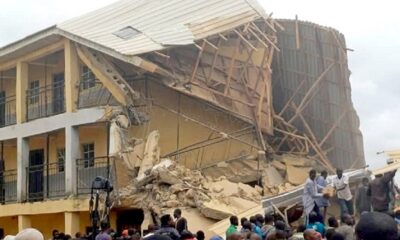
Building Collapses Along Slaughter Road in Port Harcourt, No Casualties Reported
-
 News13 hours ago
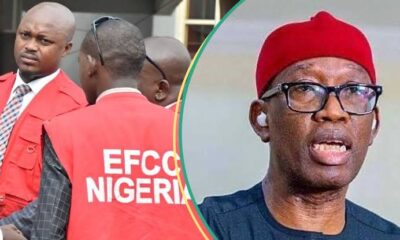
Ex-Delta Gov Okowa Visits EFCC Lagos Office
Warning: Undefined variable $user_ID in /home/naijuinz/public_html/wp-content/themes/zox-news/comments.php on line 49
You must be logged in to post a comment Login