Connect with us

News

Northern Elders Again Reject Tinubu’s Tax Reform Bill, Back 19 Governors, Monarchs On Withdrawal

Published

on

ADVERTISEMENT
Zoom Ad
ADVERTISEMENT
Zoom Ad

The Northern Elders’ Forum (NEF) has endorsed the stand taken by the Northern States Governors’ Forum in conjunction with the Northern Nigeria Council of Traditional Rulers, about the proposed Tax Reform Bill by President Bola Tinubu.


The 19 state governors in the Northern region had aired their strong displeasure on the recent Tax Reform Bill the Federal Government submitted to the National Assembly for approval.

The governors particularly rejected the proposed shift to a Derivation-based Model for Value Added Tax distribution.

They claimed that the proposed model would be at the disadvantage of the northern states and other less industrial regions.

Advertisement

The governors, under the auspices of the Northern States Governors’ Forum, voiced their strong opposition in a communique issued after a strategic meeting in Kaduna in October.

However, NEF Board of Trustees during its Second Bi-Annual Meeting on Wednesday November 20th, 2024 at the Shehu Musa Yar’Adua Center, Abuja, reaffirmed the NEF’s strong opposition to this pernicious policy.

According to a statement, NEF maintained, that, in its present form, the Tax Reform Bill is conceived in bad faith, poorly packaged and it is a palpable threat to their unity and national cohesion.

The forum in a communique signed by Professor Ango Abdullahi, its Convener and released on Saturday, condemned the conspicuous loss of voice on the burning issue by the elected lawmakers in the National Assembly from the region.

Advertisement

The communique partly reads; “The meeting unanimously endorsed the patriotic stand taken on the raging national debate about the Tax Reform Bill by the Northern States Governors’ Forum in conjunction with the Northern Nigeria Council of Traditional Rulers, just as it reaffirmed the NEF’s strong opposition to this pernicious policy.

“In addition, the meeting seriously maintained, that, in its present form, the Tax Reform Bill is conceived in bad faith, poorly packaged and it is a palpable threat to our unity and national cohesion. The Meeting proceeded by drawing attention to the brazen cavalier way and suspicious manner in which the Tax Reform Bill was imposed on the nation, without allowing the inputs of critical stakeholders, even as it kept members of the National Economic Council in the dark, thus; confirming the sinister intentions of those promoting this outrageous Bill.

“The Board-in-session, condemned in very strong terms, the conspicuous loss of voice on this burning issue by the overwhelming number of elected politicians in the National Assembly from the region, and fiercely warned, that indeed, the days are fast gone, when such conspiratorial connivance against the vital and strategic interest of the region, either by those within or outside the region, would be condoned or even tolerated.”

Advertisement

News

131 Gambians Die on Irregular Migration Routes in 2026

Published

on

ADVERTISEMENT
Zoom Ad
ADVERTISEMENT
Zoom Ad

…as ECOWAS Hear Fresh Call for Tougher Action

By Gloria Ikibah

The human cost of irregular migration took centre stage in The Gambia, as the Chief Executive Officer of the Network of Reintegration and Irregular Migration Data (NRIMD), Baye Gassama, disclosed that 131 Gambians have died attempting dangerous migration journeys in 2026, with the sea remaining the deadliest route.

Gassama disclosed this during an engagement between the ECOWAS Parliament and residents of Barra in the North Bank Region as part of the regional legislature’s citizen engagement programme on irregular migration and trafficking in persons.

Advertisement

Presenting the latest migration statistics, he said most of the recorded deaths occurred at sea.

He further revealed that four migrant boats have gone missing this year, leaving 245 Gambians unaccounted for.

According to the figures presented, 1,860 migrants reached Spain in 2026, including 743 Gambians.

Gassama also disclosed that 2,553 migrants were intercepted during the year, among them 574 Gambians, adding that 1,589 of those interceptions took place before the migrants embarked on their journeys.

Advertisement

Highlighting the challenges of reintegration, he said the North Bank Region recorded 246 migrant returnees in 2025, compared with 178 in 2024.

“According to the 2026 data, 131 Gambians died, comprising 117 at sea and 14 on land, and the sea remains the deadliest route.

“The increase from 178 in 2024 to 246 in 2025 indicates a 38 per cent rise in returnees, underlining the urgent need for reintegration support, livelihood programmes and psychosocial services to prevent re-migration and support sustainable community development,” he said.

He emphasised that comprehensive data collection and sustained reintegration initiatives remain essential in helping returnees rebuild their lives.

Advertisement

Gassama also drew attention to the closure of the migration resource centre in Barra, which he said had previously played a key role in educating communities about the dangers of irregular migration.

“When the project phased out, there were no more awareness-raising activities on irregular migration, which has led to an increase in the number of young people venturing on the backway journey,” he noted.

He explained that Lower Nuimi’s strategic location at the mouth of the River Gambia has continued to make it an attractive departure point for migrant smugglers.

Appealing to the National Youth Council, Gassama urged authorities to revive the centre, describing it as an important hub for public awareness campaigns, information sharing and youth activities.

Advertisement

Recalling a recent tragedy, he said many families were still searching for loved ones lost at sea.

He therefore called for stronger legislation to tackle migrant smuggling.

“In 2025, from November to December, there were boats that capsized around Jinack. We lost around 50 people and many of them are still missing.

“We need a strong law against smuggling so that those found smuggling migrants will face appropriate penalties, which are not currently in place,” he stated.

Advertisement

Gassama further urged the government to establish rehabilitation and vocational training centres to equip young people with skills and reduce the temptation to embark on dangerous migration routes.

The ECOWAS delegation also heard emotional testimonies from survivors of irregular migration.

One of them, Momodou Lamin Joof, told lawmakers that despite serving in the Gambia Navy for 11 years and attaining the rank of Lance Corporal, economic hardship and family pressure drove him to attempt the journey five times.

Describing the conditions he endured while detained during the journey, Joof painted a grim picture.

Advertisement

“It was because of the backway that I lost my job, as I was compelled by family pressure and the lack of job opportunities, especially for young people.

“We used the entrance of the prison to urinate because there were no toilet facilities, and the urine flowed back into the prison. When they locked the prison at 7 a.m., it remained closed until 7 a.m. the following day.

“They moved us to three different cells. The conditions were horrible and our suffering continued”, he stated.

Another survivor, Yamundaw Sarr, told the lawmakers she made three unsuccessful attempts to migrate irregularly.

Advertisement

She recalled severe hardship during the journey, including hunger and confinement.

“Getting food during the journey was almost impossible. They seized all our phones and locked us up from morning until evening,” she said.

Both survivors said they had received no meaningful assistance since returning to The Gambia and appealed for support to help them rebuild their lives through skills acquisition and income-generating opportunities.

Community leaders and residents who attended the engagement welcomed the ECOWAS Parliament’s visit and urged the Gambian government to invest more in youth empowerment, job creation and sustainable development initiatives, arguing that addressing unemployment and poverty remains the most effective way to reduce irregular migration.

Advertisement
Continue Reading

News

‘He was our bread winner’: Dad laments 28-Year-Old Lieutenant Killed in Oyo School Rescue Mission

Published

on

ADVERTISEMENT
Zoom Ad
ADVERTISEMENT
Zoom Ad

The family of Lieutenant Felix Ademe Isaac, the 28-year-old Nigerian Army officer killed during the operation that rescued abducted teachers and pupils in Oyo State, has expressed deep grief, describing his death as a painful loss to both the family and the nation.

Lt. Isaac lost his life while leading troops during the military operation that secured the release of dozens of abducted teachers and schoolchildren from Oriire Local Government Area of Oyo State after 56 days in captivity.

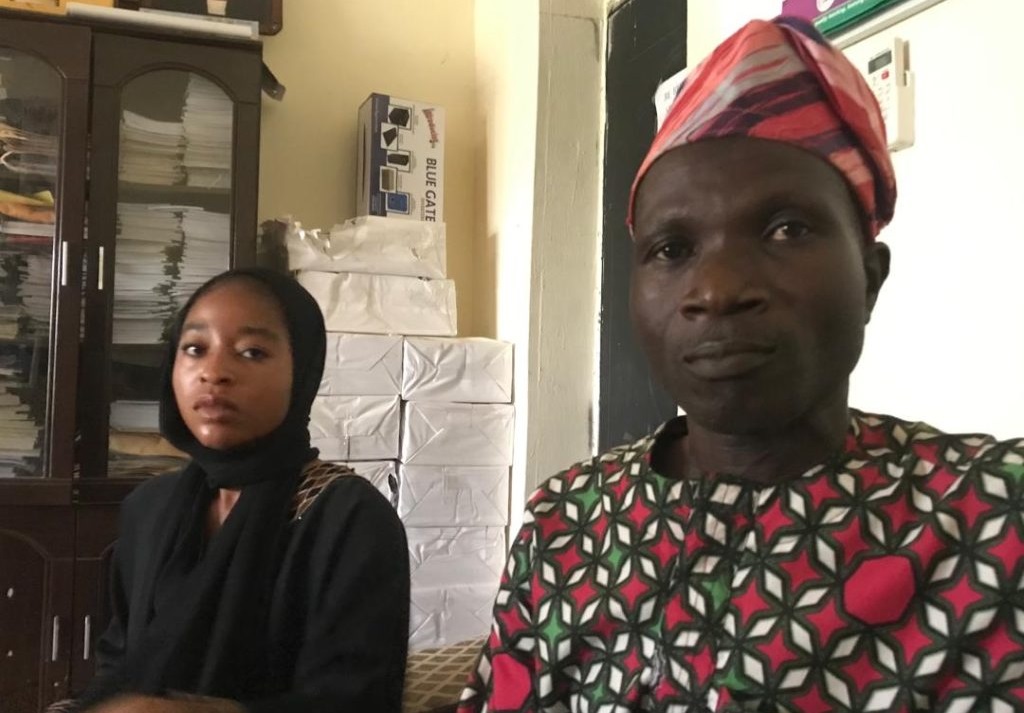
His father, Mr. Isaac Alabura, a retired Master Warrant Officer, said the family was still struggling to come to terms with the tragedy.

Speaking to Daily Trust at his residence in Bachure Quarters, Yola, Adamawa State, Alabura described his late son as “the hope of the family and the community.”

Advertisement
Continue Reading

News

After 56 Days in Captivity, Oriire Parents Scared of Sending Rescued Kids Back to School

Published

on

ADVERTISEMENT
Zoom Ad
ADVERTISEMENT
Zoom Ad

Parents of pupils kidnapped from schools in Oriire Local Government Area of Oyo State have expressed deep fears about returning their children to the classrooms, saying the traumatic experience of spending 56 days in captivity has left families unwilling to take further risks despite the successful rescue of the victims.

The pupils were among 39 schoolchildren and seven teachers, including a school principal, kidnapped when heavily armed terrorists attacked three schools in the Ahoro-Esiele and Yawota communities on May 15, 2026. Two teachers were killed during the incident, while the survivors were taken into forests around the Old Oyo National Park before security forces rescued them on July 10 after an intensive multi-agency operation.

Speaking after the victims regained their freedom, some parents said although they remain grateful to God, the Federal Government and security agencies for the rescue, the emotional scars left by the ordeal have made an immediate return to school difficult.

One parent said the fear among families remains overwhelming, stressing that parents must first be convinced the schools are secure before allowing their children to resume classes. Another relative, Basirat Adigun, noted that no parent wants to expose a child to another similar experience, insisting that visible and effective security measures must be put in place around the affected schools and communities.

Advertisement
Continue Reading

Trending

Copyright © 2024 Naija Blitz News