News
FG protests Nigerian Army’s probe by ICC
- /home/naijuinz/public_html/wp-content/plugins/mvp-social-buttons/mvp-social-buttons.php on line 27
https://naijablitznews.com/wp-content/uploads/2024/07/Lateef-Fagbemi.jpg&description=FG protests Nigerian Army’s probe by ICC', 'pinterestShare', 'width=750,height=350'); return false;" title="Pin This Post">
- Share
- Tweet /home/naijuinz/public_html/wp-content/plugins/mvp-social-buttons/mvp-social-buttons.php on line 72
https://naijablitznews.com/wp-content/uploads/2024/07/Lateef-Fagbemi.jpg&description=FG protests Nigerian Army’s probe by ICC', 'pinterestShare', 'width=750,height=350'); return false;" title="Pin This Post">
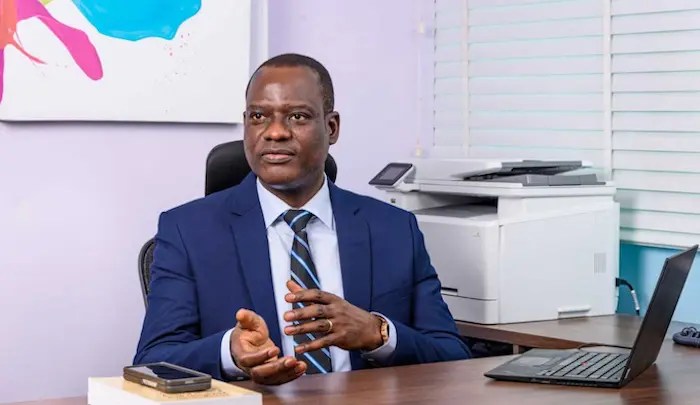
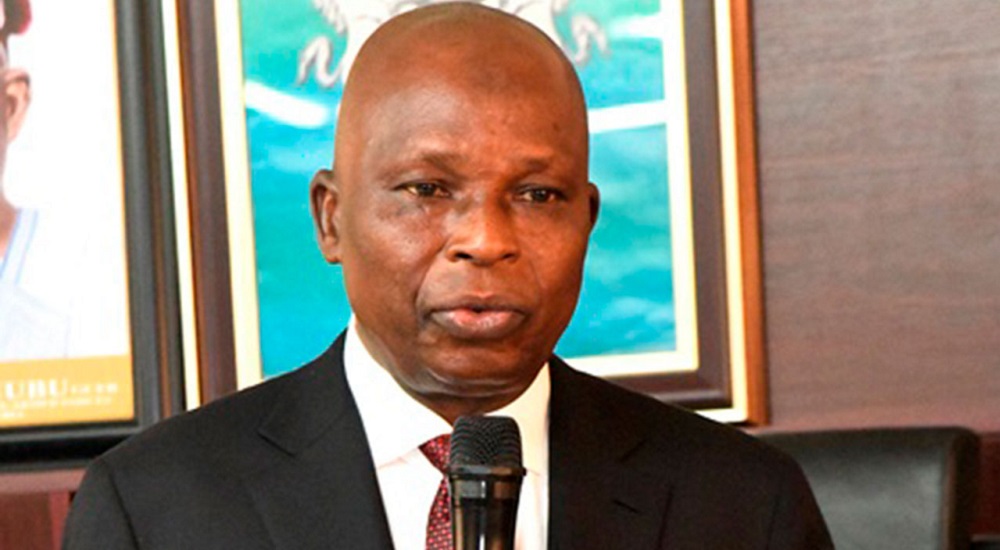
The Attorney General of the Federation and Minister of Justice, Prince Lateef Fagbemi (SAN), has asked the Office of the Prosecutor at the International Criminal Court in The Hague, Netherlands, to stop the prolonged investigation of the Nigerian military.

The AGF stated the country’s position on Monday in a statement made available to the media in Abuja by the Special Adviser to the President on Communication and Publicity, Office of the AGF and Minister of Justice, Kamarudeen Ogundele.
According to the statement, the AGF, in his remarks at the 23rd session of the Assembly of States Parties to the Rome Statute of the ICC in Hague, stated that Nigeria at the global stage had demonstrated the will to promote justice and end terrorism among other global crimes.

The AGF, while expressing the country’s commitment to confronting impunity, holding perpetrators of heinous crimes accountable, and restoring justice for victims, noted further that the preliminary examination into alleged crimes in Nigeria had lasted 14 years and was demoralising to the service men laying their lives to defend their country against terrorists.
The minister emphasised that Nigeria, as a responsible state party to the Rome Statute, had consistently engaged with the Office of the Prosecutor and demonstrated its military’s adherence to international humanitarian law and ensuring accountability for any personnel found guilty of misconduct.
He said, “While we respect the court’s mandate to intervene when states are unable or unwilling to prosecute such crimes, it is important to emphasise that there must be respect and regard to the principle of complementarity. The ICC is meant to act as a court of last resort, intervening only when national legal systems are unable or unwilling to address grave crimes. I must assert that Nigeria does not fall under any such situation. Our nation has consistently demonstrated both the will and the capacity to investigate and prosecute serious crimes, including those committed by Boko Haram and other terrorist groups. We are proud of the Nigerian military, which has systems and structures in place to ensure their operations are guided by international humanitarian law and human rights principles.
“At the 22nd Session of this Assembly, Nigeria reported the establishment of an independent Special Investigative Panel by the National Human Rights Commission to address allegations against the Nigerian military made by Reuters. After thorough investigations spanning eight months, the panel found no evidence to substantiate these claims. The allegations of killings, torture, and the recruitment of underage fighters have been proven to be false and exaggerated.
“Indeed, the work of the panel and acceptance of its recommendations by the government clearly indicates that Nigeria has the political will to investigate allegations of heinous crimes and hold violators accountable.
“The conduct of military operations during conflict is regulated by international humanitarian law, and we can assure this Assembly that the Nigerian military does not engage in arbitrary killings or inhumane treatment of those no longer directly participating in hostilities. Our military ensures that captured combatants are treated with dignity and respect. While inadvertent mistakes or errors of judgment may occur in the chaos of conflict, these are promptly investigated by impartial commissions and panels. I wish to state that Nigeria has a well-established and functional court martial system for holding erring officers accountable. We also employ restorative justice measures, including compensation, when appropriate.
“In addition, Nigeria’s six-month Demobilization, Deradicalization, and Reintegration programme has successfully reintegrated 4,000 former Boko Haram combatants into society. We continue to prioritise the training and re-training of our armed forces, ensuring that human rights and international humanitarian law remain at the forefront of our military operations, with a focus on the protection of civilian protection.”
The AGF observed further that the country was concerned by the seemingly predetermined stance of the Office of the Prosecutor regarding armed forces and the situation in Nigeria despite these efforts.
“We are also concerned about activities of apologists of terrorist groups, parading as civil society organisations, who are continuously making unsubstantiated allegations in order to undermine legitimate efforts of the Nigerian Armed Forces,” he added.
Fagbemi, on behalf of Nigeria, called on all States Parties to ratify the Convention on Cluster Munitions, as the use of cluster munitions continues to cause widespread suffering and hinders peace-building and humanitarian efforts.
He also congratulated the newly elected members of the Board of Directors of the Trust Fund for Victims, saying that with their exceptional qualifications, he was confident they would fulfil the Fund’s mandate with integrity and dedication.
“Nigeria stands firm with fellow State Parties in the shared commitment to ending impunity for the world’s most serious crimes. We fully support the work of the ICC and encourage those States Parties yet to accede to the Rome Statute to do so,” he added.
News
Senate Calls For Total Ban On Importation Of Textile Materials
The Senate has asked the Federal Government to impose an outright ban on the importation of foreign textile materials as part of efforts to revive Nigeria’s struggling textile industry and stimulate local cotton production.
The upper chamber also urged the Federal Government, through the Ministries of Agriculture and Trade and Investment, to take urgent steps to resuscitate textile manufacturing across the country, particularly along the Kaduna-Kano industrial corridor, citing its potential to create jobs and address rising youth unemployment and insecurity.
The resolutions followed the adoption of a motion titled ‘urgent need to revive the textile industries in Nigeria with particular reference to the Kaduna-Kano Axis’, sponsored by Senator Sunday Katung (APC, Kaduna South) and co-sponsored by several lawmakers across party and regional lines.
Presenting the motion, Senator Katung recalled that Nigeria’s first large-scale textile manufacturing mill was established in Kaduna in 1957, a development that later spread to other regions and contributed significantly to industrial growth and employment generation.
According to him, government intervention policies in the 1960s and 1970s, including restrictions on textile imports, encouraged investment in local production and helped the industry flourish.
He noted that by the late 1970s and 1980s, Nigeria had about 167 textile mills employing more than 500,000 workers directly, making the sector the second-largest employer of labour after the Federal Government.
Katung further lamented the sector’s steady decline, attributing it to obsolete equipment, inadequate capital, inconsistent power supply and policy challenges.
The senator expressed concern that more than six decades after the industry’s golden era, Nigeria’s textile sector has deteriorated significantly, leaving once-thriving industrial facilities abandoned and reducing the industry to one of the weakest segments of the nation’s manufacturing sector.
Lawmakers who supported the motion underpinned the need for deliberate government intervention to restore the industry’s competitiveness, boost local production, reduce dependence on imports and create sustainable employment opportunities for Nigerians.
The Senate subsequently called for increased funding to the Bank of Industry (BoI) to support the revival of textile companies and requested the Federal Ministry of Agriculture to intensify efforts to encourage cotton farming, describing cotton production as critical to the survival of the textile sector.
Following deliberations, the Senate adopted the motion and urged the Federal Government to implement policies aimed at revitalising the textile value chain, from cotton farming to manufacturing and distribution, as part of broader efforts to strengthen the country’s industrial base and economic growth.
News
Tinubu launches Ebola response task force, approves N10bn emergency fund
President Bola Tinubu has approved the establishment of a Presidential Task Force on Ebola Virus Disease Preparedness and Emerging Public Health Threats and authorised the immediate release of N10 billion to strengthen Nigeria’s emergency response capacity against the deadly virus.
The intervention comes amid renewed concerns over the resurgence of Ebola cases in the Democratic Republic of Congo (DRC) and Uganda, prompting the Federal Government to activate measures aimed at preventing the importation of the disease into the country.
The emergency funding is expected to bolster the operational readiness of the Nigeria Centre for Disease Control and Prevention (NCDC) and support critical public health response activities nationwide.
The newly constituted Presidential Task Force will be chaired by the President’s Chief of Staff, Femi Gbajabiamila, with membership drawn from key Ministries, Departments and Agencies (MDAs), alongside representatives of state governments.
President Tinubu’s approval followed a high-level stakeholders’ meeting convened by Gbajabiamila to assess Nigeria’s preparedness and develop strategies to forestall any outbreak within the country’s borders.
Participants at the meeting included officials of the Ministry of Interior, the Federal Airports Authority of Nigeria (FAAN), the Nigeria Immigration Service (NIS), the Nigerian Civil Aviation Authority (NCAA), the Lagos State Government and other critical institutions involved in disease surveillance and border management.
As part of the emergency measures, the President directed all states hosting international airports and major border corridors to submit detailed preparedness plans, funding requirements and intervention needs for coordinated implementation by the Federal Government.
The Task Force is also expected to immediately intensify passenger screening at international airports through enhanced temperature checks and stricter crowd-control measures.
Authorities have been directed to strengthen monitoring of travellers arriving through identified high-risk routes, including flights operated by Air Uganda, RwandaAir, Air Tanzania, Air Angola, Kenya Airways and Ethiopian Airlines.
In addition, referral and isolation centres are to be activated without delay at the Lagos and Abuja international airports, while similar facilities will subsequently be established at other designated entry points across the country.
The government further ordered the mandatory deployment of QR code-based pre-arrival health declaration systems for passengers originating from, or transiting through, countries classified as high risk.
Other precautionary measures include the disinfection of departure halls, cargo terminals, baggage handling areas and other airport facilities.
President Tinubu also mandated the advisory group to engage security, diplomatic and aviation authorities on possible regulations governing flights from affected countries.
The Task Force is expected to recommend the designation of specific airports or terminals for high-risk flights to facilitate controlled screening and isolation procedures, as well as consider adjustments to flight schedules to minimise contact between high-risk travellers and other passengers.
The latest measures signal the administration’s determination to avoid a repeat of past public health emergencies by strengthening early detection systems, tightening border surveillance and ensuring rapid response capacity in the face of emerging disease threats.
News
Umahi gives Abuja-Lokoja highway contractors 72 hours to mobilise
The Minister of Works, David Umahi, has given contractors handling sections of the Abuja-Lokoja highway rehabilitation project 72 hours to fully mobilise to site or risk sanctions, including possible prosecution by anti-graft and law enforcement agencies.
Umahi issued the ultimatum on Tuesday during a joint inspection of the highway alongside members of the Senate and House of Representatives Committees on Works.
The minister warned that contractors who had received government funds but failed to execute projects in line with agreed timelines would no longer be tolerated.
“If you are holding the money of the Federal Government, you have to bring it out and do the job, or we start going to the police and the EFCC.
“I’m giving you 72 hours to effectively deploy on this road and utilise the money. The President has graciously approved the funds, and everyone involved must fulfil their obligations,” Umahi said.
He disclosed that President Bola Tinubu had approved funds for the project and urged contractors to immediately deploy equipment, personnel and resources to their respective sections of the road.
The minister expressed dissatisfaction with the pace of work by GELD Construction Limited, noting that only 8.2 kilometres of continuously reinforced concrete pavement had been completed on a 28-kilometre stretch despite the contractor spending several years on the project.
“GELD is not doing well at all on this project. The contractor has been on this job for years, and the progress recorded is not commensurate with the time spent on site,” Umahi said.
According to Umahi, the original contract covered 49.28 kilometres but was later reduced to 28 kilometres because of funding constraints.
He directed officials of the Federal Ministry of Works to identify the worst sections of the highway for immediate intervention using available funds, insisting that motorists should not continue to suffer the consequences of project delays.
The minister also warned ministry officials against poor supervision of projects, stating that engineers and project managers who fail to effectively monitor contractors could be removed from their positions.
“We can no longer keep quiet and allow contractors to do whatever they want to do. Contractors who have received government funds must utilise them for the intended purpose and ensure that critical sections of the road are attended to immediately,” he said.
Umahi lamented the hardship experienced by commuters due to prolonged construction activities and warned contractors against unnecessarily obstructing traffic flow.
“I feel very sad whenever I see this road completely blocked. Contractors have no right to keep road users suffering, and ministry officials have no right to keep quiet while that happens,” he stated.
While acknowledging that delayed payments had posed challenges for contractors, the minister appealed to the Nigerian National Petroleum Company Limited to accelerate the release of funds for projects being financed under its tax credit arrangement with the Federal Government.
He maintained that the Tinubu administration remained committed to completing strategic road infrastructure projects across the country and warned that contractors unwilling or unable to continue work after receiving public funds could be replaced.
Speaking during the inspection, Chairman of the House of Representatives Committee on Works, Akin Alabi, backed the minister’s position, saying infrastructure delivery required commitment from contractors, supervising engineers and funding agencies.
“The President cannot be everywhere, and neither can the minister. That is why there are engineers, controllers and supervisors on site. What we have seen here suggests that reports reaching the minister do not fully reflect realities on the ground,” Alabi said.
Similarly, Chairman of the Senate Committee on Works, Onyekachi Nwaebonyi, urged ministry officials to discharge their responsibilities diligently and called for timely payment for completed projects.
The Abuja-Lokoja highway is a major transport corridor linking the Federal Capital Territory with parts of the North-Central, South-East and South-South regions. Motorists have repeatedly complained about its deteriorating condition, frequent accidents and traffic congestion.
-
News16 hours agoSad: Nigerian Labour Leader Dies At International Labour Conference In Geneva
-
News16 hours agoThe 30 Days of Projects Commissioning in the FCT starts today
-
News14 hours agoTinubu Swears In New Ministers
-
News19 hours agoNCC appoints Princess Emiko as interim chair to drive Digital Bridge Institute transformation
-
News15 hours agoIran holds funeral ceremony for two air defense personnel slain in Israeli airstrikes
-
News14 hours agoReps Demand Answers on Defence Spending, Summon Service Chiefs, Finance Minister
-
News12 hours agoTinubu Commissions OSEX Main Carriageway, Vows End To Era Of Abandoned Projects(Photos)
-
News11 hours agoINEC Parleys With Parties, Defends Decision To Appeal Court Ruling On Primary Deadlines

Warning: Undefined variable $user_ID in /home/naijuinz/public_html/wp-content/themes/zox-news/comments.php on line 49
You must be logged in to post a comment Login