News
Failed lawyers, litigants responsible for attacks against judges — Justice Tsoho
- /home/naijuinz/public_html/wp-content/plugins/mvp-social-buttons/mvp-social-buttons.php on line 27
https://naijablitznews.com/wp-content/uploads/2024/06/images-64.jpeg&description=Failed lawyers, litigants responsible for attacks against judges — Justice Tsoho', 'pinterestShare', 'width=750,height=350'); return false;" title="Pin This Post">
- Share
- Tweet /home/naijuinz/public_html/wp-content/plugins/mvp-social-buttons/mvp-social-buttons.php on line 72
https://naijablitznews.com/wp-content/uploads/2024/06/images-64.jpeg&description=Failed lawyers, litigants responsible for attacks against judges — Justice Tsoho', 'pinterestShare', 'width=750,height=350'); return false;" title="Pin This Post">
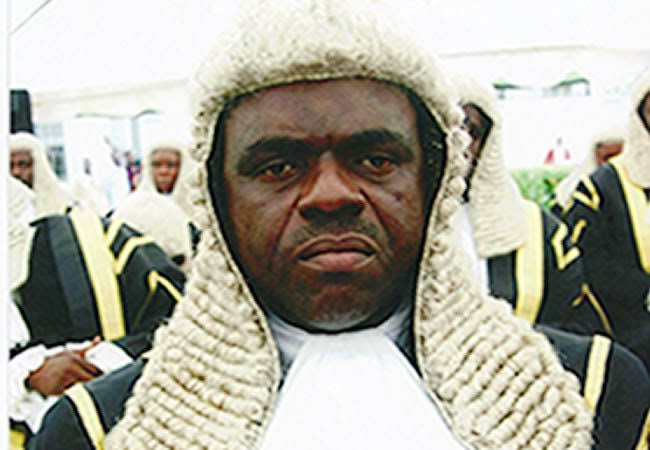
The Chief Judge of the Federal High Court of Nigeria, Justice John Tsoho, has said that failed lawyers and litigants are responsible for the recent virulent attacks against judges of the court across the country over their judgements.

He lamented that the court has been worse for the attacks on social media arising from its wide territorial and vast subject matter jurisdiction.
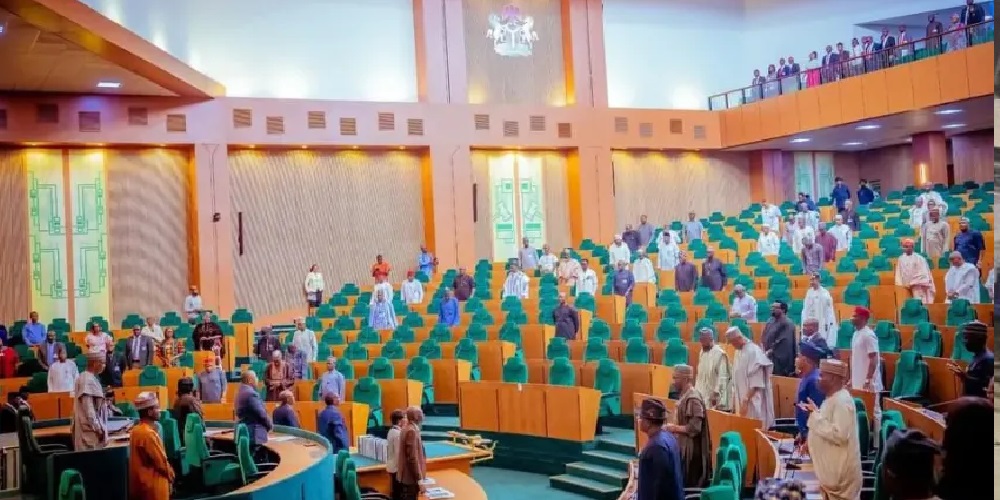
Speaking at the 2024 Conference of Federal High Court Judges and commencement of the new legal year on Monday in Abuja, Justice Tsoho warned those vilifying judges to desist in their own interests.

The Chief Judge, who expressed bitterness over the trend, called on the Nigeria Bar Association NBA to use the instrument of the Code of Professional Ethics to deal with the erring lawyers desecrating the temple of justice.
He said: “I am compelled to seriously deprecate the current pervading attitude of some lawyers, litigants and public commentators of launching virulent attacks in the media against judges and their decisions.
“The Federal High Court regrettably, has been worse for it, arising from its wide territorial and vast subject matter jurisdiction.
“This trend seems to have become a ready means of seeking fame, employed mostly by failed lawyers and litigants. They do not realise that the field of law and indeed adjudication, is not a pedestrian affair.
“I wish to use this rare opportunity of voicing out, which comes just once in a year, to comment at length on this canker, as it poses great danger, not only to the Nigerian Judiciary but to the Rule of Law generally.
“Firstly, we need to remind ourselves that courts of law are established by the Constitution of the Federal Republic of Nigeria, the Supreme Law of the Land and are vested with judicial powers by Section 6 thereof.
“Similarly, judges, particularly of the Superior Courts of record, are appointed pursuant to the provisions of the Constitution and are obligated to discharge their duties in accordance with the Constitution and enabling statutes.
“Secondly, there exists the hierarchy of courts, which serves to scrutinise the adjudicatory role of the courts in ascending order. Thus, appeals lie from the High Courts to the Court of Appeal and ultimately to the Supreme Court of Nigeria.
“Consequently, litigants who are dissatisfied with decisions of lower courts are expected and indeed required to express their grievance through the appeal process.
“The right of appeal is constitutionally guaranteed, with regard to both civil and criminal litigation. The essence of this narration is to demonstrate that the legitimate manner of challenging a court decision is through the appeal process.
“If, however, a litigant genuinely and strongly feels that a judge has misconducted himself in handling the case, such litigant may then quietly make a written complaint to the National Judicial Council (NJC) for redress.
“There is hence no room in law for holding press conferences to criticise judicial decisions. The implication therefore is that those who attack decisions of judges in the press are neither lawyers nor law-abiding, but violators of law.
“It is significant to stress the point that the existence of the appeal structure itself admits of the diverse nature of opinions and thoughts in society, which could occur in the decision-making process.
“Therefore, it is not a crime that there could be concurring or divergent views of superior courts on a decision made by a judge. That our decisions are not final is a blessing. With the industry and brilliance of our judges, appeals are welcome to test the veracity and tenacity that distinguish our judges.
“However, it is very concerning that the common situation these days is that some parties, after appealing the decision of a judge, proceed to petition the NJC on the same issue.
“The question then is: Which of the steps taken does that party accord priority to? This attitude reflects nothing else but malice. Judges will not be cowed by such antics. Worse still, some discuss pending cases in the media, notwithstanding that such cases are sub-judice.
“There can also be a cultural reflection on the growing attacks against courts and judges when it is realised that a good number of judges are aged above 60 years and are hence senior citizens in their own right.
“Yet, it is mostly youths in the age bracket between 25 and 30 years that come to the public arena to heap insults on these elders, some of whom are community leaders or from royal families.
‘This is an abominable act in refined cultural settings, as traditional society approves only of the dignified reproach of elders, even where they err.
“Thus, it is easily discernible that youths who indulge in such conduct display a lack of decent cultural background. It is, therefore, by their fruits that they are known.
“A situation where the legally recognised means of challenging court decisions is being increasingly sidelined in favour of approach by mob mentality is dangerous and worrisome.
“It is more so, as those promoting it are not well-informed but act in concert with some disgruntled lawyers. It is very sad that certain lawyers, with a few senior lawyers among them, have willingly offered themselves as errand boys to some politicians to malign judges.
“They secretly seek to influence judges but hypocritically turn around to condemn judges when their clandestine overtures to judges are rebuffed. In such situations, their supposition is that the judge must have been compromised by the opponent. They merely appear sanctimonious, while levelling unfounded allegations of bribery against judges in humongous sums of money.
“None of them has ever proven such allegations, but nevertheless, they succeed in inciting the gullible society against the maligned judges. It is bad enough that they mostly use faceless media platforms to orchestrate their malicious campaigns.
“They publicly advertise their ignorance by vociferously calling for the immediate ‘sack’ of judicial officers, as if the officers are mere domestic staff. They are oblivious that the appointment of Judicial Officers has a statutory flavour and they cannot be removed unless there is a proven case of serious misconduct.
“The ugly trend must be halted, if the judiciary is to survive. This is a task for well-meaning members of the legal profession, who owe their lives to the profession.
“For the greedy and shameless renegades, however, the collapse of the legal profession itself will not make any difference, as they would readily survive by touting.
“At this juncture, we call on the Nigerian Bar Association to scrutinise its ranks and uproot the misfits, who are causing incalculable damage to the legal profession.
“We wish to further draw attention to the fact that there are extant laws that can be called in aid to check the malicious tendency. Both the Criminal Code and the Penal Code provide punishment for malicious or injurious falsehood.
“For lawyers, the Rules of Professional Conduct can apply. On the part of judges, there is a crying need to revive the exercise of the power of contempt to protect the integrity of their persons and the courts.
“Their reluctance to employ this potent weapon should not be seen as a sign of ignorance or cowardice.
“In another vein, I consider it pertinent to briefly shed light on the commonly misconstrued phrase of “bail bond.” Most people interpret the “bond” entered into as a bail condition, to mean actual payment of money. When bail is “granted in the sum of N1 million,” for instance, it does not mean that the surety is there and then expected to deposit that sum of money with the Court.
“Rather, the surety is to enter into a bond, which is a promise, an undertaking or agreement, to the effect that the person undergoing trial would consistently attend court and would not escape until the trial is concluded.
“If however, the person escapes without satisfactory explanation, the surety will be held to pay the promised money (the value of the bond) to the court.
“This is a voluntary decision by the surety; hence, unless he is trusting of the person under trial, he is not obliged to execute the bail bond.
“It is therefore a matter of ignorance or mischief to ascribe a contrary interpretation to the matter of bail bond. This explanation is meant to enlighten the misinformed so that they will refrain from unduly vilifying Judges regarding the issue of bail bonds.
“As we reflect on the achievements of this past year, I extend my sincere gratitude to the National Judicial Council and the Federal Judicial Service Commission, all under the able leadership of His Lordship, The Honourable, The Chief Justice of Nigeria, Honourable Justice K. M. O. Kekere-Ekun, for their unwavering support.
“Your commitment in ensuring the smooth operation of our Judicial system has been invaluable. We are profoundly grateful to the Bi-Cameral Committees of the National Assembly on Judiciary, Human Rights and Legal Matters for their unflinching goodwill with regard to our budgetary interests.
“We equally appreciate the continued understanding and support in diverse ways, by the Honourable Attorney-General of the Federation and Minister of Justice.
“We also express deep gratitude to critical stakeholders for their ready collaboration with us in the area of training. These include: the National Judicial Institute (NJI), The British High Commission (BHC), the United Nations Office on Drugs and Crime (UNODC), the Nigerian Communications Commission (NCC), Nigerian Shippers Council, Asset Management Corporation of Nigeria (AMCON), National Deposit Insurance Corporation (NDIC), Federal Inland Revenue Service (FIRS), Economic and Financial Crimes Commission (EFCC), Central Bank of Nigeria (CBN) and several others.
“Your guidance, collaboration, and dedication to the principles of Justice have enabled us to navigate challenges and make significant progress in strengthening the rule of law in our nation.
“As we navigate the challenges confronting the judiciary and the Federal High Court in particular, it is imperative that we adhere to best practices in justice delivery.
“Judges must maintain the highest standards of impartiality and fairness in all their judicial functions. Decisions must be based solely on the law and the evidence presented, without fear or favour.
“We must strive to resolve cases expeditiously while ensuring that justice is not compromised. Delays in the administration of justice erode public confidence and undermine the rule of law.
“The judiciary must be transparent and accountable in all its operations. This includes providing access to court records and information and ensuring that judicial processes are open and accessible to the public on application.
“The protection and promotion of human rights are fundamental to the administration of justice. Judges must be vigilant in safeguarding the rights of all individuals, regardless of their background or status.
“In this new legal year, I call upon all judges and staff of the Federal High Court to rededicate themselves to the pursuit of justice. Let us work together to uphold the integrity and independence of the judiciary and to ensure that the Federal High Court remains a beacon of hope for all who seek justice before it.
“I also urge all stakeholders in the justice sector, including the bar, law enforcement agencies, and other agencies of government, to collaborate with us in our efforts to strengthen the wheels of justice in Nigeria.
“I am confident that with our collective commitment and dedication, the Federal High Court will continue to play a pivotal role in upholding the rule of law and promoting a just and equitable society for all Nigerians.”

News
NSITF promises Gambia of technical support, stronger partnership …As study tour ends in Abuja
By Kayode Sanni-Arewa
The Nigeria Social Insurance Trust Fund (NSITF) has promised to provide technical support while continuing to share knowledge with the Industrial Injuries Compensation Fund (IICF), Social Security and Housing Finance Corporation (SSHFC) of the Gambia in advancing social protection and workers’ welfare in the West African sub-region.
Managing Director/CE of NSITF, Barr. Oluwaseun Faleye, gave the assurance at the closing ceremony of the one-week study tour by the Board of the Industrial Injuries Compensation Fund (IICF), Social Security and Housing Finance Corporation (SSHFC) of the Gambia to the Fund.
He said the “NSITF will continue to support the Industrial Injuries Compensation Fund under the SSHFC by sharing technical knowledge, exchanging experiences and providing guidance wherever we can.
“We see this as a partnership between brothers, working together towards the common goal of strengthening social protection and advancing the welfare of workers across our sub-region”.
Faleye, who was represented by the Executive Director (Administration), Barr. Samaila Abdu, said, “I therefore wish to assure you that this relationship does not end with today’s closing ceremony. Rather, it marks the beginning of an even stronger partnership between our two institutions.
“As you return home, please convey our warm regards to the Managing Director, the Board, Management and the entire Social Security and Housing Finance Corporation of The Gambia.
“As we come to the close of this week-long study visit, permit me to express our sincere appreciation to the delegation from the Social Security and Housing Finance Corporation of The Gambia for choosing NSITF as the destination for this important study tour.
“Your decision to understudy our institution is both an honour and a demonstration of the growing spirit of collaboration among social security institutions within our sub-region. We are grateful for the openness, professionalism and mutual respect that have defined our engagements throughout the week,” the MD enthused.
“Over the course of this engagement, we have shared experiences, exchanged ideas and explored practical approaches to strengthening the administration of employment injury compensation and social security,” he continued, adding that “beyond the presentations and technical sessions, what has been most rewarding has been the quality of our interactions. We have engaged in frank discussions, asked important questions and learned from one another. That, indeed, is the true value of a study visit”.
Speaking further on the collaboration by the two agencies, the NSITF helmsman stated that “We are particularly delighted by your invitation for NSITF to visit The Gambia and witness first-hand how some of the lessons from this engagement will be adapted and domesticated within your institution. We deeply appreciate that invitation and will certainly give it due consideration.
“As an institution, we readily acknowledge that we are still strengthening and expanding our own social security implementation. Like every progressive institution, we continue to learn, innovate, and improve. However, we remain committed to sharing our experiences and best practices in areas where we have made meaningful progress”.
Giving a summary of what transpired during the tour, the Managing Director said, “We began by examining the evolution of social security administration in Nigeria, tracing the journey from the National Provident Fund through the NSITF and ultimately to the Employees’ Compensation Scheme established under the Employees’ Compensation Act, 2010.
“We also had the opportunity to exchange views on institutional governance, policy evolution and the future direction of social security within our respective countries.
“We examined the operational backbone of the Scheme, employer registration, compliance management and contribution assessment. Discussions centred on the legal obligations of employers, our compliance strategies, assessment methodologies and the role of technology in enhancing transparency and accountability.
“The interactive exchanges demonstrated our shared commitment to improving compliance while expanding coverage, particularly within underserved sectors of the economy.
“We explored claims administration, compensation delivery, rehabilitation and return-to-work programmes. Beyond the statutory obligation to compensate injured workers, we highlighted the importance of restoring dignity through medical rehabilitation, vocational training and economic reintegration.
“Our discussions also focused on research, evidence-based policy formulation, actuarial planning and the role of digital transformation in modern social security administration,” he highlited, adding that “the demonstration of the Employees Compensation Scheme Application (ECSA) illustrated how technology is enhancing efficiency, improving compliance and strengthening service delivery within the Fund. More importantly, our discussions on future cooperation reaffirmed our collective resolve to sustain this partnership beyond the confines of this study visit.”
Faleye maintained that together, the two social security agencies have reaffirmed that effective social security administration is not a destination but a continuous journey of learning, innovation and improvement.
“Perhaps the most important outcome of this engagement is our shared commitment to continue working together. The invitation extended to NSITF to visit The Gambia and witness your own reform journey is one we sincerely appreciate, he summed.
In his response, the leader of the Gambian delegation, Permanent Secretary, Ministry of Trade and Employment, Lamine Camara, expressed appreciation for the opportunity, expressing the desire to improve on their operations.
“We are very pleased and not happy that this tour is coming to an end. We want to take this collaboration further in every area of social security. We are also looking at improving capacity from this collaboration.
“We are eager to learn from the NSITF experience. We also want to improve the areas of research we are behind in that area, and this will help improve us, and our experience can also be of great benefit to Nigeria. We also use this opportunity to invite NSITF to visit us in the Gambia, and we are very happy,” he stated.
News
Plateau in panic mode as nine members of same family 2 month old baby killed in renewed attack
No fewer than nine members of the same family, including a two-month-old baby, were killed in a fresh attack by suspected gunmen on Kum and Wereng-Camp communities in Riyom Local Government Area of Plateau State late Saturday night.
The attack, according to residents, began at about 11:30 p.m. on Saturday and lasted for more than one hour, leaving the village head of the community critically injured after he was allegedly attacked by the assailants.
A resident, Precious Tok, told Vanguard that the victims were slaughtered in their home during the coordinated assault, describing the incident as one of the deadliest attacks witnessed in the area in recent times.
He said the gunmen invaded the communities in large numbers, shooting indiscriminately and forcing terrified residents to flee into nearby bushes for safety.
The National Publicity Secretary of the Berom Youth Moulders Association, Rwang Tengwong, who confirmed the attack, said the assailants struck under the cover of darkness and unleashed violence on helpless residents.
According to him, the attack wiped out nine members of one family, including a two-month-old infant, while the village head sustained life-threatening injuries and was rushed to hospital for treatment.
He added that security agencies had been alerted and expressed hope that the perpetrators would be apprehended and brought to justice.
The latest attack has thrown the affected communities into mourning, with residents urging the Federal and Plateau State governments to strengthen security across Riyom and other vulnerable communities to halt the recurring attacks.
As of the time of filing this report, security personnel had reportedly been deployed to the affected communities, while many residents remained displaced and fearful of further attacks.
Efforts to obtain official confirmation from the Plateau State Police Command were unsuccessful. (Sunday Vanguard)
News
Atiku Condemns Proposed N50,000 WAEC, NECO Examination Fees
Former Vice President Atiku Abubakar has criticised the Federal Government’s decision to approve a uniform N50,000 registration fee for the Senior Secondary School Certificate Examinations (SSCE) conducted by the West African Examinations Council (WAEC) and the National Examinations Council (NECO), warning that the policy could further limit access to education for millions of Nigerian students.
The Federal Government, through the Federal Ministry of Education, approved the adoption of a uniform N50,000 registration fee for WAEC and NECO SSCE internal examinations, effective from 2027.
Under the new arrangement, NECO’s registration fee will increase from N30,000 to N50,000 per candidate, while WAEC’s fee will rise from N27,000 to the same amount.
The approval was contained in a memo dated June 18, 2026, signed by the Director of Senior Secondary Education at the Federal Ministry of Education, Adeniji Ibrahim, on behalf of the Minister of Education. The memo, addressed to the Registrar of NECO, stated that the decision followed a meeting between the ministry and examination bodies held on March 31, 2026, where stakeholders agreed to adopt a harmonised fee structure.
Reacting in a statement issued by his Senior Special Assistant on Public Communication, Phrank Shaibu, Atiku described the planned increase as “cruel, economically insensitive and fundamentally incompatible” with the government’s obligation to make education accessible to every Nigerian child.
He argued that the policy comes at a time when many households are grappling with rising inflation, escalating food and transportation costs, higher electricity tariffs, unemployment and declining purchasing power.
“It is unconscionable that at a time when Nigerian families are battling record inflation, soaring food prices, rising transportation costs, crippling electricity tariffs, stagnant incomes and widespread unemployment, the Tinubu administration has chosen to make education even more expensive,” Atiku said.
The former vice president maintained that education remains one of the most important pathways to social mobility, warning that higher examination fees could force more children out of school and deny qualified students the opportunity to pursue higher education.
“Every additional financial burden imposed on parents translates into another child being denied the opportunity to learn, dream and contribute meaningfully to society,” he said.
He noted that Nigeria already has one of the world’s largest populations of out-of-school children and argued that government efforts should be focused on reducing educational barriers rather than introducing policies that could worsen the situation.
“Nigeria already bears the painful distinction of having one of the largest populations of out-of-school children in the world. Any government confronted with such a national emergency should be investing aggressively to bring these children back into school,” he added.
Atiku further warned that the increase in WAEC and NECO fees, alongside the recent hike in fees for Federal Unity Colleges, would disproportionately affect low- and middle-income families already struggling to meet basic needs.
According to him, many academically qualified students may be unable to sit for the qualifying examinations required for admission into tertiary institutions due to financial constraints.
“The recent increase in WAEC and NECO examination fees represents far more than another financial burden on parents. It is a systemic filter that will inevitably restrict access to tertiary education for thousands of indigent but academically qualified Nigerian students,” he stated.
He also criticised the Federal Government’s reliance on the Nigerian Education Loan Fund (NELFUND), arguing that student loans cannot solve the challenges facing children who are unable to complete secondary education or afford examination fees.
“A university loan offers little comfort to a child who has already been priced out of secondary education or cannot afford the qualifying examination required to secure admission,” he said.
Atiku called on the Federal Government to prioritise investment in educational infrastructure, recruit more qualified teachers, expand the capacity of public tertiary institutions and implement policies that ensure poverty does not determine a child’s access to education.
He urged President Bola Tinubu’s administration to immediately reverse the increase in Unity School fees and the proposed N50,000 WAEC and NECO examination fees, while convening stakeholders to develop sustainable funding mechanisms for public education.
-
Entertainment24 hours agoFinally, Peller, Jarvis pick date for white wedding
-
News24 hours agoNDLEA nabs South African lady with 3-year-old son as cover to traffic heroin(Photos)
-
News24 hours agoNDLEA arrests South African lady with 3-yr-old son as cover up to traffic heroin
-
News22 hours agoDANGEROUS DEVT: Bandits abduct corpse of FRSC Cmdr, mourners, demand almost half a billion Naira ransom
-
Sports23 hours agoFIFA Rubbishes Claims of Referee Bias in Argentina’s World Cup Victory Over Egypt
-
News19 hours agoMilitary identifies Army lieutenant who paid supreme sacrifice in rescue of abducted Oyo pupils, teachers
-
News19 hours agoIranian Newspaper lists Trump, European leaders as alleged revenge targets
-
News23 hours agoNotorious bandit kingpin Sani Yellow eliminated in Zamfara

Warning: Undefined variable $user_ID in /home/naijuinz/public_html/wp-content/themes/zox-news/comments.php on line 49
You must be logged in to post a comment Login