News
RMAFC Challenges Tinubu’s Tax Reform Bills Over Constitutional Validity

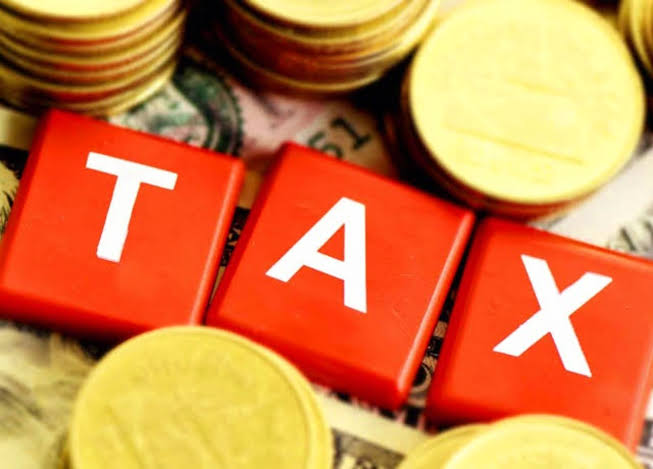


The Revenue Mobilisation, Allocation and Fiscal Commission (RMAFC) has strongly opposed President Bola Ahmed Tinubu’s contentious tax reform bill, which the National Assembly is currently considering.
In a comprehensive nine-page memorandum obtained by Economic Confidential, RMAFC outlined a range of legal, constitutional, and technical objections to the proposed legislation.
The document, signed by RMAFC Chairman Mohammed Bello Shehu, emphasized that Section 162(2) of the 1999 Constitution (as amended) grants the Commission the authority to determine the formula for equitable revenue sharing among the three tiers of government.
This mandate also includes ensuring that the formula reflects principles of fairness and justice.
“The Constitution designates RMAFC as the final authority on matters of revenue allocation,” the memorandum stated.
“As such, no Act of Parliament, including the VAT Act, can infringe upon this constitutional responsibility. Any such attempt would constitute a violation of the Constitution.”
RMAFC maintained that its role as the exclusive arbiter in developing fair revenue allocation formulas must be respected. Any deviation from its constitutional duties, it argued, could undermine the integrity of the Commission and compromise the principles of justice in revenue sharing.
In its submission, the Commission called for an approach to Value Added Tax (VAT) allocation that accounts for the unique nature of VAT as a consumption tax.
It proposed a formula developed by RMAFC that would ensure equitable distribution among federal, state, and local governments.
The memorandum outlined the following points:
1. Equitable Allocation Formula: VAT allocation and derivation should be based on a formula developed by RMAFC. This formula would consider VAT’s consumption-based nature, ensuring fairness in distribution.
2. Recognition of Consumption Patterns: The formula would factor in consumption rather than merely production or the location of company headquarters, ensuring balanced benefits.
3. Support for Weaker Economies: Special consideration would be given to states with weaker economies, promoting national cohesion and fairness across all tiers of government.
RMAFC concluded the memorandum with several recommendations.
It urges he federal government to empower the Commission to finalize a VAT allocation formula in line with its constitutional mandate, reinforcing Constitutional Mandates by ensuring that VAT allocation strictly follows RMAFC’s framework, not arbitrary provisions in the VAT Act or the proposed reform bill.
The memo urges dialogue among federal, state, and local governments to secure consensus on the RMAFC’s formula, thereby reducing tensions and ensuring acceptance.
The memo also cautions legislative or executive measures that undermine RMAFC’s authority and advocates implementing systems like electronic invoicing to tag VAT collections to end-user locations, enhancing transparency and accuracy.
The Commission warned that the proposed tax reform bill threatens national unity and constitutional harmony.
By adhering to its constitutional mandate, RMAFC believes it can provide an equitable solution to revenue allocation disputes while safeguarding the principles of fairness and justice.
PRNigeria reports that the Revenue Mobilisation, Allocation, and Fiscal Commission (RMAFC) is a constitutional empowered to ensure the equitable distribution of the country’s financial resources among the three tiers of government: the federal, state, and local governments.
It is mandated that the revenue allocation formula be reviewed to ensure equitable distribution among the three tiers of government to reflect fairness, justice, and equity, taking into account.
It is also empowered to monitor the accruals and disbursements from the Federation Account to ensure compliance with the revenue-sharing formula and advise the federal, state, and local governments on fiscal efficiency and revenue diversification.
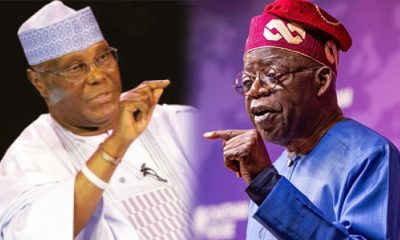







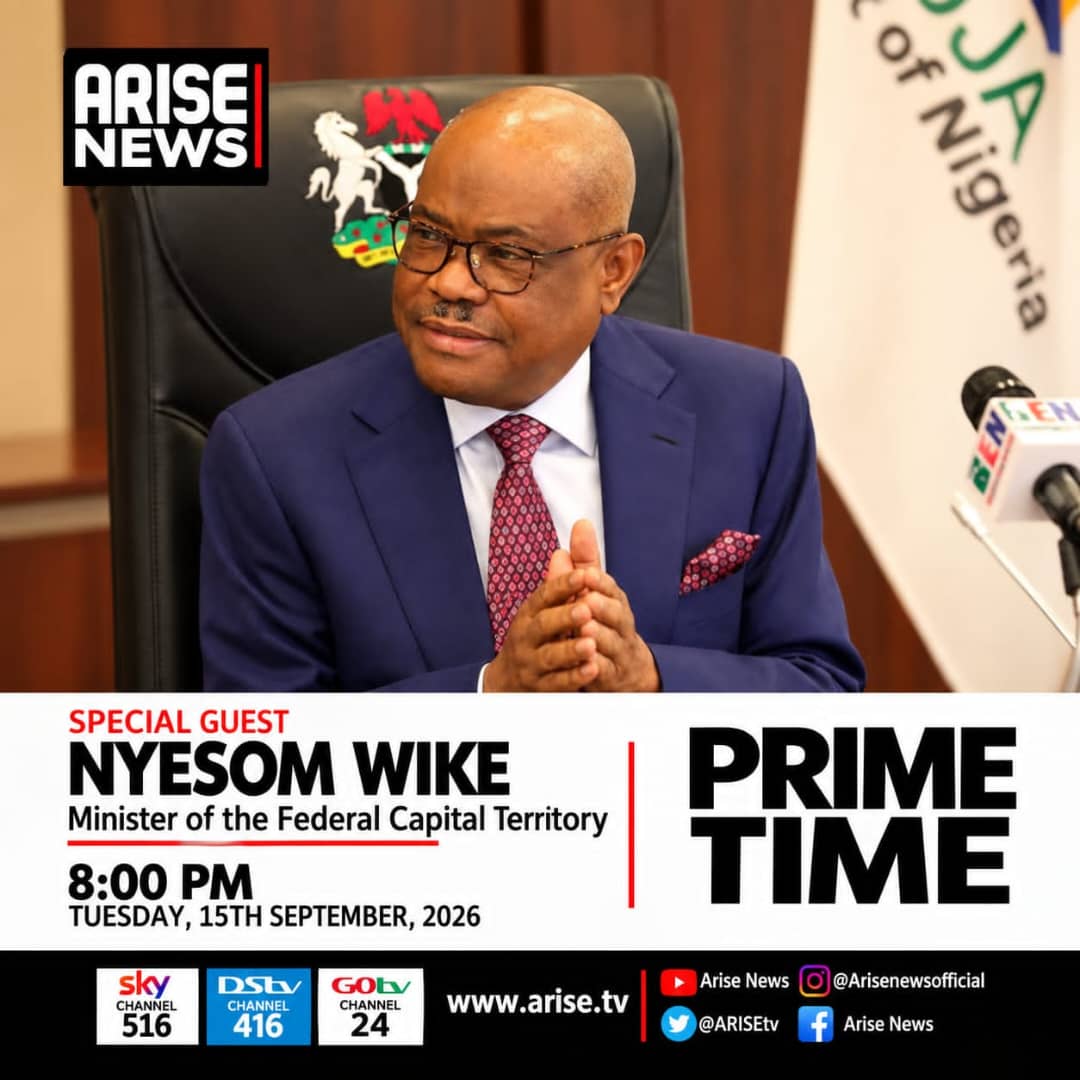
The Minister of the Federal Capital Territory (FCT), Barr. Nyesom Wike, has said President Bola Ahmed Tinubu is fully aware of his “Rainbow Coalition” and all his political activities.
Wike made the declaration on Tuesday night while speaking on Arise News Prime Time.
“There is nothing that I do that I don’t tell Mr. President,” he stated.
The FCT Minister said he was mobilizing support across party lines for the reelection of President Tinubu in 2027 under what he termed a “Rainbow Coalition.”
He has consistently maintained that his support is solely for the President, and not for the All Progressives Congress (APC), as a party.
Wike, a chieftain of the Peoples Democratic Party, (PDP), said his actions are not done in secret, stressing that the President is carried along at all times.
Wike also said he is not answerable to governors elected on the platform of the APC.
“I’m not answerable to APC governors.
“If people fail to learn from other people, they don’t grow. I took 31 days to commission projects in the FCT and they are not happy,” he added.
Turning to the Governor of Imo State, Hope Uzodimma, Wike said: “Hope Uzodimma should be lucky that I’m not in the APC. Hope fears for nothing.
“When I look at the APC governors who held the press conference, I see some people who are smart but politically lazy. Hope Uzodinma was the governor of Imo State, yet President Tinubu could not secure 10% of the votes there.
“Hope in his own state, Imo state, he was Governor. President Tinubu didn’t get 10% votes in the 2023 elections, but he took two senators and Labour Party took one senator. Is he saying Imo people were confused, or were they not confused?
“The governors of Osun, Anambra and Abia States are supporting the President reelection. Won’t they still support the candidates of their parties in other elections? So where is the confusion?”
Speaking about Rivers State, the Minister said; Becauseof our rainbow coalition, we no longer have Rivers of blood. There is no litigation on party candidates in Rivers State, unlike Imo State.”
When asked where else in the South-South the President can win, the Minister replied: “That can happen in Bayelsa State. The whole PDP there is working for the President. The founder of the NDC is not the founder of Bayelsa.”
“As I sit here today, I will tell you that the President will win in the FCT,” he added.

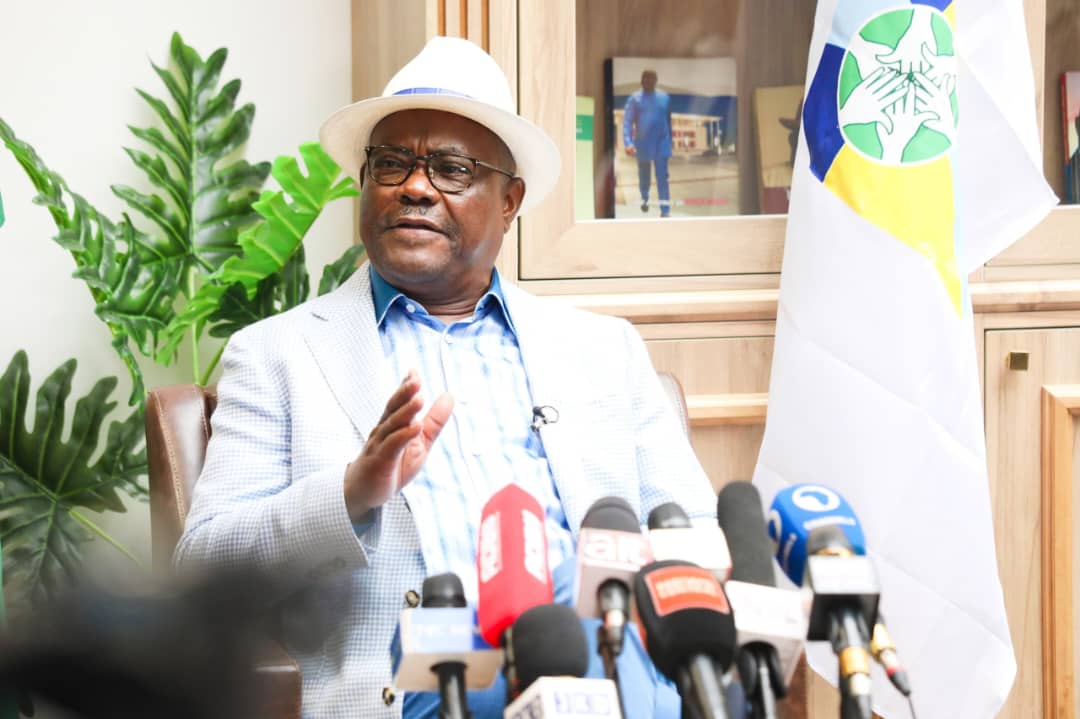
Federal Capital Territory FCT minister Nyesom Wike has said the Governor of Imo State, Hope Uzodinma and his cohorts are politically lazy.
Wike who is in Spain made this assertion during an ongoing interview with Arise tv.
He said all they said during a press briefing is neither here nor there.
He went memory lane saying, “Hope supported Ahmad Lawan during APC Presidential primaries and TInubu lost the election in his state.
Details shortly….
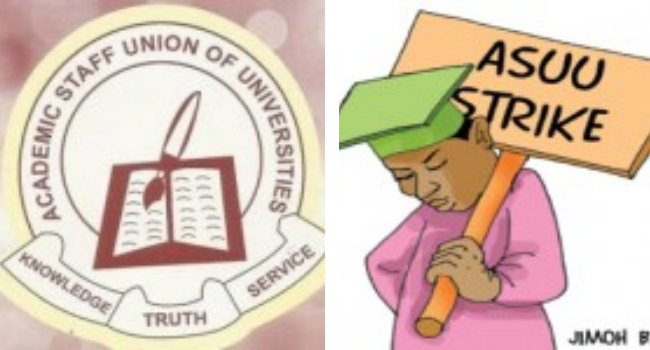
The Academic Staff Union of Universities (ASUU) has declared a total and indefinite strike across Lagos State-owned universities, citing the failure of the state government to implement key provisions of its 2025 agreement with the Federal Government.
The strike affects Lagos State University (LASU), Lagos State University of Education (LASUED), and Lagos State University of Science and Technology (LASUSTECH) and takes effect immediately.
ASUU’s Joint Campus Group covering the three institutions announced the industrial action in a statement on Tuesday, following the expiration of a 14-day ultimatum issued to the Lagos State Government on August 31.
According to the union, the ultimatum expired without a satisfactory resolution or a concrete commitment from the government to address its demands.
The union said its final warning on September 10 had made it clear that “silence is no longer an option,” but the government failed to initiate meaningful discussions before the September 13 deadline.
“ASUU Joint Campus Group comprising ASUU-LASU, ASUU-LASUED, and ASUU-LASUSTECH hereby declares a total, comprehensive, and indefinite strike action effective immediately,” the union said.
Why ASUU Is Striking
At the centre of the dispute is ASUU’s demand for the full domestication and implementation of the December 2025 agreement between the union and the Federal Government in all Lagos State-owned universities.
The union specifically demanded the implementation of provisions covering the Consolidated Academic Tools Allowance (CATA) as well as welfare protections for serving and retired academic staff.
ASUU said it arrived at the decision “with a heavy heart,” acknowledging that the strike could disrupt the academic calendar and affect students, parents and university administrators.
Addressing students, the union said the action was ultimately aimed at protecting the quality and sustainability of higher education in the state.
“This fight is fundamentally about preserving the quality and sustainability of your education,” it said, arguing that a demoralised academic workforce could not deliver the standard of education students deserved.
The union urged students to remain calm, peaceful and law-abiding while efforts continued to secure what it described as a lasting resolution.
It also acknowledged the concerns of parents and guardians over possible delays to their children’s education, saying its patience had “been tested and toyed with over the last eight months.”
Strike Not Against University Management
ASUU said the industrial action was not directed at the management of the three universities.
“This decision is by no means an adversarial action against your office,” the union said, urging the university administrations to understand the action as an effort to secure better working conditions for academic staff.
It commended the managements of LASU, LASUED and LASUSTECH for their efforts towards domesticating the agreement.
The union, however, accused the Lagos State Government of continued inaction and failure to implement agreements that it said had already been adopted by some neighbouring states.
National ASUU Backs Action
ASUU said the strike had the backing of its national leadership, which it said had supported the process from the initial correspondence to the university authorities, governing councils and the Visitor, through to the issuance of the 14-day ultimatum.
The union urged the Lagos State Government to follow the example of other state governors who had intervened to resolve similar disputes in their universities.
It also called on traditional rulers, religious leaders, alumni associations, civil society groups and other stakeholders to support its campaign for what it described as the rescue of education in Lagos State.
The strike, ASUU said, would remain in force until meaningful negotiations produce a satisfactory resolution and the Lagos State Government signs, domesticates and fully implemented.

Wike: Tinubu privy to my rainbow coalition, says I’m not answerable to APC governors

2027: Uzodinma and his cohorts are politically lazy- Wike

ASUU Shuts Down Lagos State Universities, Declares Indefinite Strike




-
 News17 hours ago
I’Ve Nothing To Hide, Nothing To Fear – Senator Buba On Banditry Allegations
-
 News17 hours ago
UCH Ibadan Emerges As Nigeria’s Top Health Institution In 2026
-

 Economy17 hours ago
Dangote Refinery IPO Rush Overwhelms Two Investment Sites
-

 News17 hours ago
I Don’t Want To Be Called The Richest Man In Africa — Dangote
-

 Entertainment17 hours ago
I Know I’ll Win — Carter Efe Challenges Wizkid To $1m Boxing Bout
-
 Metro17 hours ago
Kidnappers Abandon Victim, Flee At Police Checkpoint In Anambra
Warning: Undefined variable $user_ID in /home/naijuinz/public_html/wp-content/themes/zox-news/comments.php on line 49
You must be logged in to post a comment Login