Connect with us

News

Biden grants clemency to nearly 1,500 people, most ever in a day

Published

on

ADVERTISEMENT
Zoom Ad
ADVERTISEMENT
Zoom Ad

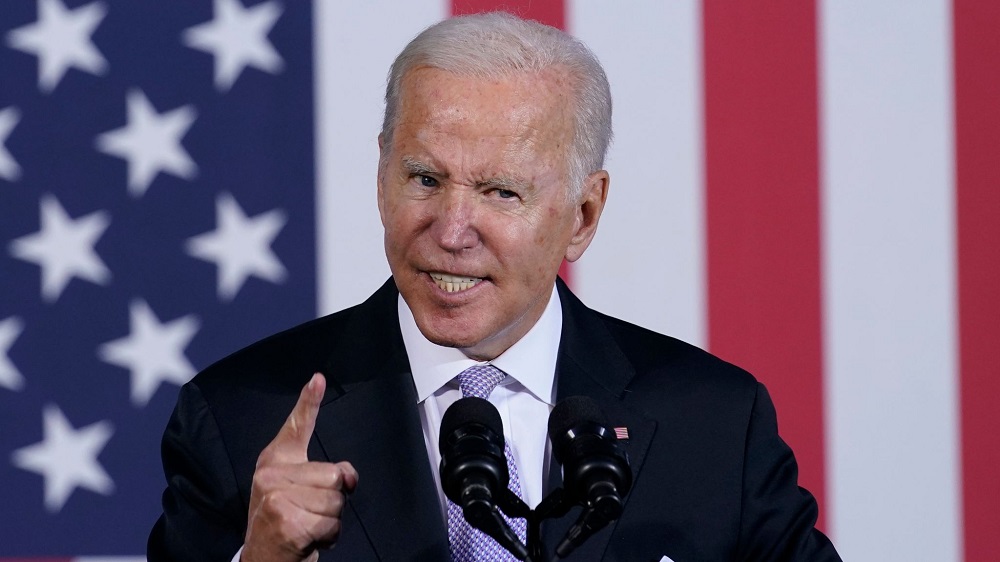
Outgoing President Joe Biden said Thursday he had commuted the sentences of nearly 1,500 people and pardoned 39 others, in what the White House called the largest single-day act of clemency in US history.


The move comes just over a week after the 82-year-old Biden pardoned his troubled son Hunter, something he had previously promised not to do, prompting anger from both sides of the political divide.

“America was built on the promise of possibility and second chances,” Biden said in a statement announcing the action. “As President, I have the great privilege of extending mercy to people who have demonstrated remorse and rehabilitation.”

Democrat Biden — who hands over power to Republican Donald Trump on January 20 — is following in the footsteps of many lame-duck presidents who have issued a flurry of acts of clemency in their final days in the Oval Office.

Advertisement

All of the 1,499 people — “the most ever in a single day” — whose sentences were commuted were placed on home confinement during the Covid-19 pandemic, the White House said.

Biden said they had all “successfully reintegrated into their families and communities and have shown that they deserve a second chance.”

The 39 pardons were all for what the White House called a “non-violent offense” or a “non-violent drug offense.”

Those getting relief from the president on Thursday included a “decorated military veteran and pilot who spends much of his time helping his fellow church members.”

Advertisement

A nurse “who has led emergency response for several natural disasters” and an addiction counsellor “who volunteers his time” were also singled out for relief.

“I will take more steps in the weeks ahead,” Biden said.

– ‘Retribution’ –

But Biden has already sparked outrage among both Republican rivals and Democratic allies alike with the pardon of his son Hunter, 54, on December 1.

Advertisement

Hunter Biden pleaded guilty in a tax evasion trial in September and was facing up to 17 years in prison, and had separately been convicted of federal gun charges, for which he was facing 25 years in prison.

When pardoning him, Biden said that Hunter had been “singled out” because of his surname and that “raw politics” had infected the process of justice — a nod to his Republican foes.

Biden has meanwhile reportedly been debating whether to issue blanket pardons for some allies and former officials amid fears they could be targeted for what Trump has previously called “retribution.”

“I’m not going to get into the President’s thinking,” White House Press Secretary Karine Jean-Pierre told a briefing when asked about the possibility of such preemptive pardons.

Advertisement

“He’s going to have conversations with his team, he’s going to review clemency petitions, he’s going to review options on the table, and so that’s where I’m going to leave it.”

The spokeswoman also refused to comment on calls for clemency for people on the US federal death row.

Biden’s controversial pardon of his son followed in the footsteps of his predecessors, who also gave reprieves on their way out the door to family and well-connected allies.

Bill Clinton, for example, granted a pardon on his last day in office to his half-brother Roger, who had served time in prison on drug charges.

Advertisement

Trump pardoned his son-in-law’s wealthy father, Charles Kushner — whom he has now nominated as US ambassador to France.

Trump meanwhile has vowed to pardon at least some if not all of the rioters jailed for storming the US Capitol on January 6, 2021, to protest his defeat by Biden in the 2020 election.

In an interview with Time magazine marking the second time he has received its “Person of the Year” award, Trump said he would start “in the first hour that I get into office.”

“A vast majority of them should not be in jail, and they’ve suffered gravely,” he said, while adding that he would look at each case individually.

Advertisement

News

Just in: Police finally handover 16-year-old Jennifer to parents after alleged forced conversion to Islam

Published

on

ADVERTISEMENT
Zoom Ad
ADVERTISEMENT
Zoom Ad

The Bauchi State Police Command has released 16-year-old Jennifer Joseph, a Christian teenager from Adamawa State, to her parents following weeks of controversy over her custody and disputed religious identity.

Jennifer was released to her parents on Monday after extensive deliberations at the Bauchi State Police Command, SaharaReporters has learnt.

The development followed sustained public attention and extensive reporting by SaharaReporters on the circumstances surrounding the teenager, who became the centre of a dispute involving her parents, the Bishara Dole Christian Ministry and an Islamic Da’awah group in Bauchi.

Reverend Mohammed Mohammed of The Gospel of Christ Must Be Preach International Ministry, popularly known as Bishara Dole, confirmed Jennifer’s release to SaharaReporters on Tuesday.

Advertisement

Mohammed, however, disclosed that the police had detained Rev. Badamasi, a staff member of the Bishara Dole ministry, over an allegation that he molested Jennifer while transporting her from her family home in Adamawa State to the ministry in Bauchi.

He described the allegation as unfounded and “laughable,” while insisting that the matter should be investigated properly.

Jennifer’s release comes after a series of controversial developments that had left her parents stranded in Bauchi while seeking to regain custody of their daughter.

The latest development has now introduced another layer to the controversy following the detention of Rev. Badamasi.

Advertisement

According to Reverend Mohammed, the Bishara Dole staff member was detained over an allegation that he molested Jennifer while accompanying her from Adamawa to Bauchi in a commercial bus.

Mohammed rejected the allegation, describing it as “laughable” and insisting that the ministry would not be deterred by what he considered attempts to discredit its members.

SaharaReporters could not independently establish the circumstances surrounding Badamasi’s detention or the allegation against him.

The development is also significant because earlier reports had documented claims by Bishara Dole that allegations of child molestation had been made against the ministry as part of what Mohammed described as an attempt to discredit the Christian organisation.

Advertisement

The ministry had called for an independent investigation into all allegations rather than allowing competing religious interests to determine Jennifer’s custody.

With Jennifer now released to her parents, attention is expected to shift to the circumstances surrounding the teenager’s custody, the competing claims over her religious identity and the allegations that emerged during the dispute.

Continue Reading

News

To be defeated, drug barons must lose their wealth, Marwa declares at Cambridge

Published

on

ADVERTISEMENT
Zoom Ad
ADVERTISEMENT
Zoom Ad

. Tells global audience of experts how NDLEA uses asset recovery strategy in fight against drug trafficking

The Chairman/Chief Executive of the National Drug Law Enforcement Agency (NDLEA), Brig. Gen. Mohamed Buba Marwa (Rtd), has told an international gathering of judges, law enforcement chiefs, financial intelligence experts and academics that the war against drug trafficking cannot be won by arrests alone, but must be matched by an equally aggressive pursuit of the proceeds of crime.
Marwa made this declaration while delivering a presentation titled “Criminal Property and the Criminal Process: How Can We Make It More Effective?” at the ongoing 43rd Cambridge International Symposium on Economic Crime, organised by the Centre for Geopolitics, University of Cambridge, United Kingdom.

According to him, the effectiveness of the criminal process should not be measured only by the number of convictions secured. It should also be measured by whether crime is made unprofitable. A trafficker who loses his liberty but retains his fortune has not truly been defeated. His wealth can finance another operation, support his associates and sustain the criminal enterprise.

“The ultimate objective must therefore be to deny criminals the proceeds of their crime, promptly, and lawfully while preserving the value of the property. Nigeria, through the National Drug Law Enforcement Agency, will continue to strengthen this approach.”

Advertisement

Addressing the session chaired by the Honourable Judge Wendy Tien, the NDLEA boss said arresting a trafficker without dismantling his fortune was like “pruning a weed at the stem while leaving its roots undisturbed,” warning that such wealth simply resurfaces “under a different name, through a different front company, in a different jurisdiction.”
He outlined six practical strategies the NDLEA has deployed to strengthen asset recovery, anchored on the National Drug Law Enforcement Agency Act 2004, the Proceeds of Crime (Recovery and Management) Act 2022, and the Money Laundering (Prevention and Prohibition) Act 2022.

He cited the forfeiture of the Hook Hotel, a property linked to a fugitive drug suspect, which was recovered through non-conviction-based forfeiture and sold for $4.2 million, with proceeds paid into the Federal Government’s forfeited assets account domiciled with the Central Bank of Nigeria; proof, he said, that a fugitive “cannot simply outrun the process and retain the benefit of his crime.”
Marwa also disclosed that NDLEA investigators and prosecutors are now embedded together from the inception of cases, a reform that has shortened the interval between arrest and the securing of restraint orders. He revealed that last month alone, the Agency froze bank accounts worth over $7 million and secured interim forfeiture orders covering multibillion-naira assets, including filling stations, multi-storey buildings and exotic vehicles linked to a fugitive methamphetamine syndicate.

On the landmark case of Nigerian billionaire and suspected drug baron Amadi Simon, arrested in Switzerland through a joint operation involving NDLEA, the U.S. Drug Enforcement Administration (DEA), and authorities in Switzerland, Greece and France, Marwa explained that three hotels linked to the suspect were placed under professional asset managers rather than shut down, to preserve their value as going concerns pending the outcome of trial.

He further highlighted the Agency’s use of provisions on unexplained wealth and living beyond one’s legitimate means as a powerful investigative trigger, and the interlocutory sale of perishable and depreciating assets to protect their value ahead of final judgment.
He noted that these efforts have now been institutionalised within Nigeria’s National Drug Control Master Plan 2026–2030, ensuring that financial disruption of drug cartels remains a sustained national priority rather than a series of isolated cases.
Distilling these experiences into three guiding principles: speed over sequence, preservation of value, and institutionalization, Marwa acknowledged that challenges remain, particularly around delays in mutual legal assistance, limited forensic accounting capacity, and the need to balance the rights of accused persons with the State’s duty to preserve assets pending trial. He called for faster international cooperation mechanisms and stronger cross-border recognition of non-conviction-based forfeiture orders.
He thanked the Centre for Geopolitics, the organisers of the Symposium, and Judge Tien for the platform, and reaffirmed NDLEA’s readiness to deepen partnerships with jurisdictions and institutions committed to dismantling the financial architecture of drug trafficking.

Advertisement
Continue Reading

News

Sad! Catholic Priest Commits Su!cide Over Transfer To Another Parish

Published

on

ADVERTISEMENT
Zoom Ad
ADVERTISEMENT
Zoom Ad

In Italy, a 75-year-old Roman Catholic priest took his own life after it was announced that he will be transferred from the parish where he had served for nearly 25 years.

On August 12, the body of 75-year-old Catholic priest Lino Zatelli was found in the Italian city of Trento.

Shortly before his de@th, he had learned of his transfer from the parish where he had served for nearly 25 years, reports Tribune Chrétienne.

That morning, the priest was supposed to celebrate Mass at the Church of San Carlo Borromeo, but he did not appear for the service. The sacristan then went to his home and discovered his body.

Advertisement

Shortly before the tragedy, Zatelli was informed that, as part of a diocesan reorganization, he was required to leave the parish to which he had devoted nearly a quarter of a century.

The priest was deeply distressed by this decision and openly told his parishioners: “I never asked to leave.”

A campaign was even organized to demand he stay at San Carlo, with a petition gathering several hundred signatures.

This tragedy also raises the question of the loneliness and suffering of elederly priests, in Italy as well as in France.

Advertisement

Catholic authors note that for a clergyman, leaving a parish after decades of service means not merely a change of ministry but a break the community that had actually become his family and primary social circle.

At the same time, the authors of the publication emphasize that it is impossible to definitively establish the transfer as the direct cause of the su!cide.

The tragedy has, however, once again drawn attention to the issues of isolation, emotional exhaustion, and lack of support among Catholic clergy.

Advertisement
Continue Reading

Trending

Copyright © 2024 Naija Blitz News