Connect with us

News

Former NHIS Boss Usman Yusuf criticizes Tinubu , Writes From Kuje Prison, Says He’s In VIP Section

Published

on

ADVERTISEMENT
Zoom Ad
ADVERTISEMENT
Zoom Ad

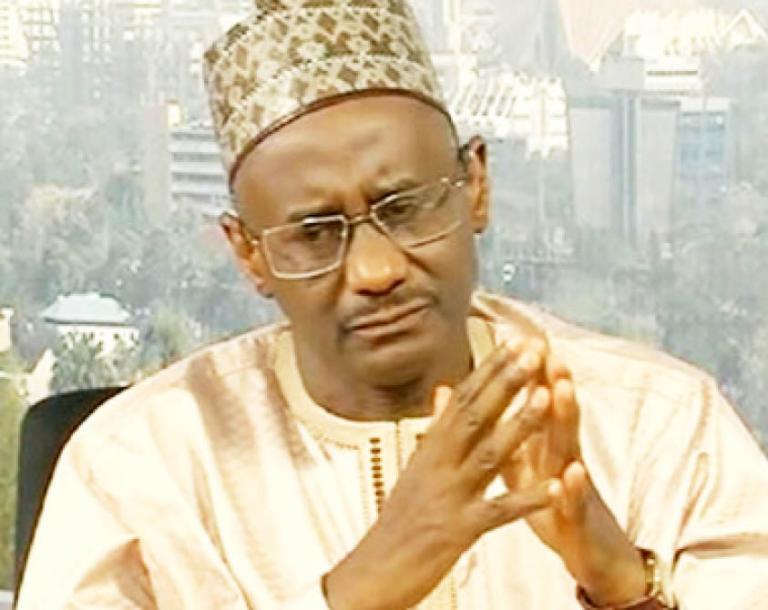
Professor Usman Yusuf, the former Executive Secretary of the National Health Insurance Scheme (NHIS), has expressed his heartfelt thanks to individuals who have demonstrated support and concern in light of his ongoing challenges.


Currently detained on allegations of fraud amounting to N90 million, Yusuf shared this information in a statement issued on Wednesday afternoon.

A hematologist and expert in bone marrow transplantation, he noted that he is being held in the VIP area of the prison.

Appointed by President Muhammadu Buhari in 2016, Yusuf’s tenure was marked by several suspensions and investigations.

Advertisement

Yusuf’s statement comes after he was remanded in Kuje Prison for alleged fraud, including the unauthorised payment of N6.8 billion to himself and staff.

Calling on all well-meaning Nigerians to resist what he described as dangerous traits reminiscent of the dark days of military rule in Nigeria, he recounted how he was trailed after speaking at the maiden summit of Tafiyar Matasan Arewa, a Northern Youth Movement with branches in all 19 Northern states, which he chaired in Bauchi.

He stated that the summit, themed “The Role of Youths in Nation-Building,” held on Saturday, January 25, 2025, triggered his arrest.

“Most speakers spoke in Hausa, but I communicated in both Hausa and English to reach a wider audience. I called on the youths to wake up and take their destinies in their hands because nations are built by the youths, not the aged,” he said.

Advertisement

He outlined the 10 key points he addressed, considering the economic situation in the country under President Bola Tinubu’s administration.

Here is his full account:

1. Northern Nigeria has only itself to blame for the hardships this government is inflicting on its people, despite contributing 62% of the votes to its election victory.

2. The Muslim-Muslim ticket of the ruling Party APC in the 2023 Presidential elections was an electoral scam that has done nothing but deceived people and widened the fissure between Muslims and Christians in the region.

Advertisement

3. There has been a premeditated plan to divide peoples of the north with insecurity (Boko Haram, Banditry, Lakurawa, etc.), inter-ethnic strife between Hausas and Fulanis in the Northwest and Fulanis and other ethnic groups in the rest of the region. Religious divide and suspicions have been exacerbated by the ruling party’s Muslim-Muslim ticket.

4. Pervasive insecurity has devastated the region and destroyed its social fabric making it poorer, hungrier and very dangerous.

5. Systemic Balkanisation and bastardisation of the region’s respected traditional institutions, as in Kano and Adamawa states.

6. Corruption and manipulation of some Clerics in the region by the government for them to pacify the suffering masses.

Advertisement

7. This government is now sponsoring its Hausa political singers to sing songs that fan embers of hatred and enmity between the peoples of northern Nigeria and their brethren in Niger Republic.

8. Deterioration of the relationship between Nigeria and Niger Republic and the exit of Mali, Burkina Faso and Niger from the ECOWAS are bad news for the security and socio-economic wellbeing of Nigeria and northern Nigeria in particular.

9. President Tinubu’s romance with France is a big concern for the security of Nigeria and the West African subregion and a harbinger of bad things to come.

10. This Government needs to review and reverse its economic policies that are causing unbearable hardships for citizens.

Advertisement

Finally, I called upon Northern youths to remain united, shun all acts of violence and criminality, engage positively in the political process, and resist any person or group trying to use religion or ethnicity to divide the people of the region. The event received very wide press coverage.

In the evening after the event when I returned to my hotel accommodation, I noticed some strange people in the lobby, hallway, and restaurant that I immediately knew were security agents stalking me.

Abduction and detention for 6 days at the EFCC: From Wed. 29 Jan. to Mon. 3 Feb. 2025

On Wednesday, 29 January 2025, at around 6:30pm, as I was preparing to break my fast, my wife came upstairs to inform me that two gentlemen in black suits knocked at the door and came inside the house, saying I knew they were coming. I came downstairs in my Jallabiyya (robe), no cap, with bathroom slippers to meet these gentlemen who introduced themselves as operatives of the Economic and Financial Crimes Commission (EFCC) directed to take me to their headquarters.

Advertisement

I asked them for their badges, which they showed me with an apology for the oversight. I asked for an arrest warrant and they told me that they did not need one. I also asked why I was not sent any formal invitation letter before this intrusive visit. I then asked to be allowed to go upstairs to change but was physically blocked by these operatives. I also asked for my wife to be allowed to go upstairs and bring me a change of clothing, but they refused to allow that.

On stepping outside the house, there were 5 armed mobile policemen, some deployed to the back of my house, presumably to prevent me from escaping through the back door or window. The engine of the bus they came in was left running with the driver sitting inside.

In the heat of argument, my wife got into a shouting match with the lead operative, which made her say a few unpleasant words that provoked him and the rest of his team.

My 14-year-old daughter was understandably very shaken by this act of state terror. I shouted out some words of consolation to her because I was blocked from going close to hug and talk to her. I asked my wife to call my brothers and Lawyers to let them know.

Advertisement

The lead operative angrily seized my phone from my hand and literally bundled me onto the bus seating me between him and an armed mobile policeman.

The driver then zoomed off, driving crazily, sometimes against the flow of traffic to the EFCC headquarters. All the dark-suited operatives and the five armed mobile policemen in the bus were gleefully high-fiving themselves as if they had captured Kachalla Bello Turji, the notorious Zamfara bandit kingpin.

Let us be clear, the main purpose of these cowardly Gestapo tactics by the EFCC was to use the instrument of state to intimidate and terrorise my family. As for me, I was not the least impressed or intimidated by this shameful act of state terror.

On arriving at the EFCC, the five armed mobile policemen were dismissed with a part on the back for a job well done while I was escorted by the dark-suited operatives upstairs to the office of head of Procurement Fraud Section (PFS) to whom I introduced myself and asked why he sent his operatives to abduct me from my house to his office. He just handed me a bunch of papers he said were my charges asking me to sign, which I did after some back and forth.

Advertisement

I asked him for a bottle of water to break my fast, which he obliged, and to be allowed to call my wife. Unfortunately, my phone battery had run down. I was refused a phone call to tell my wife and daughter where and how I was.

After signing and collecting a copy of the charges against me, the boss PFS who seemed in a rush to close for the day, asked his assistant to take his bag downstairs to his car as if I was the last item on his to-do list for the day.

No one told me why I was abducted, whether or not I was going to be detained, when I would be allowed access to my family and Lawyers, or when I would be arraigned in court to answer the charges labelled against me.

I was then taken on foot around the main building to the detention cells. After being processed, I asked to be allowed to say my evening prayers (Maghrib and Isha), after which I was taken to my cell, which I shared with three other detainees.

Advertisement

Many of the detainees, especially the youths, recognised me and came over to greet and offer their prayers and best wishes. My three cellmates accorded me all the courtesy and respect befitting my grey hairs. They gave me a sachet of pure water and a cup of hot tea, which helped ease my headache resulting from caffeine withdrawal and hunger from 20 hours of fasting.

Detainees sleep on thin mattresses that touch each other on a bare floor. My cellmates offered me the privileged position of being next to the wall.

It was now 11 p.m., the lights were turned off, and the cell doors locked with keys from outside. I laid down in the dark, pained that I had not spoken with my wife and daughter to tell them where and how I was doing.

Soon after the lights went out, one of my cellmates started snoring loudly, ordinarily, this would have kept me awake, but I fell asleep until awoken by the metallic clanging sound of the cell guards opening the cells for morning prayers at 5am. We came out to say our prayers in a small recess on the corridor.

Advertisement

My name was called out at 7am on Thursday, 30 January 2025, and told to get ready to be taken to court at 8am. On coming out of the building housing the detention cells with my interrogation officer (IO), a photographer of the media unit of the EFCC was strategically stationed to be taking my pictures unshaven, in bathroom slippers, no cap and in the same clothing that I was abducted from my house the evening before.

It was then very obvious to me that one of the directives to the EFCC was to publicly humiliate, dehumanise and weaken my spirit in addition to smearing my reputation and integrity with frivolous made-up charges.

When I got into the bus, I jokingly told the operatives that they had forgotten to put on hands and legs cuffs and chains on me. They busted out laughing saying, “Haba Oga, e no reach dat level”.

The Judge adjourned the date of my arraignment to Monday, 3 February 2025, because lawyers of the EFCC were not prepared, which meant four more days of detention in EFCC’s cell for me.

Advertisement

On arriving back at the EFCC, my wife was waiting with a fresh change of clothing and a home-cooked meal; the last time I had anything to eat was about 40 hours ago.

I gently reminded her that our fight is not with the EFCC or its operatives but with President Bola Ahmed Tinubu’s corrupt and tyrannical government. I convinced her to come upstairs with me for her to apologize to the operative she got into a shouting match with when they came to our house to abduct me the night before. Her apology worked magic because it got me an upgrade from the cell I shared with three other detainees to a single cell all to myself.

The boredom of detention was eased by visits from family and friends, taking walks on the long corridor of the cells, reading the Qur’an, getting enough rest and mentally tuning out of the hustle and bustle of the outside world, I felt the comforting warmth of an inner peace and calmness that I had never experienced in my life.

On the day of my arraignment on Monday, 3 February 2025, the Court was packed full with Lawyers, youth organisations and activists. After my arraignment, the Judge ordered that I should be remanded in Kuje Prison until 12 February 2025, when she could hear my lawyers’ bail application.

Advertisement

This ended my six days of detention in the EFCC and the beginning of nine days of incarceration in Kuje Prison. I was promptly taken to the prison by EFCC operatives in their bus and handed over to the Nigerian Correctional Service.

First 9 days of incarceration in Kuje Prison: From Mon. 3 to Wed 12 Feb. 2025

The name Kuje Prison from the outside, feels like going to the dark beyond. My experience from the first day I got in to the day I exited was anything but. I found the staff of the Nigerian Correctional Service in Kuje to be compassionate, courteous, supportive and very professional in the conduct of their duties. They treated the inmates, majority of whom are youths, as humans with the utmost of respect, support and understanding.

I was processed and taken to my new home, called the segregation unit, which houses VIP inmates. Although the setting is relaxed with some few privileges, one is constantly reminded of the loss of his freedom by round the clock presence of guards, CCTVs in the hallway and the courtyard that are monitored both within the Prison and remotely at the headquarters and the fact that the guards locked the door to each cell from the outside each day at 8pm and opened next day at 7am which is 11 hours locked up in a hot cell measuring about 10 by 6 feet with only one window.

Advertisement

The 13 hours of freedom within the Prison yard are invaluable. One could freely walk to the mosque on the other side of the Prison for Zuhr and Asr, the only 2 prayers that are done in a congregation in the mosque because prisoner cells are locked from 6pm to 9am.

Kuje Prison brought back memories of my boarding school days with the prisoners policing themselves. Each prisoner knows his assigned job the moment they are let out of their cells in the morning. The yard is kept very clean and the relationship between wardens and the prisoners is that of mutual respect.

The prisoners seemed aware of happenings on the outside. Many of them would come to me to offer words of support. As soon as they found out who I was, I kept getting requests to meet with various individuals and groups who wanted me to advocate for them when I get out, they seemed to have forgotten that I also had my own wahala,

I sat down with and heard from young men accused or convicted of being Boko Haram, bandits, IPOB, Shiites protesters, armed robbers, drug traffickers, murderers, rapists, lifers, 419ers, the list of alleged crimes goes on and on. I also went to the Prison clinic to meet with the staff and patients. I visited the kitchen where prisons did the cooking. I went to and talked to prisoners in the skills acquisition workshops, the small sparsely stocked library and the Nigerian Open University building. I didn’t enter the cells of the inmates but watched them play football matches.

Advertisement

It was very sad to see our youths in the prime of their lives wasting away. What was very painful to hear was the stories of many prisoners awaiting trial some for over 10 years. Kuje Prison with an original capacity of 560 inmates, now holds 960 with 198 (21%) convicted while 765 (79%) awaiting trial.

I considered my spending time in Kuje Prison as a blessing and an education I would never have gotten from any classroom. It was a privilege to hear and see the sufferings, trials and tribulations of these young men. I promised to do my part when I get out to reach officials and agencies that can help make things better.

15 more days of incarceration in Kuje Prison: Wed. 12 Feb. to Thurs. 27 Feb. 2025

We returned to Court today Wednesday 12 February 2025 for the Judge to hear my lawyers’ bail application. The Judge promptly adjourned to Thursday 27 February 2025 to give her ruling whether to grant me bail or not. I was taken back to the Prison to spend 15 more days.

Advertisement

Credit: Sahara Reporters

News

Alleged N400m Contract Scam: Reps Summon FRSC Chief as Businessman Recounts Ordeal Before Committee

Published

on

ADVERTISEMENT
Zoom Ad
ADVERTISEMENT
Zoom Ad

…committee to meet alleged PFIPC DG in police custody over ongoing probe

By Gloria Ikibah

The House of Representatives Ad-hoc Committee investigating the alleged establishment and operations of the Presidential Foreign Investment Promotion Council (PFIPC) on Tuesday heard emotional testimony from a businessman who claimed he lost N400 million after allegedly being deceived into believing he had secured a Federal Government contract.

The committee also summoned the Corps Marshal of the Federal Road Safety Corps (FRSC) to explain how vehicles allegedly linked to the controversial organisation obtained official Federal Government number plates, while announcing plans to question the alleged Director-General of the council, Prince Adeniyi Adeyemi, who is currently in police custody.

Advertisement

Appearing before the panel chaired by Rep. Yusuf Gagdi,  Managing Director of Divine Dopacy Nigeria Limited, Gbenga Collins, narrated how his long-standing acquaintance with Adeyemi and what appeared to be the trappings of government office convinced him that the council was a genuine federal institution.

Collins told lawmakers that he first met Adeyemi in Ogbomoso, Oyo State, during a community event in December 2024 before being invited to Abuja a few weeks later to discuss what was presented as a business opportunity.

According to him, an official vehicle bearing Federal Government registration plates picked him up from the airport and drove him to an office at the Federal Secretariat.

“When I arrived at the airport, he sent an official car to come and pick me from the airport to his office at the Federal Secretariat, Abuja.

Advertisement

“When I got to his office, I met him there. He is a well-known man in Ogbomoso. I met a lot of people, very big dignitaries in his office, and I met a group of security officers guarding the office”, he said.

He said the experience left him with little reason to doubt Adeyemi’s claims that he was the Director-General of both the Presidential Economic Advisory Council (PEAC) and  Presidential Foreign Investment Promotion Council.

Collins said Adeyemi later informed him that he wanted to renovate and furnish what he described as the official residence allocated to him as Director-General and asked whether his company could execute the project.

“I saw police officers with him. That was my first time of coming to Abuja because I’m not familiar with Abuja very well. He sent his official car to pick me from the airport. It had a Federal Government registration number attached to the Lexus SUV.

Advertisement

“He told me that he wanted to do refurbishment and renovation of the official house assigned to him as the DG of that agency and asked whether I would be able to handle the contract.

“He took me to the house to show me the property because I slept in Abuja. We went there the following day with his staff. We went with more than four, five or six vehicles with security. They opened the house and took us round, showing me what they wanted to do”, he added.

Although he could not identify the exact location of the property because he was unfamiliar with Abuja, Collins said he still retained photographs of the building.

He further told the committee that discussions continued until April 2025 when he returned to Abuja and was allegedly handed a contract award letter, scope of work and an agreement between his company and the purported agency.

Advertisement

According to Collins, Adeyemi insisted that he would have to provide N400 million to demonstrate his company’s financial capacity and facilitate mobilisation for the project.

“He gave me the contract award letter, the scope of work and the agreement with my company to execute the refurbishment project.

“I had to pay N400 million for the facilitation of that project to show my strength that I would be able to handle the project. At the same time, he said it would fast-track the mobilisation for the contract”, he disclosed.

He explained that he sourced the money from business associates who trusted his judgement because he had personally visited what appeared to be a functioning government office.

Advertisement

“When I was paying the money, I kept telling him that I collected the money from my colleagues who were doing business with me.

“I was the one who told them I had gone to this man’s office, so I believed it was going to be a great opportunity for us. That was why people started giving me the money”, he said.

Collins further revealed that the money was paid in five instalments between May and July 2025, with N380 million allegedly transferred into a Guaranty Trust Bank account belonging to World Entrepreneurs Limited, while the remaining N20 million was paid into an Access Bank account operated by Sunshine Confectionery and Catering Services.

He said Adeyemi repeatedly assured him that mobilisation will begin in August 2025 but later blamed delays on security concerns before promising payment in November.

Advertisement

“When I finished the payment, he said they were going to do the mobilisation by August.

“I continued calling him. He kept managing me, telling me they were handling security issues and that they would pay in November”, he said.

When nothing happened, Collins said he sought legal advice and was informed that he had allegedly fallen victim to a scam.

“My lawyer was the first person who told me that I had been scammed”, he stated.

Advertisement

He told lawmakers that his lawyer petitioned the Economic and Financial Crimes Commission (EFCC) on November 13, 2025, and that he formally adopted the petition six days later.

“The petition was written on the 13th and I was invited to adopt it on the 19th”, he added.

According to him, EFCC investigators later informed him that Adeyemi repeatedly failed to honour invitations, citing ill health through his legal representatives.

“Since then, the EFCC has been trying to invite him. I think he has been sending his lawyer. According to the Investigating Police Officer handling the case, his lawyer kept saying he would appear.

Advertisement

“Since then, I have not heard anything further, but they are on top of the matter. The EFCC will be in the best position to handle the rest”, he noted.

An emotional Collins appealed to the committee to help him recover from the financial setback, saying the incident had devastated both his business and personal finances.

“I just want to beg the Chairman and the honourable members to help me talk to all the agencies involved because I have been frustrated.

“Especially by those people who gave me the money. I have started selling my property. My business is not going well again”, he pleaded.

Advertisement

He insisted that everything he encountered in Abuja suggested he was dealing with a genuine government institution.

“I did all this based on trust. When I went to his office, I met a lot of big dignitaries there, people waiting to see him and people he was discussing contracts with. I also did it because he is from my hometown”, he said.

Responding to questions from lawmakers, Collins denied that the money was a bribe, maintaining that he was told it was a condition for facilitating the contract and securing mobilisation.

He, however, admitted that he did not go through any formal procurement process before accepting the purported contract.

Advertisement

“What I just have to say is to beg the committee, or to implore the committee, to please, in all their capacity, whatever they can use to assist me with the police that are investigating him.

“Because I was invited to the Cybercrime office. He said the same thing, that he did not deny collecting the N400 million”, he revealed.

The testimony prompted members of the committee to question how vehicles linked to the alleged council came to bear official Federal Government registration plates.

Consequently, the committee summoned the FRSC Corps Marshal to appear before it on Thursday to explain the procedures for issuing official government number plates and clarify how the vehicles in question were registered.

Advertisement

Addressing journalists after the session, Committee Chairman Rep. Gagdi explained that the committee had not ignored calls to invite Adeyemi but was constrained by an existing court order keeping him in police custody.

He emphasised that the National Assembly will respect the constitutional separation of powers and will not interfere with ongoing judicial proceedings.

“For the benefit of the general public, we are not refusing to invite Prince Adeniyi here. We have pronounced him to appear here and police have responded that he is in their custody based on the court order.

“As an arm of government, we respect the principle of federalism and separation of powers. We respect the powers of the judiciary, the executive and we equally limit ourselves within our own powers.

Advertisement

“We do not have the power as the National Assembly to vacate an existing court order and say that somebody who is in the custody of the Nigerian Police should leave the police to appear before the National Assembly”, he stated.

Gagdi disclosed that the committee will instead meet Adeyemi privately at an undisclosed time and location to avoid jeopardising ongoing investigations by the EFCC,  Independent Corrupt Practices and Other Related Offences Commission (ICPC) and other security agencies.

He maintained that the committee’s priority was to establish the facts surrounding the alleged activities of the organisation.

“We will not announce to the general public when we will interact with Prince Adeniyi. We will not, because the ICPC are investigating this matter. EFCC are investigating this matter. Part of this matter is before the court of law and many other agencies.

Advertisement

“To say that we will put the suspect under direct camera and interact with him the way we are interacting with everyone here will definitely undermine the ongoing investigation by the EFCC and ICPC.

“In view of that, we are meeting him on an unannounced date and at an unannounced time. We will meet him with a camera that will exonerate members of the committee on our interaction with him.

“Just as you came here with your lawyer, we will inform the police whenever we are going to meet him and, as directed by the court, it will be in the presence of his lawyers.

“Whether he appears before this committee or this committee appears before him, the most important thing is to have an interaction with him to get some things clarified. And we are going to do just that”, he assured.

Advertisement

Gagdi added that the committee will continue its public hearing on Thursday before concluding its work and presenting a comprehensive report to the House of Representatives.

The committee is investigating the circumstances surrounding the alleged establishment and activities of the Presidential Foreign Investment Promotion Council, including allegations of forgery, impersonation, financial impropriety and abuse of public institutions.

Continue Reading

News

Out of 573,680 applicants only 3,852 selected as Customs releases final 2024/2025 recruitment list

Published

on

ADVERTISEMENT
Zoom Ad
ADVERTISEMENT
Zoom Ad

The Nigerian Customs Service (NCS) has announced the release of the final list of successful candidates for its 2024/2025 recruitment exercise, saying only 3,852 candidates were selected out of 573,680 applications received.

According to the Comptroller General of the Service, Adewale Adeniyi, during a briefing on Tuesday, the list covers the Superintendent, Inspectorate and Customs Assistant cadres, with all 36 states and the FCT represented.

He apologised for the delay and announced that Customs will now conduct recruitment annually, stating that the next exercise will begin later this year.

According to Adeniyi, the process was thorough, fair and free, urging applicants to report anyone demanding payment.

Advertisement

“I am pleased to announce the release of the final list of successful candidates in the 2024/2025 Recruitment Exercise of the Nigeria Customs Service. A total of 3,852 candidates have been offered places across the three cadres of entry: 1,275 in the Superintendent Cadre, 367 in the Inspectorate Cadre and 2,210 in the Customs Assistant Cadre. This is the final list, and it concludes the exercise that opened in December 2024.

“I owe you an explanation rather than an excuse. Several factors extended the timeline. The volume alone was extraordinary: the Service received 573,680 applications for 3,852 places. Every one of those applications had to be received, verified and assessed. The Service also carried, over this same period, an unusually high rate of retirement and turnover among its senior and management cadre, which placed real strain on the administrative machinery that runs an exercise of this size.

“Above all, however, the time was taken because the Service was determined that the right candidates should emerge. Every candidate on this list has passed through several distinct layers of scrutiny: application screening, computer-based examination, and verification of credentials against the national identity database. Where a record did not reconcile, we went back and checked it again. Successful candidates will now proceed to physical and medical assessment, and to a final review at Board level. That is the honest reason this list is issued in August rather than in March.

“I will say one further thing, and I will say it plainly. An exercise of this scale, in a country of this size, attracts interest from many quarters. That is neither unexpected nor improper in itself. What I can tell you is that the list I place before you today is one I am prepared to defend on its merits, and the standards the Service set for itself at the beginning of this process are the standards that produced it.

Advertisement

“The competition was severe. From 573,680 applications, 3,852 candidates were selected. That is an overall success rate of 0.67 per cent, or roughly one place for every 148 applicants.

“The intensity differed by cadre. The Superintendent Cadre drew 276,995 applications for 1,275 places, a ratio of one in 217. The Inspectorate Cadre was the most competitive of the 3: 128,604 applications for 367 places, or one in 350. The Customs Assistant Cadre received 168,081 applications for 2,210 places, one in 76.”

He encouraged candidates whose names did not make it to the final list not to lose faith, adding that there were not enough openings to employ more applicants, despite many meeting the NCS requirements..

“I want to speak directly to the more than 560,000 Nigerians who applied and whose names are not on this list. You were not rejected; you were unlucky in a field of extraordinary competition.

Advertisement

“Many of you met every requirement the Service set.

There were simply not enough places. I encourage you to remain engaged with the Service, to keep your credentials current, and to apply again. As I will explain shortly, the next opportunity is not years away.”

He explained that the recruitment exercise reflected the national colouration.

“The Service is a national institution, and this exercise reflects that. All 36 states of the Federation and the Federal Capital Territory are represented on the final list, without exception.

Advertisement

“The allocation is equal across states by design. Each of the 36 states receives an identical number of places in each cadre: 35 in the Superintendent Cadre, 10 in the Inspectorate Cadre and 60 in the Customs Assistant Cadre, giving 105 places to every state. The Federal Capital Territory receives 72 places in accordance with the applicable formula. No state received more than another.”

Aggregated by geopolitical zone, the North West received 735 slots and the North Central 702, reflecting the seven states in each of those zones together with the Federal Capital Territory.

The North East, South South and South West each got 630 places, being six states apiece, and the South East got a total of 525, being five.

The NCS said the variation between zones arose solely from the number of states each contains, adding that not one place was allocated at the discretion of any officer of this Service.

Advertisement

According to Adeniyi, a total of 839 women were employed of the 3,852 places, or 21.8 per cent of the intake.

“I want to place that figure in its proper context. Women made up 21.2 per cent of the applications received.

“Their share of the places offered therefore slightly exceeds their share of the applications; the exercise selected women at a rate marginally above the rate at which they applied.
“The point is sharper still when the two are compared directly.

“A woman who applied to this exercise stood a marginally better chance of selection than a man who applied. From 121,479 applications by women, 839 were selected: one in 144.”

Advertisement

From 452,198 applications by men, 3,011 were selected: one in 150.

“The pattern holds in 2 of the 3 cadres: in the Customs Assistant Cadre the ratio was one in 54 for women against one in 81 for men, and in the Inspectorate Cadre one in 269 against one in 375. Only in the Superintendent Cadre did the ratio favour male applicants, at one in 210 against one in 238.”

The composition of the vacancies themselves is the principal factor in the overall figure. Some 85 per cent of the places in this exercise are in core enforcement and general duty roles, anti-smuggling patrol, border operations, and field examination, which are physically demanding and often carry personal risk.

Adeniyi noted that these roles attracted proportionally fewer applications from women than did the specialist and support functions, where female applications ran several points higher.

Advertisement

“Equal consideration was given throughout, and in the specialist and support streams women are represented in numbers close to their share of that applicant pool.”

He explained that the Service was not content to leave the matter there, adding that the NCS intends to work more deliberately on attracting qualified women into the enforcement stream in future exercises, because a Customs administration that reflects the country it serves is stronger.

The Customs boss noted that this year’s recruitment exercise is of a young intake, with the median age of the successful candidates being 26 years.

While by cadre, the median is 29 years in the Superintendent Cadre, 27 years in the Inspectorate Cadre, and 24 years in the Customs Assistant Cadre.
Close to three-quarters of those selected are under 30.

Advertisement

“This matters for a practical reason. These officers will carry the Service through the next 3 decades of its work, and they are entering at a point when Customs administration worldwide is being reshaped by technology, data and automated risk management. They are of the generation best placed to absorb that change and to build on it”, Adeniyi noted.

According to Adeniyi, the turnover in the senior and management cadre contributed to the length of this exercise.

“Let me address that directly, because it is a matter of institutional health and not of administrative inconvenience.

“The Service has, over the past two years, seen a substantial number of experienced officers reach statutory retirement. That is the ordinary operation of the Public Service Rules, and it is not in itself a cause for concern.

Advertisement

“What matters is how an institution manages it. I am satisfied that the Service has remained stable throughout, that our operational performance has not faltered, and that our revenue and enforcement outcomes have been sustained.

“That stability has been made possible by the consistent support of His Excellency, President Bola Ahmed Tinubu, GCFR, by the guidance of the Nigeria Customs Service Board under the chairmanship of the Honourable Minister of Finance, and by the professionalism of the officers and men of this Service.

“We are working deliberately to ensure continuity at the top of the organisation. But continuity at the top means very little if the base is not replenished.

“That is the lesson this exercise has taught us most forcefully, and it brings me to the most consequential announcement I have to make this afternoon.”

Advertisement

He explained that the NCS is moving to an annual recruitment cycle, adding that the 2026 exercise will open later in the year.
“Recruitment will no longer be an occasional event undertaken every several years. It will be a standing, predictable, yearly process.
“The 2026 Recruitment Exercise will open later this year, and it is my firm intention that it will be completed within a single calendar year, from advertisement to final list.
“The systems, the screening architecture and the verification processes built during this exercise now exist, and they will not have to be built again. The delays of this cycle were in significant part the cost of constructing that machinery. That cost has now been paid.
“An annual cycle serves the Service and the applicant equally. It allows us to plan our manpower against known retirements rather than in reaction to them.
“And it means that a young Nigerian who is unsuccessful this year knows precisely when the next opportunity arrives, rather than waiting in uncertainty for an announcement that may be years in coming.

NCS Comptroller General, Adewale Adeniyi, hands over some assorted arms and 2, 298 live cartridges to NCCSALW Director General, Johnson Kokumo, in Lagos on February 13, 2025.

“They should watch the official channels of the Service and no others. I repeat the warning the Service has issued throughout this exercise: recruitment into the Nigeria Customs Service is free.”
He warned candidates against engaging in fraudulent recruitment exercise.

“No candidate has paid, and no candidate should pay, any person or group for a place on this list. Anyone who solicits payment on our behalf is a criminal, and should be reported to the Service and to the security agencies.

Advertisement
Continue Reading

News

Breaking: Customs to unveil yearly hiring, open 2026 recruitment portal soon

Published

on

ADVERTISEMENT
Zoom Ad
ADVERTISEMENT
Zoom Ad


The Nigeria Customs Service has announced a significant shift in its recruitment policy, stating that future recruitment exercises will be conducted annually instead of at irregular intervals.

The Comptroller-General of Customs, Adewale Adeniyi, revealed this during a press briefing on the release of the final list of successful candidates for the 2024/2025 recruitment exercise at the service headquarters in Abuja on Tuesday.

He said the decision was part of efforts to create a predictable manpower planning system that would enable the service to replace retiring officers promptly while giving young Nigerians regular opportunities to join the organisation.

Advertisement

According to Adeniyi, the service has moved away from a recruitment model under which applicants had to wait several years before another opportunity became available.

He explained that the new structure would make recruitment a continuous process, with the 2026 exercise expected to commence later this year.

The 2026 Recruitment Exercise will open later this year, and it is my firm intention that it will be completed within a single calendar year, from advertisement to final list.”

The Comptroller-General said the lengthy process experienced during the 2024/2025 recruitment exercise was largely due to the need to establish a robust recruitment architecture capable of supporting future exercises.

Advertisement

He said the service had invested time and resources in building the framework, adding that subsequent recruitment exercises would benefit from the structures already put in place.

“The systems, the screening architecture and the verification processes built during this exercise now exist, and they will not have to be built again,” he said.

“The delays of this cycle were in significant part the cost of constructing that machinery. That cost has now been paid.”

Adeniyi said the annual recruitment model would benefit both the service and prospective applicants by improving workforce planning and reducing uncertainty among young Nigerians seeking employment.

Advertisement

He explained that the approach would enable the service to anticipate manpower gaps arising from retirements and other exits instead of waiting until shortages occur before recruiting.

“An annual cycle serves the Service and the applicant equally. It allows us to plan our manpower against known retirements rather than in reaction to them,” he said.

He added that the new system would also provide clarity for unsuccessful applicants by allowing them to prepare for future opportunities without prolonged uncertainty.

“And it means that a young Nigerian who is unsuccessful this year knows precisely when the next opportunity arrives, rather than waiting in uncertainty for an announcement that may be years in coming,” he stated.

Advertisement

The announcement followed the conclusion of the 2024/2025 recruitment exercise, which attracted significant interest from Nigerians seeking employment in the paramilitary agency.

Adeniyi also announced that 3,852 candidates had been offered appointments across the service’s three entry cadres.

Of the successful candidates, 1,275 were recruited into the Superintendent Cadre, 367 into the Inspectorate Cadre, and 2,210 into the Customs Assistant Cadre.

Advertisement
Continue Reading

Trending

Copyright © 2024 Naija Blitz News