
News
Justice Delayed: The Imperative for Accountability in the Wake of Ibrahim Babangida’s Autobiography

- /home/naijuinz/public_html/wp-content/plugins/mvp-social-buttons/mvp-social-buttons.php on line 27
https://naijablitznews.com/wp-content/uploads/2025/02/Screenshot_20250222-130151-536x600.jpg&description=Justice Delayed: The Imperative for Accountability in the Wake of Ibrahim Babangida’s Autobiography', 'pinterestShare', 'width=750,height=350'); return false;" title="Pin This Post">
- Share
- Tweet /home/naijuinz/public_html/wp-content/plugins/mvp-social-buttons/mvp-social-buttons.php on line 72
https://naijablitznews.com/wp-content/uploads/2025/02/Screenshot_20250222-130151-536x600.jpg&description=Justice Delayed: The Imperative for Accountability in the Wake of Ibrahim Babangida’s Autobiography', 'pinterestShare', 'width=750,height=350'); return false;" title="Pin This Post">


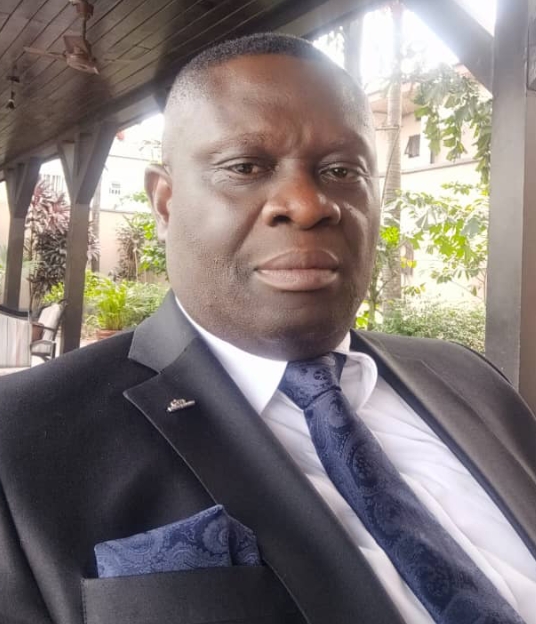
By Dr Gabriel Nwambu
**Abstract**
The launch of Ibrahim Badamasi Babangida’s autobiography, “A Journey in Service,” on February 20, 2025, at the Transcorp Hilton in Abuja, marks a critical juncture in Nigeria’s political narrative.
While the book offers insights into Babangida’s life, his controversial past raises urgent questions about accountability, justice, and the prospects for Nigeria’s future.
As Nigeria seeks to grapple with its historical challenges, the call for Babangida to face consequences for his actions has never been more pertinent. This paper examines the need for accountability as crucial not only for justice but also for the integrity of Nigeria’s democratic foundation.
**Introduction**
Ibrahim Babangida’s persona as a leader encapsulates a troubling chapter in Nigeria’s history. Celebrated by some as a political strategist, his tenure as military head of state is also marked by egregious violations of civil rights and democratic principles. This analysis interrogates the implications of Babangida’s actions throughout his rule, particularly regarding deep-seated issues such as betrayal, the nullification of free elections, and the need for restorative justice in Nigeria.
**The Dark Legacy of Betrayal: The Execution of General Mamman Vasta**
A significant chapter in Babangida’s narrative is the betrayal of General Mamman Vasta, a man he once considered a closest friend. Their relationship, characterized by intimate gestures such as exchanging clothing, was shattered when Babangida accused Vasta of plotting a coup and ordered his execution. The pleas from respected figures in Nigerian society failed to dissuade Babangida from this decision, reflecting a chilling disregard for human life and friendship. The implications of this act extend beyond personal betrayal; they symbolize the treachery embedded within the political fabric of leadership in Nigeria, raising critical questions about loyalty and morality among those in power.
Babangida’s precarious ascent to leadership came through a coup d’état, overthrowing General Muhammadu Buhari, and establishing a regime characterized by manipulation and coercion. Despite ruling with an iron fist, he demanded respect as a democratically elected president, a title that contradicted the reality of his rise to power and governance. The duality of Babangida’s nature as both a strategist and a tyrant complicates the narrative, leading to a legacy fraught with contradictions and injustices.
**The Cynical Nullification of the 1993 Democratic Elections**
One of the most grievous acts of Babangida’s presidency was the denial of the results of the June 12, 1993, elections, widely regarded as the freest and fairest in Nigerian history, won by Chief Moshood Abiola. Nigeria had, for the first time, expressed its democratic will, and yet Babangida nullified the election, leading to a national crisis and significant unrest. The repercussions of this decision continue to resonate across generations, undermining trust in democratic processes and institutions. The tragic outcomes included the untimely deaths of pro-democracy activists, such as Kudirat Abiola, and an atmosphere of political hostility that set Nigeria on the brink of civil strife.
The key players and contributors to this crisis, including Babangida himself, are now deceased, including figures like Professor Humphrey Nwosu and General Sani Abacha. As Babangida now seeks to narrate his perspective from a wheelchair, the timing of the revelations seems more an exercise in self-justification rather than a sincere pursuit of truth and reconciliation.
**The Need for Accountability: A Call to Action**
As Civil Rights Organizations advocate, “A New Nigeria is Possible.” This ideal hinges upon confronting the past and demanding accountability.
Babangida’s actions warrant scrutiny not for the purpose of vengeance but as a vital component of a healing process that Nigerian society so desperately needs. It is essential that those who wielded power and exercised it with impunity face the full weight of the law. Only then can Nigeria embark on a path to genuine democracy, lifting the embers of a fractured past toward a cohesive future.
Moreover, the staggering sum of ₦17 billion raised during the launch of Babangida’s autobiography in a country struggling financially highlights a disconnection between wealth and accountability. This disparity poses a fundamental question about the values that the Nigerian elite perpetuate and the societal implications of such actions.
**Conclusion**
Babangida’s autobiography opens a window into a complex saga of Nigeria’s history, intertwining personal narrative with profound political consequences. However, it does not absolve the former leader from the weight of his legacy, marked by betrayal and the systematic dismantling of democracy. As Nigeria looks to reforge its identity and re-establish its governance structures, it stands as an imperative for the nation to confront its past injustices head-on. To pave the way for a better future, Ibrahim Babangida must face the law, not merely as a pursuit of justice but as a cornerstone of Nigeria’s commitment to democracy, accountability, and human rights for all. Until that day arrives, the specter of an unaddressed past will continue to haunt Nigeria’s political landscape.
Nwambu Gabriel, Ph.D.









On your special day, we celebrate *Rt. Hon. TEEJAY YUSUF*
A visionary leader, a political juggernaut, and a man with the fear of God.
Thank you for your uncommon leadership, mentorship, and for being a true benefactor to many.
May God grant you long life in good health, more wisdom, divine protection and greater heights in service to humanity.
Happy Birthday Sir. We celebrate you today and always.
LAGATA CARES!

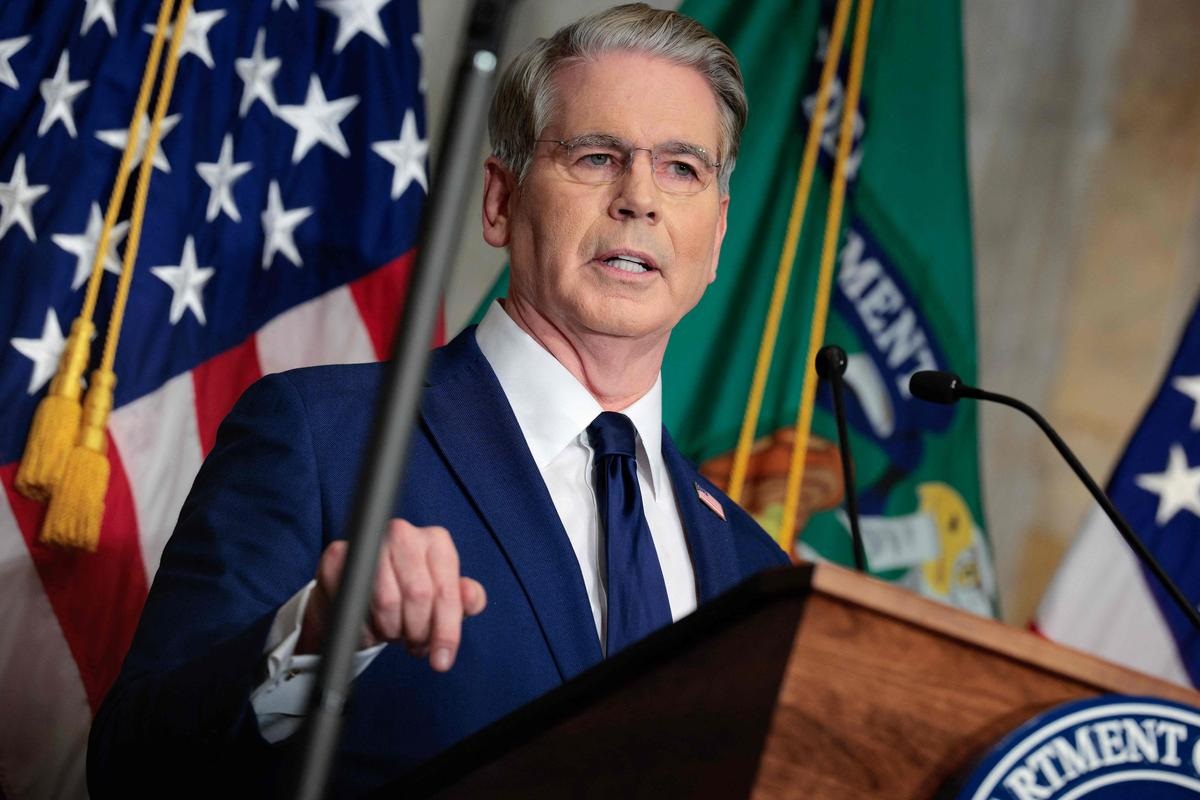
United States Treasury Secretary Scott Bessent on Monday laid out plans for the “economic asphyxiation” of Iran, expanding Washington’s secondary sanctions threats and warning of dire consequences for countries that decline to join the pressure campaign.
Bessent’s address comes almost six months into a war on Tehran that has ground to a stalemate, with stalled peace talks and Iran preventing most traffic through the crucial Strait of Hormuz.
“Around the globe, our objective is to sever every economic lifeline that sustains this tyrannical regime until Tehran stands alone,” Bessent told a press conference.
“We are going to hold everyone accountable, and this is economic asphyxiation of this regime.”
He added that countries not joining US sanctions would “share in the isolation” of Iran, and noted that Trump is making phone calls to world leaders with requests to stop their interactions with Tehran.
The Treasury Department said Monday that it has “issued determinations against five critical sectors — digital assets, technology, gold, aviation, and shipping — that the Iranian regime uses to try to prop up its failing economy.”
Bessent, meanwhile, vowed that any entity “that facilitates money laundering on behalf of Iran will be removed from the US dollar system.”
Asked if Chinese banks dealing with Iran could be targeted, Bessent said “no one is above the reach of US sanctions.”
The Treasury chief earlier declared that an “economic D-Day” had begun against Tehran, in a column for the Financial Times.
The United States and Israel triggered the Middle East war with a massive wave of bombing against Iran on February 28, sparking Iranian retaliation across the region.
AFP
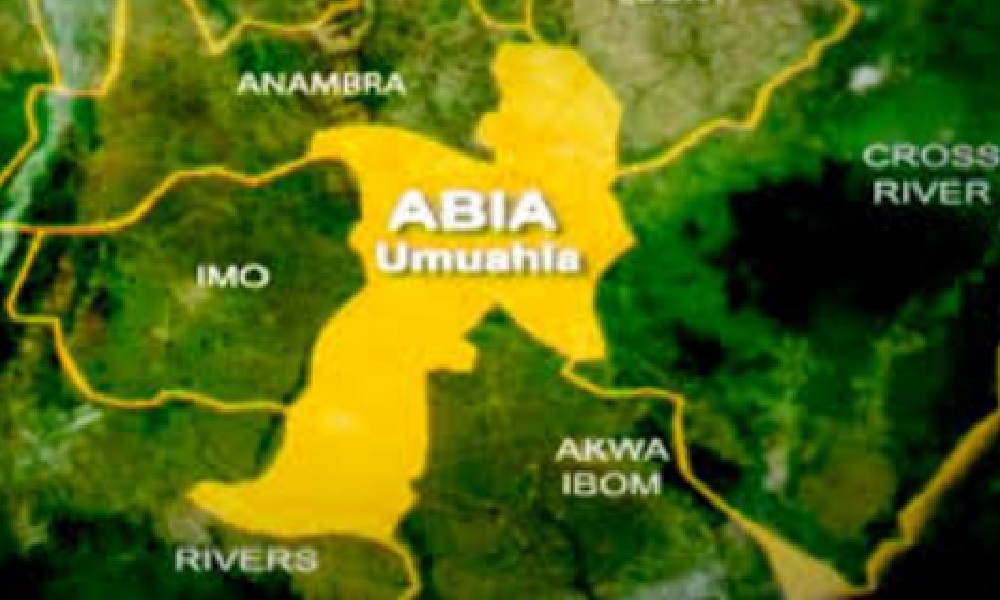
Abia State Government has said it has commenced the payment of gratuities to deserving beneficiaries, and also resolved issues that led to the strike in Abia State University, Uturu.
Briefing newsmen on Monday on the outcome of the state Executive Council meeting presided over by Governor Alex Otti, the state Commissioner for Information, Okey Kanu, said that this was following the state government committee set up to midwife the payment process of gratuities in the state,
He said that upon review of records from the State Pensions Board and Local Government Pensions Board, the committee determined the total outstanding gratuity liability to be N61.8 billion, covering both state and local government retirees.
“So if you have to do a summary of the outstanding gratuities between 2001 and 2010, it was N7.2 billion. Between 2011 and 2023, ending May 2023, May 29, 2023, it was N43.6 billion. May 30, 2023 to the present is N10.9 billion. That’s how the total of N61.8 billion came about.
“So in consideration of the magnitude of the liability, the committee examined several payment scenarios. Having in consideration as follows, the impact of the lengthy delay on the lives of pensioners, the obligation of government as a continuum, the limitations to the capacity of government to meet the established obligations while maintaining the momentum, gains in restoring our state, and the efficacy of the process.
“The committee therefore recommended that the total annual financial impact, 2026 to 2031, be fully provided in the state’s medium-term expenditure framework and subsequent yearly budgets to ensure steady implementation and to avoid further accumulation of gratuity arrears.
“That payments should be made directly to verified beneficiaries through a dedicated gratuity payment platform linked to the state’s treasury single account, TSA”, Prince Kanu Informed.
The commissioner also stated that following the intervention of the state SSG-led committee set up by the state governor, the issues that led to the strike in Abia State University, Uturu, have now been resolved.
“And it’s important to emphasise that before that action, the Governor of the State, Alex Otti, had approved the asset demands way back in April 2026. So the subsequent delay was, therefore, not a matter of government’s unwillingness or refusal to meet those demands, but rather an issue arising from administrative and implementation processes”, the commissioner said.
“In particular, outstanding check-off dues have been paid. And a new salary scale, consolidated academic teaching allowance, ASCATA, and other related payments have been addressed and will be paid with the August 2026 salary of the affected workers. And the August salary of those workers is expected to drop any time soon, maybe within this week.
“The new salary scale for other staff at the Abia State University has also been processed and will be paid this month, this August. Consequently, it is safe to assume that all the issues regarding action by ASUU have been concluded or resolved.
Otti’s administration, he said, remains committed to constructive engagement with ASUU and other organised labour unions, while ensuring that workers’ welfare remains a priority of the Administration, stating that the issue of a suspended lecturer by the university remains the school’s internal matter.

2027 Polls: APC Has A Lot To Tell Nigeians As Achievements – Akpabio (Photos)

*HAPPY BIRTHDAY TO A POLITICAL JUGGERNAUT*

US Treasury chief vows to cut every ‘economic lifeline’ of Iran



-

 News24 hours ago
SAD! Nigerian popular General Overseer is dead
-
 News24 hours ago
Security operatives rescue kidnap victims in Imo waste two suspects
-
 News7 hours ago
Nigerian Council Of Legal Education Bans Atiba University From Offering Law For 10 Years
-
 Politics7 hours ago
APC Campaign Council: Meet 14 governors tasked with delivering Tinubu in 2027
-
 Entertainment7 hours ago
Ogogo’s Burial: Yinka Quadri, wife, Ilaro weep as Nollywood Stars bid Actor farewell
-

 News7 hours ago
Oby Ezekwesili Reveals ‘Only Achievement’ Recorded Under Tinubu
-
 News21 hours ago
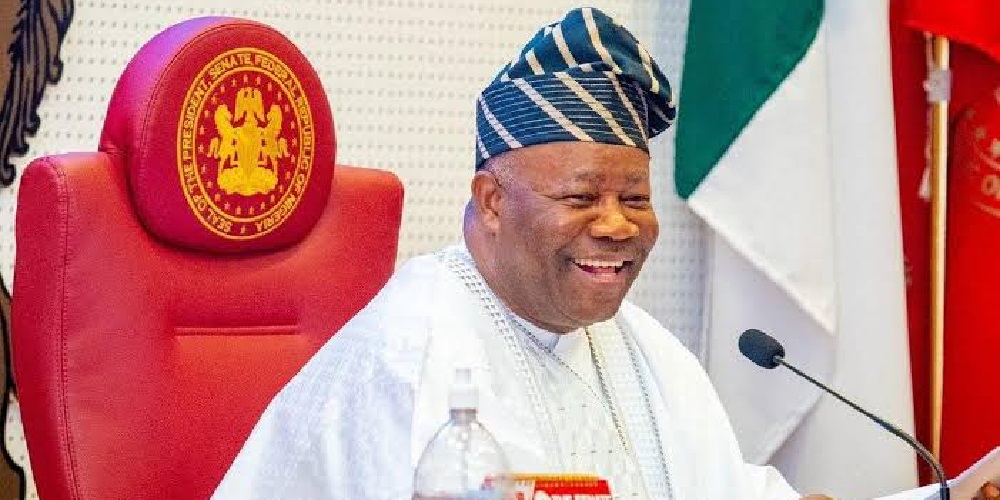
Eid El Maulud: Akpabio Felicitates Muslims, Seeks Prayers For Peace, Unity
-

 News20 hours ago
JAMB unveils new system, permits candidates to upload their O’Level results from homes
Warning: Undefined variable $user_ID in /home/naijuinz/public_html/wp-content/themes/zox-news/comments.php on line 49
You must be logged in to post a comment Login