News
We have over N600bn worth of petrol in store ― Dangote
- /home/naijuinz/public_html/wp-content/plugins/mvp-social-buttons/mvp-social-buttons.php on line 27
https://naijablitznews.com/wp-content/uploads/2024/09/images-2024-09-03T133608.134.jpeg&description=We have over N600bn worth of petrol in store ― Dangote', 'pinterestShare', 'width=750,height=350'); return false;" title="Pin This Post">
- Share
- Tweet /home/naijuinz/public_html/wp-content/plugins/mvp-social-buttons/mvp-social-buttons.php on line 72
https://naijablitznews.com/wp-content/uploads/2024/09/images-2024-09-03T133608.134.jpeg&description=We have over N600bn worth of petrol in store ― Dangote', 'pinterestShare', 'width=750,height=350'); return false;" title="Pin This Post">
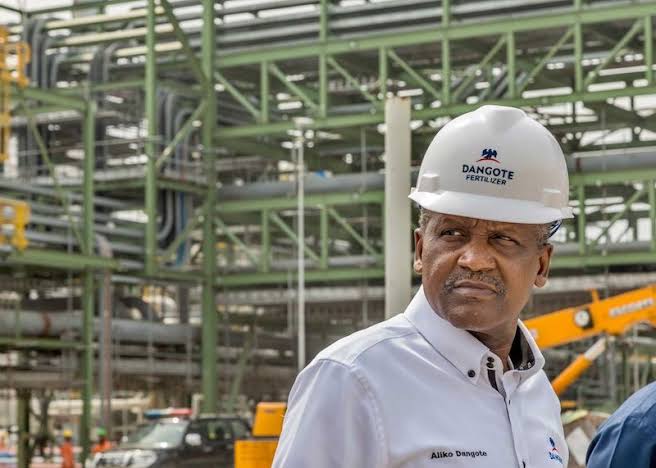
President of Dangote Industries Limited (DIL), Aliko Dangote said his company – the Dangote Petroleum Refinery – has enough Premium Motor Spirit (PMS otherwise known as petrol) in storage to sufficiently meet the local needs of Nigeria.

Speaking at the weekend, Dangote disclosed that the oil refinery has “more than half a billion litres of petroleum and over 600 billion Naira worth of products in its tanks.
Dangote said, “…as we speak right now we have more than half a billion litres. The Refinery is producing enough refined products, like gasoline, diesel, and kerosene, to meet 100 per cent of Nigeria’s requirements.

Speaking after a tour of the Refinery complex by a Zambia Government delegation, led by the country’s Minister of Energy, Mr. Makozo Chikote, Dangote stated that the refinery project, like other projects in the past, is not for Nigeria alone.
“This refinery is not only for Nigeria; it is for Africa. We must sustain the African Continental Free Trade Area (AfCFTA) deal. We are trying to see how we trade with other African countries
The Zambian Minister of Energy said his takeaway from the Dangote Refinery working visit was that the President, Aliko Dangote, is truly focused on the bigger picture for Africa.
Chikote, who led a delegation of energy experts to the Dangote Petroleum Refinery to partner Zambia on energy solutions, expressed satisfaction and readiness to work with the African manufacturing giant.
After a tour of the Dangote complex at the Free Trade Zone, Ibeju Lekki, starting from the Single Point Mooring to the Dangote Jetty, the biggest fertiliser plant in Africa and the 650,000bpd largest single-train refinery in the world, the Minister enthused that the presentation by the Vice President, Oil and Gas of Dangote Industries Limited, Mr. Edwin Devakumar, made their hearts “jump”.
He stated that the presentation speaks to the challenges of his country, Zambia.
The energy minister added, “In Zambia, we created an environment for the private sector to participate in the growth and development of our country. Currently, 100 per cent of our petroleum is done by the private sector.
“We are targeting increased productivity in mining, agriculture, and other sectors. Your presentation is an immediate solution to our energy needs. We are trying to promote competition among our private players
“We are looking at Dangote coming on board, which would lead to efficient, reliable, quality, and competitive products, and we want these done like yesterday.”
“Coming to the Dangote Petroleum Refinery, we have learned so many advantages of bringing many players for competition, which has improved the lives of the citizens.”
According to him, “From what we have seen, we need to promote trade within Africa to promote each other. We need these countries together to make Africa efficient, and a reliable trade hub.
“We have seen here that we can learn from what Dangote has done, and this would lead Africa and Africans to stand on their feet and not depend on overseas support in terms of trade. I believe going forward that people have learned a few lessons. The one lesson I have learned from this visit is that Dangote looks at the bigger picture for Africa.”
Another member of the Zambia delegation, Samuel Maimbo, the Vice President of Budget, Performance Review, and Strategic Planning at the World Bank Group, presently campaigning for the presidency of the African Development Bank (AfDB), explained that there is not enough development aid to develop Africa.
“There is also not enough government funding to develop Africa. The only way we can finance Africa’s growth at a pace and scale that solves our problem is by working through the private sector, which is why we are here today, to learn and to see what an ambitious programme looks like,” he stated.
He added that it is only the private sector that can help develop the continent of Africa.
The Vice President of Dangote Industries Limited, Edwin Devakumar stated that the Refinery produces the best quality products as its core business strategy.
“The project concept was to process the crude from Nigeria and add value. But we also wanted to provide some flexibility to process most of the African crudes and some of the Middle Eastern crudes,” Edwin said.
He said: “In another concept, what we did was maximum value extraction. That is a process where every barrel of crude which goes in, the value addition should be the best.”
According to Edwin, “the Refinery can meet all our requirements. 44 per cent can meet the entire requirements of Nigeria, and 56 per cent of the production would be exported. Every day, we produce lighter products of 104 million litres; 57 million litres of petrol every day; 20 million litres of jet fuel; and 27 million litres of diesel production.
“The local consumption is just around 46 million litres, and the remaining 58 million litres will be exported daily,” he added.
Credit: Vanguard
News
Boko Haram Faction Pocketed 90% Of Nigeria’s Nearly $5.8Million Ransom Payments In One Year –Report
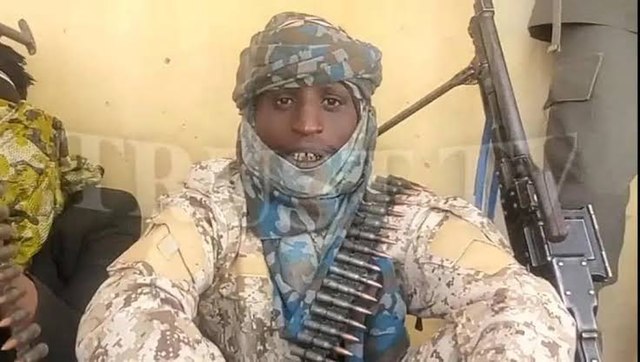
A single faction of Boko Haram collected 90% of all ransom money paid to kidnappers across Nigeria between July 2025 and June 2026, according to a new report by SBM Intelligence, in a finding that suggests the country’s kidnap-for-ransom crisis has been effectively captured by a designated terrorist organisation.
The report, titled The Capture of Nigeria’s Kidnap Economy, found that of ₦7.779 billion ($5.78 million) paid in ransom nationwide during the period, the Jama’atu Ahlis Sunna Lidda’awati Wal-Jihad (JAS) faction of Boko Haram and its allied cells took ₦7.0015 billion from just eight recorded incidents.
“Attributing each ransom to the actor named in its reporting, the JAS faction and its allied cells account for N7.0 billion of the N7.779 billion paid around the country, a staggering 90% of all ransom collected in Nigeria this year, from just a handful of incidents,” the report stated.
By contrast, the entire diffuse population of bandits and unaffiliated kidnappers, responsible for 146 separate cases, collected only ₦719.4 million between them, or 9.2% of the national total.
Two abductions, ₦7 billion
SBM Intelligence traced almost the entire national ransom bill to two mass abductions carried out months apart.
In April 2026, a faction reportedly commanded by one Ali Ngulde abducted 416 people from Ngoshe in Gwoza, Borno State, issuing a 72-hour ultimatum for ₦5 billion. The report said the full amount was paid, the largest single ransom SBM has ever recorded.
Months earlier, in November 2025, gunmen abducted 315 pupils and staff from St Mary’s School in Papiri, Niger State, in what the report called “one of the worst mass abductions in the country’s history.” Multiple intelligence sources cited in the report put the ransom paid at ₦2 billion.
“Together, these two incidents account for N7 billion and explain almost the entire national ransom bill,” the report said.
A “bumper harvest” for terrorism
The report described the shift as a structural change in how Nigeria’s kidnap industry now functions, warning that a “designated terrorist organisation is no longer merely participating in the kidnap economy; in ransom terms, it is the kidnap economy.”
It drew a sharp contrast between the economics of ideologically-driven mass abduction and everyday criminal kidnapping. Bandits and unaffiliated kidnappers, the report found, demanded ₦13.492 billion across 146 cases but collected only 5.3% of it. JAS, meanwhile, demanded ₦9.205 billion and collected 76.1% of what it asked for.
“Measured by what was demanded, the kidnap economy is a crime of the many. Measured by what was actually paid, it is dominated by a single terrorist organisation,” the report said.
It added that this concentration carries strategic consequences beyond the immediate cash figures: “For a designated terrorist organisation to collect N7 billion in a single year is hardly the criminal-justice failure that it may appear to be, because, on the contrary, it is a material transfer of resources to an insurgency, one that buys weapons, pays fighters and sustains the very campaign that produces the next round of abductions.”
A record-setting demand
The report noted that 2026 marked the first year in the life of the annual series that the highest amount demanded in a single incident and the highest amount actually paid were identical, the ₦5 billion Ngoshe ransom.
“In every prior year, a wide gulf separated the boldest demand from the largest settlement; and the fact that the two now coincide is the clearest possible signal of a counterparty with the leverage to be paid exactly what it asks,” the report said, attributing that leverage to a group “holding hundreds of hostages, and willing to kill.”
Inversion of the naira-dollar trend
The report also flagged a break from the pattern of recent years, in which ransom sums in naira climbed while their dollar value stagnated due to currency devaluation.
In 2026, the naira strengthened even as the ransom total rose, meaning the dollar value of ransom paid, approximately $5.7 million, more than tripled from the previous cycle’s $1.66 million.
Call for action on financial flows
SBM Intelligence argued that the concentration of ransom proceeds in the hands of a single armed group changes the calculus for how the crisis should be addressed, calling for action to disrupt the financing rather than treat kidnapping purely as a policing problem.
“Breaking this cycle demands two actions: disrupting the financial flows that now underwrite insurgency, and addressing the economic desperation that supplies its foot soldiers,” the report concluded. “Without a coordinated strategy that targets both the profitability of the crime and its roots, Nigeria risks entrencing kidnapping not merely as a criminal industry but as a funding mechanism for the very groups that most threaten its stability.”
News
Impeachment move: Suspected thugs invade Ondo Assembly
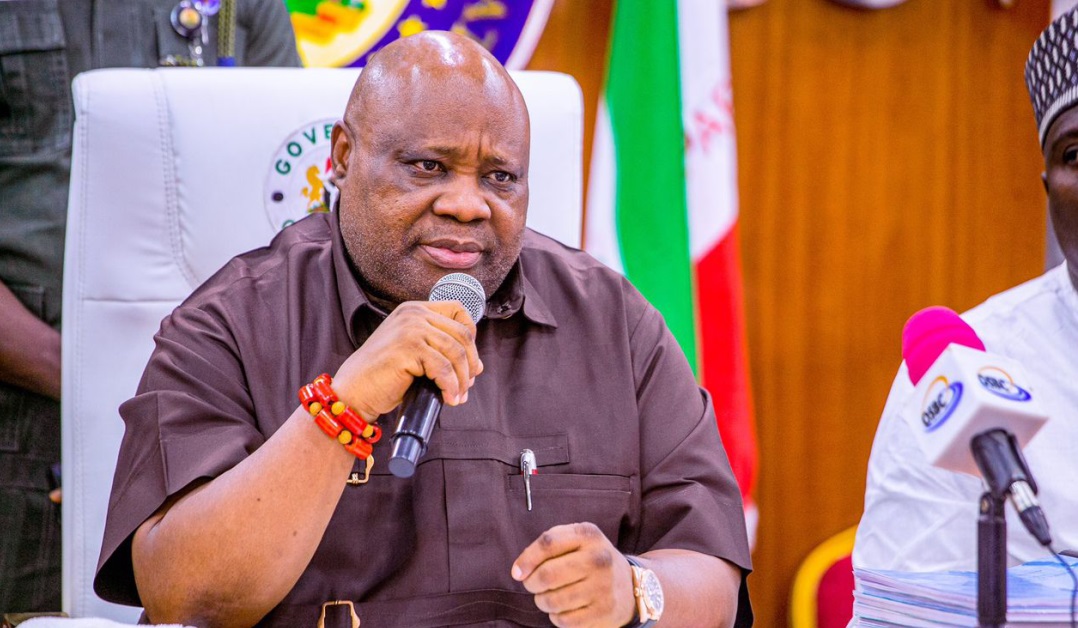
Suspected thugs on Thursday invaded the Ondo State House of Assembly amid the lingering crisis over the alleged impeachment of the Speaker, Olamide Oladiji.
The men, said to be from Ondo town, the constituency of the embattled Speaker, reportedly moved around the Assembly complex, visiting different offices without disclosing their purpose.
A staff member, who spoke on condition of anonymity, said the development caused tension among workers as the suspected thugs moved from one office to another.
According to the source, the situation was eventually brought under control following the intervention of a lawmaker, Olajide Oguntodu, some other members of the Assembly and security personnel.
The source said the intervention prevented the situation from escalating, adding that the suspected thugs were subsequently forced to leave the premises.
The development came amid the unfolding leadership crisis in the Assembly, with lawmakers reportedly divided over the fate of Oladiji.
The alleged impeachment move has heightened tension around the legislative complex, with security personnel maintaining a presence to forestall a breakdown of order.
As of the time of filing this report, there was no official statement from the Assembly authorities on the alleged invasion or the circumstances surrounding the impeachment proceedings.
News
SAD! NLC General Secretary Emmanuel Ugboaja is dead
Emmanuel Ugboaja, the fifth General Secretary of the Nigeria Labour Congress and the first Nigerian lawyer to work full-time for a trade union, has died after a protracted illness.
NLC President Joe Ajaero announced Ugboaja’s passing by reading a letter from his family to members of the Congress National Executive Council meeting in Enugu. Details surrounding his death remained sketchy at the time of filing.
Born May 15, 1966, Ugboaja obtained a law degree from the University of Calabar in 1987 before entering the trade union movement in 1993. He served as General Secretary of NUCFRLANMPE from 2000 to 2005, participated in constitutional reform conferences under Presidents Obasanjo and Jonathan, and was appointed NLC General Secretary in August 2019 following a competitive selection process ratified at the NEC meeting in Kano.
His death leaves a significant void in Nigeria’s organised labour movement.
Vanguard
-
News10 hours agoINEC to display 2027 governorship, Assembly candidates’ list Saturday
-
Metro10 hours agoBandits Kill Tinubu’s Minister’s Brother
-
News3 hours agoSad: Bandits reportedly kill elder brother of serving minister
-
News10 hours agoTinubu Mourns Eagle Online Publisher, Dotun Oladipo, Who Died At 56
-
Health10 hours ago7 Simple Ways To Prevent Typhoid Fever In Your Home
-
Metro10 hours agoSuspected drug dealer arrested with 64 bottles of “Suck and D!e” in Bauchi
-
News3 hours ago2027: Why Tinubu holds strongest pathway to reelection amid emerging challenges of Obi, Atiku-ADSC Report
-
Metro10 hours agoEFCC Reacts As Nigerian Beg For Rent Loan From Recovered Loot

Warning: Undefined variable $user_ID in /home/naijuinz/public_html/wp-content/themes/zox-news/comments.php on line 49
You must be logged in to post a comment Login