
News
Nigeria Targets Electricity Access for 300 Million Africans by 2030 – Speaker Abbas


- /home/naijuinz/public_html/wp-content/plugins/mvp-social-buttons/mvp-social-buttons.php on line 27
https://naijablitznews.com/wp-content/uploads/2025/05/IMG-20250505-WA0038-1000x600.jpg&description=Nigeria Targets Electricity Access for 300 Million Africans by 2030 – Speaker Abbas', 'pinterestShare', 'width=750,height=350'); return false;" title="Pin This Post">
- Share
- Tweet /home/naijuinz/public_html/wp-content/plugins/mvp-social-buttons/mvp-social-buttons.php on line 72
https://naijablitznews.com/wp-content/uploads/2025/05/IMG-20250505-WA0038-1000x600.jpg&description=Nigeria Targets Electricity Access for 300 Million Africans by 2030 – Speaker Abbas', 'pinterestShare', 'width=750,height=350'); return false;" title="Pin This Post">


By Gloria Ikibah
Speaker of the House of Representatives, Rep. Tajudeen Abbas has said that Nigeria is taking a frontline role in the push to expand electricity access across Africa, to help power about 300 million people on the continent by 2030.
The Speaker disclosed this while delivering the keynote address at the First Legislative Conference and Expo on Renewable Energy, organised by the House Committee on Renewable Energy, in collaboration with the United Nations Development Programme (UNDP) held in Lagos on Monday.
The conference brought together lawmakers, industry stakeholders, and development partners to explore renewable energy solutions and legislative frameworks for boosting access and affordability.
Abbas praised President Bola Tinubu’s approval of a $1 billion funding package for Nigeria’s Rural Electrification Agency in December 2024, and described it as a major boost for energy inclusion.
According to him, Nigeria’s participation in the Mission 300 initiative, a joint effort with the World Bank and African Development Bank demonstrates the country’s growing commitment to clean, sustainable energy for underserved communities.
He said: “This initiative speaks to Nigeria’s readiness to lead by example on the continent. It is about more than power, it is about development, opportunity, and progress.

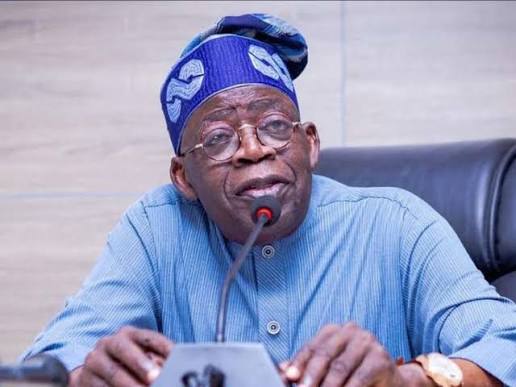
The Federal Government will begin blacklisting schools, authors, and publishing houses that use or distribute unapproved instructional materials starting this September.
This harsh sanction coincides with the resumption of the 2026/2027 academic session in two weeks, marking the official enforcement of an aggressive new national textbook ranking policy.
Under the new directive, standard licensing from the Nigerian Educational Research and Development Council (NERDC) no longer guarantees a textbook’s entry into classrooms.
Every instructional resource from primary to senior secondary school must now pass a rigorous national evaluation, securing a minimum score of 70% to qualify for the official national ranking.
Speaking recently with education stakeholders—including state commissioners, private school owners, and administrators—the Minister of Education, Dr. Tunji Alausa, emphasized that the policy is central to making Nigeria’s education sector globally competitive.
According to the policy statement obtained by Nigerian Tribune, the government is capping the final approved list to a maximum of six to 10 titles per subject to prevent an overcrowded market.
Once a textbook makes this elite list, it will remain standard for a minimum lifespan of three years to ensure educational stability.
While unranked textbooks are strictly banned in all public primary and secondary schools nationwide, the Federal Government strongly recommends that private institutions adopt these exact standards to maintain uniform educational quality.
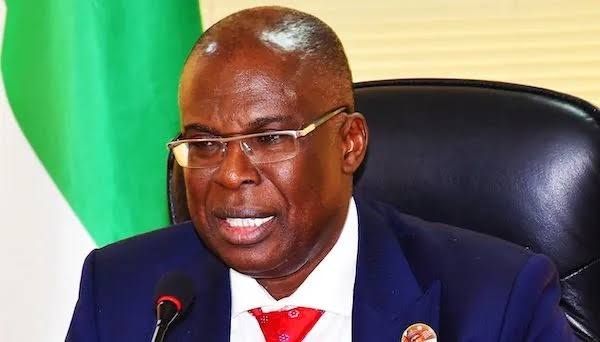
Ex-Minister of State for Petroleum Resources, Timipre Sylva, has dumped All Progressives Congress (APC).
His resignation was contained in a letter dated August 31, 2026, addressed and electronically transmitted to the APC Chairman of Ward 4 in Brass Local Government Area of Bayelsa State.
In the letter, Sylva accused the ruling party of abandoning the ideals on which it was founded, saying he could no longer remain in the party.
He also described the APC as a floundering ship whose fate appears irredeemable by the load of its iniquities.
The resignation letter were also sent to the National Chairman of the APC, the Executive Chairman of the Economic and Financial Crimes Commission (EFCC) and the Bayelsa State Chairman of the party.
The former Governor of Bayelsa State said his decision followed extensive consultations with his family, associates, colleagues and sympathisers.
“Having consulted widely with my family, associates, colleagues and sympathisers, I wish to formally tender my resignation from the All Progressives Congress (APC), with immediate effect,” he stated.
Sylva, who described himself as a founding member of the APC, accused the current leadership of abandoning the ideals that initially attracted him and other Nigerians to the party.
He said their actions have shown that the basic standards of morality and decency have been abandoned by the leaders who now believe that ‘all is fair in politics.’
“As a founding member of the APC, and one who joined other well-meaning Nigerians in building the Party with sweat and money, it is deeply saddening to witness how the ideals we espoused have been so thoroughly and unrecognisably thwarted.
“Moreover, I cannot, in all good conscience, continue to belong to a Party whose leaders believe that ‘all is fair in politics,’ and have consistently demonstrated that belief in practice.
“All cannot be fair in any endeavour of life. The demands of basic decency and morality forbid it,” he said.
Sylva alleged that the current APC leadership and the federal government have disappointed a lot of Nigerians.
“The present Government, formed under the banner of the APC we once loved, has disappointed the vast majority of Nigerians. And I can see neither a credible attempt nor any possibility of a revamp.
“I am therefore left with no other choice than to jettison a floundering ship whose fate appears to have been sealed by its irredeemable load of iniquities,” he said.
The former Governor called on Nigerians to vote out the APC in the 2027 elections and free the country from a political stronghold.
“I have no doubt that, in the coming election, Nigerians will vote for Nigeria and free the Country from this stranglehold on our beautiful country,” he stated.
He also accused the EFCC of conducting itself like an arm of the APC rather than an independent institution of state.
Sylva acknowledged that his resignation could expose him and his associates to increased scrutiny or investigation by the anti-graft agencies and other security forces.
“I am deliberately putting the EFCC in copy of this letter because, of late, it has conducted itself more as an organ of the APC than as an institution of State.
“I am fully aware that this action of mine may invite a redoubled witch-hunt against me and my associates, but that is a risk I am willing to take,” he stated.

Unknown gunmen have struck in Awka, the Anambra State capital, killing popular comedian Isaac Nwosu, a.k.a Aiza, and one other person.
The ace comedian, who was gunned down with the other victim on Sunday, August 30, 2026, is widely known in Awka and its environs by both residents and politicians who hired him during campaigns to promote their candidacy.
He came to limelight in the political field of Anambra State in 2003 when he threw his weight behind former Governor Peter Obi during his battle in court to return to office.
The Anambra State Police Command has condemned yesterday’s killings in the strongest terms. The Command in a statement this Monday morning by the state Police Public Relations Officer (PPRO), SP Tochukwu Ikenga, said it has intensified the ongoing manhunt for the perpetrators.
It called for the support and cooperation of members of the public to assist in bringing the suspects to justice.
According Ikenga, information gathered so far reveals that three unidentified persons, travelling in a silver-coloured Toyota Corolla, with registration number yet to be ascertained, reportedly shot two persons at separate locations within Awka.
He said: “Upon receipt of the distress information, Command operatives immediately mobilised patrol teams to the affected areas and commenced efforts to track down the assailants.
“Upon arrival at the scenes, the operatives recovered the bodies of the victims along Capital City Road, Amaenyi, and S.M. Okeke Street, Amaikwo, Awka, respectively. The victims were taken to a hospital, where they were subsequently confirmed dead by medical personnel.
“While one of the victims is yet to be identified, the second victim has been identified as Isaac Nwosu, male, also known as “Aiza.”
The operatives also recovered from the scenes the sum of N7,550, one Moniepoint ATM card and a pair of slippers”, the statement added.
Meanwhile, the Commissioner of Police in the state, CP Nnanna Oji Ama, has condemned the dastardly act and described the killings as unacceptable and a direct affront to the peace and security of the State.
He further directed the transfer of the case to the State Criminal Investigation Department (SCID), Awka, for discreet and comprehensive investigation, even as security operatives have intensified patrols, surveillance and intelligence gathering across Awka and adjoining areas.

FG set to blacklist schools, publishers using unapproved textbooks from September

Buhari’s minister, Sylva finally dumps APC

SAD! Unknown gunmen k!ll popular comedian, Aiza in South East




-

 News22 hours ago
CEKI hails Kayode Arewa, urges support for Ekiti Assembly bid
-

 News22 hours ago
Pre-Election Suit: Ogbeide-Ihama Challenges INEC, NDC Over Alleged Substitution Of Oredo Federal Constituency Candidate
-
 News23 hours ago
Troops silent terrorist Lieutenant, recover arms , motorcycles in Katsina
-

 News23 hours ago
From Abuja to Hangzhou (2): Thrills, Frills and the Chinese ‘Smart Life’
-

 News21 hours ago
Abuja filling stations jerk up petrol pump prices
-
 News23 hours ago
DSS rearrests Miyetti Allah President Bodejo shortly after EFCC release
-
 Economy11 hours ago
Record $947m July Remittances Bring Cardoso’s $1bn Monthly Target Within Sight
-

 Metro11 hours ago
Two ladies arrested for stealing their neighbors’ 3 kids 2 weeks after moving in as tenants
Warning: Undefined variable $user_ID in /home/naijuinz/public_html/wp-content/themes/zox-news/comments.php on line 49
You must be logged in to post a comment Login