By Gloria Ikibah


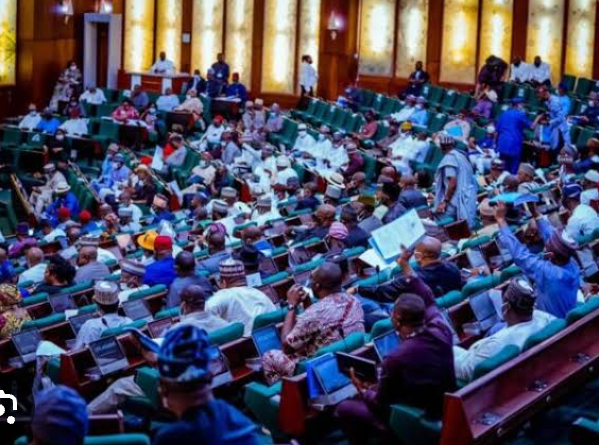
The House of Representatives has passed through second reading a bill seeking to amend the Electoral Act 2022 to make voting compulsory for Nigerians of voting age, sponsored by Speaker Abbas Tajudeen, and Rep. Daniel Ago.
In his lead debate on Thursday at plenary, Rep. Ago explained that the bill is aimed to encourage greater citizen participation in the electoral process, and address the persistent issue of voter apathy if it scales through legislative scrutiny. 
Contributing to the debate, Rep Mark Esset, (PDP) from Akwa Ibom State, opined enacting a law to make voting compulsory is not enough to reform the electoral system.
“Let us not build something on nothing. If citizens have lost faith in the electoral system, there is much work to be done. Many Nigerians abstain from voting because they believe their votes do not count. If we must make voting compulsory, we must also enact a law to ensure that every vote truly counts,” Esset stated.
Rep. Ago stressed that the piece of legislation when signed into law will address low voter turnout by making electoral participation a legal obligation rather than a personal choice.
According to him, a compulsory voting law would boost civic engagement and voter participation, strengthen democracy, improve representation, foster greater political awareness, and reduce vote buying.
Speaking in support of the bill, Deputy Speaker Benjamin Kalu said citizenship comes with civic responsibilities, citing Australia, where voting is mandatory and failure to vote is considered a crime, resulting in more stable and inclusive governance.
“In Australia, it is an offence not to vote. There are even certain incentives citizens are denied if they fail to participate in elections,” Kalu explained.
He added that Nigerians should actively take part in the nation’s decision-making processes.
But on the contrary, Rep. Awaji-Inombek Abiante, member representing Andoni/Opobo-Nkoro federal constituency of Rivers State, said there are no meaningful incentives to justify making voting compulsory.
He asked, “What are the incentives that would be denied to citizens? Voting should remain a voluntary civic act.”
Rep. Abiante also raised concerns about the credibility of the voter register, pointing out that many Nigerians live abroad.
“Who will provide the logistics for them to return home and vote?” he questioned.
In response, Speaker Abbas noted that certain laws make provisions for exceptions and exemptions.
Rep. Esset stressing his opposition to the bill, maintained that it is unwise to mandate voting when public confidence in the electoral process is low.
“It’s a good bill, but we are trying to build something on nothing. If we want to make voting compulsory, we must also guarantee that votes will count,” he said.
During the debates, Kalu frequently interrupted lawmakers who opposed the bill, citing Order 9 and urging them to stick to the rules of debate. However, Speaker Abbas intervened, clarifying that the arguments were consistent with the general principles of the bill.
When put to a voice vote by the Speaker, the “ayes” were louder than the “nays.