
Foreign
How Organ Harvesters Deceived Villagers To Sell Their Kidneys

- /home/naijuinz/public_html/wp-content/plugins/mvp-social-buttons/mvp-social-buttons.php on line 27
https://naijablitznews.com/wp-content/uploads/2024/04/Organ-Harvesters.jpg&description=How Organ Harvesters Deceived Villagers To Sell Their Kidneys', 'pinterestShare', 'width=750,height=350'); return false;" title="Pin This Post">
- Share
- Tweet /home/naijuinz/public_html/wp-content/plugins/mvp-social-buttons/mvp-social-buttons.php on line 72
https://naijablitznews.com/wp-content/uploads/2024/04/Organ-Harvesters.jpg&description=How Organ Harvesters Deceived Villagers To Sell Their Kidneys', 'pinterestShare', 'width=750,height=350'); return false;" title="Pin This Post">


In Hoske, a remote village in Nepal, some residents have been tempted into selling their kidneys under the false belief that the organs would grow back.
The village is notorious as being the “Kidney Valley” or the “village with a single kidney” in the world because someone from almost every household has sold a kidney.
Kidney trafficking involves the illicit trade of humans and/or their organs. Brokers would often visit villages such as Hokse, and recruit individuals through deception and are uninformed about the reality of the procedure and the impact of kidney removal.
In Hokse, locals feel duped and exploited with some claiming they were tricked into selling their kidney with the promise that it would regrow. They also claimed some died due to the process.
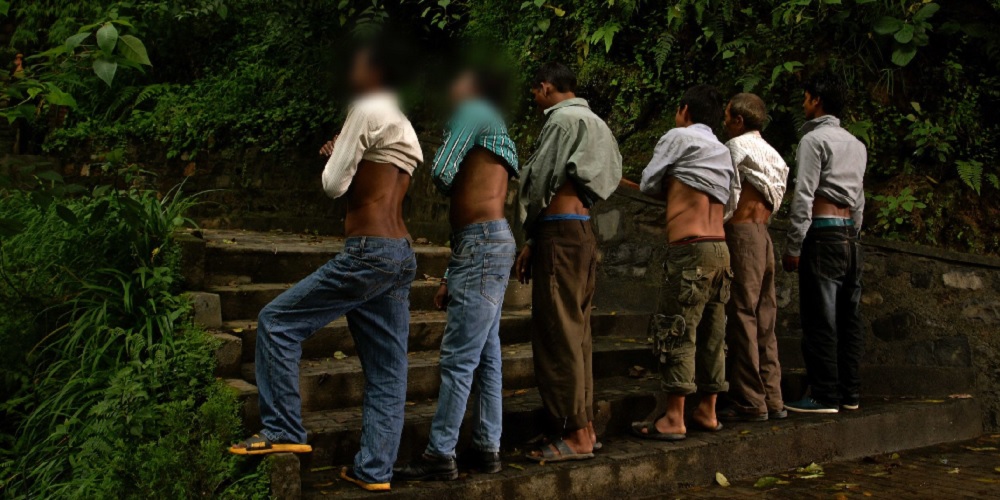
Narrating their ordeal with SkyNews, Kanchha and Ram, in their 40s lifted their shirts to show their scar, recounted how financial depseration pushed them into selling one of their kidneys. Kanchha revealed he’s still in pain and unable to work because of the side effects from the surgery.
“It’s impossible to count how many have done it. Everywhere, this village, that village, so many people have sold their kidneys.”
The situation in Hokse has become critical, with a growing number of young migrant men returning to the village with kidney failure, urgently requiring kidney transplants.
Some scientists attribute this phenomenon to the harsh working conditions abroad due to exposure to extreme heat and severe dehydration.
31-year-old Suman revealed he had no option than travelling to India to sell his kidney for £3,000 after being financially and emotionally broken pushed him to almost ending his life.
“I felt weak and I lost consciousness. When I woke up, it was really hurting. Now I can’t work and I try to tell anyone I can, not to sell their kidney.”
Kachan who also sold his kidney in India revealed that he did that with a ‘fake sister.’ Indian laws states that “donors must be related and they must present the relevant paperwork.” He also alleged that the doctors are also a part of the trafficking ring.
“The agents made fake documents in Kathmandu, including Indian ID cards. My kidney was given to a fake sister. I think the doctor in India knew I’d sold it.”
A pioneering and renowned surgeon at the Human Organ Transplant Center in Nepal, Dr Pukar Shresth, stated that young men who leave the country to work extreme heat consitions, with little water, often return to the country with, “completely failed kidneys”.
“It is very grave because about one third of all transplants are these labour migrant workers who have come from abroad,” he says.
“This has caused a huge burden to our health resources health facility because they account for more than 30% of the total transplant number in our country.”
While locals in Nepal claim that the sales have stopped, some residents are still taking desperate risks in the hope of improving their lives.



Iran’s foreign ministry on Tuesday accused the United States of violating a fragile ceasefire during the past 48 hours in the southern coastal province of Hormozgan, without specifying the incident.
“The US terrorist army, continuing its illegal and unjustified actions since the ceasefire … has, in the past 48 hours, committed a gross violation of the ceasefire in the Hormozgan region,” the ministry said in a statement.
The US Central Command said forces had on Monday attacked missile sites and boats it said were trying to lay mines in the Gulf, while Iran’s Revolutionary Guards said it had fired at US aircraft attempting to enter the country’s airspace.
AFP

Iranian President Masoud Pezeshkian has ordered the restoration of international internet access in Iran, which had been suspended since the United States and Israel launched attacks against the country, local media reported Monday.
“The decree aimed at restoring internet access to its pre-January state was communicated to the Ministry of Communications by the president,” Iranian news agencies Tasnim and Fars reported.
Authorities shut down the internet during large-scale anti-government protests that peaked in early January, then suspended it again on February 28 at the start of the Middle East war.
Since then, the population has only had access to domestic platforms and websites.
AFP
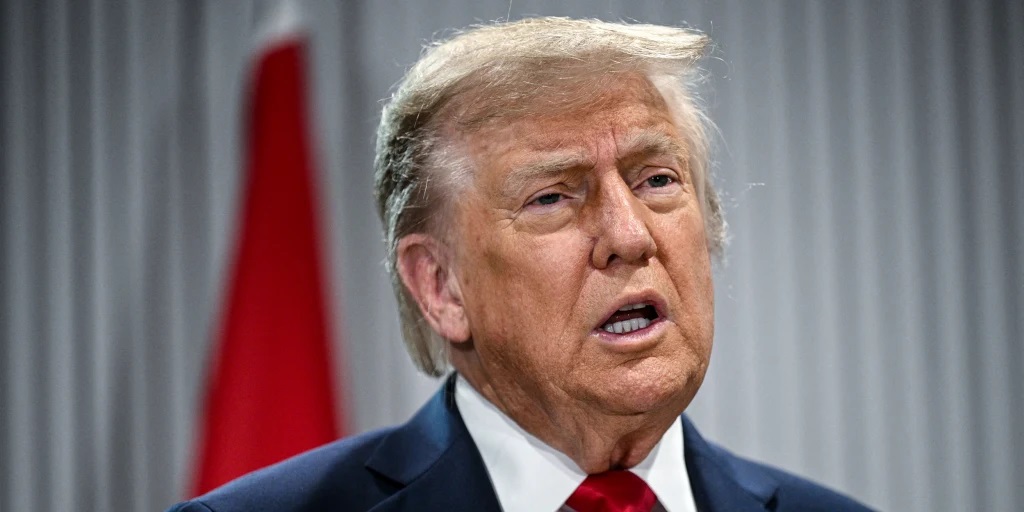
US President Donald Trump says an agreement with Iran has been “largely negotiated” and details will be announced soon.
The deal would include the reopening of the Strait of Hormuz, he said on Saturday, without giving further details.
Iranian foreign ministry spokesman Esmaeil Baqaei earlier told state television that US and Iranian positions had been converging in the last week, but warned that did not mean agreements would be reached on key issues and accused the Americans of “contradictory statements”.
On social media, Trump said he had a “very good call” with the leaders of Saudi Arabia, the United Arab Emirates, Qatar, and others about a “Memorandum of Understanding pertaining to PEACE”.
“An agreement has been largely negotiated, subject to finalization between the United States of America, the Islamic Republic of Iran, and the various other Countries, as listed,” Trump said.
“Final aspects and details of the deal are currently being discussed, and will be announced shortly.”
He also said he had a call on Saturday with Israeli Prime Minister Benjamin Netanyahu, which “went very well”.
The president has not given any further details on the deal, but has insisted any agreement would “absolutely” prevent Iran from obtaining a nuclear weapon.
Later, Pakistan’s Prime Minister Shehbaz Sharif said: “I congratulate President Donald Trump on his extraordinary efforts to pursue peace,” and said the phone call had been “very useful and productive”.
Pakistan has been helping to negotiate a peace deal, serving as an intermediary.
“We hope to host the next round of talks very soon,” he wrote in the statement on X.
The US and Israel launched wide-ranging strikes on Iran on 28 February, sparking conflict across the Middle East. Iran responded by launching attacks on Israel and US-allied states in the Gulf.
A ceasefire in Iran was agreed in early April, and since then Washington and Tehran have engaged in talks over a long-term peace deal.
Speaking to state television on Saturday, Iranian foreign ministry spokesman Esmaeil Baqaei also described a “memorandum of understanding”, saying Iran’s intention was to reach an agreement “in the form of a framework, consisting of 14 points”.
Baqaei said they were in the process of finalising the memorandum, so further talks could be held within 30 to 60 days “and ultimately a final agreement can be reached”.
The new sense of momentum comes after the mood appeared to have soured in Washington, with anonymous officials briefing US media on Friday that the administration was preparing for a fresh round of military strikes, although no final decision had been made.
On Friday, the president posted on Truth Social that he would not attend his son Donald Jr’s wedding this weekend so he could remain in Washington DC “during this important period of time”.
Last week, Trump had said the truce was on “massive life support” after rejecting Tehran’s demands, labelling them “totally unacceptable”.
The US has blockaded Iranian ports since 13 April.
On Saturday, US Central Command (Centcom) said it had redirected 100 vessels, disabled four, and allowed 26 humanitarian aid ships to pass since the blockade began.
Centcom commander Admiral Brad Cooper said its forces had been “highly effective” in “allowing zero trade into and out of Iranian ports which has squeezed Iran economically”.
Meanwhile, Iran has claimed military control of an area around the Strait of Hormuz, and has said all transit through the strait “requires coordination with and authorisation from the Persian Gulf Strait Authority”.
The US and Gulf allies have repeatedly rejected Iranian attempts to assert control over the strait, and the US has told ships not to comply with Iran’s rules.

FCTA Threatens Sanctions Against Hotels, Event Centres Hosting Illegal Groups

Ebola Alert! FG flags 21 states on lockdown watch, Lagos, FCT, Rivers, Akwa Ibom, Borno, others in high risk zones
JUST IN: Trouble looming as North Central APC Group Wants Nat’l Chairman,Yilwada to Resign




-

 Politics19 hours ago
Dickson Welcomes Omo-Agege, Ochei to NDC, Grants Senatorial Primary Waivers
-
 Metro19 hours ago
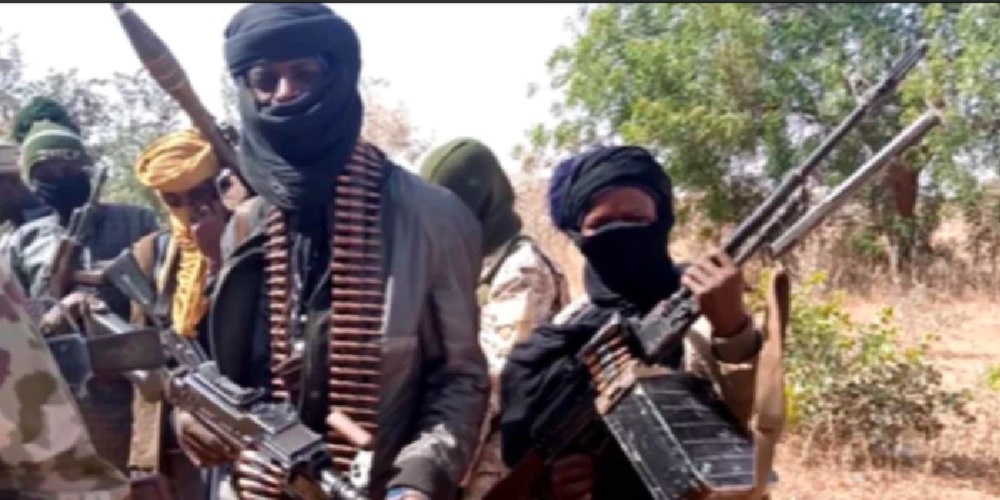
Bandits hold abducted Niger State medical doctor despite N20m ransom payment
-
News19 hours ago
Ignore ‘Illogical’ Election Results In Circulation, We’ll Hold Our Primaries Today – NDC
-

 Sports19 hours ago
UCL final: Thierry Henry to present trophy as Arsenal face PSG
-

 Sports19 hours ago
Sinner Stunned In Paris, Crashes Out Of French Open
-

 Entertainment19 hours ago
‘I have checked out of marriage,’ says Regina Daniels
-

 News19 hours ago
Conversion Rumours Untrue, President Tinubu Remains A Muslim-Aide
-
News19 hours ago
‘Over 80% of ISIS operations now in W’Africa’