Foreign
Saudi official denies reports alcohol ban will be lifted


- /home/naijuinz/public_html/wp-content/plugins/mvp-social-buttons/mvp-social-buttons.php on line 27
https://naijablitznews.com/wp-content/uploads/2025/05/alco.jpg&description=Saudi official denies reports alcohol ban will be lifted', 'pinterestShare', 'width=750,height=350'); return false;" title="Pin This Post">
- Share
- Tweet /home/naijuinz/public_html/wp-content/plugins/mvp-social-buttons/mvp-social-buttons.php on line 72
https://naijablitznews.com/wp-content/uploads/2025/05/alco.jpg&description=Saudi official denies reports alcohol ban will be lifted', 'pinterestShare', 'width=750,height=350'); return false;" title="Pin This Post">


A Saudi official denied on Monday media reports saying the kingdom, the birthplace of Islam, would lift its 73-year-old ban on alcohol, which is prohibited for Muslims.
The report, which was picked up by some international media after it appeared on a wine blog last week, said Saudi authorities planned to allow alcohol sales in tourist settings as the country prepares to host the 2034 soccer World Cup. It did not give a source for the information.
The once ultra-conservative kingdom has eased some restrictions to lure tourists and international businesses as part of an ambitious plan to diversify its economy and make itself less dependent on oil.
While alcoholic drinks are still off limits, both Saudis and foreigners can take part in activities that were once unthinkable in the Gulf country – from dancing at desert raves to watching models at fashion shows or going to the cinema.
The report about alcohol rules sparked a vigorous online debate in the kingdom, whose king also holds the title of Custodian of the Two Holy Mosques – Islam’s most revered places in Mecca and Medina.
Saudi Arabia’s de facto leader, Crown Prince Mohammed bin Salman, known as MBS, has pushed a series of reforms, which included ending a prohibition on allowing women to drive in 2017, easing some rules on sex segregation in public spaces and reducing the power of the religious police.
Saudi Arabia and Kuwait are the only Gulf countries that prohibit the sale of alcohol.
A minor move to allow alcoholic drinks to be consumed in the kingdom was the opening of the first alcohol store in the capital, Riyadh, last year serving exclusively non-Muslim diplomats.
Prior to that, alcohol was available only through diplomatic mail or on the black market.

The United Kingdom has told the United Nations General Assembly that Russia’s occupation of Ukrainian territory and attempted annexations have not altered Ukraine’s sovereignty or borders, while calling on Moscow to accept a full and unconditional ceasefire.
Speaking at the UN General Assembly meeting on Ukraine in New York on Tuesday, UK Permanent Representative to the UN, Ambassador Sarah MacIntosh, said Russia’s continued military actions amounted to violations of the UN Charter and Ukraine’s territorial integrity.
“It is 1,651 days since Russia began her illegal, full-scale invasion of Ukraine,” MacIntosh said, adding that it had also been “twelve years since her illegal annexation of Crimea.”
According to the full speech on the UK Home Office website on Tuesday, she said Russian attacks had escalated, with at least 429 missiles launched into Ukraine in July alone, “more than double the month before.”
“And Ukrainian civilians are paying the price,” the ambassador said.
MacIntosh said almost 17,000 Ukrainian civilians, including 820 children, had been killed since February 2022, while more than 51,000 civilians, including 3,000 children, had been injured.
She also highlighted the impact of the war on global food supplies, saying Ukraine had accounted for 12 per cent of global corn exports, 10 per cent of wheat exports and 50 per cent of sunflower oil exports before Russia’s 2022 invasion.
“But Russian strikes on Ukraine’s ports and civilian shipping have also escalated,” she said, adding that the attacks were “Blocking vital food supplies, contributing to driving up food prices worldwide, and killing seafarers from UN Member States from Africa to Asia.”
The UK envoy said Russia’s actions in occupied Ukrainian territories were a violation of fundamental international principles.
“Mr President, Russia’s war in Ukraine is a clear violation of our UN Charter and of Ukraine’s sovereignty and territorial integrity,” she said.
“These are key principles; principles that bind every United Nations Member State.”
MacIntosh listed Crimea and parts of Donetsk, Luhansk, Kherson and Zaporizhzhia as territories invaded by Russia, accusing Moscow of using violence to consolidate its control.
“And uses violence to consolidate its control within them,” she said, citing the separation of families, alleged forced deportation and indoctrination of children, forced issuance of Russian passports, arbitrary detention and disappearance of Ukrainian civic leaders, torture and ill-treatment.
She also said communities had been left without water or humanitarian assistance, while Ukraine’s cultural heritage and language were being targeted.
“Russia’s occupation and attempted illegal annexations are inflicting a terrible toll on the Ukrainians living in these territories,” MacIntosh said.
“But these actions do not change Ukraine’s sovereignty; nor do they rewrite her borders.”
The UK called on all UN member states to defend the principles of the UN Charter and reject Russia’s territorial claims.
“And so today, we call on all States to uphold the UN Charter; to reject Russia’s illegal claims; to press Russia to allow humanitarian access; and to support accountability; to help get Ukraine’s children back home, and her civilians released,” she said.
MacIntosh reaffirmed Britain’s support for Ukraine’s right to defend itself under international law.
“The United Kingdom will stand with Ukraine as she exercises her lawful right to self-defence, in accordance with Article 51 of our United Nations Charter,” she said.
“Today, and for as long as it takes.”
She said the UK also supported Ukraine’s demand for an immediate end to the fighting.
“We support Ukraine’s call for a full, immediate, and unconditional ceasefire, and a just and lasting peace,” MacIntosh said.
“And we urge Russia to commit to the same.”
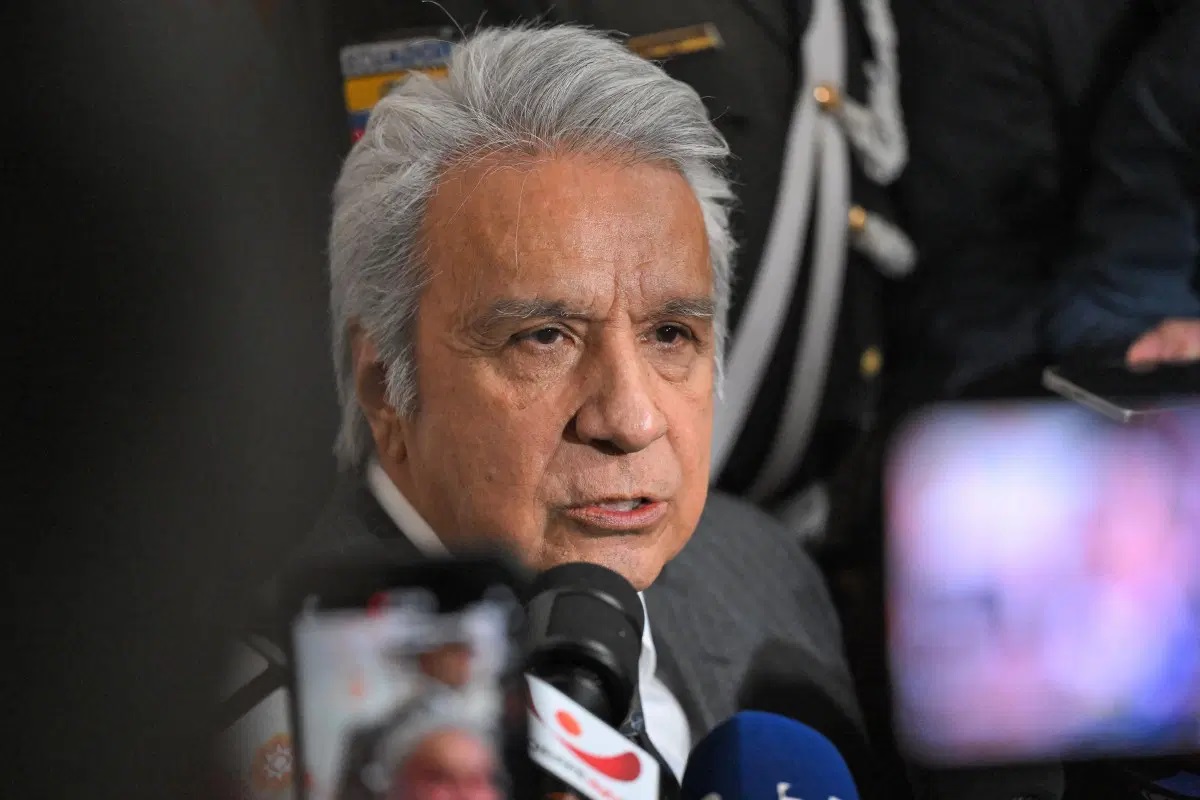
An Ecuadorian court has sentenced former President Lenin Moreno to five years in prison for accepting bribes linked to the construction of the country’s largest hydroelectric dam.
Moreno, who served as president from 2017 to 2021, was among 20 people convicted over corruption allegations surrounding the Coca Codo Sinclair hydroelectric project, which was built by Chinese company Sinohydro.
Prosecutors alleged that Sinohydro paid about $76 million in bribes, representing roughly four per cent of the project’s total cost.
Moreno, 73, denied the allegations and maintained that he never received money from the Chinese company.
Speaking after Friday’s ruling, the former president said he had never received “a single cent” from Sinohydro.
He also blamed the case on the administration of his former political ally and predecessor, Rafael Correa, whom he accused of seeking revenge after their political relationship deteriorated.
Moreno served as Correa’s vice-president between 2007 and 2013 before succeeding him as president. The two later fell out after Moreno moved away from Correa’s socialist policies and developed closer ties with the United States.
The court also sentenced Moreno’s wife and other relatives to nearly three years in prison for complicity in the corruption case.
Two former managers of the Coca Codo Sinclair power plant were also among those convicted.
Prosecutors had initially requested a six-and-a-half-year prison sentence for Moreno.
The former president has announced plans to appeal the judgment.
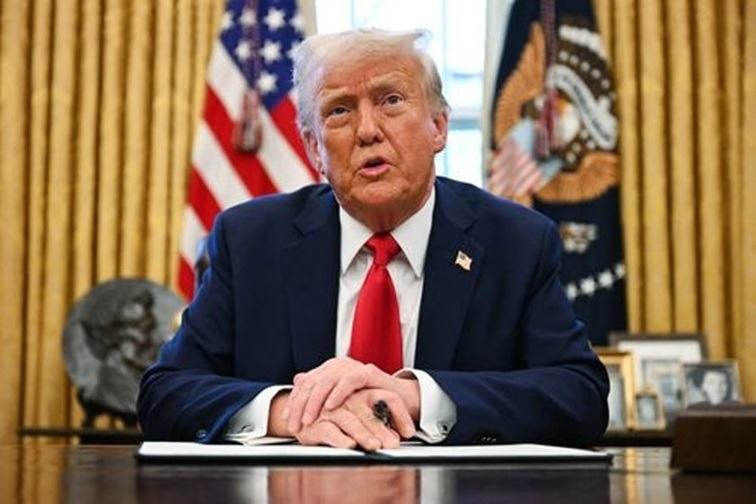
US President Donald Trump has signed an executive order renaming Lake Ontario as “Lake America” for official US federal use, in the latest escalation of his dispute with Canada.
Trump signed the order on Thursday at the White House, saying the change was effective immediately. The order directs the US Department of the Interior to update federal geographic records and naming systems.
Trump justified the move by accusing Canada of treating the United States unfairly in trade and defence. He said Canada had been “ripping us off” in trade and criticised Ottawa over its relationship with Washington.
However, the order does not require Canada or international organisations to adopt the new name. Lake Ontario is shared by the US state of New York and Canada’s province of Ontario, with more than half of its surface area lying in Canadian territory.
Ontario Premier Doug Ford dismissed the move, saying the lake would continue to be known as Lake Ontario by Canadians and much of the rest of the world.
The renaming comes amid a rapidly worsening US-Canada trade dispute. Washington recently imposed 50 per cent tariffs on about $20 billion worth of Canadian goods, while Canada responded with retaliatory tariffs of its own on hundreds of US products.
The latest move echoes Trump’s decision in January 2025 to rename the Gulf of Mexico as the “Gulf of America” for US federal purposes.
Trump also suggested that further geographic name changes could be considered, joking that after a gulf and a lake, the United States might eventually rename the Atlantic or Pacific Ocean.
Canadian Prime Minister Mark Carney’s government had not immediately issued a formal response to the latest order.
The controversy has added another symbolic dimension to already strained relations between the two neighbouring countries, as both sides continue to impose tariffs and seek to protect their economies.

Shettima @60: Speaker Abbas Hails VP’s Service, Loyalty to Tinubu

PFIPC Probe: HoR Panel Clears Gbajabiamila, Says Evidence Shows He Acted Against Fake Agency

Wike Suspends FCDA Director Over Illegal Approvals On Abuja Waterways



-
 News13 hours ago
“Go Back and Repair Our Road!” — Enugu Residents Turn APC Campaign Ground Into Assessment Session(Video)
-

 Health16 hours ago
Abuja hospital denies organ trafficking, suspends kidney transplant services
-

 Politics17 hours ago
PHOTOS: Umahi’s 28-year-old son sworn in as Ebonyi LG chairman
-
 Metro16 hours ago
Ogun Issues Fresh Flood Alert, Urges Residents In Vulnerable Areas To Relocate
-
 News16 hours ago
Lagos begins enforcement of 2026 parking permits, warns defaulters
-
 News16 hours ago
NLC rejects petrol price hike, demands more crude for refineries
-

 Sports16 hours ago
Deadline Day: Man City Agree To Sign Fernandez For £125m
-
 News16 hours ago
Tin Can seizure: Arms Centre boss denies Ribadu link
Warning: Undefined variable $user_ID in /home/naijuinz/public_html/wp-content/themes/zox-news/comments.php on line 49
You must be logged in to post a comment Login