By Gloria Ikibah


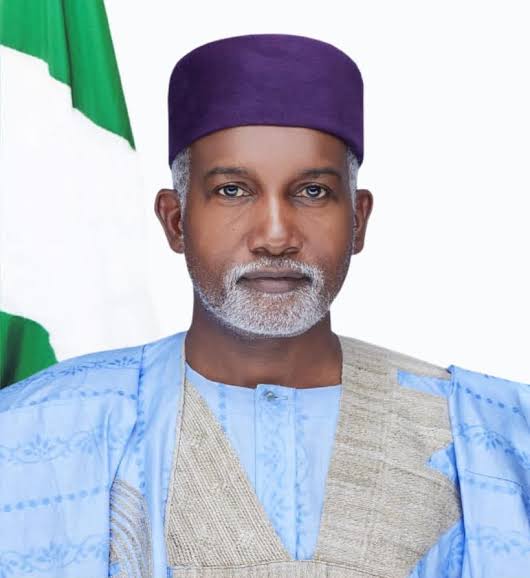
Minister of Foreign Affairs, Ambassador Yusuf Maitama Tuggar, has reaffirmed Nigeria’s deep commitment to regional integration, peace, and economic cooperation in the WestAfricansub-region.
Ambassador Tuggar stated this at the 50th anniversary celebration of the Economic Community of West African States (ECOWAS) with the theme “Stronger Together for a Brighter Future”, hosted in Lagos. 
In his welcome address he traced the journey of ECOWAS from its founding in 1975 to becoming a major force for unity, economic advancement, and collective security in West Africa.
Ambassador Tuggar reflected on the state of the region following independence from colonial powers, saying, “West African countries emerged from colonialism fragmented and underdeveloped. ECOWAS was born from the recognition that progress could not be achieved in isolation.”
He honoured the foresight of the founding fathers, noting that “they understood that integration—not division—was essential for growth, peace, and stability.”
Highlighting achievements, Ambassador Tuggar pointed to landmark ECOWAS initiatives such as the Community Levy, which enables financial autonomy, and projects like the ECOWAS Trade Liberalisation Scheme (ETLS), SIGMAT customs data integration, the Abidjan-Lagos and Abidjan-Dakar corridors, the West African Power Pool, and the African-Atlantic Gas Pipeline framework. These, he said, are practical expressions of the ECOWAS vision.
Touching on recent challenges, the Minister addressed the temporary withdrawal of three member states, urging patience and collective resolve: “Democracy is a process, not an event,” he remarked, adding, “No single country in this region can reach global competitiveness alone. Only through ECOWAS can West Africa realise its full potential.”
Looking ahead, Ambassador Tuggar emphasized opportunities emerging in the Atlantic basin and the importance of seizing them collectively. “This time, we will not be left behind,” he declared. “This time, we will be organised under ECOWAS. This time, it will be fair, inclusive, and driven by our own terms.”
Tuggar made a call to action, stressing the vital role of ECOWAS in addressing global and regional challenges: “From unregulated technologies and artificial intelligence to climate change, organised crime, and violent extremism—ECOWAS must lead. The need for strong regional institutions is more urgent now than ever.”
The ceremony marked not only a celebration of ECOWAS’s past achievements, but also a firm recommitment by Nigeria and the region to a shared, united future.