Connect with us

News

Reps Committee Reveals 60% of MDAs Fail to Comply with Financial Regulations

Published

on

ADVERTISEMENT
Zoom Ad
ADVERTISEMENT
Zoom Ad
 
…say financial leakage, limited audit implementation are challenges of fiscal governance
 
By Gloria Ikibah 

The House of Representatives Committee on Public Accounts has raised concerns over widespread lapses in financial compliance across federal institutions, and noted that more than 60 percent of Ministries, Departments, and Agencies (MDAs) have not yet aligned to established financial management standards.


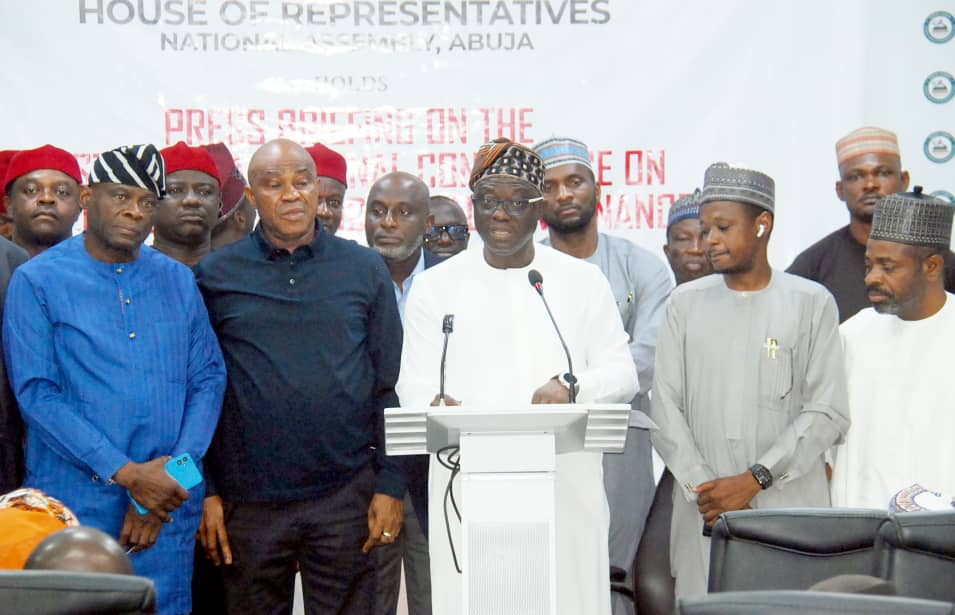
Speaking at a press briefing on the inaugural National Conference on Public Accounts and Fiscal Governance, the Committee Chairman, Rep. Bamidele Salam highlighted the persistence of several systemic issues, including unresolved public expenditures exceeding ₦250 billion, frequent unauthorized fund reallocations, and a yearly rise in audit observations.

Rep. Salam outlined additional challenges such as weak audit implementation cycles, significant financial inefficiencies within institutions, inconsistencies in public finance reporting, and minimal enforcement of statutory procedures across all tiers of government.

He emphasised that for Nigeria to fully harness the benefits of the current fiscal reform efforts led by the administration, it is essential to leverage the upcoming conference as a platform for inclusive dialogue and collaborative policy alignment among key stakeholders.

Advertisement
He said: “We strongly believe as important stakeholders, that it is imperative for us to leverage the opportunity of this unique conference to deepen collaboration among Public Accounts Committees, especially at the sub-national levels, Audit Institutions, Regulatory Bodies, and Anti-Corruption Agencies”.

The Chairman said the four-day national summit is aimed at strengthening Nigeria’s public financial systems and institutional accountability frameworks.

According to him, President Bola Tinubu is expected to formally open the conference, which will also feature keynote addresses by Vice President Kashim Shettima and Edwin W. Harris Jr., Director General of the Inter-Governmental Action Group Against Money Laundering in West Africa (GIABA).

Rep. Salam described the conference as a strategic initiative designed to enhance transparency, efficiency, and integrity in fiscal management. 

The conference is organised by the Public Accounts Committee in collaboration with the House of Representatives, seeks to align Nigeria’s financial oversight mechanisms with international best practices while integrating the Renewed Hope Agenda into broader governance frameworks across the region.

Advertisement

He emphasised that while fiscal reforms have gained momentum under the current administration, entrenched structural barriers continue to affect performance and accountability outcomes. 

He further noted that the conference is both timely and essential as Nigeria moves to deepen its commitment to reforms and responsible financial stewardship.

The event will also serve as a precursor to the Annual Conference of the West African Association of Public Accounts Committees (WAPAC), which Nigeria will host in 2025. According to Salam, this national gathering has been carefully designed to yield institutional value by focusing on capacity building, skill development, and modern audit techniques.

Participants, including public accounts committees, auditors, financial managers, and regulatory officers, will engage in hands-on sessions covering tools for effective oversight, performance audits, and policy implementation.

Advertisement

The forum will encourage dialogue among local and international stakeholders, promoting knowledge-sharing on reforms, digital tools in fiscal governance, and strategies to strengthen the enforcement of audit recommendations.

A major outcome of the conference will be the harmonization of existing laws and procedures to align practices at national and sub-national levels. This is aimed at improving consistency across public financial oversight bodies and enhancing their effectiveness.

Salam concluded by affirming the event’s objective of uniting key stakeholders behind a shared vision of transparency, efficient resource use, and long-term accountability in public finance.
He stressed that at the end of the conference, the committee expect a significant reduction in unaccounted expenditures from over ₦300 Billion to less than ₦1Billion in the next fiscal year 2026, a drop in the number of audit queries and rate of non-compliance with financial regulations from over 60% to less than double digit at 9% through rigorous capacity building development and a measurable significant improvement in Nigeria’s Fiscal Governance Health Index (FGHI) across all levels of government through enhanced transparency measures using digital technology tools for sustainable national development.
 
Responding to questions from journalists, Rep. Salam said: ‘there is no doubt in the fact that as a country, we still have a long way to go in terms of deepening our fiscal governance systems and structures, and that is why almost all tiers of government, executive, legislative and the judiciary have at various points in time had to have interventions on issues coming out of mismanagement of public resources.
 
“When you have a country as large and as diverse as Nigeria, you have to put some things in place to ensure that you don’t allow people to commit infractions and get away with it because of the span of time it takes to track most of this expenditure. And one of the problems we have identified in the Public Accounts Committee is the fact that, for example, as we speak, the report we have before the National Assembly is the Auditor General’s report for 2021. 
 
“In most cases, those who were alleged to have committed those infractions, have retired, some have changed their office and job role, some have even gone to the world beyond. And so, when you sit down to consider most of these issues, it becomes a little bit tricky and difficult to get to the root of some of the matters, because those who are the present occupiers of the office at the moment, have little or no information on those things that happened. We believe that one of the ways through which we can bridge this very, very huge gap is to call all stakeholders to attention and learn from what happens elsewhere.
 
“We have had a study tour of the Public Accounts Committee in Ghana. We had a study tour of the Public Accounts Committee in Nairobi, Kenya. We had a study tour of the Public Accounts Committee in Rwanda and in each of these jurisdictions, we have discovered that the centrality of the Supreme Audit Institution, which is the Auditor General for the Federation, is very, very key to whatever you want to do, especially in the line of prevention of most of this corruption and mismanagement of resources. 
 
“But if that office itself is starved of resources or manpower, it will impact on its outputs. And don’t forget, it is that output of that committee that, by virtue of Sections 85 and 86 of the Constitution, referred to the Public Accounts Committee.
 
“The challenge I would however want to give members of the media is this. We laid a report on the expenditure of the COVID-19 expenditure, over a trillion naira, for COVID-19. The Public Accounts Committee laid a report. And for the first time in the history of the Public Accounts Committee in this institution, that report was considered by the House in daylight. It’s never happened since 1999.
 
“That report was passed. Now, I think I want to challenge us to go into that report and see some of those recommendations and the punitive measures that have been recommended. As we speak, this committee has also laid three different reports before the House, which will equally be considered very soon.
 
“If you can track some of these things, you will see a lot of application of existing laws and regulations and the punitive measures already recommended. We don’t even need new measures. We have enough provisions in our existing regulations and laws to deal with these matters.
 
“We are in Parliament, we are not the executive. Ours is to consider the report, make the recommendations, and send them to the appropriate agencies of government for enforcement. We are not the executive arm of government.
 
“To the best of our ability, we have been doing that, and we will still continue to do that as the Public Accounts Committee of the House. So it is obvious, if you ask whether one is happy, nobody is happy”.
Advertisement
Continue Reading
Advertisement
Click to comment

Warning: Undefined variable $user_ID in /home/naijuinz/public_html/wp-content/themes/zox-news/comments.php on line 49

You must be logged in to post a comment Login

Leave a Reply

News

Army arrests suspected kidnapper linked to Kaduna abduction

Published

on

By

ADVERTISEMENT
Zoom Ad
ADVERTISEMENT
Zoom Ad

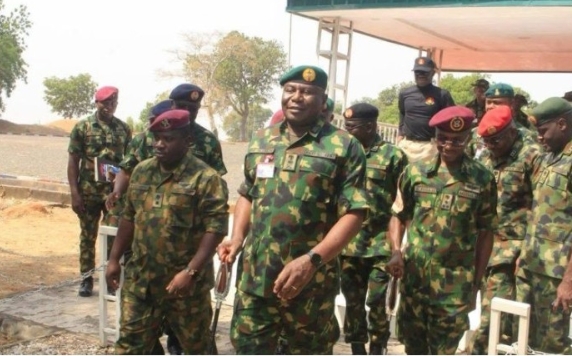
Troops of Operation ENDURING PEACE, OPEP, in collaboration with the Civilian Joint Task Force, CJTF, have arrested a suspected kidnapper linked to the abduction of a resident in Kauru Local Government Area of Kaduna State.

This was contained in a statement posted on X by the Nigerian Army.

The post identified the suspect as Buba Ali, 30, adding that he was arrested at about 12:45 pm on Sunday, August 9, at Binawa village in Kauru Local Government Area.

According to post, the suspect was arrested during a joint operation conducted by troops of Sector 7 OPEP and members of the CJTF.

Advertisement

It said the suspect was reportedly linked to the kidnapping of Alhaji Tasi, who was abducted in the village.

“Following his arrest, Ali was taken into custody and is currently being interrogated by security personnel.

“The ongoing investigation is focused on obtaining information that could lead to the identification and arrest of other members of the suspected kidnapping gang,” the Army said.

Advertisement
Continue Reading

News

FFK fumes as Islamic scholar says those against Muslim-Muslim ticket should leave Nigeria

Published

on

By

ADVERTISEMENT
Zoom Ad
ADVERTISEMENT
Zoom Ad

Nigerian ambassador to South Africa, Femi Fani-Kayode, has rejected claims by an Islamic scholar, Sheikh Yahaya Jingir, that Nigeria is a Muslim country.

In a viral video, Sheikh Jingir, who was preaching to Muslims at an event, said “if you don’t want to accept a Muslim-Muslim ticket, you should leave Nigeria because it belongs to us”.

The comment has continued to generate backlash online as Christians rejected the claim.

Reacting, Fani-kayode in a statement posted on his official X handle on Sunday night, said the cleric’s remark is unhelpful and untrue.

Advertisement

“Worse of all is the fact that it is highly provocative,” the former aviation minister said.

“Kindly take note that it is a very slippery and dangerous slope to take and is best avoided. Nigeria is NOT a Muslim country and neither is she a Christian country.

“She is a SECULAR and MULTI-RELIGIOUS state comprising BOTH Christians and Muslims in equal numbers and that is our strength,” FFK added.

He further stated that President Bola Tinubu’s Muslim/Muslim ticket for 2027 is gaining acceptance “only because of the calibre, ability, sincerity of purpose, character, utility and electoral strength of our Presidential and Vice Presidential candidates and their ability to deliver and not because they are Muslims”.

Advertisement

“One day we may have a Christian/Christian ticket too because with God all things are possible,” he added.

Continue Reading

News

Osun Commissioner released on bail after Ilesa APC rally shooting

Published

on

By

ADVERTISEMENT
Zoom Ad
ADVERTISEMENT
Zoom Ad

The Osun State Police Command has confirmed the release of the state Commissioner for Environment and Sanitation, Moyowa Adejoorin, who was arrested in connection with a shooting incident at an All Progressives Congress, APC, rally in Ilesa.

The incident occurred on Saturday and reportedly left four people injured, including a teenager identified as Tobi Ilesanmi.

The command’s spokesperson, DSP Abiodun Ojelabi, said Adejoorin was taken into custody after police officers arrived at the scene, secured the area and began collecting evidence.

According to Ojelabi, the commissioner’s vehicle was stopped at the location, where an Amotekun operative allegedly linked to the shooting was also found.

Advertisement

“Immediately the incident was reported, our personnel moved to the scene and cordoned off the area before some exhibits were recovered, which included expended cartridges and Amotekun personnel caps.

“Also, Mr Adejoorin was arrested at the scene and taken to the command for questioning as part of the investigation process,” Ojelabi said.

The development came amid heightened attention to the incident after a video circulated on social media on Sunday showing Adejoorin leaving the police command.

Confirming the development, Ojelabi told Vanguard that the commissioner had been released on bail but said he was still awaiting clarification on the status of the Amotekun operative who was arrested alongside him.

Advertisement

“It is true that the commissioner has been released on bail today, but I am yet to clear the situation with the Amotekun personnel arrested with him,” he said.

Police investigations into the circumstances surrounding the shooting are ongoing.

Continue Reading

Trending

Copyright © 2024 Naija Blitz News