



ADVERTISEMENT

ADVERTISEMENT

By Gloria Ikibah
The House of Representatives has called for the urgent need to empower Nigerian youths through structured vocational and entrepreneurial training.
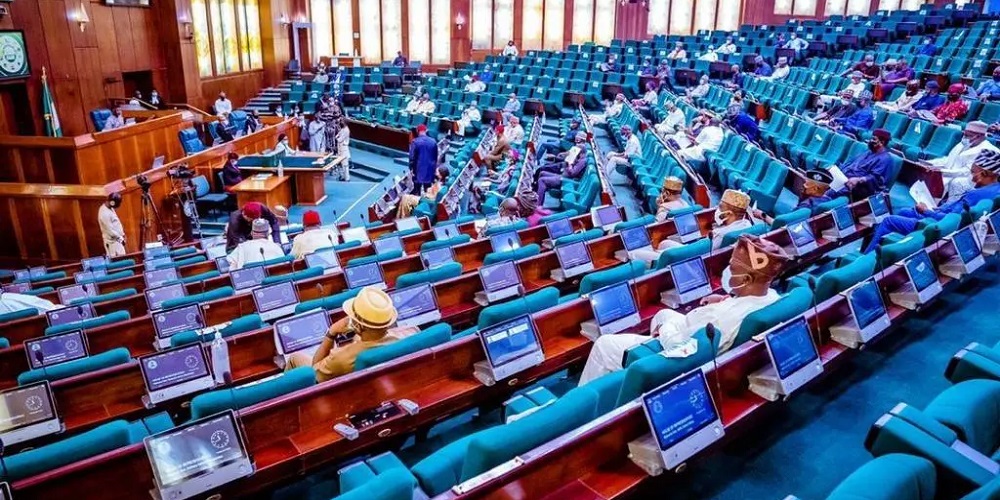
Naijablitznews.com reports that the House commenced legislative action on a bill seeking to establish federal vocational and skills training centres across Nigeria’s 774 local government areas in a bid to tackle youth unemployment and drive national development through alternative education.
At the maiden public hearing on the proposed legislation by the House Committee on Alternative Education, the Chairman, Rep. Ibrahim Almustapha said the session marked a significant step at addressing the country’s long-standing gaps in skills acquisition and technical training.
The Chairman said the initiative was a commitment to the future of the nation, underscoring the global shift toward skill-based economies driven by technology and innovation.
He daid: “In a world that is rapidly evolving, driven by technological advancements and changing market demands, it is imperative that we equip our young people with the necessary skills to thrive. The establishment of these centres is not just a policy initiative; it is a national imperative”.
The hearing featured deliberations on nine related bills, including proposals for the creation of: National Institute for Technical and Vocational Education, Kalgo, Kebbi State; National Vocational Training Centre in all 774 LGAs (HB. 736); Federal College of Entrepreneurship and Skills Acquisition, Maiduguri, Borno State; and Federal Vocational and Entrepreneurship Training Centre, Mallam Madori, Jigawa State
Others are Federal Technical and Vocational Training Center, Aba, Abia State; Federal Vocational Training Center, Riyom, Plateau State; Federal College of Entrepreneurship and Skills Acquisition, Bunza, Kebbi State; Federal College of Entrepreneurship and Skills Acquisition, Ntigha, Abia State; and National Vocational and Entrepreneurship Institute, Jos, Plateau State.
According to the Committee, these proposed centres would serve as a vehicle for equipping Nigerians, especially those without formal primary, secondary, or tertiary education, with practical skills to ensure self-reliance and contribute meaningfully to national economic growth.
The Chairman praised the Speaker of the House, Rep. Tajudeen Abbas, for establishing the Committee on Alternative Education for the first time in Nigeria’s legislative history, and described it as a forward-looking decision aimed at bridging legislative and institutional gaps in non-formal education and training.
“Our Committee is not only focused on making this sector a key alternative source of revenue and economic growth, but also on helping to develop institutions that will impart knowledge and skills to build our nation through progressive legislation.
“This platform gives us the opportunity to tap into the views of stakeholders, experts, and citizens who will ultimately be the beneficiaries of these initiatives,” he added.
The lawmaker acknowledged the contributions of Committee members and expressed gratitude to stakeholders from the public and private sectors, including educators, government officials, civil society actors, and industry leaders who attended the hearing.
Almustapha stressed the broader objective of the initiative to provide Nigerian youths with real opportunities to thrive in an increasingly competitive global economy.
“I encourage each of you to share your thoughts candidly. We must work together to ensure that the proposed bills are comprehensive, inclusive, and tailored to meet the diverse needs of our country.
“Let us remember that the future of Nigeria rests in the hands of our youth. It is our responsibility to provide them with the opportunities they deserve. Together, we can build a brighter future through education, skills training, and empowerment,” he urged.
The Speaker Abbas emphasised the resolve tof the 10th House to ensure empowerment of Nigerian youths through vocational and skills training.
He said: “In a world that is rapidly evolving, driven by technological advancements and changing market demands, it is imperative that we equip our young people with the necessary skills to thrive. The establishment of these centres is not just a policy initiative; it is a commitment to the future of our nation.
“Again, it is common knowledge that vocational training and entrepreneurial skill acquisition is a foundation and catalyst to the growth of nations like Nigeria as her economy depends on the contributions of this vital sector.
“Nigeria, by any standard, is well endowed with youthful population readily available to acquire vocational training and entrepreneurial skills and use same for self-reliance and nation building.
“The fact that our vocational and entrepreneurial skill acquisition sector has not translated into a desirable outcome has remained a concern”, he said.
The Speaker who was represented by Rep. Alexander Mascot Ikwechegh , assured that as legislators charged with law making, oversighting as well as representing the sector, the Committee is not only focused on making the sector a key alternative source of revenue and economic growth, but also poised to contribute in the development of centers that will impact skills and knowledge for the nation through progressive legislations.
He called for the release of funds for existing vocational centres, stressing that many of them are currently underfunded and unable to function at their full potential.
Chairman, House Committee on Financial Crimes, Rep. Ginger Onwusibe, argued that other institutions might be of greater priority in some LGAs than vocational centres.
“Let us critically look at it and see the workability and fit it into the area that needs it,” he said.
Also speaking, Rep. Olatunji Akinosi described the bill as “one of the most important bills this 10th assembly”.
“Before now, Nigerians have attached so much importance to having certificates. The countries we have tried to emulate do not have this kind of system. Your technical worth makes so much importance to them,” he said.
Rep. Olatunji argued that Nigeria’s overemphasis on academic certificates hinders national progress, noting that developed countries like China, the US, the UK, and Germany value technical skills over paper qualifications.
The lawmaker added that Nigeria should shift focus from credentials to practical competence.
Other stakeholders who spoke on the objectives of proposed legislations expressed optimism that the bills when passed into law will boost Entrepreneurial skills and country’s industrialisation programmes.