

Connect with us

News

Peter Obi and the strategic messiness of real reform

Published

on

ADVERTISEMENT
Zoom Ad
ADVERTISEMENT
Zoom Ad

By Paul Okolo

In Nigeria’s turbulent journey towards nationhood, the pursuit of power is rarely gentle. It is a contest of vision, grit, and, more often than not, grim necessity.

Let us speak the truth without any softening proverb: nation-building is not a walk in the park. It is a prolonged tug-of-war between lofty ideals and hard realities, between the promise of a better tomorrow and the ghosts of an imperfect past.

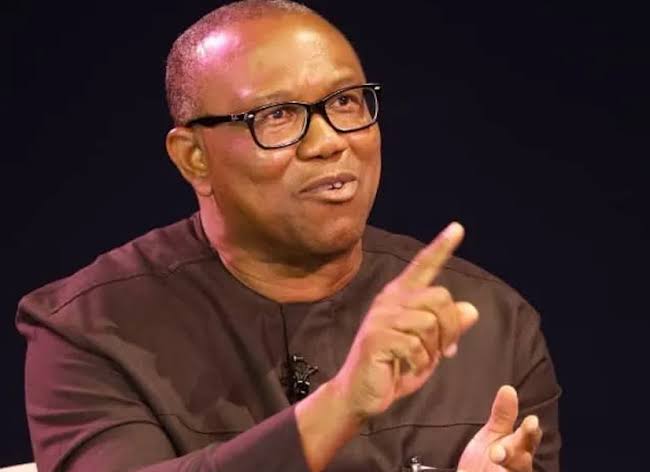
Into this fraught arena steps Peter Obi once more, this time not as the lone reformer of 2023, but as a prominent figure in the African Democratic Congress (ADC)-led opposition coalition for the 2027 elections.

Advertisement

For some, Obi’s move reeks of compromise. For others, it is the logical next phase of his journey. Critics have rushed to paint it as a betrayal of his reformist image, a dalliance with the same old establishment figures he once stood against. But beneath the surface of outrage lies a deeper truth.

Coalition-building, far from being a betrayal of principle, is the very terrain upon which credible power is constructed in a democracy. The real test is not whether Obi stands alone, but whether he can lead others towards a shared vision of national renewal.

If Nigeria is to move forward, then reformers like Obi must not only preach from the margins but also learn to negotiate at the centre.

● Fear of losing the Obidient base

Advertisement

The most emotionally charged criticism so far has been that Obi risks alienating his Obidient movement. These are the young Nigerians, urban professionals, market women, and first-time voters who saw in him a symbol of hope and a break from the past. By aligning with a broader coalition, critics argue that he dilutes his brand.

Yet this argument ignores the essence of Obi’s appeal. His base is not built on rigid party loyalty but on belief in his vision: fiscal discipline, inclusive governance, and sincere leadership.

His support was never about Labour Party letterheads. It was about a new kind of politics. Those who joined Labour Party after Obi joined did not do so because they suddenly saw the LP as some shining light in the dark. They joined simply because Obi joined and they believed in his agenda.

Now, if Obi clearly communicates that this coalition is the vehicle to amplify that agenda, not abandon it, then his base will understand.

Advertisement

As an aside, Tinubu’s political transitions, from the AD to the ACN to the APC, did not erode his Lagos base. Likewise, Obi’s record in Anambra, including prudent financial management and investment in education, remains the most persuasive argument for continued support.

● The “recycled politicians” dilemma

The presence of Atiku Abubakar, David Mark, and Nasir el-Rufai within the coalition has fuelled accusations that Obi is now dining with the same political class he once challenged. The charge is emotionally potent, but intellectually simplistic.

Nigeria’s political terrain is not a Utopia. Building a viable electoral alternative requires coalition with those who carry institutional memory, political reach, and experience in navigating the federal structure.

Advertisement

What matters is not whether Obi sits in the same room with veterans, but whether he bends to their agenda or they bend to his.

If we do not want to be economical with the truth, we will all recall that Tinubu’s 2013 merger to form the APC was criticised as an alliance of strange bedfellows. Yet, it led to the first peaceful handover of power in Nigeria’s history. Reform does not mean exclusion. It means steering the ship in a new direction, even if it is filled with old sailors.

● Labour Party turmoil

The Julius Abure-led Labour Party faction has threatened fire and brimstone, accusing Obi of dual loyalty. But in truth, the Labour Party is as divided internally as it is externally.

Advertisement

Obi was not born inside the Labour Party. He found a platform there when others would not offer one. And he built a movement from the ground up.

Before we all start acting as if we’ve just arrived from Mars, let us remember that party conflicts are part of Nigeria’s political DNA. What is unusual is the magnitude of the movement Obi built around himself.

His allegiance, by every public measure, has always been to the Nigerian people. The Labour Party’s factional bickering is unlikely to dent his momentum, especially if he either resolves matters internally or carries his base into the coalition as a unified force.

Just as Tinubu left the AD to form the ACN and later helped birth the APC, Obi can use this moment to build a broader national platform.

Advertisement

● Opportunism or adaptability?

Obi’s journey from APGA to PDP to Labour to the ADC-led coalition has opened him up to charges of political inconsistency. In the Nigerian imagination, party-switching often smells of opportunism. But viewed differently, it also reflects adaptability in an unpredictable landscape.

To be clear, Obi has remained consistent in one crucial area: his values. Across all platforms, he has preached prudence, productivity, and people-centred governance.

He left Anambra with liquid cash, invested in education, and governed without ostentation. These are not the markings of a man chasing power for its own sake.

Advertisement

Since the critics have conveniently forgotten, let us remind them that Tinubu, too, moved across parties. Was it opportunistic when he did so? Or, charges of opportunism only arise when it is Obi?

To dismiss accusations of opportunism, Peter Obi only needs to lean on his track record and remind Nigerians that he is adapting not to survive but to lead.

● Risk of marginalisation within the Coalition

Festus Keyamo and others have argued that Obi could be used for his popularity and then discarded, with the presidential ticket going to more entrenched figures.

Advertisement

To be fair, that is a cynical view. But it is also one that cannot be dismissed outright.

Obi, however, enters this coalition not as an underdog but as the most popular opposition figure from the 2023 cycle. He won the Federal Capital Territory. He won Lagos. He amassed over six million votes without a traditional structure. His moral currency, particularly among youth, cannot be ignored. Okwute, the Rock, remains solid.

Moreover, Obi has demonstrated the right strategic instincts in building a national profile against impossible odds. The same instinct can preserve his influence within this coalition.

● Legal concerns about party affiliation

Advertisement

Questions have emerged about whether Obi must formally resign from the Labour Party before aligning with the ADC.

Concerns about dual affiliations are valid but manageable. Nigeria’s electoral laws require formal resignation, and Obi, with the ADC’s experienced legal team, is likely ensuring compliance well before 2027.

Or, are we forgetting that Tinubu’s shift from the AD to ACN involved similar manoeuvring and did not result in disqualification? Obi and the ADC will likely tread the same cautious path. They, after all, are not babies in politics.

● An ideologically hollow Coalition?

Advertisement

Another concern is that the ADC-led coalition has no ideological spine, that it exists solely to unseat President Tinubu.

Of course, there is some truth to this critique, but it is not terminal. Coalitions often begin in opposition and mature into vision-bearing entities.

Again, let us remind these latter-day critics that the APC’s 2015 “Change” slogan was light on detail but rich in electoral value. Only after seizing power did the party begin to define its priorities and policies, all to the detriment of the Nigerian people.

Obi’s job now is to ensure that this coalition is more than a gang of disgruntled elites. A difficult task, to be sure, but his 2023 manifesto, with its clear economic and social vision, can serve as the ideological anchor.

Advertisement

■ Exclusion of Youth and Women

The coalition’s unveiling lacked visible representation from youth and women, prompting immediate concern from voices like Aisha Yesufu.

This critique, raised by voices like Aisha Yesufu, is valid but premature. Obi’s 2023 campaign thrived on youth and women organisers, and he can ensure their inclusion through leadership quotas and policy priorities, as he did with Anambra’s education programmes targeting young people. Coalitions evolve, and Obi’s track record suggests he will not let youth and women be sidelined.

Sincerity in Question

Advertisement

Allegations from Labour Party figures such as Abayomi Arabambi about Obi’s sincerity are clearly politically motivated.

Arabambi’s claims lack evidence and clash with Obi’s record of integrity, such as leaving Anambra awash with liquid cash and rejecting lavish perks as governor and ex-governor. Such politically motivated noise cannot overshadow his proven sincerity.

The One-Term Promise Doubt

Doubts about Obi’s one-term pledge are speculative and peripheral. His credibility rests on governance, not soundbites: Anambra’s financial status at the time he left office and transparent leadership testify to his honesty, unlike many peers who avoid such commitments.

Advertisement

While Obi is only human and not a celestial being residing in the heavens, pound for pound he is more honest than any other politician of his calibre. Indeed, even his critics admit: “Obi will not steal, and he will not let others steal.”

To sum it all up, as the renowned honest manager of the people’s resources that he is, Peter Obi’s entrance into the ADC-led coalition is what imbues the movement with possibility.

For Obi, this is a strategic evolution rooted in the brutal realisties of Nigerian politics. To build a nation, one must first win it. And to win it, one must be willing to enter complex partnerships, not for self-preservation, but for national transformation.

Coalitions are not kumbaya affairs. They are messy, loud, and riddled with contradictions. But if guided by principle, they can become the very tools through which broken nations are repaired.

Advertisement

This is not about Peter Obi the saint, because he is only human and has never claimed sainthood anywhere. It is about Peter Obi the strategist, stepping into the arena to battle not just for relevance, but for reform.

Let us not lose sight of the stakes. Nigeria teeters on the brink of chronic instability. A flailing economy, mass youth unemployment, pervasive insecurity, and a political culture allergic to reform. If ever there was a time to prioritise strategy over sentiment, this is it.

With Nigeria grappling with soaring inflation and economic hardship, Obi’s coalition is not just necessary, it may be the only path to repair a nation in urgent need of reform.

■ Paul Okolo, a political analyst, is based in Abuja.

Advertisement
Continue Reading
Advertisement
Click to comment

Warning: Undefined variable $user_ID in /home/naijuinz/public_html/wp-content/themes/zox-news/comments.php on line 49

You must be logged in to post a comment Login

Leave a Reply

News

How I delivered ten pregnant women while in captivity, nurse reveals

Published

on

ADVERTISEMENT
Zoom Ad
ADVERTISEMENT
Zoom Ad


A nurse who recently regained her freedom after nearly six months in captivity has narratted the severe conditions endured by the abducted women and children, saying she helped 10 pregnant women give birth without gloves or proper medical equipment.

Amirah Salihu was among the victims abducted during the February 3 attack on Woro and Nuku communities in Kaiama Local Government Area of Kwara State.

Salihu, who is the daughter of the chief of Woro community, disclosed her experience during an interview on Channels Television’s Politics Today.

Advertisement

She said the captives faced acute food shortages and were forced to sleep in exposed locations, including near a river, where they were frequently drenched by rainfall.

According to her, the abductors often gave them little food, with guinea corn, salt and seasoning sometimes serving as their only meal.

The nurse said her professional training became crucial when some of the women went into labour during their captivity.

She explained that she assisted about 10 pregnant women to deliver their babies despite the absence of gloves and other essential medical supplies.

Advertisement

She said, “When the pregnant women started going into labour, I had to assist them. I helped about 10 women deliver their babies, even though I had no gloves or proper equipment.

“It was difficult, but I had to do what I could to help them survive and deliver safely.”

Salihu added that the abductors eventually discovered she was a nurse and attempted to persuade her to remain with them because of her medical knowledge.

She said she rejected the proposal because her priority was to regain her freedom and return to her family.

Advertisement

The rescued victim also recalled the killing of two of her brothers during the attack, alleging that the assailants targeted her family because of her father’s opposition to their activities in the community.

She said her father had previously resisted attempts by the attackers to gain access to Woro and had sought military intervention to protect the residents.

According to her, the attackers struck when the soldiers were no longer present in the community.

She said her father had previously resisted attempts by the attackers to gain access to Woro and had sought military intervention to protect the residents.

Advertisement

According to her, the attackers struck when the soldiers were no longer present in the community.

Salihu further said the abductors justified their actions by claiming they wanted residents to abandon Nigeria’s democratic system and follow their interpretation of religious laws.

However, when asked about sexual violence during the period, she said she was not aware of any rape or sexual assault among the captives.

The victims were part of the 176 women and children abducted during the February 3 attack on Woro and neighbouring Nuku.

Advertisement

They were released on Wednesday after spending almost six months with their abductors. The Kwara State Government later disclosed that 13 children had died in captivity, while 12 others were yet to return.

Kwara State Governor, AbdulRahman AbdulRazaq, received the freed victims in Ilorin and commiserated with families who lost loved ones.

He subsequently visited a hospital where 14 rescued victims were undergoing treatment, including three women who delivered babies while in captivity.

Advertisement
Continue Reading

Foreign

STRATEGIC AUTONOMY: NIGERIA’S DOCTRINE FOR SELF-DETERMINATION IN A MULTIPOLAR WORLD

Published

on

ADVERTISEMENT
Zoom Ad
ADVERTISEMENT
Zoom Ad

In an era defined by geopolitical competition, trade wars, sanctions regimes, and shifting alliances, one phrase has migrated from European policy papers to the heart of African diplomacy: “Strategic Autonomy”.

For Nigeria, this is not a new experiment in isolation, nor is it a nostalgic return to Cold War non-alignment. As I outlined in a recent address from the Ministry of Foreign Affairs in Abuja, it is something far more direct and more urgent.

Strategic autonomy is alignment to Nigerian national interest. Once you are clear in what constitutes your national interest, you align with those interests regardless of which party is at the receiving end. That is the foundation. I am aware of scholarly publications that was recently put together by the Nigerian Institute of International Affairs on the subject.

While the Ministry prepares the full concept note charting new fronts in a multi polar world, let me share the preliminary framework guiding Nigeria’s foreign policy under President Bola Ahmed Tinubu.

Advertisement

Our goal is simple: to ensure that Nigeria, and by extension Africa, is not an object of geopolitics, but a subject that defines its own future.

What Strategic Autonomy means for Nigeria and Africa
Strategic autonomy is often misunderstood as withdrawal. It is the opposite. It is engagement on our terms. Today, Nigerian Foreign Policy has shifted. Gone is the era of reactive alignment. The Tinubu 4Ds agenda is anchored on strategies that are clearly designed to bring succor to Nigerians. The deliberate pursuit of Nigeria’s national interest across economic, security, technological, and diplomatic domains, without being locked into any single bloc. Nigeria’s strategic autonomy rests on 5 pillars in a world of continuous alignment. Together, they form the blueprint for how Nigeria engages a world that is no longer unipolar, but contested, transactional, and opportunity-rich.

NATIONAL INTEREST, NIGERIA FIRST 
Alignment to Nigerian national interest is the guiding rule. For Nigeria, Foreign Policy begins at home. Every treaty, partnership, and diplomatic gesture is measured against one question: does it deliver jobs, infrastructure, security, defence and dignity for Nigerians?

This principle was tested in the enforcement of the One China Policy. When diplomatic lines were blurred, the Ministry acted decisively: relocating trade missions from Abuja to Lagos, Nigeria’s commercial hub, and reaffirming that Nigeria speaks with one voice.  There is no room for diplomatic blunder in Nigeria. The message is clear: Nigeria will be a partner, not a pawn. Strategic autonomy means clarity of position first, and flexibility in tactics second.

Advertisement

ECONOMIC DIVERSIFICATION 
AfCFTA + global partnerships like China’s zero-tariff access. Nigeria is done with aid-for-diplomacy. The new model is trade-for-growth. Under President Bola Ahmed Tinubu’s Renewed Hope Agenda, Nigeria is leveraging two levers simultaneously: 

1. Continental integration through the African Continental Free Trade Area, to build regional value chains. 

2. Global partnerships that open markets. China’s zero-tariff policy for eligible Nigerian exports is a case in point, creating new pathways for agriculture, manufacturing, and solid minerals to reach 1.4 billion consumers.

From the Lagos-Calabar coastal transport system to industrial parks in Ogun and Lekki, Chinese, European, and Gulf investments are being steered toward productive sectors. The goal is not dependency, but diversification: more partners, more markets, more Nigerian-made exports.

Advertisement

SECURITY SOVEREIGNTY
African-led, but open to any partner that delivers results. Nigeria’s security doctrine is rooted in the principle that Africans must lead African solutions. ECOWAS, the AU, and regional counter-terrorism frameworks remain central.

But strategic autonomy also means pragmatism. On terrorism, maritime security in the Gulf of Guinea, and cyber threats, Nigeria is open to cooperation with any partner, East or West that brings intelligence, technology, and capacity without conditions that undermine sovereignty. The benchmark is simple: results for Nigerian communities. Partnerships are judged not by ideology, but by impact on the ground.

TECHNOLOGICAL AGENCY 
Build, don’t just buy. Lead in AI and digital infrastructure. The 21st century will be won on data, chips, and talent. Nigeria refuses to be only a consumer. This is the essence of Minister Bosun Tijjani’s reforms in our digital ecosystem.  Through partnerships in 5G, fiber optics, and smart cities, Nigeria is negotiating technology transfer, not just procurement. Engagement with the World Artificial Intelligence Organization and related partnerships signal intent: to move from adoption to authorship.

The aim is to build domestic capacity in AI, fintech, and digital governance, so that Nigerian developers, not just foreign vendors, shape the platforms used daily by 200 million Nigerians. Technological agency is sovereignty in the digital age.

Advertisement

DIPLOMATIC FLEXIBILITY 
Engage all major powers without being locked into one camp. In a multipolar world, alignment is a choice made per issue, not per decade. Nigeria maintains a Comprehensive Strategic Partnership with China on infrastructure and more. It deepens trade and security ties with the US and EU. It expands South-South cooperation with India, Brazil, and the Gulf. It leads on the continent through AfCFTA and AU reform.

This is not non-alignment. It is multi-alignment: engaging all, belonging to none, and extracting maximum value for Nigeria from each relationship. Strategic autonomy is alignment to Nigerian national interests. Nigeria’s 5 Pillars offer more than a foreign policy. They offer a template for mid-sized and emerging powers navigating great power competition. It is a policy of conviction without rigidity. Of partnership without dependence. Of ambition without illusion.

Nigeria will continue to deepen partnerships that deliver infrastructure, jobs, and technology, but always on Nigerian terms. In 2026, the measure of sovereignty is not who you oppose. It is what you are able to build.

We can no longer afford an economy built only on exporting raw materials to one market and importing finished goods from another. The African Continental Free Trade Area gives us the platform to build regional value chains. At the same time, we must diversify globally. This is why we welcome China’s decision to grant zero-tariff treatment to 53 African countries, while we simultaneously deepen trade with the EU, the US, the Gulf, and our neighbors in ECOWAS. No single partner can meet all our development needs, and we will not be dependent on any one.

Advertisement

The primary duty of any government is the protection of its citizens. That principle must guide our security partnerships. African-led solutions through the AU and ECOWAS remain our first choice. But we will not outsource our judgment. We greatly appreciate the US but if any country says he can help me to wipe out terrorism in Nigeria in the next two weeks, will I say because I’m friend to the US I will not agree? No,”. The safety of Nigerians comes first. Strategic autonomy means we evaluate every security offer by one metric: does it deliver peace, security and stability for our people?

In a multipolar world, we must talk to everyone and be forced to choose no one. This is not duplicity. It is maturity. We have demonstrated this in recent weeks. We condemned Afrophobic attacks in South Africa because the dignity of Nigerians abroad is non-negotiable. We pushed the agenda at the recent ECOWAS Summit in Freetown Sierra Leone where President Tinubu’s voice was clear and unambiguous. At the same time, we are preserving and strengthening the Nigeria-South Africa strategic partnership because both countries benefit from trade, investment, and regional leadership. That is strategic autonomy in practice.

The 4D Agenda meets a fragmenting World
The global shifts make this doctrine necessary today.  Today, we have multipolarity. The unipolar moment has passed. Power is diffused across Washington, Beijing, Brussels, New Delhi, Riyadh, and other capitals. Under President Tinubu’s 4D Foreign Policy Agenda: Demography, Development, Diaspora and Democracy — Nigeria’s diplomacy is calibrated to one question: what does this mean for Nigerian citizens? Ideological blocs are secondary to results.

Africa has 60% of the world’s youngest population. By 2050, one in four people on earth will be African.  Nigeria will be the third most populated country in the world by 2050. We cannot allow our future to be scripted by others. We must define our own development model, centered on jobs, skills, and innovation. In this context, some analysts have described our approach as “pragmatism devoid of doctrine.” I disagree.

Advertisement

“I don’t agree with that kind of characterization. Everything foreign policy is about national interest,”.  What we are doing is giving that age-old principle a modern name and structure. We are drawing from our own history. As one of my lecturers at the University used to say, “ non-alignment is alignment to your national interest.” That remains true. Doctrine without delivery is rhetoric. For strategic autonomy to produce tangible benefits, Africa must take deliberate steps.

We must fully implement AfCFTA to unlock a $3.4 trillion single market. That means reducing tariffs, harmonizing standards, and building cross-border infrastructure. We must invest heavily in energy and infrastructure. No factory runs without power. No trade happens without roads, rail, and ports. Strategic autonomy requires industrial power.

Africa must speak with one voice in global forums — at the UN, G20, and WTO. Africa’s 54 countries carry more weight together than separately. It is time to protect and deepen democratic institutions. Autonomy should never be confused with authoritarianism. The legitimacy of our choices comes from the consent of our people.

Let me be clear. Strategic autonomy is not about turning our backs on partners. It is about choosing partners freely. It is the right to trade with anyone, learn from everyone, and be dominated by no one. The world is fragmenting into blocs. Africa’s best option is not to join a bloc, but to become a bloc ourselves — economically integrated, politically coherent, and diplomatically confident.

Advertisement


Written by Ambassador Sola Enikanolaiye,
Minister of State for Foreign Affairs, Federal Republic of Nigeria

Continue Reading

News

Bode George Still Angry Over His Failed PDP National Chairmanship Bid, No Regret Stopping Him – Wike

Published

on

ADVERTISEMENT
Zoom Ad
ADVERTISEMENT
Zoom Ad

The Federal Capital Territory (FCT) Minister, Nyesom Wike, has said that he had no regret Stopping Peoples Democratic Party (PDP) former Deputy National Chairman, Chief Bode George, from becoming the party National Chairman, saying; “his anger is because we didn’t allow him to be PDP National Chairman and no regret doing so.”

In a statement on Saturday, by his Senior Special Assistant on Public Communications and Social Media, Lere Olayinka, the FCT Minister said the political frustration of Bode George has further been compounded by the emergence of Deji Doherty, a personality he does not want to see as the one in charge of the party in Lagos State.

“He wanted to be PDP National Chairman, and was carrying on like the position was his birthright. We stopped him because it was the turn of the South-South. Since then, he has not stopped being angry.

“As a sitting governor, I visited his house in Maitama, Abuja, to appease him after the national convention, his wife attempted to walk me out, but for the intervention of former governor of Ondo state, Olusegun Mimiko,” the minister said.

Advertisement

He described Bode George as a failed politician, who despite all the privileges and power has not won anything for the PDP in Lagos State since 1999, adding that “We have managed him even though we know that he has no value. But as it is, since he wants to keep dancing naked in the market place of politics, we can’t but allow him.”

The Minister reiterated that leadership of a political party is not by name, title or being a founding father. Rather, it is about what you are able to bring to the table in terms of winning elections, and in this regard, Bode George is a complete disaster.

“Even his Unit 001 in Ward E2, Evans Street, Lagos Island, he has never won for the PDP. In 2019 Presidential election, APC had 84 votes while PDP had 40. In the 2023 elections, he transferred his voter’s card to Eti Osa, PDP had four votes in his polling unit,” Wike said.

Wike said since it appeared that he (Bode George) is not busy, he will continue to make his likes busy by creating reason for them to jump from one television station to the other.

Advertisement
Continue Reading

Trending

Copyright © 2024 Naija Blitz News