By Prof. Ifeanyi Odoziobodo


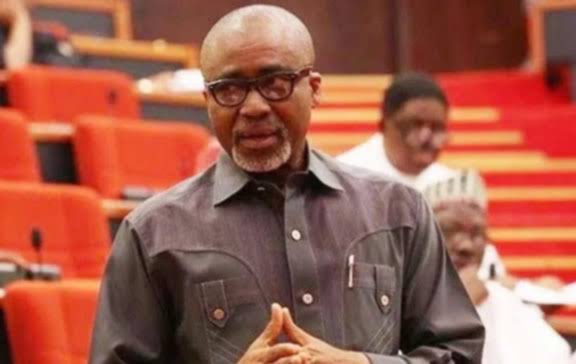
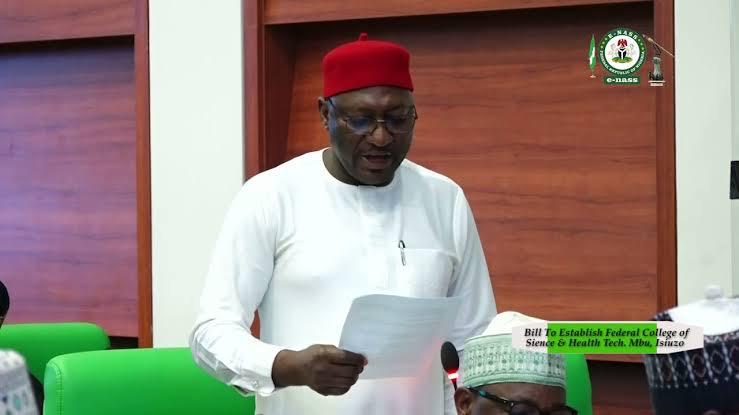
Hon. Prof. Paul Sunday Nnamchi arrived in politics to overthrow a 24-year dynasty rule supported by assertive leadership. In the best sense of the word, he was a renegade who broke through the glass ceiling. He was a fountain of creativity, a scholar who wandered into politics. His victory at the polls in gaining the Enugu East/Isi-Uzo seat in the House of Representatives is a victory at the polls and proof of the ability of leadership to effect change. He was forced into politics by the waves of the Obidient movement during the 2023 Nigerian elections.Prof. Nnamchi, who was elected to the 10th National Assembly to represent Enugu East/Isi-Uzo Federal Constituency on the Labour Party ticket (now the incumbent All Progressives Congress (APC) ticket), tells an engrossing story of unrepentant disruption, psychological discipline, and public duty.
His leadership style is a reinterpretation of leadership in terms of form, function, and style, rather than necessarily being one of representation.From Ivory Tower to the House of the PeoplePaul Nnamchi was a highly respected academic with a global reputation before entering politics. He has a Ph.D. in Biomaterial Engineering from the University of Sheffield and has collaborated with some of the top research institutes in the world, including the Max Planck Institute in Germany and TU Delft in the Netherlands. 
At the University of Nigeria, Nsukka, he was the Head of Biomedical Engineering. He was a pioneer in European and African research and a fellow of the Institute of Physics in the United Kingdom as well as the Nigerian Academy of Science.But for a successful career, Nnamchi made the bold jump from the university into public service. It was not a fantasy or diversion, rather an intentional act of civic duty. However, Nnamchi bravely left the university to enter public service in order to have a prosperous career. It was a deliberate act of civic responsibility rather than a fantasy or pastime. Plato once said, “The price good men pay for indifference to public affairs is to be ruled by evil men.” He frequently quoted this quote. For causes other than his own, he was called to public duty. His remarks, “Nigeria is at the crossroads,” “It needs people who are ready to raise the bar—to provide solutions that can enable us to exit this desperate situation,”Prof. Nnamchi believes that transformative ideas should not be restricted to academic settings and lecture halls. They needed to participate in policymaking, parliament, and above all, people’s daily lives. His switch from academic to lawmaker was more of a declaration that knowledge must be subordinated to the greater good than a professional decision.Disrupting the Political Status QuoProf. Nnamchi’s election victory was historic. He broke record in Enugu East Local Government Area of Enugu State. He ventured into a terrain that seemed not meant for sons of the poor, and came out successful. Running on the Labour Party ticket, he won the election to represent Enugu East/Isi-Uzo in the House of Representatives – an unthinkable challenge many thought it was, reminding Nigerians that anybody can be anything. His words echoed across the land: “With God’s grace and with discipline, a son of nobody can become somebody.” It wasn’t a campaign slogan, it was a battle cry for fairness, meritocracy, and the empowerment of youth in a nation whose politics has too often been closed to all but the ruling class. It wasn’t just a political win, it was symbolic. It was among the stripping away of entitlement by merit, of political heritage by choice. That paraphrases what then U.S. President Barack Obama once stated: “In the face of impossible odds, people who love this country can change it.” That was Obama’s victory; that of Nnamchi. A portent that Nigeria’s politics can change and its citizens can vote for competence instead of patronage.Education as a Tool for TransformationTrue to his background, education was one of the very first priorities of Prof. Nnamchi.
He showed his passion for education as a tool of empowerment and not just of policy. Before even his official inauguration, he gave notice of a pre-inauguration ICT and digital skills training program for youths in his constituency. In so doing, he echoes the sentiment of Nelson Mandela, who believes that “Education is the most powerful weapon which can be used to change the world.” Subsequently, he came up with the PPNTAYI (Prof. Paul Nnamchi Talent Acceleration for Youth Initiative)—an overall human capital development plan focusing on technology, creativity, and vocation skills. To his fellow citizens, he vowed this: their “vote of courage is my strength to do the right things when the time comes—and the time is now.” Through Prof. Nnamchi’s representation, the President of the Federal Republic of Nigeria, His Exc. President Bola Ahmed Tinubu in August 2025 signed into law a bill establishing the Federal University of Agriculture, Ako Nike, Enugu State, Prof. Nnamchi’s home town.While others promised and made campaign rhetoric, Prof. Nnamchi wagered on brains. He is aware that development has to be based on a trained and educated population, more so in a youth bulge country like Nigeria.Human-Centered GovernanceWhat makes Prof. Nnamchi unique is not only his brilliance but his accessibility. Emphasizing accessibility and listening, Prof. Nnamchi brings politics back to service rather than status.
His promise to constituents was straightforward and firm: “I will be a representative that the people can see, reach and touch.” By this he copies John Quincy Adams’ leadership philosophy, who insisted: that “If your actions inspire others to dream more, learn more, do more and become more, you are a leader.”His leadership is action-oriented, inclusive, and consultative. From youth empowerment to advocacy for infrastructure, he bases his actions on real people’s needs. He practices an open-door policy and engages with constituents on a regular basis not as a political ideology, but as a philosophy of leadership.Beyond legislation and projects, his presence in the National Assembly has brought intellectual ability to debates and a thoughtful perspective to bills.
As an academic-turned-MP, he approaches national issues with facts, context, and a mind on the future.By focusing on roads, education, health, and innovation, he is not just ruling over a constituency, he is developing human potential.Upholding Democratic ValuesIn September 2023, a court ruling controversially annulled his election, an action many interpreted as politically motivated. Prof. Nnamchi never turned to indignant vociferation nor desperation. He took his case to the courts with faith in due process, which in fact prevailed. Undeterred, he took the legal route, appealed, and was vindicated. His mandate was re-stated, affirming not only his personal integrity but also the potency of Nigeria’s judiciary when appropriately tested.In the agony, he remained steady and unruffled, advising Nigerians that democracy is the path to take and it should be kept safe with truth and not blood. His response was a political lesson in maturity and democratic faith.His defiance at that point cemented public belief in democracy and in the courts as an instrument of fairness.
In so doing, he embodied the essence of what Martin Luther King Jr. once stated that “The arc of the moral universe is long, but it bends toward justice.”Vision That Goes Beyond PoliticsDespite the mundane needs of representation, Prof. Nnamchi is a persistent beacon for Nigeria.
His voice is not just for his people. He speaks out against institutional injustice, he is against mis-governance, and he campaigns for one national identity. His belief in a greater Nigeria is indomitable. He has been a strong voice criticizing contradictions of poverty in the face of a backdrop of national prosperity, and he has advocated for a new political awareness in terms of justice, solidarity, and visionary planning. He is challenging the country to imagine a Nigeria where ethnicity does not intersect, where merit is not the measure of leadership, and where everybody’s children have an equal chance of making it. His representation is not tribal, transactional, or opportunistic but transformational. His philosophy aligns with that of Mahatma Gandhi, who reminded us: “You will never know what the outcome may be from what you do. If you do nothing, however, there will be no outcome.”Prof. Nnamchi has decided to act—to act with purpose, intention, and clarity.Conclusion: A Model for the FutureProf. Paul Nnamchi’s political journey is not merely about one man’s ascent, it is a blueprint for what Nigerian democracy could become. He is a reminder that good governance is possible when competence meets courage, and when vision is matched with integrity.As Nigeria makes its way through its myriad problems, from the unity of the nation to economic transformation, it shall require more such leaders as Prof. Paul Sunday Nnamchi: thinkers who do, and doers who think.In an era of political disillusionment, Paul Nnamchi is a living testimony that revolutionary representation is not only a desire, it is a reality.Prof. Ifeanyi Odoziobodo, PhD writes from Department of Political Science, Enugu State University of Science and Technology, Enugu, Nigeria.