Connect with us

News

Tinubu Urges Nigerians to Embrace Constitutional Review as Path to Stronger Democracy

Published

on

ADVERTISEMENT
Zoom Ad
ADVERTISEMENT
Zoom Ad

…as Abbas vow swift consideration, prompt transmission to State Assemblies for adoption

…constitution review must reflect will if the people – Kalu

By Gloria Ikibah

President Bola Ahmed Tinubu has reaffirmed his administration’s commitment to far-reaching constitutional reforms aimed at strengthening national institutions, promoting justice, and safeguarding fundamental rights.

Advertisement

The President also appealed to Nigerians to take active part in the ongoing constitutional review process, describing it as a historic opportunity to entrench good governance, inclusivity, and sustainable development.

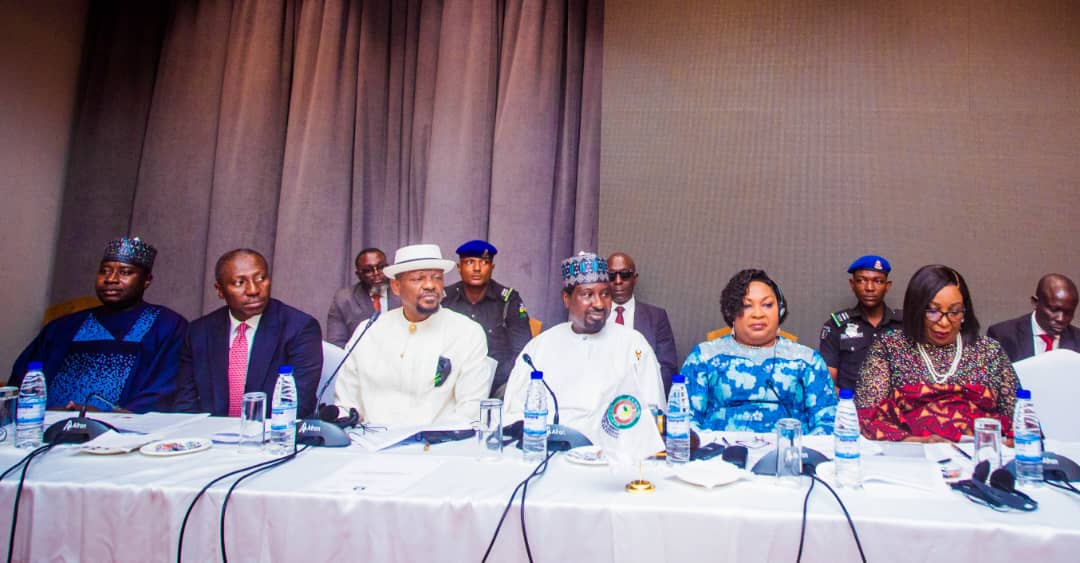
President Tinubu who was represented by the Secretary to the Government of the Federation (SGF), Senator George Akume, at the National Public Hearing on the Review of the 1999 Constitution (as amended) in Abuja on Monday, described the review exercise as a “golden opportunity” to deepen democracy and advance nation-building.

He commended the House of Representatives Committee on Constitution Review, chaired by Deputy Speaker, Rep. Benjamin Kalu, for establishing an inclusive platform that engages citizens, civil society, political parties, professional bodies, and traditional institutions in shaping the nation’s supreme law.

“The Constitution is the supreme law of the land. It is not static, but a living document that must continually respond to the realities, aspirations, and challenges of our people.

Advertisement

“I urge all participants to approach this exercise with a spirit of patriotism, responsibility, and constructive dialogue. The quality of ideas generated here will go a long way in shaping the laws and institutions that will serve generations yet unborn,” Tinubu stated.

The President stressed that the ongoing reforms align with his administration’s Renewed Hope Agenda, was designed to deliver good governance, social justice, and economic transformation across the country.

He assured Nigerians that his government would back every effort that strengthens participatory democracy and enhances national unity.

“I wish the Committee and all stakeholders fruitful deliberations, and I assure you that the outcome of this process will receive the deserved attention as part of our collective quest to build a stronger, more united, and prosperous Nigeria,” he added.

Advertisement

In his remarks, Speaker of the House of Representatives, Rep. Tajudeen Abbas, declaring the hearing open, described the exercise as “a significant moment in Nigeria’s democratic journey”, emphasising that the constitution must ultimately reflect the will of the people.

He further pledged that the process would not be weighed down by delays, promising that amendments would be swiftly considered by the National Assembly and promptly transmitted to State Assemblies for adoption.

He said: “Reform delayed is reform denied, and Nigerians deserve clarity and closure.

“We intend to vote on the proposals expeditiously and give the States enough time to deliberate and endorse the people’s will”.

Advertisement

The Speaker highlighted several transformative amendments under consideration:

Reserved seats for women in the National and State Assemblies, aimed at accelerating gender inclusion and addressing Nigeria’s dismal five percent female representation in parliament.

Guaranteed representation for persons with disabilities, alongside gender quotas in ministerial appointments.

Formal advisory roles for traditional rulers in peacebuilding and community security.

Advertisement

He argued that such reforms would make Nigeria’s democracy more representative, responsive, and just.

Speaker Abbas further noted that many proposals align with President Tinubu’s Renewed Hope Agenda, providing the “legal chassis” for reforms in security, economic revitalisation, inclusivity, and transparent governance.

Deputy Speaker, Rep Benjamin Kalu, who chairs the Constitution Review Committee, highlighted the extensive consultations that shaped the ongoing amendment process.
He revealed that the committee had collated 87 amendment bills drawn from nationwide public hearings, memoranda, and regional engagements.

Among the most significant proposals are electoral reforms, including provision for independent candidacy, the creation of an Electoral Offences Commission, and strict timelines for resolving pre-election disputes.

Advertisement

Another landmark proposal is the devolution of powers, with a bill seeking to move policing from the Exclusive Legislative List to the Concurrent List, effectively opening the door to state and community policing.

Local government autonomy also features prominently, with measures designed to guarantee financial and administrative independence for grassroots governance.

Kalu stressed that these were not impositions by lawmakers but rather “the thought-out demands and memoranda of the Nigerian people themselves.”

“The ultimate authority for this process resides with you, the sovereign people of Nigeria,” he said. “Constitutional reform is a marathon, not a sprint. Your continued engagement is crucial to see this through.”

Advertisement

The Leadership of the 10th House assured citizens that the amendment exercise would remain transparent, inclusive, and free from political interference, and vowed that a harmonised draft of the proposals would be published ahead of voting in plenary.

Leaders of the National Assembly have urged Nigerians to stay actively involved in the constitution review process by engaging their representatives at both federal and state levels, warning against complacency that could see hard-fought reforms diluted or abandoned.

Speaker Tajudeen Abbas appealed to a broad range of stakeholders, from civil society organisations and labour unions to traditional rulers, youth groups, women, and the media — to put forward clear and practical proposals at the hearings.

“By improving our constitution, we write a new chapter in our national story. Let it be remembered that we chose courage over caution, unity over discord, and posterity over short-term politics,” Abbas declared.

Advertisement

The hearing represents the final round of public consultations before the National Assembly begins formal voting on 87 proposed amendments.

If these amendments secure passage and be ratified by at least 24 State Houses of Assembly, Nigeria could be on the brink of its most far-reaching constitutional reform since 1999, one that promises to reshape governance, strengthen security, broaden inclusivity, and entrench democratic accountability for future generations.
Continue Reading
Advertisement

News

Reps Probe Lingering Bille Gas Leak, Demand Swift Action as Regulators Confirm Emissions Continue

Published

on

ADVERTISEMENT
Zoom Ad
ADVERTISEMENT
Zoom Ad

By Gloria Ikibah

The House of Representatives Committee on the South-South Development Commission has launched an investigation into the prolonged gas leak 0in Bille Community, Degema Local Government Area of Rivers State, expressing concern over the environmental and humanitarian consequences nearly a year after the incident first came to public attention.

At an interactive session held on Thursday at the National Assembly, lawmakers questioned officials of the National Oil Spill Detection and Response Agency (NOSDRA) and Nigerian Upstream Petroleum Regulatory Commission (NUPRC) over the delayed response, conflicting official reports and the continued hardship faced by residents.

In his opening remarks, Committee Chairman, Rep. Julius Pondi, said the investigation was intended to establish the facts surrounding the incident, evaluate the response of relevant agencies and identify measures to prevent a recurrence.

Advertisement

He said: “The Committee approaches this engagement with an open mind. Our objective is neither to prejudge any individual or institution nor to apportion blame without due process. Rather, we seek to establish the facts, identify operational or regulatory shortcomings, ensure every stakeholder is held accountable and make practical recommendations that will strengthen environmental governance and improve regulatory oversight.”

Presenting NOSDRA’s findings, the agency’s Director of Oil Field Assessment, Cyrus Nkangwang, told lawmakers that it first became aware of the unusual gas emissions in October 2025 after receiving reports from residents of Bille Community.

He explained that the investigations detected elevated concentrations of methane, hydrogen sulphide and carbon dioxide, as well as groundwater contamination, deteriorating air quality and potential health risks for residents.

When the committee sought clarification on whether the emissions had stopped, NOSDRA admitted that the leak was still active.

Advertisement

Pondi asked:
“After this moment we speak, has this stopped leaking or is the leak still going on?”

The agency’s representative replied:
“It’s still leaking.”

Lawmakers also queried the apparent delay in responding to the incident despite repeated complaints from the affected community.

Explaining the circumstances, the NOSDRA official said:
“This incident is not the regular incident that attracts reportage. It is not from any facility. It is gas bubbling that enveloped the community… It started gradually and the community brought it to public attention before we became aware of it.”

Advertisement

Representing the NUPRC, Mr Joseph Olushola said the commission only became directly involved after a stakeholders’ meeting convened by the Ministry of Petroleum Resources on February 4, 2026.

“Our clear involvement started when that meeting was called. Before then, we had reports of investigations being carried out by NOSDRA. We also believed we should have been brought up to speed since the community had reported the incident”, he said.

He disclosed that joint investigations involving Renaissance Africa Energy, Newcross Exploration and Production, NNPC Eighteen Operating Limited and host community representatives confirmed methane emissions across approximately 1.5 kilometres of the community.

According to him, extensive field studies, laboratory analyses and geological investigations found no evidence linking the emissions to existing oil and gas infrastructure.

Advertisement

He explained that the evidence suggested the gas was migrating naturally from deep underground reservoirs.

“There is no relationship between the pipeline, the facility, to the signature and the structure of the gas seepage.

“This began to give an indication that this gas may be coming from deep reservoirs up to the surface. We therefore commenced detailed geological and geophysical investigations to determine the source, the trigger and the migration pathways”, he said.

Describing the incident as unusual, the NUPRC official added:
“This is novel. We have studied similar seepages around the world, but the expanse, the duration, the pressure of the bubbling and the fact that it is linked to almost every borehole and water well in Bille Community makes this a special occurrence.”

Advertisement

Lawmakers, however, questioned why residents had continued to suffer while investigations dragged on.

Pondi asked:
“From December to February when you got involved till now, what happened to the Bille people? Whose water has been affected? Who does not have clean water to drink? Whose farmland has been devastated? What remedial measures have you taken?”

In response, the commission said it had pursued both technical investigations and humanitarian interventions.

The commission disclosed that relief materials had already been distributed and that a medical outreach programme would begin within two weeks.

Advertisement

“No operator has been found culpable, but the industry decided to rally round as part of its corporate social responsibility.

“An integrated relief programme involving medical outreach, provision of potable water and safety management is ongoing while technical investigations continue”, he noted.

The regulator also acknowledged that the community’s environment had been adversely affected.

“The water is contaminated. Air is polluted. We visited and we felt it. You smell the odour”, he said.

Advertisement

Officials explained that temporary measures had been introduced to vent gas above rooftop level to reduce fire risks, but maintained that a lasting solution would depend on identifying and sealing the source of the seepage.

The hearing also revealed inconsistencies between reports submitted by the two regulatory agencies.

Committee members questioned a section of NOSDRA’s report indicating that the NUPRC had “no pipeline record in the area”, an assertion the commission firmly rejected.

“Emphatically, no. We have always had records of the pipelines, their operating status, pressures, temperatures and other operating parameters,” the NUPRC official said.

Advertisement

Asked to explain the discrepancy, NOSDRA maintained that the statement reflected discussions at an earlier stakeholders’ meeting but admitted it may have conveyed a misleading impression.

Several lawmakers criticised what they described as the slow pace of intervention.

One member remarked:
“Are we saying after eight months we cannot stop the leakage? If we cannot, then the only thing left is to relocate the village.”

Another urged the Federal Government to immediately involve the National Emergency Management Agency (NEMA), describing the situation as a humanitarian emergency.

Advertisement

The committee also questioned why the Environmental Remediation Fund established under the Petroleum Industry Act had not yet been deployed.

Responding, the NUPRC official said remediation could only commence after investigators identified the precise source of the gas seepage.

“Any attempt to conduct remediation now will be like plastering over cracks. We cannot begin remediation until we identify and stop the source”, he stated.

On the possibility of relocating residents, the commission revealed that it had advised the Rivers State Government to consider a managed evacuation pending the outcome of ongoing health and risk assessments.

Advertisement

“The laboratory analysis shows there are gases that should not normally be breathed. Government should consider a managed evacuation of the people pending further investigations”, he said.

Pondi assured residents that the House committee would sustain its oversight until a permanent solution was found, insisting that protecting lives, public health and the environment remained its foremost priority.

Continue Reading

News

Video of Deltans scooping fuel from Tanker in Asaba surfaces online

Published

on

ADVERTISEMENT
Zoom Ad
ADVERTISEMENT
Zoom Ad

A video depicting residents scooping fuel from a leaking tanker in Asaba, the Delta State capital, has surfaced on social media, raising fresh concerns over public safety.

The incident reportedly occurred around the City Gate area of Asaba after a tanker developed a leak, causing its contents to spill onto the road.

Rather than fleeing the scene over fears of a possible explosion, dozens of people were seen rushing toward the tanker with buckets, jerrycans, kegs and other containers to collect the leaking fuel.

Footage circulating online captured men and women crowding around the tanker as they struggled to fill their containers, apparently ignoring the dangers associated with highly flammable petroleum products.

Advertisement

Eyewitnesses said the leaking tanker quickly attracted a large crowd, with many residents taking advantage of the situation to gather free fuel despite the significant risk posed by the spill.

The incident has sparked widespread reactions on social media, with many Nigerians expressing concern over the hazardous behavior and warning that such actions could easily trigger a devastating fire or explosion.Africans & Diaspora

Safety experts have repeatedly cautioned the public against approaching or attempting to collect fuel from damaged tankers, noting that even a small spark from a vehicle, mobile phone, cigarette or any ignition source can ignite spilled fuel and lead to catastrophic consequences.

Fuel tanker accidents have claimed hundreds of lives across Nigeria over the years, particularly in situations where residents gathered to scoop spilled petrol before an explosion occurred.

Advertisement

The latest incident has renewed calls for greater public awareness on the dangers of fuel spills, with many urging motorists and residents to immediately vacate areas where petroleum tankers are leaking and allow emergency responders to secure the scene.

As of the time of filing this report, there was no official statement from the relevant authorities regarding the incident, and it remained unclear whether emergency personnel were deployed to contain the fuel leak or prevent further danger.

Continue Reading

News

Resident doctors issue fresh notice to FG to begin nationwide indefinite strike

Published

on

ADVERTISEMENT
Zoom Ad
ADVERTISEMENT
Zoom Ad


The Nigerian Association of Resident Doctors (NARD) has issued another nationwide strike notice, warning that its members will embark on an indefinite strike from 8:00 a.m. on August 10 if the Federal Government fails to address longstanding demands relating to unpaid arrears, welfare and poor working conditions.

The resolution was reached at the end of the association’s National Executive Council (NEC) meeting held in Gombe from July 26 to 31, where delegates reviewed the implementation of previous agreements with the Federal Government and assessed challenges confronting the country’s health sector.

Addressing journalists after the meeting, NARD President, Dr. Mohammad Usman Suleiman, said the council was dissatisfied with what it described as the slow implementation of agreements reached with the government despite repeated engagements over the past several months.

Advertisement

He said the association had extended its strike ultimatum four times in the hope that the outstanding issues would be resolved, but regretted that many of the commitments remained unfulfilled.

Among its key demands, NARD called for the immediate payment of outstanding 25–35 per cent CONMESS salary review arrears, the 19-month professional allowance arrears, promotion arrears and salary arrears owed to doctors in several federal health institutions.

The affected institutions, according to the association, include the University of Health Sciences Teaching Hospital, Okuki; Federal Medical Centre, Owo; Obafemi Awolowo University Teaching Hospitals Complex, Ile-Ife; University of Uyo Teaching Hospital; Federal University Teaching Hospital, Owerri; Alex Ekwueme Federal University Teaching Hospital, Abakaliki; Federal Medical Centre, Makurdi; and other federal hospitals.

The association also condemned the growing cases of assault, harassment, intimidation and attacks on doctors and other healthcare workers while on duty, describing the trend as a serious threat to Nigeria’s already overstretched health system.

Advertisement

It urged the Federal Government to establish a National Healthcare Workers Assault Prevention and Response Protocol and called on the National Assembly to enact legislation criminalising attacks on healthcare personnel.

While commending the Federal Government for releasing the 2026 Medical Residency Training Fund, NARD demanded the immediate payment of eligible resident doctors who were omitted from the initial disbursement.

The council also expressed concern over the worsening welfare of house officers, citing prolonged salary delays, unpaid arrears and persistent bottlenecks in internship placement and onboarding, which it said force many newly employed doctors to work for weeks or months before receiving their first salaries.

NARD further demanded the speedy conclusion and implementation of the Medical and Health Workers Collective Bargaining Agreement, the implementation of recommendations aimed at addressing excessive workload and manpower shortages, and urgent intervention by the Federal Ministry of Health and Social Welfare in the industrial dispute at the Lagos University Teaching Hospital.

Advertisement

The association also urged the Federal Government and state governments to increase investment in healthcare through improved funding, rehabilitation of health facilities, provision of modern medical equipment, uninterrupted electricity supply, recruitment and retention of healthcare workers, and accelerated implementation of universal health coverage.

It also appealed to the Federal Capital Territory Administration, the Kaduna State Government and the management of affected federal tertiary hospitals to resolve outstanding salary, welfare and training issues involving resident doctors.

NARD warned that unless its demands are substantially addressed before August 10, resident doctors across the country would commence a total and indefinite strike.

The association linked many of the unresolved welfare issues to the growing exodus of Nigerian doctors, noting that more than 16,000 medical doctors have left the country in the last three to four years in search of better remuneration and working conditions abroad.

Advertisement

It warned that the number of doctors leaving the country now far exceeds the number graduating annually from medical schools, a trend it said poses a grave threat to healthcare delivery if urgent steps are not taken to reverse it.

Continue Reading

Trending

Copyright © 2024 Naija Blitz News