…”This is Our Moment to Make Democracy Work Better” – Deputy Speaker


By Gloria Ikibah
The President of the Senate, Senator Godswill Akpabio, has called for constitutional reforms that reflect the evolving aspirations of Nigerians, as he stressed that democracy must not only endure but also deliver tangible results to the people 
While the Deputy Speaker, House of Representatives, Rt. Hon. Benjamin Kalu, has stressed the need for broad consensus and collective action to address the nation’s challenges.
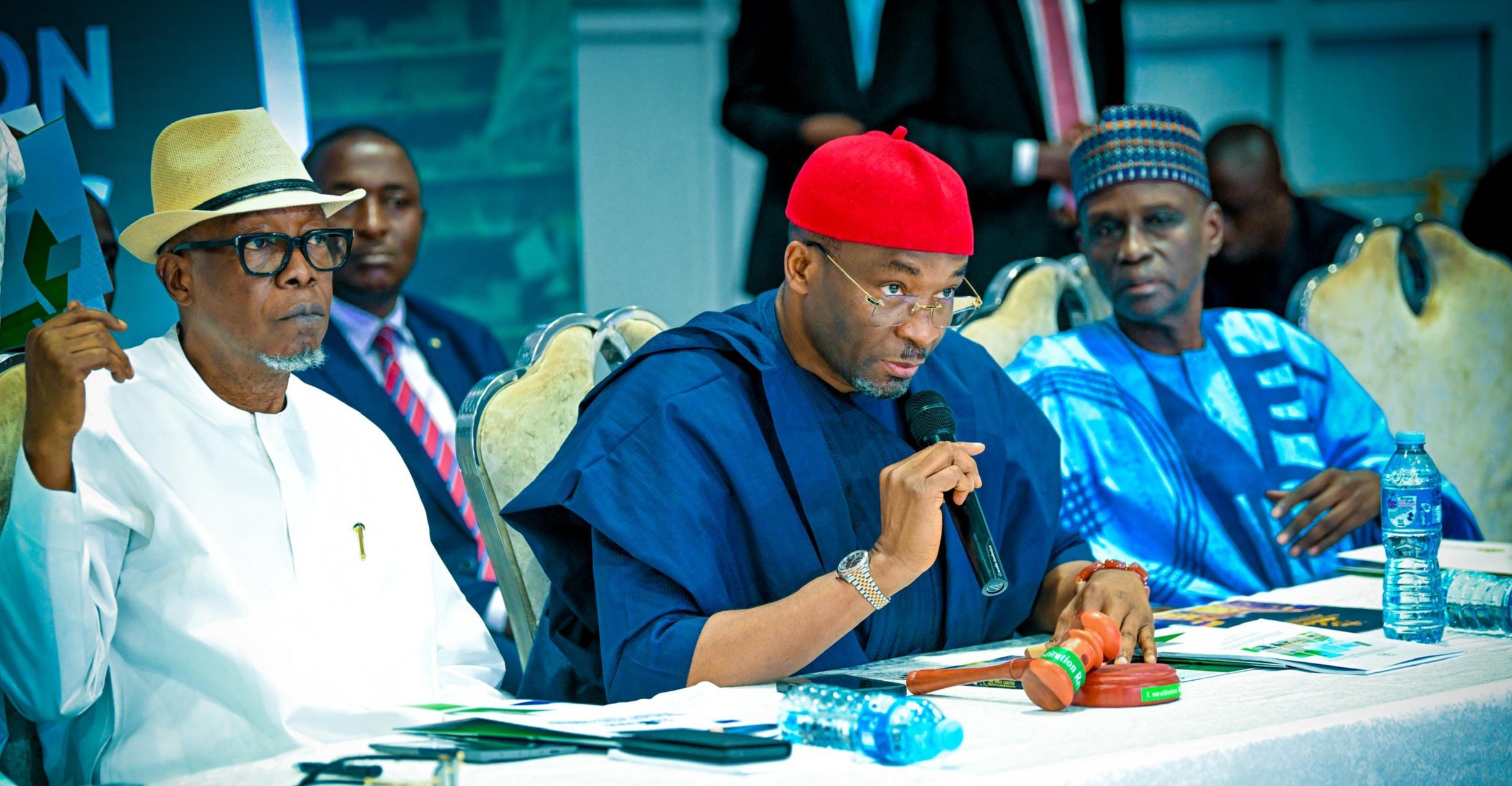
The duo stated this at a special session of the House Committee on Constitution Review tagged “Consultation With Leaders of Political Parties” on Monday, in Abuja.
In his opening remarks, Kalu urged leaders and stakeholders in the Nigerian project to make commitment that will deepen democracy and promote national development, taking advantage of the ongoing review of the 1999 Constitution.
He said: “If constitutional amendments are to be legitimate, they must have your buy-in. If they are to be effective, they must address the challenges you face on the ground. And if they are to endure, they must reflect a broad consensus that transcends party lines.This is why we have invited you here today: not as adversaries, but as partners in nation-building.
“Before us are critical amendment bills that will define the trajectory of our democracy for the next generation. Bills that seek to guarantee women’s representation in our legislative houses, ensuring that no Nigerian is excluded from decision-making because of their gender.
“Bills that seek to grant financial autonomy to local governments, so that the councillors and chairman elected by your community can deliver services without waiting for handouts from Abuja. Bills that seek to streamline our electoral process, reducing the endless litigation that undermines the will of the people. These are not abstract legal propositions. These are reforms that go to the heart of what it means to be a democracy. And they require your input.
“In the last twenty-six years, Nigeria’s democracy has relied on the goodwill of a few committed leaders to survive. But goodwill alone is not enough. We need strong institutions. We need clear rules. We need a Constitution that does not just permit democracy, but actively enables it. This is our moment to get it right. The Committee has worked tirelessly to ensure this process is inclusive.”
Kalu called attention to key areas of focus for the constitutional review, including guaranteeing women’s representation in legislative houses, granting financial autonomy to local governments, and streamlining the electoral process.
He emphasised that the reforms are not partisan issues, but Nigerian issues that require a collective action.
“We recognize that your parties represent diverse ideologies and constituencies. You will not agree on everything. That is the beauty of democracy.
“But I am asking you today to focus on what unites us, not what divides us. We all want a Nigeria where elections are free, fair, and credible. We all want a Nigeria where women have an equal seat at the table. We all want a Nigeria where local governments work, where federalism is real, and where our Constitution commands the respect and allegiance of every citizen. These are not partisan issues. These are Nigerian issues.The world is changing. So must we”, he said.
Kalu further urged the stakeholders to engage with the proposed amendments, study the bills, and bring their concerns and suggestions to the table.
He expressed gratitude to the members of the Committee for their tireless efforts in ensuring an inclusive process and called on all stakeholders to work together to build a Constitution that reflects the hopes, values, and aspirations of all Nigerians.
“We have consulted widely. We have listened carefully. But the final word does not rest with us alone. Under our Constitution, any amendment must secure a two-thirds majority in the National Assembly and the approval of at least two-thirds of State Houses of Assembly. This means that the amendments we are proposing will only become law if they command broad, cross-party support. And that begins here, in this room, with you.
“So, I am asking you today: engage with us. Study the bills before you. Consult with your party structures. Bring us your concerns, your suggestions, and your ideas. This is not the end of the conversation; it is the beginning. Because a Constitution is not just a legal document. It is a social contract. It is a promise we make to each other about the kind of country we want to build. And that promise must be one we all believe in.
“Distinguished leaders, our values do not change. Nigeria will remain ademocracy. But to sustain our democracy in a changing world, we must change the way it operates. We must give women their rightful place in governance. We must empower local governments to serve their people. We must make our elections credible and our courts efficient”, he stated.
Declaring the session open, Akpabio who was represented by the Chief Whip of the Senate, Senator Tahir Monguno, commended the House Committee for its patriotic effort to strengthen democracy, describing the ongoing constitutional review as “a call not for politics but for purpose.”
The Senate President said the engagement with political parties demonstrates that Nigeria’s democracy remains vibrant, responsive and evolving.
Speaking on gender inclusion, Akpabio paid tribute to women as the pillars of every family and the architects of every community, and called for deliberate steps to ensure greater female representation in governance.
“If government does not work in the village, it has failed in the capital. We must free our local governments from the chains of dependency. Development must have a human face. And that face must be visible in every wall, every street, and every home.
“A democracy that silences women puts itself at risk. Across the world, the evidence is clear. In Rwanda, women lead more than 60% of parliament. In Finland, women share policy and governance with distinction. While women rise, nations die. It is time for Nigeria to move from the language of sympathy to the policy of inclusion,” he added.
On national security, he argued that safety must begin at the local level to be truly effective.
“Security must be local before it can be national. A nation as vast as ours cannot be protected from a single command post. But in seeking safety, we must not sacrifice freedom. The hand that guards must not gark. The shield of the state must never become a sword against its citizens,” he cautioned.
Akpabio reaffirmed the National Assembly’s readiness to collaborate with the executive and other stakeholders to ensure the success of the constitutional review process.
Chairman of the Inter-Party Advisory Council, the umbrella body of political parties in the country, Alhaji Yusuf Dantalle, said issues of Judicial and Electoral Reforms, Local Government Reforms, Special Seats for Women, State Policing and Human Rights and Justice are part of broader issues for consideration in the ongoing Constitution and Electoral Act Amendments.
He said, “As the umbrella body of all registered political parties in Nigeria, IPAC has been at the vanguard for Constitution and Electoral Act Amendments with a view to consolidating, deepening, and strengthening the nation’s democracy. This is imperative after flaws were witnessed in each election cycle.
“As the platform that produces all elected public officers, IPAC is committed to ensuring that the electoral process is fair, transparent, and inclusive, and all political parties are given a level playing field in electoral contests.
“We believe that a revised Electoral Act and Constitution amendments preceding the 2027 general election will address identified concerns as well as significantly enhance the credibility and integrity of Nigeria’s electoral process, promote political stability, and strengthen democratic governance.”
Dantalle called for the scrapping of the State Independent Electoral Commissions (SIECs) and vesting the responsibility of conducting all 774 Local Government elections on the Independent National Electoral Commission (INEC).
He said, “IPAC has been championing Local Government autonomy. Politics is local, citizens should be encouraged to actively participate in grassroots politics that guarantee free, fair, and credible Local Government elections.”
They are also advocating “the removal of the power to appoint the Chairman of the Independent National Electoral Commission, the Commission Secretary and National Commissioners from the executive to promote the independence of the Commission.
“Setting up of an Independent Appointment Committee (IAC) composed of representatives from all registered Political Parties and Civil Society Organizations, the National Judicial Council, and a Committee of the National Assembly to be appointed by both the majority and minority arms of the Senate and House of Representatives, thereby ensuring that all parties have representatives in the Independent Appointment Committee.
“Restoration of funding of political parties in Nigeria to provide a level playing ground for all political parties. The amendment should provide a mechanism to ensure that political parties maintain transparent financial records and accounting practices.
“IPAC supports the bill as proposed by the Deputy Speaker of the House of Representatives. When a section of society is under-represented in policy discussions, they feel marginalised”.
Also, IPAC gave full support to the establishment of the Electoral Offences Commission to try electoral offenders. This will help to curb electoral offences, including vote buying and selling, violence, ballot snatching, and falsification of results”.
He recognised the role of the Judiciary in the sustenance of democracy, and said IPAC was of the view that any seat vacated due to decamping, resignation, or death should be filled by the original winning political party through a replacement process, rather than a very expensive, torturous election.