
News
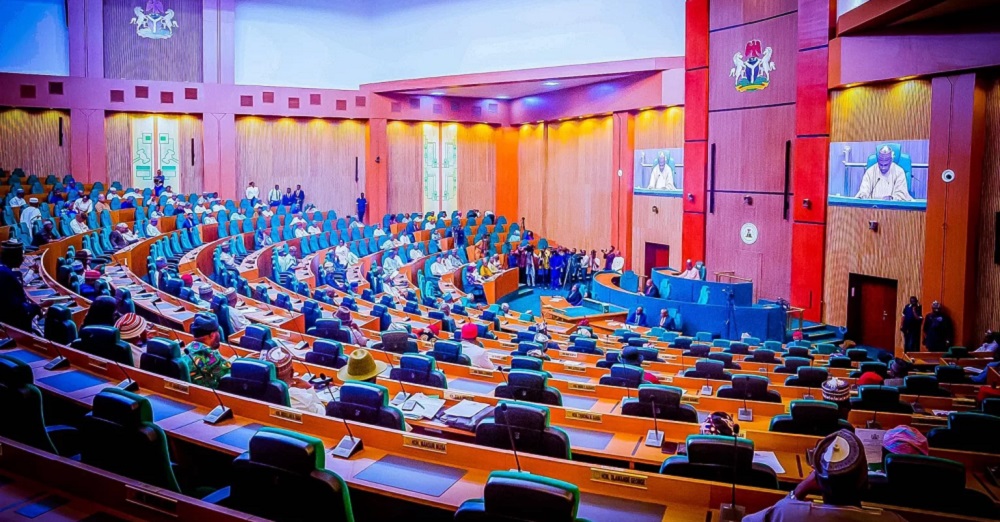
Reps Greenlight Tinubu’s N1.84tr Loan Request, $500m Sukuk Issuance, Eurobond Refinancing Plan

- /home/naijuinz/public_html/wp-content/plugins/mvp-social-buttons/mvp-social-buttons.php on line 27
https://naijablitznews.com/wp-content/uploads/2024/08/house-of-rep.jpg&description=Reps Greenlight Tinubu’s N1.84tr Loan Request, $500m Sukuk Issuance, Eurobond Refinancing Plan', 'pinterestShare', 'width=750,height=350'); return false;" title="Pin This Post">
- Share
- Tweet /home/naijuinz/public_html/wp-content/plugins/mvp-social-buttons/mvp-social-buttons.php on line 72
https://naijablitznews.com/wp-content/uploads/2024/08/house-of-rep.jpg&description=Reps Greenlight Tinubu’s N1.84tr Loan Request, $500m Sukuk Issuance, Eurobond Refinancing Plan', 'pinterestShare', 'width=750,height=350'); return false;" title="Pin This Post">


By Gloria Ikibah
The House of Representatives has approved the sum of ₦1.84 trillion (equivalent to $1.23 billion), a request by President Bola Tinubu to implement a new external borrowing plan amounting, as part of the 2025 Appropriation Act to help finance the national budget deficit.
President Bola Tinubu’s request to implement a new external borrowing plan amounting
The approval was sequel to the consideration and adoption of the report of the House Committee on Aids, Loans and Debts Management, chaired by Hon. Abubakar Hassan Nalaraba, on Wednesday during plenary.
According to the committee’s recommendations, the House gave the green light for the federal government to raise the new external loan to part-finance the ₦9.27 trillion deficit contained in the 2025 budget.
Additionally, lawmakers approved the government’s plan to refinance a maturing Eurobond worth $1.12 billion (7.625% USD1.118bn due November 2025), to ease repayment pressure and stabilize Nigeria’s external debt profile.
The resolution also authorized the administration to access a total of $2.35 billion through various international financing options, including Eurobond issuance, loan syndications, bridge finance facilities, or direct borrowing from reputable international financial institutions.
In a bid to diversify Nigeria’s debt instruments and attract Islamic investors, the House further approved the issuance of a debut stand-alone Sovereign Sukuk of up to $500 million in the international capital market, with or without credit enhancement.
The borrowing plan forms part of President Tinubu’s fiscal strategy to strengthen foreign reserves, stabilize the naira, and fund critical infrastructure projects amid rising debt obligations.
News
NERD: UNIBEN, ABU, UNICAL, EKSU, Kwara State Poly Lead Nigeria’s Academic Digitisation Drive as Country crosses 400,000 academic submissions


Nigeria’s push to build a national digital infrastructure for education records and quality assurance in higher institutions has recorded a major milestone, with the Nigeria Education Repository and Databank (NERD) surpassing 400,000 digitised theses and dissertations.
Officials and education stakeholders see the achievement as an important step towards preserving the country’s intellectual output and making Nigerian research more accessible, while simultaneously building a national database for the instant validation of academic credentials.
Data from the repository showed that by early September 2026, the platform had accumulated over 400,000 visible academic submissions from universities, polytechnics, monotechnics, colleges of education, and other post-secondary institutions across the country.
That figure had exceeded 410,000 as of press time.
Likewise, the National Credential Verification Service’s component of NERD has verified more than 115,000 academic credentials and allocated these National Credential Numbers (NCN), fulfilling a critical mandate of NERD for the authentication, preservation, and digital warehousing of academic qualifications.
The development represents one of the measurable outcomes of the Federal Government’s Renewed Hope Agenda and its ongoing education digitisation programme under President Bola Ahmed Tinubu, GCFR, whose administration has increasingly placed technology, data and institutional accountability at the centre of reforms in the education sector.
Under the supervision of the Minister of Education, Dr Tunji Alausa, CON, NERD has grown into an increasingly broad national infrastructure connecting institutions, students, academic works, workers, and credentials within a common digital environment.
—629 institutions active on repository—
The scale of institutional participation is equally significant.
Figures on the NERD platform show that NERD has recorded 907 enrolled institutions, of which 629 are active, demonstrating the widening reach of the national repository across different categories of post-secondary education.
The latest institutional breakdown displayed by the platform includes 259 universities, 163 polytechnics, 179 monotechnics, 178 colleges of education and 130 institutions classified under other categories.
Beyond institutions themselves, the digital network now covers 2,020 enrolled faculties, with 1,620 recording visible submissions, while 5,353 of 9,626 enrolled departments have visible academic works on the repository.
The figures suggest that the challenge is gradually shifting from simply bringing institutions onto the national platform to deepening participation within individual faculties and departments.
—Varsities, polytechnics battle for top spots—
Competition among institutions is also becoming visible in the repository’s national statistics.
The latest Top 20 chart places the University of Benin and Ahmadu Bello University, Zaria, at the head of a tightly packed group of institutions, followed by Ekiti State University, the University of Calabar and the University of Nigeria, Nsukka, among other leading contributors.
The rankings are notable for the strong showing of polytechnics alongside universities.
Institutions such as Kwara State Polytechnic, Kaduna Polytechnic, Auchi Polytechnic, Federal Polytechnic Nasarawa and Federal Polytechnic Nekede feature prominently among institutions contributing substantial volumes of student academic works.
At faculty level, the Faculty of Education at Ahmadu Bello University leads the current chart, while Education at Ekiti State University and Science and Technology at Kaduna Polytechnic are also among the leading contributors.
The departmental statistics reveal an even more diverse picture. Mass Communication and Public Administration departments belonging to several polytechnics dominate some of the highest positions, illustrating that Nigeria’s growing digital research collection is not being driven exclusively by the traditional university system.
—Projects dominate national academic collection—
The data also offer a glimpse into the composition of the material being preserved.
Student projects overwhelmingly constitute the largest category of visible academic works, with theses, dissertations, seminar papers, and other research outputs making up smaller portions of the repository.
Similarly, as of the 4th day of September 2026, the number of undergraduate submissions (409,456) far exceeds the number of postgraduate submissions (1,563).
The significance of the initiative extends beyond the sheer number of documents accumulated.
For decades, Nigerian universities and other tertiary institutions generated large volumes of theses, dissertations, projects and other scholarly materials that were often stored almost exclusively within departmental libraries, physical archives or disconnected institutional systems.
Consequently, potentially valuable research could be difficult to discover outside the institution where it originated.
The Tinubu administration’s establishment of NERD represents an attempt to reverse that pattern by creating a structured national layer through which the country’s academic output can be verified, preserved, indexed and progressively made discoverable.
—Women lead in research submissions—
Fresh statistics from NERD also reveal an interesting dimension to Nigeria’s emerging academic knowledge base: female students currently account for substantially more of the visible research submissions than their male counterparts.
Of the records categorised by sex in the visible dataset, 228,347 submissions were attributed to female students, compared with 181,536 for male students, while 77 records were not categorised.
The pattern broadly reflects the platform’s overall student enrolment figures. NERD’s latest statistics show 248,284 enrolled female students, against 197,526 males.
The age profile provides another indication of the demographic character of the emerging repository. The largest concentration of final-year or graduating students falls within the 25–29 age bracket, followed by those aged 20–24, with considerably smaller numbers in the older age categories.
Taken together, the figures provide a growing body of national-level data that could eventually help government, institutions and researchers better understand participation patterns within Nigeria’s tertiary education system.
—Industry focus and top knowledge pillars—
The data also revealed a notable trend: regardless of their disciplines, a sizeable number of Nigerian students are gravitating towards innovation- and technology-driven research topics.
Significantly, this inclination is not confined to students in science, technology and engineering; it is also increasingly evident across the social sciences, humanities, law and other disciplines, suggesting a broader shift towards research that embraces technology, innovation and practical problem-solving.
—From certificates to national knowledge infrastructure—
The academic credential verification component of NERD gives the initiative a second strategic dimension. With more than 115,000 academic credentials already verified and allocated unique National Credential Numbers (NCNs), the emerging infrastructure provides a common national framework for uniquely identifying, referencing and authenticating academic credentials, while NERD simultaneously preserves and organises the research and intellectual outputs produced across Nigeria’s education system.
That combination, knowledge preservation and credential authentication, could prove important to the Federal Government’s wider effort to modernise education administration and improve the integrity of academic records.
The milestone also comes as the Tinubu administration seeks to reposition education as an instrument for skills development, innovation and economic growth.
Alausa’s education ministry has increasingly emphasised reforms intended to connect education more closely with technology, employability, research and national development.
NERD now provides a measurable digital component to that policy direction: rather than leaving Nigeria’s academic heritage dispersed among hundreds of institutions, the country is gradually assembling a national body of knowledge that can be counted, verified, organised and analysed.
—A repository still growing—
The statistics are not static. Institutional participation and submission volumes continue to change as more records enter the system, meaning rankings that hold today may shift as institutions accelerate digitisation.
That dynamism may itself become one of the project’s strengths. Universities, polytechnics and colleges can increasingly see their contribution to the national research pool, while policymakers gain a broader view of where academic work is being produced and where participation remains weak.
Crossing the 400,000 mark, therefore, is less significant as an endpoint than as evidence of scale.
For the Federal Government, the milestone offers an early indication that a nationwide education repository can move from policy conception to measurable infrastructure. For institutions, it creates an opportunity to give decades of Nigerian scholarship greater visibility. And for students and researchers, it raises the prospect that academic work produced in Nigeria will increasingly become part of a permanent and organised national intellectual record.
The larger test will be how effectively that expanding body of knowledge is subsequently connected to research, industry, innovation and public policy. This is why the nation must watch closely what Alausa and his team are doing with the introduction of the National Laureate Programme, an initiative that seeks to build on the Tinubu administration’s achievements with NERD by helping to transition promising academic discoveries and research outputs into commercially viable products and services, creating greater visibility for young researchers and their work, and identifying, celebrating and rewarding research with strong potential for real-world application.
But with more than 410,000 academic works, 115,000 verified credentials and 629 active institutions already within the emerging ecosystem, Nigeria appears to have crossed an important threshold: from discussing the need to preserve its academic knowledge to actually building the infrastructure to do so.


Suspected bandits have attacked Girkau community in Kebbe Local Government Area of Sokoto State, killing at least five residents, injuring others and abducting several people.
The attack reportedly occurred despite a security alert issued by the Sokoto State Police Command following intelligence indicating that suspected bandits were planning an attack in Kebbe LGA.
According to Crisis Reporter in the North-West, Bakastine, who disclosed the incident in a Friday post on X, the attackers reportedly spent several hours in Girkau during the invasion, leaving residents with limited options for escape or shelter.
He said five people were killed and several others injured, while the attackers also rustled a large number of cattle.
The victims reportedly included one person killed in Dukura and another in Jabga, both communities within Girkau Ward. Two other residents were injured during the attack.
A local vigilante was also reportedly abducted, while his locally made firearm was seized by the attackers.
The latest incident comes amid growing concerns over renewed bandit activities in Kebbe LGA. It also follows reports that suspected bandits had demanded a N40 million levy from residents of Kebbe town and threatened to attack the community if the money was not paid.
The fresh attack has heightened fears among residents and raised further concerns about the ability of security agencies to prevent attacks despite advance intelligence warnings.
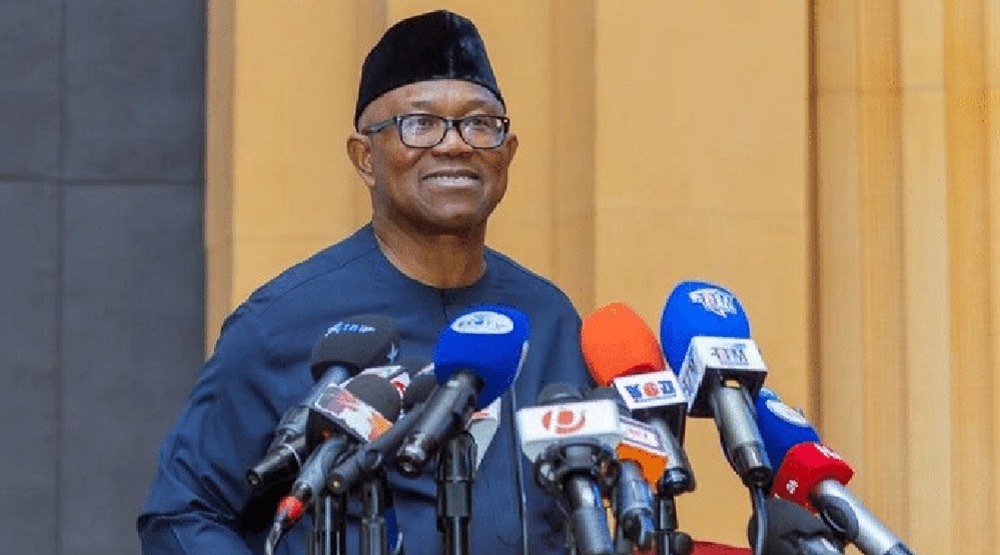
Peter Obi, the presidential candidate of the Nigeria Democratic Congress, NDC, has vowed to give his life to protect his vote in the 2027 elections.
He charged Nigerians not to allow anyone to scare or intimidate them at polling booths during the 2027 election.
Speaking at a town hall meeting in Port Harcourt, Rivers State, on Thursday, Obi cautioned the Independent National Electoral Commission, INEC, against altering election results.
He said Nigerians would no longer allow themselves to be intimidated at polling stations, noting that the number of voters at a polling unit was usually higher than the number of officials.
According to Obi, an average polling unit could have between 40 and 50 voters and about five officials, making it difficult for the officials to intimidate or control the voters if they stand together.
He said Nigerians must work together to protect the country, adding that he was prepared to risk his life for the process.
Obi also said there would be improved communication to prevent intimidation during the election.
He warned that attempts could be made to influence the Independent National Electoral Commission’s Result Viewing Portal, IReV, but expressed confidence that such interference would be more difficult in 2027.
The former Anambra State governor said there would be more IReV systems available during the election and that alternative network arrangements would be provided where technical problems occurred.
He said allowing network glitches to persist could negatively affect the electoral process and contribute to the problems Nigerians were currently experiencing.

NERD: UNIBEN, ABU, UNICAL, EKSU, Kwara State Poly Lead Nigeria’s Academic Digitisation Drive as Country crosses 400,000 academic submissions

Bandits Kill Five, Abduct Several as Sokoto Community Comes Under Fresh Attack

Obi vows to protect 2027 election votes with his life




-

 News1 hour ago
Just in: Massive Explosion Rocks APC Governorship Candidate’s Convoy in Borno as Terrorists Attack
-
 News56 minutes ago
Obi vows to protect 2027 election votes with his life
-
 Foreign24 hours ago
Nigerians react as UK permits foreign workers to change employers
-

 Politics1 hour ago
Lere Olayinka: Some Presidential Candidates Are Not Contesting To Win 2027 Election But To Make An Impression
-

 News58 minutes ago
See Dollar to Naira exchange rate today, September 4, 2026
-
 News51 minutes ago
Bandits Kill Five, Abduct Several as Sokoto Community Comes Under Fresh Attack
-
 News2 minutes ago
NERD: UNIBEN, ABU, UNICAL, EKSU, Kwara State Poly Lead Nigeria’s Academic Digitisation Drive as Country crosses 400,000 academic submissions