News
RESIST POLITICAL PARTISANSHIP, OKUN LEADERS LEAGUE ADVISES TRADITIONAL RULERS
- /home/naijuinz/public_html/wp-content/plugins/mvp-social-buttons/mvp-social-buttons.php on line 27
https://naijablitznews.com/wp-content/uploads/2024/04/kogi-state-map.jpg&description=RESIST POLITICAL PARTISANSHIP, OKUN LEADERS LEAGUE ADVISES TRADITIONAL RULERS', 'pinterestShare', 'width=750,height=350'); return false;" title="Pin This Post">
- Share
- Tweet /home/naijuinz/public_html/wp-content/plugins/mvp-social-buttons/mvp-social-buttons.php on line 72
https://naijablitznews.com/wp-content/uploads/2024/04/kogi-state-map.jpg&description=RESIST POLITICAL PARTISANSHIP, OKUN LEADERS LEAGUE ADVISES TRADITIONAL RULERS', 'pinterestShare', 'width=750,height=350'); return false;" title="Pin This Post">
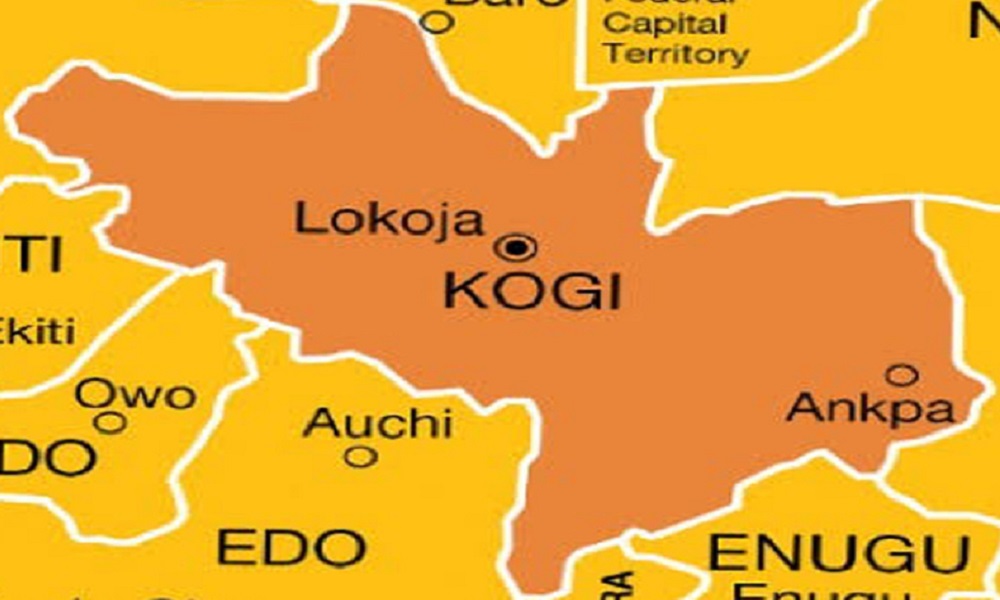
It has come to the attention of the *Okun Leaders League,* (OLL), that a meeting has reportedly been scheduled between the Kogi State Governor, Ahmed Ododo and the Okun Traditional Council, for Friday October 31, 2025. The said meeting which is purported for Kabba, headquarters of Kabba-Bunu council area, is intended to seek the endorsement of the Okun traditional institution for a second term for Ododo, come 2027.

Information at the disposal of OLL, suggests that Okunland will be baited with the position of Deputy Governor on the Ododo ticket for the 2027 gubernatorial poll. The aim is to effectively extinguish the aspirations of the good people of Okunland for the governorship office which has serially eluded them in the 34 year history of Kogi State, but more currently since the beginning of the Fourth Republic 26 years ago.
To refresh our collective memories, by 2027, the Igala ethnicity in Kogi East would have held the office of Kogi State Governor for 16 years post-1999, while the Ebiras would have held the same position for 12 years.

History reminds us that in the Second Republic in the old Kwara State, Alhaji Adamu Atta from Ebiraland served as Governor for four years between 1979 and 1983. In Nigeria’s Third Republic, Prince Abubakar Audu served as Kogi State Governor for two years. When these figures are added, it sums up that while the Igala ethnic group has held the office of Governor for 18 years, the Ebiras would have occupied the same office for 16 years by 2027.
In this curious leadership statistics in Kogi State, the Okun nationality which is supposed to be the third leg of the sociopolitical tripod in Kogi State, has been utterly relegated in the governance scheme.
On two occasions between 1992 and 1993, and between 2012 and 2016, Okun sons have served as Deputy Governor of Kogi State. In Nigeria’s political system, we know too well that deputies are nothing but dispensable “spare tyres” who breathe and function at the sole discretion of their principals.
They are toothless, powerless and incapable of bringing home the dividends of growth and progress which we all crave in a democracy.
*Okun Leaders League* therefore calls upon our royal fathers to resist consenting to any arrangement calculated to hoodwink, cajole and undermine the collective intelligence of our people. Much as they are appointees of the state government, they are primarily custodians of our customs and traditions who are expected to be totally non-partisan and apolitical. Okun traditional rulers must reject anything and everything that will set them up against their people, irrespective of the level of material inducement or intimidation which has characterised godfather politics in Kogi State within the past decade.
Our numbers and support have been leveraged in the past to raise governors in Kogi State. Since the unbroken run of democratic rule in 1999, Kogi State has produced five governors and not one has been from Okunland. To borrow from the evergreen lyrics of the iconic reggae artist Bob Marley, “we’ve been trampled upon for far too long.” Okun people reject any attempt to insult and patronise us with the position of Deputy Governor. We must warn that any individual or group of individuals who accept any denigrating office for self gratification, purportedly on behalf of the Okun nation straddling Lokoja, Kabba-Bunu, Ijumu, Mopamuro, Yagba East and Yagba West, does so at his or her own peril.
*UNDER THE SEAL OF:*
● Group Captain Denja Mahmud (rtd)Oworo, Lokoja
● Canon Andrew BaiyekuhiKabba-Bunu
● Mallam Qassim Yusuf Ijumu
● Dr James OgbondeminuMopamuro
● Engineer Omobowale PalufeYagba East
● Chief Samuel ObaroYagba West
News
Coalition want explanation over alleged BVAS failure in Osun mock accreditation exercise
A group, aegis of Coalition of Concerned Nigeria Citizens (CCNC), has called on the Independent National Electoral Commission (INEC) to immediately explain the alleged widespread failure of the Bimodal Voter Accreditation System (BVAS) during Saturday’s mock accreditation exercise conducted ahead of the August 15 Osun State governorship election.
The group alleged that the mock accreditation, designed to test the commission’s readiness for the election, experienced significant technical challenges after commencing in selected polling units across the state, raising concerns about INEC’s preparedness for the governorship poll.
In a statement signed by its spokesperson, Comrade Raufu Sodiq, popularly known as “Oluomo Success,” the coalition claimed that although the exercise was scheduled to begin at 8:30 a.m., it started behind schedule in some polling units. It further alleged that less than 40 minutes after the exercise commenced, many BVAS machines stopped recognising fingerprints, facial features and Permanent Voter Cards (PVCs), preventing the successful accreditation of voters in the affected locations.
Describing the development as disturbing, the group said a mock accreditation exercise should ordinarily boost public confidence in the electoral process, adding that the reported malfunction of the accreditation devices during the test exercise had instead raised questions about the commission’s level of preparedness.
The coalition argued that accreditation remains the foundation of every credible election because it determines voter eligibility and protects the integrity of the electoral process. According to the group, any failure at that stage could undermine public confidence in the outcome of the election if not urgently addressed.
CCNC also queried why such challenges allegedly occurred despite what it described as years of preparation and substantial public investment in electoral technology. It called on the Osun Resident Electoral Commissioner and the national leadership of INEC to provide a comprehensive explanation on the cause of the reported BVAS malfunction and disclose measures being taken to prevent a recurrence during the August 15 governorship election.
Among its demands, the coalition asked INEC to clarify whether the reported glitches resulted from software, hardware or configuration problems, explain its contingency plans for the 3,763 polling units across Osun State, replace any faulty BVAS machines and consider conducting another mock accreditation exercise before the election to restore public confidence.
“We believe in strong democratic institutions and do not want to see INEC fail. However, public confidence must be built on competence, transparency and accountability. The people of Osun deserve an election where every eligible voter can cast their vote without avoidable technological failures,” the statement read.
The group further urged the Chairman of INEC to personally address Nigerians before the governorship election by explaining the outcome of the mock accreditation exercise, outlining corrective measures and assuring voters that all identified technical challenges would be resolved before Election Day.
INEC had organised the mock accreditation exercise to assess the functionality of the BVAS and other electoral processes ahead of the governorship election scheduled for August 15 across the state’s 3,763 polling units.
News
Why I Don’t Beg for Support – Remi Tinubu
Nigeria’s First Lady, Oluremi Tinubu, has given reasons why she does not beg for support, stressing that she only works with what God provides while encouraging young Nigerians to embrace contentment, hard work and patience.
She made the remarks on Friday at the State House in Abuja while receiving the leadership of the All Progressives Congress (APC) National Youth Wing. During the meeting, she presented brand-new buses to the youth leaders to support their activities ahead of the 2027 general elections.
She explained that the vehicles were donated by individuals who support her initiatives and decided to hand them over to the APC National Youth Wing to enhance their operations.
The First Lady commended the APC youth leaders for their conduct, noting that they had never approached her office with requests for personal assistance.
She described their attitude as selfless and said she was pleased to support them because the buses would assist them in carrying out their responsibilities.
Mrs Tinubu also advised Nigerian youths against pursuing quick wealth, emphasizing that lasting success is built on diligence, integrity and perseverance rather than shortcuts.
She urged young people to remain disciplined, patient and committed to hard work, noting that laziness does not produce success.
Using the eagle as an example, the First Lady encouraged the youths to develop resilience and determination in the face of challenges.
She urged them to remain focused on their personal goals instead of comparing themselves with others or becoming discouraged by the achievements of their peers.
News
INEC showcases Tinubu, Shettima’s personal details ahead of 2027 elections
Electoral Commission has begun the public display of the personal particulars and academic credentials of presidential candidates for the 2027 general election.
The exercise, which took off on Saturday, features documents submitted by President Bola Tinubu of the All Progressives Congress and running mate, Vice President Kashim Shettima.
Copies of Tinubu’s Form EC9 sighted showed his Bachelor of Science degree in Business Administration from Chicago State University, United States, which his transcript indicated was awarded “with honours” on June 22, 1979.
The form also carried his National Youth Service Corps discharge documents, which showed he served in Oyo State from December 1982 and was demobilised in November 1983.
His work history, as listed in the form, showed three employers: Mobil Nigeria Limited, where he worked from 1983 to 1992 and left on account of “advancement”; the Lagos State Government, where he served from 1999 to 2007 until the “legal end of tenure”; and the Federal Government of Nigeria, where he has worked from 2023 till date.
The years listed against his primary and secondary school attendance in the same form were entered as “0000,” with only his university qualification, a B.Sc obtained in 1979, indicated.
The President’s personal information section listed his date of birth as March 29, 1952, and his age as 74.
It also listed his birthplace as Lagos, his residential address as No. 4, Queen’s Drive, Ikoyi, and his occupation as “politician.”
For Shettima, the displayed documents traced his education from primary school.
His Certificate of Primary Education, issued by the Ministry of Education, North-Eastern State, showed he attended Lamisula I Primary School between 1972 and 1978, finishing second out of 22 pupils in his final year, with English, History and Religious Knowledge listed as his strongest subjects.
His West African Examinations Council result, obtained at Government Secondary School, Potiskum, in June 1983, showed six credits and passes, including a distinction in Religious Knowledge and Economics.
He proceeded to the University of Maiduguri, where records showed he bagged a Second Class Upper Division degree in Agriculture in August 1989, before earning a Master of Science in Agricultural Economics from the University of Ibadan.
His NYSC discharge certificate indicated he served from October 1989 to October 1990.
The display, contained in Form EC9, is a statutory requirement under Section 29(3) of the Electoral Act, 2026, which mandates INEC to publish candidates’ particulars within 21 days of receipt.
In a statement, the commission explained Form EC9 contains the credentials, personal particulars and affidavits submitted by candidates.
“Form EC9 contains the credentials, personal particulars and affidavits submitted by candidates sponsored by political parties,” INEC stated.
The documents were displayed at INEC offices nationwide, including its Lagos State office in Sabo-Yaba and Local Government Area offices within affected constituencies.
The Electoral Act empowers members of the public to apply to INEC for certified true copies of nomination forms and other documents submitted by candidates, and to seek legal redress over allegations of false declaration or forgery.
Campaigns for the presidential and National Assembly elections are scheduled to begin on August 19, while those for governorship and state assembly elections will follow later, in line with the commission’s revised timetable.
-
News7 hours agoJust in: After Hugh Backlash, FIFA finally Scrap Infantino’s £15B World Cup Private Investment Proposal
-
News7 hours ago‘Stop complaining about Buhari, others for your failures,’ Atiku slams Tinubu
-
News7 hours agoColonel Behind Alleged Tinubu Coup Plot Admits Failed Promotion Pushed Him, Reveals How He Was Lured By Army Chiefs
-
News6 hours agoHow Prison Inmate on D*ath Row Livestreamed On TikTok, Earned Money From Ogun Prison
-
News6 hours agoINEC Rejects PDP’s Submission Of Jonathan As 2027 Presidential Candidate
-
News6 hours agoSAD: FRSC Enugu Sector Commander Is Dead
-
News5 hours agoUK PM Burnham slams Infantino, says he’s the ‘wrong man’ to lead FIFA
-
News3 hours agoPresidency reacts to Onaiyekan’s comment, says he’s not speaking for Christians, insists Catholics supporting Obi