Connect with us

News

U.S. Ends Automatic Extension Of Work Permits For Immigrants, Effective Oct 30

Published

on

ADVERTISEMENT
Zoom Ad
ADVERTISEMENT
Zoom Ad

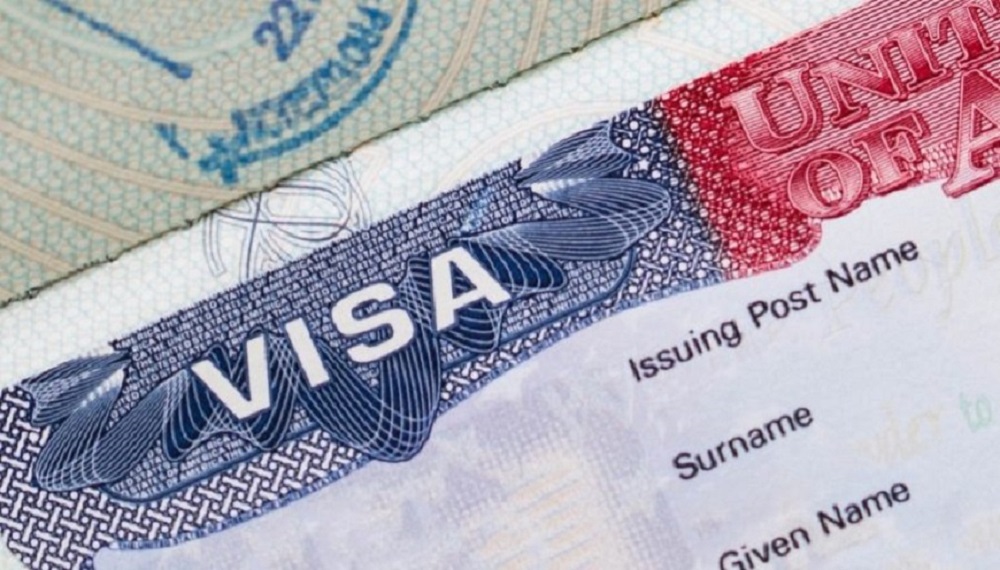
The U.S. Department of Homeland Security (DHS) has ended the automatic extension of Employment Authorization Documents (EADs) for certain immigrants renewing work permits.


The policy change is driven by concerns for national security and public safety.
The new rule mandates thorough background checks for all individuals renewing their employment authorization.

The U.S. Department of Homeland Security (DHS) has announced a new policy that will end the automatic extension of Employment Authorization Documents (EADs) for certain immigrants renewing their work permits. The agency cited national security and public safety as key reasons for the change.

DHS explained that the new rule reflects a shift toward more thorough background checks for individuals seeking to renew their employment authorization in the United States. Under the updated guidelines, all renewal applicants will now undergo a complete screening process before their work permits can be extended.

Advertisement

According to the agency, “Immigrants filing to renew their EAD on or after October 30, 2025, will no longer be eligible for automatic extension. This rule prioritizes comprehensive screening and vetting before granting extensions of employment authorization.”

Limited exceptions will still apply, such as extensions mandated by law or outlined in Federal Register notices related to Temporary Protected Status (TPS) employment documentation. DHS emphasized that the policy aims to strengthen the review process, helping U.S. Citizenship and Immigration Services (USCIS) prevent fraud and identify individuals who may pose risks before granting work authorization.

Security-Focused Approach

USCIS Director Joseph Edlow stated that the rule signals a shift from convenience-focused policies to those emphasizing safety and security. “USCIS is reinforcing rigorous alien screening and vetting, moving away from policies of the previous administration that placed convenience ahead of Americans’ security,” Edlow said.

Advertisement

He described the policy as a practical measure to ensure that all necessary checks are completed before extending employment authorization, emphasizing that the ability to work in the U.S. is a privilege rather than a right.

The agency urged immigrants to file renewal applications early up to 180 days before their current EAD expires to prevent any interruptions in work authorization. Those who delay may face temporary lapses, as automatic extensions will no longer be available. DHS also clarified that the new rule does not affect EADs that were automatically extended prior to October 30, 2025.

Paper Form Payment Requirements

In a related update, the U.S. government recently mandated that all applicants submitting paper-based immigration forms must make payments electronically. Paper applicants can now pay via credit or debit card using Form G-1450 or through an ACH debit from a U.S. bank account using Form G-1650. Online filers are unaffected, as digital payment options were already in place.

Advertisement

Applicants who cannot comply may request an exemption using Form G-1651. The change aligns with Executive Order 14247, which directs federal agencies to transition fully to electronic payment systems.

Continue Reading
Advertisement

News

Bode George Still Angry Over His Failed PDP National Chairmanship Bid, No Regret Stopping Him – Wike

Published

on

ADVERTISEMENT
Zoom Ad
ADVERTISEMENT
Zoom Ad

The Federal Capital Territory (FCT) Minister, Nyesom Wike, has said that he had no regret Stopping Peoples Democratic Party (PDP) former Deputy National Chairman, Chief Bode George, from becoming the party National Chairman, saying; “his anger is because we didn’t allow him to be PDP National Chairman and no regret doing so.”

In a statement on Saturday, by his Senior Special Assistant on Public Communications and Social Media, Lere Olayinka, the FCT Minister said the political frustration of Bode George has further been compounded by the emergence of Deji Doherty, a personality he does not want to see as the one in charge of the party in Lagos State.

“He wanted to be PDP National Chairman, and was carrying on like the position was his birthright. We stopped him because it was the turn of the South-South. Since then, he has not stopped being angry.

“As a sitting governor, I visited his house in Maitama, Abuja, to appease him after the national convention, his wife attempted to walk me out, but for the intervention of former governor of Ondo state, Olusegun Mimiko,” the minister said.

Advertisement

He described Bode George as a failed politician, who despite all the privileges and power has not won anything for the PDP in Lagos State since 1999, adding that “We have managed him even though we know that he has no value. But as it is, since he wants to keep dancing naked in the market place of politics, we can’t but allow him.”

The Minister reiterated that leadership of a political party is not by name, title or being a founding father. Rather, it is about what you are able to bring to the table in terms of winning elections, and in this regard, Bode George is a complete disaster.

“Even his Unit 001 in Ward E2, Evans Street, Lagos Island, he has never won for the PDP. In 2019 Presidential election, APC had 84 votes while PDP had 40. In the 2023 elections, he transferred his voter’s card to Eti Osa, PDP had four votes in his polling unit,” Wike said.

Wike said since it appeared that he (Bode George) is not busy, he will continue to make his likes busy by creating reason for them to jump from one television station to the other.

Advertisement
Continue Reading

News

Association of Medical, Dental Academics in Nigeria gives FG three week ultimatum or face strike

Published

on

ADVERTISEMENT
Zoom Ad
ADVERTISEMENT
Zoom Ad


The Nigerian Association of Medical and Dental Academics (NAMDA) has given the Federal Government a three-week extension to conclude negotiations over its outstanding demands, warning that failure to reach an agreement could trigger a three-day warning strike.

The association issued the ultimatum in a communiqué released to journalists in Uyo on Friday, following its Emergency National Executive Council (E-NEC) meeting.

The communiqué, endorsed by the President, Nosa Orhue, and the Acting Secretary-General, Aniekan Peter, said the extension would run until August 31, 2026.

Advertisement

It stated, “A three-week timeline extension was adopted for a possible further consideration. E-NEC further resolved that the extension period should be utilised by government to resolve all outstanding issues.

“Failure to achieve meaningful resolution at the expiration of the period ending on the 31st of August 2026 shall result in the declaration of a three-day warning strike to be announced by NOC.”

NAMDA also directed all its branches nationwide to engage their members through congresses and sensitisation programmes at least twice during the extension period.

The branches are expected to submit evidence and reports of the mobilisation activities to the National Executive Council through the secretariat, indicating their level of preparedness for possible strike action.

Advertisement

The association expressed concern over what it described as the government’s reluctance to conclude negotiations, while commending the Department of State Services (DSS) and other stakeholders for their interventions in the process.

NAMDA also appreciated its members for their patience and cooperation in maintaining stability within the university system.

The association further lamented the alleged neglect of medical education and training amid the shortage of medical and dental doctors and the increasing migration of professionals, popularly known as the “Japa” syndrome.

It reaffirmed its commitment to pursuing the full implementation of all approved benefits for medical and dental lecturers and urged its members to comply with all directives and decisions reached at the meeting.

Advertisement
Continue Reading

News

Why FCT can’t have state police — Senate

Published

on

By

ADVERTISEMENT
Zoom Ad
ADVERTISEMENT
Zoom Ad

The Senate has explained why the Federal Capital Territory will not be included in the proposed state police structure, saying Abuja lacks the constitutional institutions required to operate one.

Chairman of the Senate Committee on Media and Publicity, Yemi Adaramodu, said the FCT has no governor or State House of Assembly and remains directly under the control of the Federal Government.

Adaramodu said the territory is administered by a minister who takes directives from the Federal Executive Council, while the National Assembly performs legislative functions for the FCT.

“I have heard many people raise a lot of questions on why the Federal Capital Territory is not among the plan for state police. The FCT issue is different. It is under the Federal Government,” he said.

Advertisement

He added that because Abuja does not have a governor or state legislature, it cannot operate under the same policing arrangement being proposed for the 36 states.

“The federal capital does not have an assembly. It is the National Assembly that legislates for the FCT. This is why it can’t be different from what the Federal Government does. Therefore, the federal police are in charge,” Adaramodu said.

The clarification comes as the Federal Government pushes ahead with plans for a new policing structure amid mounting calls for decentralised security across the country.

President Bola Tinubu is expected to receive the draft Executive National Policing Bill on September 3 as part of efforts to provide an operational framework for the proposed system.

Advertisement

Chief of Staff to the President and Chairman of the Presidential Working Group on the National Policing Bill, Femi Gbajabiamila, had also unveiled a public information portal through which Nigerians can submit memoranda and position papers on the proposal.

Under the constitutional amendments being considered, state Houses of Assembly would have powers to legislate on the establishment, administration, funding and oversight of state police.

States would bear the primary responsibility for funding their police formations, although the Federal Government could provide grants or assistance on the recommendation of the National Police Council and subject to approval by the National Assembly.

The FCT, however, would remain under the federal policing structure because of its unique constitutional status and direct administration by the Federal Government.

Advertisement
Continue Reading

Trending

Copyright © 2024 Naija Blitz News