Connect with us

News

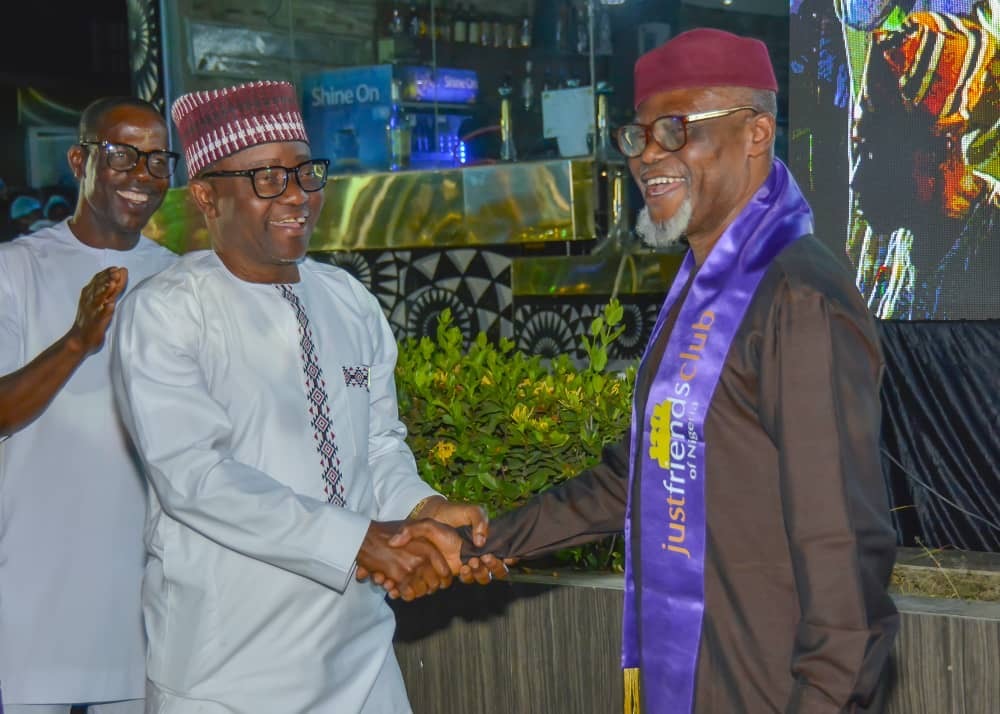
Photo News: Fred Owhawha hands over to Chief Aloke as new president of JFCN

Published

on

ADVERTISEMENT
Zoom Ad

Change of Guard:(L-R) Mr. Fred Ohwahwa presents the staff of office as President of Just Friends Club of Nigeria(JFCN) to Chief Amaechi Aloke at the club’s end-of-year party held at Bolingo Hotel, Abuja… recently

Continue Reading
Advertisement

News

Wike remains leader of APC in Rivers, Magnus Abe asserts

Published

on

By

ADVERTISEMENT
Zoom Ad

Senator Magnus Abe has declared the Federal Capital Territory Minister, Nyesom Wike, the leader of the All Progressives Congress (APC) in Rivers State, emphasizing party unity ahead of the upcoming Ahoada East Constituency II and Khana Constituency II by-elections scheduled for February 21.

He made the declaration on Monday while speaking to journalists after aspirants loyal to the FCT Minister, Nyesom Wike, emerged victorious in the APC primaries.

Abe said: “As far as Rivers State is concerned, the Minister of the FCT is the leader of the APC here.

“There is no confusion, and there is no dispute about the different roles people are playing.

Advertisement

“I want to say to Rivers people: everybody should go and revalidate your membership.

“We are all working together, supporting President Tinubu, and Rivers State will deliver the highest percentage of votes for the Renewed Hope family in this country.

“That is our commitment.”

Aspirants loyal to the FCT Minister, Nyesom Wike, emerged victorious in the APC primaries held on Monday.

Advertisement

The primaries were conducted to select candidates for the upcoming by-elections to fill vacant seats in the Rivers State House of Assembly.

Continue Reading

News

Senate to pass ₦58.47trn 2026 Budget, Electoral, Constitution Reforms in final 16 months

Published

on

By

ADVERTISEMENT
Zoom Ad

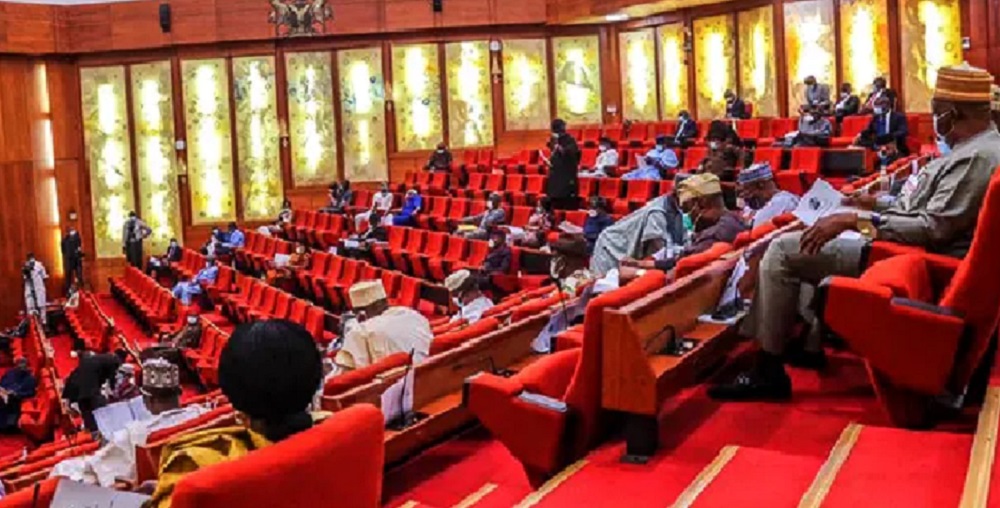
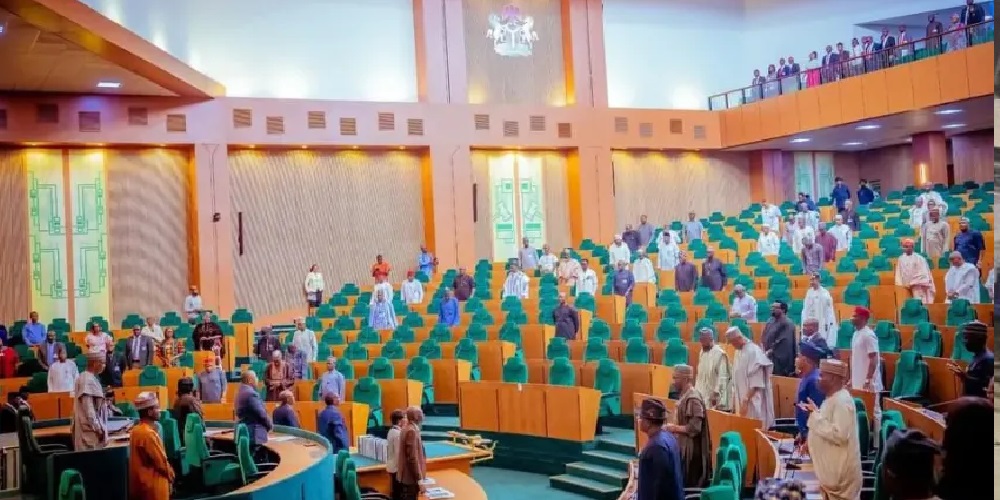
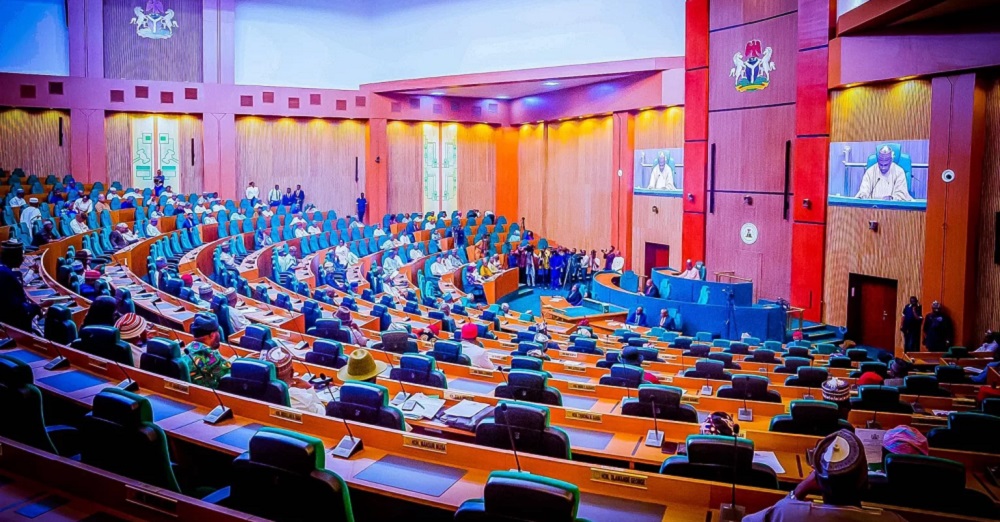
With just 16 months left in the life of the 10th National Assembly, the Senate has outlined an ambitious legislative agenda anchored on the passage of the ₦58.47 trillion 2026 Appropriation Bill, far-reaching electoral reforms ahead of the 2027 general elections, and the conclusion of the ongoing review of the 1999 Constitution.

Leader of the Senate, Senator Opeyemi Bamidele (APC – Ekiti Central) disclosed this ahead of resumption of plenary on Tuesday, stressing that the Assembly remains committed to defending the trust reposed in it by Nigerians while responding swiftly to domestic and global challenges.

Bamidele noted that of the 48 months constitutionally allotted to the Assembly, only 16 months remain, a reality that underscores the urgency for decisive, people-centred legislation capable of strengthening governance, stabilising the economy and enhancing Nigeria’s global competitiveness.

“The burden of trust our constituents repose in us is one we struggle daily to defend and treasure never to breach,” he said, adding that the National Assembly would continue to prioritise reforms that promote national cohesion, economic diversification and institutional resilience.

Advertisement

According to him, the last 32 months of the 10th Assembly have been devoted to reforms across critical sectors aimed at repositioning Nigeria from an extraction-dependent economy to a diversified, productivity-driven and globally competitive state.

He said the next phase of legislative work would focus on consolidating these gains while concluding landmark initiatives on electoral governance, fiscal sustainability and constitutional restructuring.

Top on the agenda is the scrutiny and passage of the 2026 Appropriation Bill, estimated at ₦58.47 trillion, which President Bola Ahmed Tinubu, presented to a joint session of the National Assembly on December 18, 2025.

Bamidele disclosed that committees in both chambers are already examining the revenue and expenditure projections, describing the budget as critical to macro-economic stability, job creation, rising incomes and improved quality of life across the federation.

Advertisement

He added that the Assembly is determined to restore and sustain a January-to-December budget cycle, noting that recent fiscal reforms, particularly the enactment of the 2025 Tax Reform Act, have recalibrated Nigeria’s fiscal space to reflect socio-economic realities.

The new fiscal regime, he explained, eases the tax burden on low-income earners while placing greater responsibility on high-income earners, a move expected to improve revenue generation, shrink budget deficits and ensure sustainable funding of government programmes.

Beyond the budget, the Senate has prioritised the review of the Electoral Act, 2022, with a view to delivering a more credible, transparent and accountable electoral framework ahead of the 2027 general elections.

Bamidele said the proposed Electoral Bill, 2025 contains no fewer than 20 defining provisions designed to strengthen the credibility of elections, enhance the independence of the Independent National Electoral Commission (INEC) and guarantee the security of votes.

Advertisement

Among the innovations in the Bill are the recognition of voting rights for eligible prisoners, mandatory release of election funds to INEC at least one year before polls, electronically generated voter identification with QR-coded downloadable voter cards, and compulsory electronic transmission of polling unit results.

According to him, the Bill also standardises delegates for indirect primaries, tightens voter registration requirements, extends publication periods for candidates’ details, strengthens regulation of party conventions, raises campaign spending limits and imposes stiffer penalties for electoral offences.

On vote buying and related malpractices, the proposed law prescribes fines of up to ₦5 million, mandatory jail terms, and a 10-year ban from contesting elections, a move lawmakers say will end impunity and entrench a culture of consequence in the electoral system.

Bamidele expressed confidence that, if passed, the reforms would significantly improve the credibility of elections starting from 2027, adding that reports from the Committees on INEC in both chambers would soon be presented for clause-by-clause consideration.

Advertisement

He said the Senate is also at an advanced stage in the review of the 1999 Constitution.

“Technical sessions have been concluded, public hearing reports submitted, and stakeholder engagements completed,” he said.

Bamidele said the report of the Constitution Review Committee, chaired by Deputy Senate President Barau Jibrin, would be laid before the Senate before the end of the first quarter of 2026 for debate and voting.

He noted that the process would subsequently move to the 36 State Houses of Assembly, whose approval by a two-thirds majority is constitutionally required to effect any alteration.

Advertisement

As the Assembly enters what he described as a critical phase, Bamidele reaffirmed the Senate’s commitment to good governance, enhanced security and improved welfare of Nigerians.

“At this defining moment, the onus rests on us more than ever to reinforce our constituents’ trust in their representatives, in the National Assembly and in our fatherland,” he said.

Continue Reading

News

Ex-Minister Alison-Madueke’s Corruption Trial Stalled

Published

on

By

ADVERTISEMENT
Zoom Ad

The corruption trial of a former petroleum minister, Diezani Alison-Madueke, in London had its start delayed on Monday for legal and technical reasons, lawyers said.

The 65-year-old, who is the first female president of OPEC, faces five counts of accepting bribes and one count of conspiracy to commit bribery, related to her time as Minister for Petroleum Resources between 2010 and 2015, when Goodluck Jonathan was Nigeria’s president.

The trial may not begin until Tuesday, with both the prosecution and defence teams needing to agree on certain evidence that may or may not be examined during the proceedings — and to finalise the selection of jurors — lawyers said.

Alison-Madueke is accused of accepting “financial or other advantages” from individuals linked to the Atlantic Energy and SPOG Petrochemical groups between 2011 and 2015.

Advertisement

These included the use of refurbishment work on, and staff costs at several London properties, furniture, chauffeur-driven cars, a private jet flight to Nigeria and £100,000 ($137,000) in cash.

Other counts allege she received bribes, including school fees for her son, products from high-end shops such as Harrods and Louis Vuitton, and further private jet flights.

Accepting these bribes constituted “improper performance” of her duties as oil minister, the indictment read.

She appeared at a London court last week for preliminary proceedings, including technical matters and jury selection, ahead of the trial, which is expected to last 10 to 12 weeks.

Advertisement

Two others, Doye Agama and Olatimbo Ayinde, are also being prosecuted on bribery charges linked to the case.

‘Abuse Of Power’

Alison-Madueke has been on bail since she was first arrested in London in October 2015.

She has denied the charges against her.

Advertisement

In 2023, she was formally charged with offences of accepting bribes, the National Crime Agency (NCA) said.

“We suspect Diezani Alison-Madueke abused her power in Nigeria and accepted financial rewards for awarding multi-million-pound contracts,” the NCA said at the time.

Earlier in 2023, the NCA, which targets international and serious and organised crime, said it provided evidence to US prosecutors allowing them to recover assets totalling $53.1 million linked to Alison-Madueke’s alleged corruption.

They included luxury real estate in California and New York, as well as a 65-metre (213-foot) superyacht, the Galactica Star, the US Department of Justice announced on March 27.

Advertisement

Born to a well-off family in the oil city of Port Harcourt in 1960, Alison-Madueke studied architecture in Britain and the United States before joining oil giant Shell’s Nigerian subsidiary.

In politics, she held three major positions in government — first as Transport Minister in 2007 under president Umaru Musa Yar’Adua, then Minister of Mines and Steel development.

When Jonathan took over after the death of Yar’Adua, he appointed her Minister of Petroleum Resources in April 2010.

In 2014, she became the first female president of OPEC, a role she held for around a year.

Advertisement
Continue Reading

Trending

Copyright © 2024 Naija Blitz News