
News
Uba Sani to construct the largest bus terminal in Nigeria

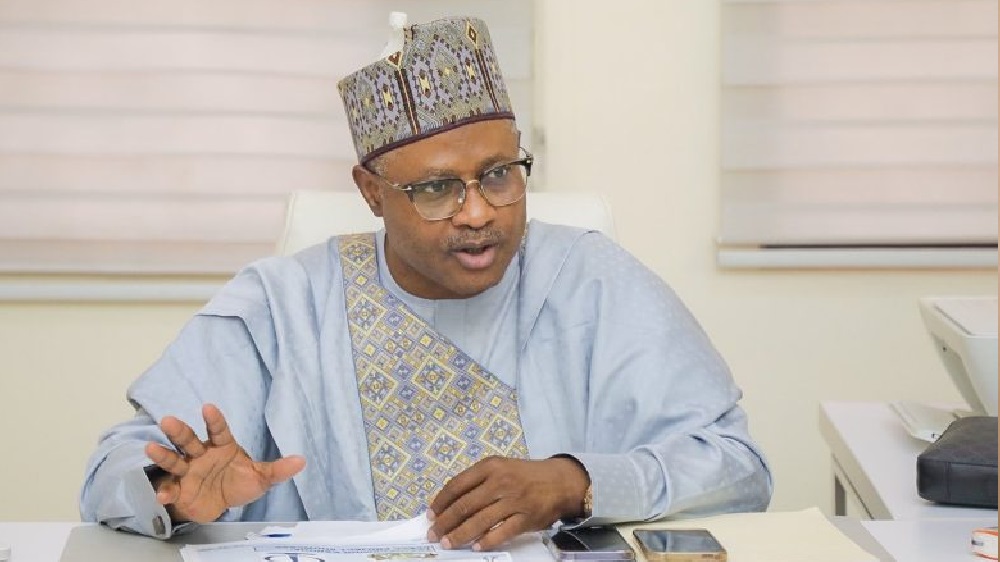


Governor Uba Sani of Kaduna State has said that his administration will construct what promises to be the largest inter-state bus terminal in Nigeria, in terms of size and infrastructure.
Performing the ground breaking on Sunday, the Governor said that the terminal will be located on 20 hectares of land along the Eastern Bypass in Chikun Local Government Area.
The Governor also disclosed that the Ultra-Modern Inter-State Bus Terminal will operate as a dual terminal with the capacity to accommodate over 5,000 vehicles, supported by intelligent traffic management systems and advanced surveillance architecture.
‘’The facility will feature escalators and elevators, ensuring accessibility for all users, including the elderly and persons with disabilities,’’ Governor Uba Sani maintained.
He said that the terminal will host refueling stations for petrol, diesel, and compressed natural gas (CNG), positioning Kaduna State at the forefront of sustainable transport innovation.
‘’A three-star hotel within the complex will cater to travellers, drivers, and visitors, offering comfort, rest, and convenience. This is not merely infrastructure of concrete and steel; it is a fully integrated mobility ecosystem; safe, efficient, transparent, and future-ready,’’ he promised.
Governor Uba Sani also pointed out that the project is also a major economic catalyst.
‘’By anchoring it along the revitalised Eastern Bypass corridor, we are decongesting the city centre, improving connectivity between intra-city and inter-state travel, and enhancing security surveillance.
‘’ Thousands of direct and indirect jobs will be created: drivers, technicians, artisans, traders, service providers, and young entrepreneurs will all find opportunity within the economic ecosystem this terminal will generate,’’ he added.
The Governor argued that investing in modern mobility infrastructure also addresses structural vulnerabilities that often fuel crime and instability, adding that ‘’in doing so, we are reinforcing peace and security not only in Kaduna State, but across the wider North-West region.’’
According to him, Sunday’s groundbreaking is part of a broader, deliberate, and carefully sequenced transformation of Kaduna State’s transport ecosystem.
He recalled that Kaduna State Government has deployed 100 free CNG buses since the middle of last year, which have conveyed over 1.4 million passengers, saving commuters almost ₦1.5 billion in transport costs.
The Governor said that ‘’this initiative has reduced household expenditure, lowered emissions, eased traffic congestion, and improved daily mobility for workers, students, and traders.’’
Governor Uba Sani noted that Kaduna State has historically occupied a strategic position as a link between regions, markets, and productive sectors in the country.
‘’However, for many years, this advantage was weakened by fragmented and inadequate transport arrangements that placed avoidable burdens on travellers, traders, and transport operators,’’ he lamented.
According to him, inter-state travel is being defined by congestion, disorder, and insecurity as ‘’families waited endlessly in unsafe conditions. Traders lost productive hours at overcrowded terminals. Young people began journeys burdened by uncertainty rather than confidence.’’
‘’Today, we draw a firm line beneath that history. With this project, we are replacing disorder with structure, vulnerability with safety, and inconvenience with dignity,’’ he said.
Governor Uba Sani said that the terminal is designed to consolidate scattered, unsafe, and unregulated motor parks into a single, professionally managed, technology-enabled facility.
‘’ It will strengthen regulatory oversight, restore confidence in public transport, and guarantee the right of every citizen to safe and dignified mobility. Order will replace chaos; transparency will replace opacity; accountability will replace arbitrariness,’’ he said.
The Uba Sani administration has also completed 200 modern bus stops across Kaduna State, providing safe, organised, and dignified waiting spaces for passengers.
He disclosed that the Kakuri Modern Bus Terminal, which will serve as the Southern Transport Hub, ‘’has reached 90 percent completion, while the redevelopment of the Sobawa Motor Park currently stands at 50 percent completion, progressing steadily toward delivery.’’
The Governor promised that ‘’by March 2026, we will break ground for the Kaduna Light Rail Project, featuring a 30-kilometre Red Line from Rigachikun to Sabon Tasha and a 20-kilometre Yellow Line from Millennium City to Rigasa.
According to him, this transformative project will redefine urban mobility and reduce pressure on our road networks.
‘’We are also launching a 24-kilometre Bus Rapid Transit (BRT) corridor from Kawo to Sabon Tasha, supported by 30 modern stations and 120 buses, designed to move large volumes of people efficiently, affordably, and reliably.
‘’ These initiatives are not isolated projects; they form an integrated, multimodal transport system designed to serve every segment of our society; urban and rural, young and old, rich and poor.
Governor Uba Sani recalled that the investment in transport sector has earned national recognition for Kaduna State under his leadership in the last two and half years.
‘’At the National Urban Mobility Conference held in Abuja on January 22, 2026, Kaduna State was ranked second in Nigeria for sustainable urban mobility, in recognition of our transport sector reforms.
‘’ We are also proud that Kaduna State is the first in Northern Nigeria and the second nationally after Lagos, to develop a comprehensive State Transport Policy, providing a clear legal and strategic framework for long-term planning.
The Governor said that ‘’when the history of this era is written, let it be recorded that Kaduna State chose planning over improvisation, inclusion over exclusion, and sustainability over short-term fixes.
‘’We are not merely building terminals, buses, and rail lines; we are building confidence, restoring trust, and laying foundations for enduring prosperity,’’ he pointed out.

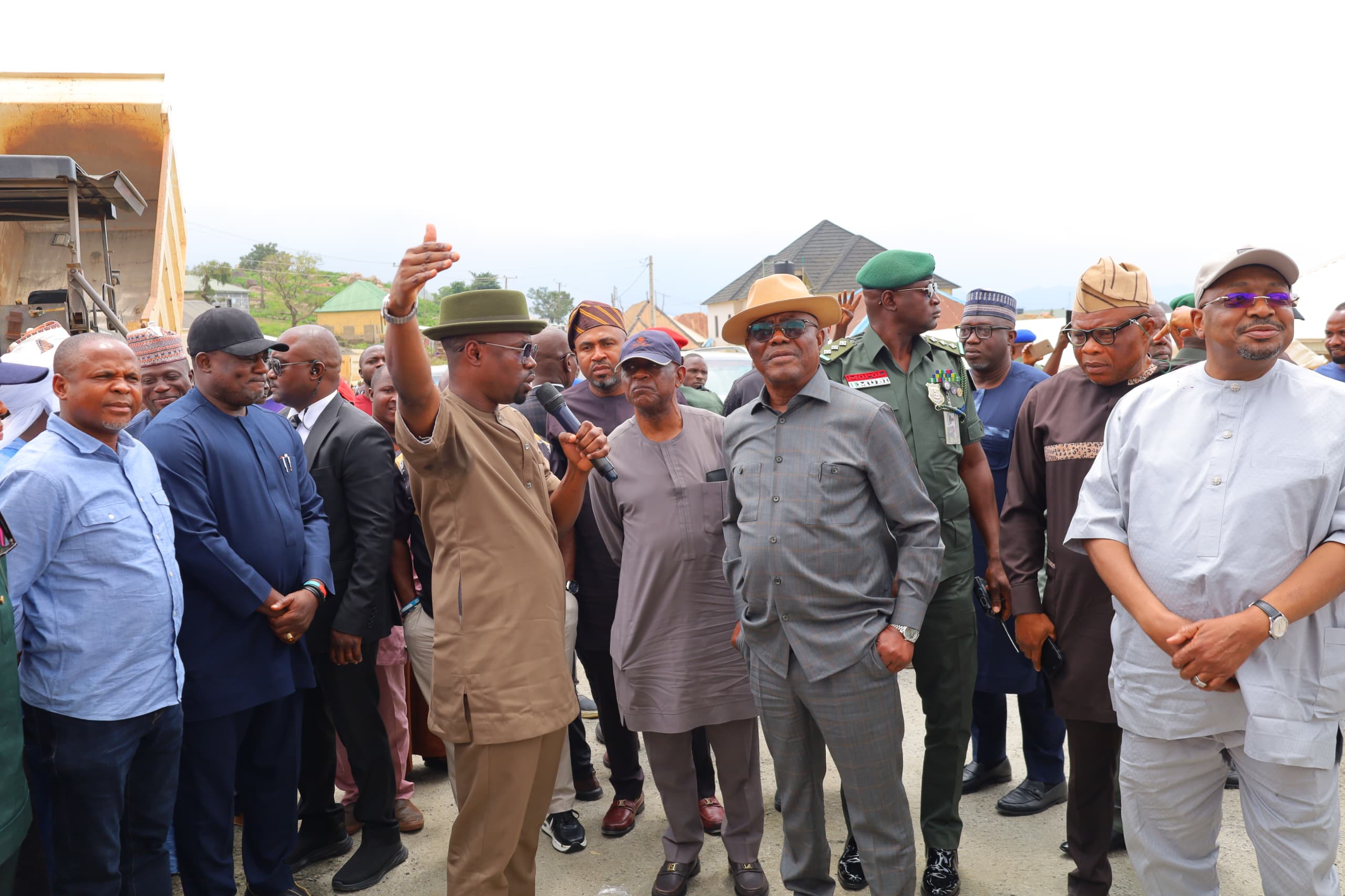
This is Chukuku, along Kuje – Gwagwalada road, Kuje Area Council of the FCT.
Wike don reach here.
Watch:
The husband of a woman accused of killing their two-year-old son stood by her in court on Thursday as she pleaded not guilty to a first-degree murder charge.
Corie Walsh, 40, appeared briefly before a judge on September 24 during a preliminary hearing in the case involving the death of her son, Barrett Walsh.
Walsh appeared in a bright red jail uniform with her hair tied back during the roughly three-minute hearing. She stood beside her attorney, who told the court that the defence had subpoenaed her treatment records from the jail.
The records, attorney Andrea Lyon later said, were requested to determine whether Walsh was receiving the mental-health treatment she needs.
The defence is also seeking to have Walsh released before trial to a hospital for treatment, despite a judge rejecting an earlier request this month.
Walsh’s husband, Michael Walsh, sat in the public gallery during Thursday’s hearing alongside an elderly couple who appeared visibly emotional.
As Walsh was led from the courtroom after the hearing, she made eye contact with her husband.
Outside the courthouse, friends comforted Michael, with one supporter telling him, “She will get through this, she’s strong.”
Michael was later heard telling another supporter that he had been “packing up” the family home.
Speaking to reporters outside court, Lyon said Walsh’s family remained firmly behind her.
“Her whole family is here today — her husband, mother, mother’s best friend,” the attorney said.
“They love her and this is not — she’s never been violent… she was psychotic. They all know that and want her to get better. This is not who she is,” Lyon added.
According to court documents, Walsh’s two older children discovered Barrett with a rope around his neck and his feet off the ground in the basement of the family’s home in Frankfort, a suburb about 30 miles southwest of Chicago.
The children reportedly ran to a neighbour’s house for help.
The neighbour called 911 and attempted CPR on the toddler, but he had no pulse and was cold to the touch. Barrett was pronounced dead at the scene.
An autopsy determined that the child, affectionately known as “Bear,” died from “asphyxia due to ligature compression of the neck,” according to court records.
Police later found Walsh fully clothed in a bathtub containing bloodied water. Investigators allege that she had attempted to kill herself by cutting her wrists and thighs with a dull kitchen knife.
Court documents further allege that Walsh confessed to killing her son and described him as the “anti-Christ” and “devil.”
The case has drawn particular attention because prosecutors allege Walsh had become intensely focused on the high-profile case of Lindsay Clancy, a Massachusetts mother accused of killing her three children.
Clancy’s defence argued that she suffered from postpartum psychosis and was legally insane when she fatally strangled her children with exercise bands. Her trial ended in a hung jury and mistrial.
According to Walsh’s defence team, she had discussed the Clancy case with neighbourhood friends shortly before Barrett was found.
During an earlier hearing, defence attorney Robert Kerr said Walsh had sent several “confusing” and “out of character” messages about the Clancy case.
Kerr told the court that Walsh had initially expressed one view about Clancy’s case before suddenly changing her position.
A witness reportedly described Walsh as abruptly saying that Clancy was “100% not guilty”, prompting friends to question whether she was okay and whether someone should check on her.
Walsh’s lawyers have argued that she was “severely mentally ill” and experiencing a psychotic episode when Barrett died.
The defence has also rejected suggestions that Walsh deliberately copied Clancy.
“Describing Corie to have copied Lindsay is to take an easy bait,” Kerr said during a previous hearing, according to a transcript.
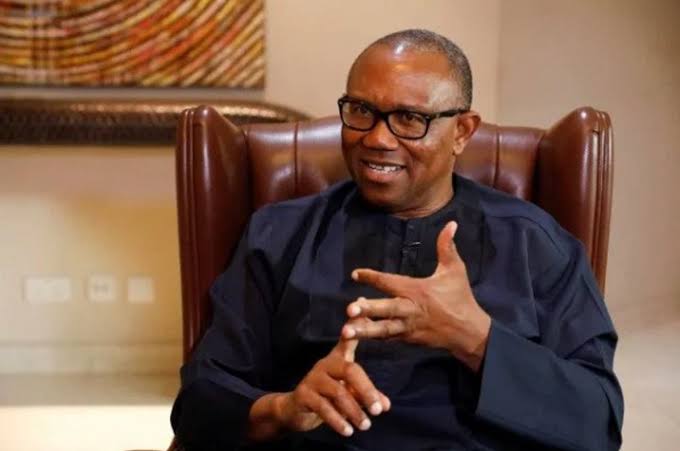
Presidential candidate of the Nigeria Democratic Congress (NDC), Peter Obi, has raised concerns about his personal safety ahead of the 2027 general elections, saying he is not certain he will be alive when Nigerians go to the polls.
Obi made the remarks during an interview on Arise TV on Thursday, where he discussed the political environment ahead of the election and called for a peaceful and democratic process.
The former Anambra State governor said he had been subjected to petitions and investigations in different places, adding that he remained uncertain about what could happen to him before the election.
“As I speak to you, I have also petitioned, I’ve been investigated everywhere. I still hear that I’m not even sure whether I’ll still be alive at the end of this,” Obi said.
He said he was relying on God for protection, while expressing uncertainty over the circumstances surrounding him.
“I’m praying to God for His protection because at this stage, I’m not sure what is happening,” he added.
Obi also appealed to political actors, particularly state governors, to create an environment where presidential candidates and other contestants can campaign freely ahead of the 2027 polls.
According to him, governors have the right to support candidates of their choice, but should not prevent candidates from opposing parties from carrying out their campaigns.
“Some of them will be campaigning for presidency tomorrow. They will be campaigning for other offices tomorrow. Let’s have peace,” he said.
The NDC candidate recalled his tenure as governor of Anambra State, saying he allowed politicians from other parties to campaign in the state, including those supporting candidates who were opposed to him.
Obi’s comments come amid increasing political activity and debate over the conduct and security of the 2027 elections. He has repeatedly called for a peaceful, credible and issue-based electoral process, while urging political actors to avoid actions that could undermine democratic participation.

FCT minister Wike spreads devt as he visits Chukuku in Kuje(Video)

Husband Stands by Mum Accused of Hanging 2-Year-Old Son as She Faces Murder Trial

2027: Peter Obi Raises Alarm Over Safety, Says He May Not Be Alive for Election




-
 News23 hours ago
Video: Apo-Karshi road getting required finishing touches
-
 News23 hours ago
SAD! Four Teenage Girls Die As Boat Carrying Eight Capsizes In Jigawa
-
 News23 hours ago
US firm declares America won’t allow Tinubu rig 2027 polls in Nigeria
-
 Opinion23 hours ago
OF TEEJAY YUSUF, KOGI WEST SENATORIAL DISTRICT, AND RESPONSIVE SERVANTHOOD
-
 News22 hours ago
FG Cuts Late Tax Payment Interest as New Rate Takes Effect October 1
-
 Sports23 hours ago
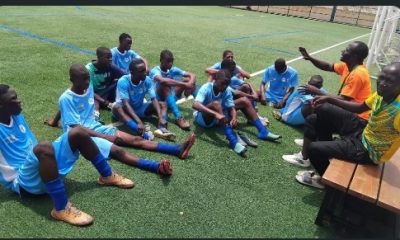
FCT emerges winner of Abuja zone, book ticket to 1st Bank/Okwaraji U-16 finals