By Gloria Ikibah


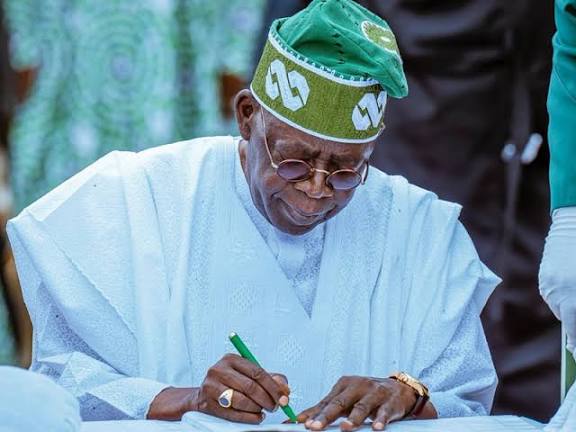
President Bola Tinubu has formally assented to the Electoral Act (Amendment) Bill 2026, ushering in significant adjustments to Nigeria’s electoral framework only days after the timetable for the 2027 general election was made public.
The legislation was signed on Wednesday evening at the Presidential Villa in Abuja, with senior members of the National Assembly in attendance. Lawmakers had passed the revised bill a day earlier, paving the way for presidential approval. 
The move comes shortly after the Independent National Electoral Commission unveiled the official schedule for the 2027 elections, effectively signalling the start of political manoeuvring nationwide.
Key to the amendment is the long-running question of electronic transmission of election results, an issue that has stirred robust debate across the country.
In recent weeks, civic organisations and opposition groups demonstrated at the National Assembly complex, pressing for compulsory, real-time transmission of results from polling units to INEC’s central database. Advocates believe such a measure would curb tampering, strengthen transparency and restore confidence in the voting process.
Meanwhile, the ruling All Progressives Congress, alongside other political figures, has raised reservations over connectivity limitations in rural and hard-to-reach areas. They favour a more adaptable approach, allowing manual collation where technological infrastructure may prove unreliable.
The discussion inevitably recalls the 2023 general election, when technical difficulties linked to INEC’s Results Viewing Portal triggered controversy and claims of irregularities.
According to the timetable already published by INEC, presidential and National Assembly contests are slated for 20 February 2027. Governorship and state assembly elections are to follow on 6 March 2027.
Political parties and stakeholders are now expected to examine the implications of the amended law as preparations intensify for what promises to be a closely watched electoral cycle.