…as 2026 First Ordinary session opens in Abuja with rallying call for trade, democracy and security


…Nigeria’s Senate President say integration is key to security, stability, economic independence
By Gloria Ikibah 
The President of the ECOWAS Parliament, Rt. Hon. Mémounatou Ibrahimah, has urged West African leaders to ensure the African Continental Free Trade Area becomes a genuine engine of transformation — not merely a political slogan.
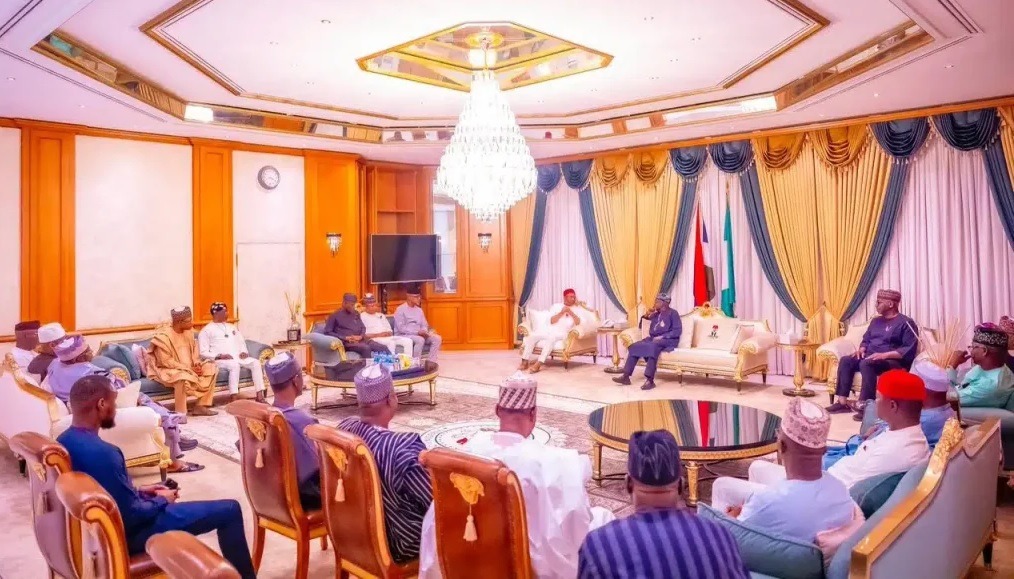
The Speaker stated this at the opening of the Parliament’s Sixth Legislature seminar and First Extraordinary Session for 2026, on Monday in Abuja.
Welcoming delegates, Ibrahimah said the new parliamentary year must deliver practical results for the region’s estimated 400 million citizens.
She thanked Nigerian authorities for hosting the session, expressing gratitude to President Bola Ahmed Tinubu, his government and the Nigerian people for what she described as their consistent hospitality.
“We gather here in Abuja, at the seat of our Institution, to launch this new parliamentary year together. May our work meet the expectations of the 400 million citizens whose voices and legitimate aspirations for peace, security, and shared prosperity we represent.
“Our presence in Abuja reaffirms our determination to make the ECOWAS Parliament a modest yet effective institution, firmly results-oriented. It reflects our commitment to embodying an integration that is not merely proclaimed, but implemented,” she said.
The session opened with a high-level seminar themed: “Deepening Regional Integration through the AfCFTA: Opportunities and Challenges for Expanding Intra-Community Trade.”
Ibrahimah noted that the African Continental Free Trade Area has entered its operational phase and carries enormous potential.
She argued that with nearly five decades of integration experience, ECOWAS must do more than follow developments.
“The African Continental Free Trade Area has now entered its operational phase. It aims to create one of the largest markets in the world by population. Our responsibility is clear: to make this instrument a lever for structural transformation in West Africa.
“With nearly fifty years of integration experience, ECOWAS cannot merely accompany this process. It must lead, coordinate, and harmonize it. This is a historic imperative,” she stated.
Highlighting progress made so far, she said ECOWAS remains one of Africa’s most dynamic regional blocs, pointing to average growth of about five per cent over the past decade, a common external tariff, and tools such as the Pan-African Payment and Settlement System and the ECOWAS Brown Card.

“Our youthful and entrepreneurial population represents one-third of Africa’s total population — a major demographic asset.
“Intra-regional trade accounts for less than 10 per cent of our total trade. Our industrial base remains underdeveloped, and we continue to export mainly raw materials — cocoa, cotton, palm oil, timber — with little local processing,” she added.
She also expressed concern that several member states are yet to ratify the AfCFTA agreement or define national strategies, slowing coordinated implementation.
Beyond trade, Ibrahimah outlined three strategic priorities for the year: democracy, security and women’s leadership.
On governance, she welcomed the lifting of sanctions against Guinea following the December 2025 presidential election and congratulated President Mamadi Doumbouya and the Guinean people.
“We also look forward to peaceful, credible elections in Cape Verde, The Gambia, and Benin, and encourage continued dialogue in Guinea-Bissau,” she added.
On security, she warned that terrorism and organised crime continue to threaten the region.
“Security solidarity is not optional; it is an obligation. We call for strengthened cooperation, enhanced intelligence sharing, and effective deployment of the ECOWAS Standby Force,” she said.
She also called for stronger participation by women in leadership across the region, commending the ECOWAS Female Parliamentarians Association while urging it to deliver measurable impact.
“As parliamentarians, our role is decisive. We must harmonize legal frameworks, remove non-tariff barriers and obstacles to free movement, oversee the use of Community resources, and ensure that integration remains inclusive, equitable, and socially progressive.
“May our debates yield clear orientations, actionable recommendations, and transformative resolutions,” she said.
“May our work here in Abuja mark a decisive turning point in advancing integration — more efficient, more effective, and closer to our people,” Ibrahimah said.
Delivering his goodwill message, President of the Nigerian Senate, Godswill Akpabio, urged West African leaders to close ranks and deepen regional integration, warning that isolation would leave the region exposed in an increasingly unforgiving global order.
Senator Akpabio who was represented by the First Deputy Speaker of the ECOWAS Parliament, Jibrin Barau said the region was standing at a defining crossroads. He painted a stark picture of a world that proclaims globalisation yet operates on raw competition.
“We are gathered at a decisive hour in the history of our region — an hour that tests our resolve, defines our unity, and determines our future.
“A time when the world proclaims itself a global village, yet behaves like an ancient Roman arena — vast, competitive, and unforgiving — where strength commands advantage and hesitation invites marginalization.
“In such a world, survival does not belong to the isolated. It belongs to the organized. It rewards the united.
“Only through unity can we secure our markets. Only through solidarity can we defend our democracy. Only through integration can we safeguard our prosperity,” he declared.
Akpabio described the theme of the gathering — deepening regional integration through the African Continental Free Trade Area — as far more than bureaucratic routine.
“The theme before us is not administrative. It is civilizational.
“We meet as trustees. We meet as guardians of a promise long deferred — the promise that West Africa, united by blood, by culture, by toil, and by triumph, shall also be united in prosperity,” he said.
According to him, the African Continental Free Trade Area is not a radical invention but a return to Africa’s trading heritage.
“AfCFTA is not invention. It is restoration,” he said, describing it as “one of the boldest economic enterprises of our age — a single market embracing more than a billion souls.”
The Senate President warned that lofty declarations would amount to little without legislative discipline and oversight.
“If we fail in legislative coherence, then trade agreements will remain mere parchment.
“If we neglect oversight, then declarations shall dissolve into bureaucratic dust. Our task is not to applaud ambition. It is to enact it,” he cautioned.
He pointed to persistent instability, economic shocks and rising protectionism abroad as further reasons for deeper cooperation within the region.
“Dependence breeds vulnerability. When we lean excessively upon distant supply chains, we surrender our resilience.”
AfCFTA, he insisted, must produce visible, practical outcomes.
“If traders remain stranded at borders by administrative confusion, then integration remains an aspiration rather than a fac.
“Integration shall not be measured by eloquence. It shall be measured by reduced costs, harmonized standards, swift ports, transparent customs, interoperable digital systems.
“Let it be measured by the young exporter whose goods cross borders without bribery or delay. Let it be measured by the woman trader who moves in dignity, not fear. Let it be measured by jobs — solid, sustaining, dignified jobs,” he said.
Akpabio did not shy away from the region’s security concerns, warning that instability directly undermines economic progress.
“Insecurity is the enemy of integration. Where instability flourishes, trade withers.
“Economic integration strengthens political stability. Political stability fortifies economic integration. These are not rival pursuits. They are twin pillars,” he said.
He emphasised Nigeria’s responsibility as the region’s largest economy, noting that prosperity in one country cannot endure if neighbours falter.
Calling for industrialisation within the region, he urged West African states to add value to their raw materials at home.
“Let us refine our minerals here, process our cocoa here, and assemble our machinery here. If we do not industrialize together, we shall remain suppliers of raw hope to the factories of others.”, he stated.