Connect with us

News

Sad: Mother of three takes own life after family snubs lover

Published

on

ADVERTISEMENT
Zoom Ad
ADVERTISEMENT
Zoom Ad

Tragedy struck in Ijebu Ode, Ogun State, as a 30-year-old woman, Abigail Adebayo, reportedly took her own life after her fiancee’s family allegedly disapproved of their marriage due to her having three children from a previous relationship.


According to a report by Daily Post, Abigail had been in a relationship with Oniga Abiola since September 2025, and the couple had been planning to marry.

Trouble reportedly began when Abiola introduced her to his mother about two weeks ago. The family allegedly rejected the marriage, citing Abigail’s children as the reason.

Heartbroken and distressed, Abigail was later found motionless in her room, having allegedly ingested Sniper insecticide.
Abiola reportedly reported the incident to the Atan Ijebu Division of the Ogun State Police Command.

Advertisement

The report revealed, Police Public Relations Officer Oluseyi Babaseyi confirmed the incident on Tuesday, noting that Abigail was rushed to General Hospital, Ijebu Ode, where she was pronounced dead on arrival.
“On 12/02/2026, it was reported that one Abigail Adebayo, 30 years old, allegedly ingested Sniper insecticide following a family disagreement over their intended marriage,” Babaseyi said.

“She was immediately rushed to General Hospital, Ijebu Ode, where she was confirmed dead by the doctor on duty. Detectives visited the scene and the hospital, photographs were taken, and no visible marks of violence were found on the body. Investigation is ongoing.”
The police have launched a full investigation to uncover all circumstances surrounding her death.

Continue Reading
Advertisement

News

Reps Seek New Revenue Streams for South-South Development Commission

Published

on

ADVERTISEMENT
Zoom Ad
ADVERTISEMENT
Zoom Ad

By Gloria Ikibah

The House of Representatives has commenced the process of amending the South-South Development Commission (SSDC) Establishment Act, 2025, in a move aimed at expanding the commission’s funding base and strengthening its capacity to address the region’s longstanding developmental challenges.

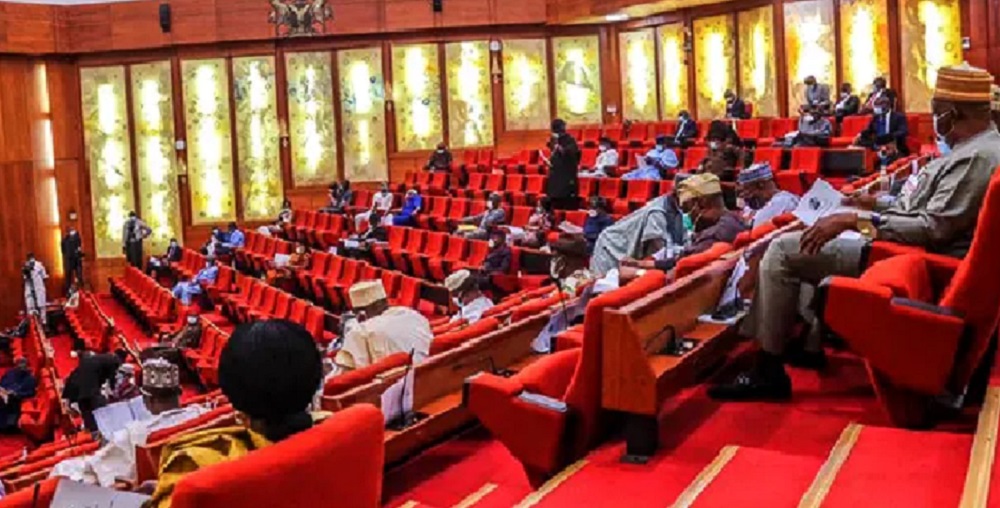
The House Committee on the South-South Development Commission on Wednesday held a public hearing on the proposed amendment, drawing governors, ministers, heads of government agencies, industry operators, civil society organisations and other stakeholders to examine plans for a broader statutory funding framework for the commission.

Declaring the hearing open, Speaker of the House of Representatives, Rt. Hon. Tajudeen Abbas, said the bill was designed to place the South-South Development Commission on a stronger financial footing by creating additional statutory sources of revenue similar to those available to other regional development commissions.

Advertisement

He reiterated the commitment of the 10th House to building what he described as a “People’s House”, where Nigerians are actively involved in shaping legislation through transparent and inclusive processes.

According to the Speaker, public hearings are more than constitutional formalities.

Abbas said: “The bill before us seeks to strengthen the financial framework of the South-South Development Commission by introducing additional statutory sources of funding to support the commission in the effective discharge of its mandate.

“They are practical expressions of participatory democracy, accountability and inclusive governance”.

Advertisement

Abbas noted that while the establishment of the South-South Development Commission recognised the region’s strategic importance as the hub of Nigeria’s oil and gas industry, many communities continue to grapple with environmental degradation, ecological damage, inadequate infrastructure, youth unemployment and other socio-economic challenges.

He, however, cautioned that any proposal introducing new financial obligations or altering existing statutory revenue arrangements must be subjected to careful legislative examination.

He said lawmakers must ensure that any amendment is equitable, fiscally responsible, transparent and sustainable.

The Speaker urged stakeholders to make evidence-based submissions that would help the National Assembly produce balanced legislation capable of delivering meaningful development to the South-South.

Advertisement

He also disclosed that the House would soon hold an “Open Week” to deepen public engagement with Parliament, improve understanding of the legislative process and strengthen citizens’ confidence in democratic institutions.

Earlier, Chairman of the House Committee on the South-South Development Commission, Rep. Julius Gbabojor Pondi, said the proposed amendment seeks to broaden the commission’s sources of revenue in order to improve its effectiveness.

Pondi explained that the bill proposes statutory contributions from extractive industries, agricultural processing companies, allocations from the Ecological Fund and a share of Value Added Tax (VAT) revenue, among other funding mechanisms.

He said that despite the South-South’s enormous contribution to Nigeria’s economy through oil and gas production, maritime activities and industrial development, the region continues to face significant developmental challenges resulting from decades of intensive resource extraction.

Advertisement

According to him, the commission currently operates under a relatively limited funding structure, making it difficult to fully deliver on its statutory mandate.

“The central argument underpinning the proposed amendment is the need to bring the South-South Development Commission substantially at par with other regional development commissions established by the Federal Government,” Pondi said.

He added that although the South-South generates a substantial portion of Nigeria’s national wealth, the commission requires a more sustainable funding model to meet the developmental aspirations of the people.

Pondi assured participants that the public hearing was intended to encourage open and constructive engagement rather than endorse predetermined outcomes.

Advertisement

He therefore pledged that all memoranda and submissions received during the exercise would be given fair and objective consideration before the committee presents its recommendations to the House for further legislative action.

Continue Reading

News

Reps Demand Tougher Crackdown on Human Trafficking, Better Care for Rescued Nigerians

Published

on

ADVERTISEMENT
Zoom Ad
ADVERTISEMENT
Zoom Ad

By Gloria Ikibah

The House of Representatives has called for a more robust national response to human trafficking, urging stronger collaboration among government agencies, international organisations and civil society groups to ensure that trafficked Nigerians rescued from Mali and other West African countries receive adequate support upon their return.

Lawmakers made the call on Wednesday during a high-level stakeholders’ technical meeting on human trafficking organised by the House Committee on Humanitarian Services in Abuja.

Chair of the committee, Rep. Tolulope Akande-Sadipe, said Nigeria must move beyond simply repatriating victims by putting in place effective rehabilitation and reintegration programmes that will help survivors rebuild their lives and reduce the risk of re-trafficking.

Advertisement

She expressed concern that thousands of Nigerians, particularly women, children and young people, continue to fall prey to traffickers operating across West Africa, where they are subjected to forced labour, sexual exploitation and other forms of modern slavery.

According to her, many victims suffer abuse, exploitation and deprivation before becoming stranded in foreign countries without legal protection or access to essential services.

“Behind every statistic is a human story. Trafficking is not merely a migration issue; it is a grave violation of human rights and an assault on human dignity that demands a coordinated national response,” Akande-Sadipe said.

She noted that recent interventions by the Federal Government, including the evacuation of vulnerable Nigerians from South Africa and the Memorandum of Understanding between Nigeria and Ethiopia on the transfer and management of Nigerian prisoners, underscored the value of diplomatic engagement and inter-agency cooperation in protecting citizens abroad.

Advertisement

Akande-Sadipe stressed that successful reintegration should go beyond returning victims to Nigeria, saying survivors require physical and mental healthcare, psychosocial support, legal assistance, education, vocational training, family reunification and sustainable economic opportunities.

She assured stakeholders that the House will continue to provide the legislative backing, policy direction and oversight required to strengthen humanitarian response systems, improve institutional coordination and ensure adequate funding for agencies responsible for protecting vulnerable Nigerians.

The lawmaker urged participants to produce practical recommendations that would strengthen Nigeria’s anti-trafficking framework in line with the internationally recognised pillars of prevention, protection, prosecution and partnerships.

Meanwhile, the National Council of Child Rights Advocates, Nigeria (NACCRAN), presented what it described as troubling findings from an 11-month fact-finding mission in Mali, alleging irregularities in the rescue and repatriation of trafficked Nigerian girls.

Advertisement

Presenting the organisation’s report, NACCRAN’s Operations Consultant on Diaspora Issues, Prince Adefioye Gbolagade Simeon, alleged that investigations uncovered a lack of transparency in repatriation processes, poor documentation of Nigerian migrants and abuse of rescued victims.

He further alleged that some officials at the Nigerian Embassy in Mali, working alongside certain Nigerians resident in the country, engaged in questionable practices during the rescue and repatriation of trafficked persons.

According to Simeon, some rescued girls were allegedly kept at the embassy for prolonged periods while awaiting repatriation through the International Organization for Migration (IOM), despite funds reportedly being collected to facilitate their return to Nigeria.

He also claimed that several victims reported suffering physical and emotional abuse after refusing to engage in prostitution, while many Nigerian migrants paid between 10,000 and 15,000 CFA francs for identification cards that were allegedly not recognised at border checkpoints.

Advertisement

Simeon accused some embassy officials and their collaborators of exploiting vulnerable Nigerians and intimidating humanitarian workers who attempted to expose the alleged misconduct.

He disclosed that petitions had previously been submitted to the Federal Ministry of Foreign Affairs, the Federal Ministry of Justice, the National Human Rights Commission, the Office of the Senate President and relevant committees of the National Assembly, but alleged that many of the issues raised had yet to be addressed.

However, he commended the House Committee on Humanitarian Services for intervening in the matter.

According to him, the committee’s engagement prompted the Federal Ministry of Foreign Affairs to deploy a fact-finding team to Mali in July 2025.

Advertisement

He added that, with the committee’s support, NACCRAN successfully repatriated more than 10 underage Nigerian girls between September and December 2025, with several victims handed over to the National Agency for the Prohibition of Trafficking in Persons (NAPTIP) before being reunited with their families.

Simeon called on the committee to investigate the management of repatriation activities at the Nigerian Embassy in Mali, strengthen coordination between the Ministry of Foreign Affairs, NAPTIP, security agencies and civil society organisations, and develop a comprehensive policy framework to protect Nigerian girls and women from trafficking across West Africa.

He also appealed for official authorisation and letters of introduction to enable NACCRAN to continue its humanitarian rescue operations in Mali and other West African countries.

The meeting brought together lawmakers, representatives of government ministries, development partners, diplomatic missions, security agencies, international organisations and humanitarian experts to explore stronger strategies for tackling human trafficking and improving protection for vulnerable Nigerians overseas.

Advertisement
Continue Reading

News

Photos: 70% Of FCT Projects We Completed Were Abandoned For 16 Years, Wike

Published

on

ADVERTISEMENT
Zoom Ad
ADVERTISEMENT
Zoom Ad

Minister of the Federal Capital Territory (FCT), Barr. Nyesom Wike, has revealed that about 70 per cent of the projects completed by the FCT Administration under President Bola Ahmed Tinubu were abandoned contracts awarded 15 to 16 years ago.

Wike said the projects were revived and completed in line with Tinubu’s directive that no viable government project should be abandoned.

Speaking during his monthly media chat on Thursday in Abuja, the minister said the administration deliberately focused on inherited projects before embarking on new ones.

According to him, allowing the projects to remain abandoned would have denied residents the benefits of critical infrastructure and wasted public resources.

“The President said we can’t abandon old projects. While we cannot abandon old projects, we must also carry out new ones.

“I can tell you that about 60 per cent of the projects we have executed in the last three years were projects awarded 15 to 16 years ago but abandoned.

“If we had allowed that, people would still be asking questions about those abandoned projects. So, we first made sure they were completed, and we have achieved that with not less than 70 per cent of them,” Wike said.

The minister stressed that while inherited projects were being completed, the FCT Administration also initiated new road and infrastructure projects across Abuja and the satellite towns.

Advertisement

He attributed the pace of development in the nation’s capital to President Tinubu’s support, particularly the decision to remove the FCT Administration from the Treasury Single Account (TSA), which, according to him, made funds readily available for infrastructure development.

Wike maintained that the administration would continue executing projects aimed at improving transportation, opening up new districts and enhancing the quality of life for residents of the Federal Capital Territory.

Continue Reading

Trending

Copyright © 2024 Naija Blitz News