News
FG increases allowances for Civil Servants

- /home/naijuinz/public_html/wp-content/plugins/mvp-social-buttons/mvp-social-buttons.php on line 27
https://naijablitznews.com/wp-content/uploads/2026/04/IMG_5733.jpg&description=FG increases allowances for Civil Servants', 'pinterestShare', 'width=750,height=350'); return false;" title="Pin This Post">
- Share
- Tweet /home/naijuinz/public_html/wp-content/plugins/mvp-social-buttons/mvp-social-buttons.php on line 72
https://naijablitznews.com/wp-content/uploads/2026/04/IMG_5733.jpg&description=FG increases allowances for Civil Servants', 'pinterestShare', 'width=750,height=350'); return false;" title="Pin This Post">


The Federal Government has approved an increase in peculiar allowances and other welfare benefits for civil servants.
Nigeria’s Head of the Civil Service, Didi Walson-Jack, disclosed this during a press briefing in Abuja on Friday, in a move expected to increase the take-home pay of civil servants and boost the morale of the government’s workforce.
Walson-Jack said the increment affects workers under the Consolidated Public Service Salary Structure (CONPSS) and the Consolidated Research and Allied Institutions Salary Structure (CONRAISS).
This is targeted at ensuring a broad-based impact across all cadres of the civil service.
According to her, the allowances have been structured to reflect across all grade levels, leading to better earnings for senior and junior officers.
Meanwhile, the Federal Government has approved a review of some key allowances for civil servants.
Some of them include duty tour allowance (DTA), estacode, and book allowance.
The head of service said almost all allowances in the Public Service Rules have been revised.
One key reform is the approval of 100 percent DTA, which is for civil servants attending approved training programmes irrespective of whether travel is involved or not.
She said, “Even if you are based in Abuja and attend training within Abuja, you are entitled to full DTA.”
Apart from salary-related adjustments, the Federal Government has also introduced an exit benefit scheme for retiring civil servants under the Contributory Pension Scheme.
The scheme, which provides 100 per cent of a retiree’s full emoluments as an exit package, in addition to their pension, takes effect from January 1, 2026.
For the head of service, the move is part of efforts to enhance dignity in retirement. She maintained that no public servant should leave service without adequate financial support.
The Federal Government equally confirmed the operationalisation of the Employee Compensation Scheme, aimed at financially protecting workers who suffer job-related injuries or death.
Nigeria’s latest reforms followed an increase in calls from labour unions for improved welfare for civil servants as the cost of living continues to soar, putting more pressure on workers.
It comes about two years after the Federal Government approved a salary rise of between 25% and 35% for civil servants on the remaining six consolidated salary structures.
The salary structure includes the Consolidated Public Service Salary Structure (CONPSS), Consolidated Research and Allied Institutions Salary Structure (CONRAISS), Consolidated Police Salary Structure (CONPOSS), Consolidated Paramilitary Salary Structure (CONPASS), Consolidated Intelligence Community Salary Structure (CONICCS), and Consolidated Armed Forces Salary Structure (CONAFSS).
Support for Oyo Workers
In the meantime, Governor Seyi Makinde of Oyo State has announced a ₦10,000 monthly transportation support fund for civil servants in the state to cushion the impacts of the rising costs of living.
Makinde said this will run for an initial period of three months. According to him, the move is part of the Oyo government’s response to prevailing economic pressures, particularly the rising cost of transportation.
The governor said it will help lessen the financial burden on civil servants in the state and ensure uninterrupted service delivery across ministries, departments, and agencies.
“This support is a direct response to the realities our workers are facing,” Makinde said. “We understand that transportation costs have gone up significantly, and as a government, we must act to ease that burden.”
The transport allowance took effect in March, 2026.


Borno State Commissioner for Youth and Sports Development, Sainna Buba, has come under criticism over comments in which he threatened political opponents with punishment if they refused to support the ruling All Progressives Congress (APC).
Buba, a known ally of Governor Babagana Umara Zulum, made the remarks at a campaign inauguration organised by the Tinubu City Boy Movement.
The City Boy Movement is a political support group and grassroots mobilization organization. It is dedicated to promoting the policies of President Bola Tinubu’s administration and securing his re-election.
The phrase “City Boy” is a popular political moniker originally given to Tinubu, from his time as the former Governor of Lagos, the commercial nerve centre of the country.
Speaking at the event, the commissioner said, “Whoever shows us a finger, we are ready to cut off his fingers.”
He further warned those who opposed the government, saying: “We are now playing politics. Whoever shows us a finger, we will show him a finger. Whoever dares to show us a finger again, we will break his finger. The government is our government. Those who follow us will enjoy the honey; if you refuse, then you will be flogged.”
The remarks have raised concerns over the language used by a serving government official, particularly amid allegations of intimidation, human rights abuses and the use of state institutions against young people in Borno State.
There have also been allegations that some youths were subjected to intimidation and prolonged detention through the justice system in Tandari. Other claims have alleged that executive powers were used against young people, with some reportedly fleeing the state and seeking refuge in Algeria.
The allegations have not been independently established and require proper investigation by the relevant authorities.
However, Buba’s comments have renewed questions about the treatment of political dissent and opposition in the state.
Critics argue that a government official threatening to “break” the fingers of those who oppose or challenge the government creates an atmosphere of intimidation and could undermine citizens’ constitutional rights.
According to critics, the remarks raise broader questions about whether political loyalty is becoming a condition for citizens to enjoy their rights and whether disagreement with those in power is being treated as an offence.
Electoral violence, inflammatory rhetoric and severe security threats have heavily characterised recent Nigerian elections.
The highly publicised incident involving Senator Francis Fadahunsi in Osun State is one example of the concerns surrounding the use of threatening language during election campaigns.
During the buildup to the Osun State Governorship Election, Fadahunsi, the All Progressives Congress (APC) lawmaker representing Osun East, became embroiled in controversy after a video emerged in which he appeared to instruct APC supporters to “kill” members of the rival Accord Party while addressing a campaign rally in Ilesa.
He also reportedly referred to the violent political crisis of 1983 in the former Western Region, including the burning of an opposition candidate’s family home.
The remarks generated widespread outrage and prompted the Osun State Police Command to summon the senator for questioning. In a letter signed by Samuel Erale, the Commissioner of Police for election duties, the police described the senator’s statements as “threatening, inciting, and intimidating in nature.”
Fadahunsi honoured the invitation and appeared at the State Criminal Investigation Department in Osogbo. He denied calling for physical violence, arguing that his words had been deliberately manipulated and that their meaning had been distorted because he spoke in Yoruba.
He maintained that when he said supporters should “kill Accord,” he meant they should defeat the party with their votes at the ballot box, not physically attack its members.
Despite the controversy and police invitation, there was no reported prosecution or punitive action against the senator beyond the questioning.
Civil society organisations, including ActionAid Nigeria, subsequently condemned what they described as the normalisation of impunity surrounding inflammatory electoral rhetoric.
The Fadahunsi controversy is part of a broader pattern of politically charged threats and inflammatory statements that have accompanied Nigerian elections, often with limited consequences for those responsible.
Ahead of the 2023 Lagos State governorship election, for instance, APC chieftain Musiliu ‘MC Oluomo’ Akinsanya was criticised after warning Igbo voters in a widely circulated video: “If you know you won’t vote for us, stay at home.”
The remarks attracted condemnation amid concerns about voter intimidation, but no significant legal action followed.
Similarly, ahead of the 2019 general elections, then-Kaduna State Governor Nasir El-Rufai warned foreign election observers on live television that anyone who came to interfere in Nigeria’s electoral process would “go back in body bags.”
El-Rufai later defended the statement as a warning against interference in Nigeria’s sovereignty, but it did not result in prosecution.
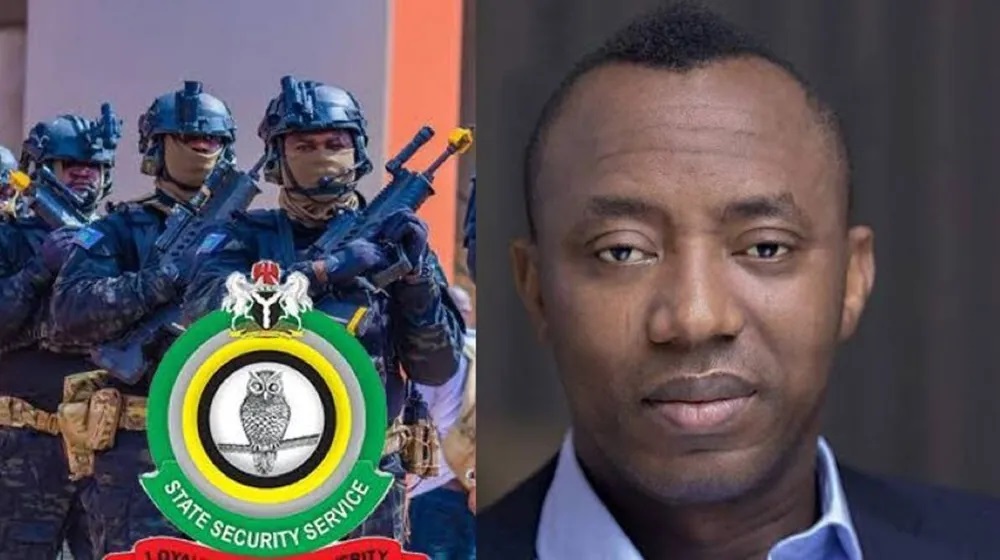
The Department of State Services (DSS) is seeking to pause the ongoing alleged cyber-bullying case against African Action Congress (AAC) presidential candidate, Omoyele Sowore, until after the 2027 presidential election, in a move officials say is aimed at ensuring that the candidate is able to participate fully in the electoral process.
The development represents a significant shift in the handling of the case, which arose from social media posts in which Sowore referred to President Bola Tinubu as a “criminal.”
The DSS had approached the Federal High Court to determine whether it was lawful for Sowore to describe the President or any individual as a criminal, while also seeking judicial interpretation on related issues, including the legality of Professor Pat Utomi’s proposed “Shadow Government.
But with presidential campaigns now underway, the security agency has directed its private counsel, Akinlolu Kehinde, SAN, to seek an adjournment of the Sowore case until after the January 16, 2027 presidential election.
A source close to the DSS legal team disclosed that the decision followed a meeting between the Director-General of the service, Tosin Ajayi, Kehinde and senior officers of the agency’s legal directorate on August 20, a day after the Independent National Electoral Commission (INEC) officially lifted the ban on campaigns.
According to the source, Ajayi told the legal team that it would be fair to allow Sowore to exercise his right to contest the presidential election without the pending case becoming an impediment to his campaign.
“The DSS boss reportedly told the Senior Advocate and his directorate of legal services that, with the commencement of presidential campaigns, it would only be fair to adjourn the court case in order to enable Sowore fully participate in the upcoming elections without let or hindrance,” the source said.
The position is particularly notable because the DSS had earlier pursued the matter after Sowore refused to remove the posts following a seven-day ultimatum issued by the agency.
The security service subsequently approached the court on September 16, 2025, after the expiration of the ultimatum, seeking adjudication on the matter.
The DSS had also stated in a September 6, 2025 letter to Meta, the parent company of Facebook, that its responsibility to protect the President extended beyond physical threats to what it described as psychological attacks.
However, nearly a year after the case was instituted, the agency now believes that continuing with the proceedings during the election campaign could unnecessarily interfere with Sowore’s participation in the poll.
The source said Ajayi was of the view that the case had already spent almost a year before the court and that delaying proceedings for a few additional months would not materially affect the matter.
“The DSS boss told the lawyers that, since the matter had been in court for nearly a year, suspending it for another few months wouldn’t make much difference,” the source said.
The development also appears to form part of a wider review by the DSS of cases involving candidates contesting elective positions in the 2027 elections.
The source said cases involving other candidates were being reviewed to determine whether similar considerations should apply.
The DSS is expected to formally approach the Federal High Court for the adjournment from September 14, 2026, when the court is scheduled to resume normal proceedings after the annual judicial vacation.
Kehinde, SAN, confirmed the development when contacted.
He said the proposed adjournment was consistent with what he described as the “civilised approach” of the current DSS Director-General, which, he said, was intended to ensure a level playing field and provide candidates with the opportunity to participate in the electoral process.
“We will seek the indulgence of the court for the adjournment,” he said.

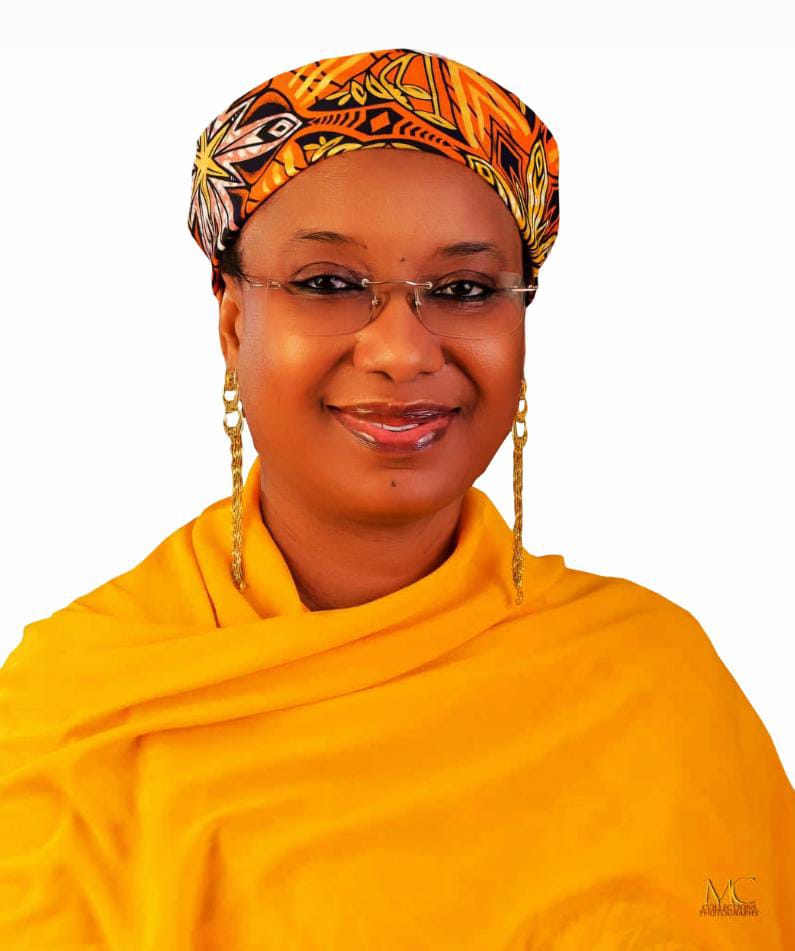
By Gloria Ikibah
BINANI Global Air Services has engaged a global aviation firm to develop a mega Maintenance, Repair and Overhaul (MRO) facility in Abuja, in a move expected to retain about $218 million in foreign exchange annually in Nigeria.
The project, which is aligned with President Bola Ahmed Tinubu’s Renewed Hope Agenda, is aimed at boosting local aircraft maintenance capacity and reducing Nigerian airlines’ dependence on foreign maintenance centres.
Chairperson of BINANI Air, Senator Aishatu Dahiru Ahmed, said the facility would address one of the major challenges confronting the country’s aviation industry — the huge cost of sending aircraft abroad for major maintenance checks.
She said most Nigerian airlines currently rely on overseas facilities for C and D checks, leading to significant foreign exchange outflows.
According to her, the proposed MRO facility will not only help keep more aircraft in Nigeria for major maintenance but also strengthen the country’s technical capacity and support the growth of the aviation sector.
She said: “Currently, domestic airlines outsource the vast majority of their heavy maintenance checks, such as C checks and D checks, to foreign facilities in Europe, the Middle East, and other African nations like Egypt and Ethiopia. This project will reduce this dependency while retaining and attracting FX of about 218 million US dollars annually”.
The proposed facility comes amid persistent concerns over the high cost of aircraft maintenance and Nigeria’s reliance on overseas MRO centres.
C and D checks require specialised infrastructure, sophisticated equipment and highly skilled personnel, which have historically been limited in Nigeria. As a result, airlines have had to send their aircraft abroad, paying for the services in foreign currency.
A functional heavy maintenance facility in Nigeria can also boost the country’s technical workforce and create specialised employment opportunities, while supporting the emergence of a wider aviation maintenance ecosystem.
The facility can further position Abuja as a potential MRO hub for Nigerian and other African airlines, subject to its eventual capacity, regulatory approvals and certification.
Senator Ahmed said the investment represents an expansion of its role beyond domestic passenger operations into infrastructure capable of serving the wider aviation industry.
However, the project’s significance will ultimately depend on its execution and the ability to translate years of discussions about local MRO capacity into a fully operational facility.
The proposed Abuja MRO will mark a major shift for Nigeria’s aviation industry if it succeeds in keeping aircraft at home for major maintenance checks and reducing the country’s dependence on foreign facilities.

Truck Hijacking Ring Crushed in Oyo, Police Recover Stolen Sino Howo
Record $947m July Remittances Bring Cardoso’s $1bn Monthly Target Within Sight

Borno Commissioner Threatens Opponents: ‘Follow Us And Enjoy Honey, Refuse And Be Flogged’



-
 Politics23 hours ago
Kwara 2027: Zakari Mohammed, Kale Kawu, Speaker Danladi, Apaokagi Make The List As INEC Displays Names, Details Of Guber Candidates
-
 News24 hours ago
I Won’t Ever Forgive APC – El-Rufai’s Son
-
 News19 hours ago
Rep Chinda, others make INEC list as gubernatorial candidates for Rivers
-

 News23 hours ago
Power Mystery: FG probes missing 100MW, N120bn revenue loss
-

 Metro23 hours ago
Sokoto Hisbah denies imposing restrictions on Christian worship
-

 Metro23 hours ago
25 terrorists killed as troops repel attack on Borno community
-

 News23 hours ago
How to apply for FG’s N10bn TETFund research grant
-

 News23 hours ago
Oyebamiji Congratulates Adeleke, Calls For Peace After Osun Gov Election