
Foreign
Iran responds to US peace proposal as drones hit Gulf


- /home/naijuinz/public_html/wp-content/plugins/mvp-social-buttons/mvp-social-buttons.php on line 27
https://naijablitznews.com/wp-content/uploads/2025/08/Iran.jpg&description=Iran responds to US peace proposal as drones hit Gulf', 'pinterestShare', 'width=750,height=350'); return false;" title="Pin This Post">
- Share
- Tweet /home/naijuinz/public_html/wp-content/plugins/mvp-social-buttons/mvp-social-buttons.php on line 72
https://naijablitznews.com/wp-content/uploads/2025/08/Iran.jpg&description=Iran responds to US peace proposal as drones hit Gulf', 'pinterestShare', 'width=750,height=350'); return false;" title="Pin This Post">


Iran responded to Washington’s latest peace proposal on Sunday, after drones threatened several Gulf region targets and Tehran warned it would not hold back from retaliating against any new US strikes.
The long-awaited answer came as Israeli Prime Minister Benjamin Netanyahu — whose forces launched the war on Iran in tandem with the US on February 28 — insisted the conflict wasn’t over until Iran’s enriched uranium was removed and its nuclear facilities dismantled.
But Tehran maintained its defiant line, even as behind-the-scenes diplomacy towards a deal continued.
“We will never bow down to the enemy, and if there is talk of dialogue or negotiation, it does not mean surrender or retreat,” Iranian President Masoud Pezeshkian said on X Sunday.
According to state broadcaster IRIB, Tehran’s response to the US plan, passed to Pakistani mediators, focuses on ending the war “on all fronts, especially Lebanon” — where Israel has kept up its fight with Iran-backed Hezbollah — as well as on “ensuring shipping security”.
It offered little in the way of detail, though the US proposal had reportedly focused on extending the truce in the Gulf to allow for talks on a final settlement of the conflict and on Iran’s contested nuclear programme.
Netanyahu said on Sunday that Iran’s stockpile of enriched uranium must be removed before the US-Israeli war against Iran could be considered finished.
“It’s not over, because there’s still nuclear material — enriched uranium — that has to be taken out of Iran. There’s still enrichment sites that have to be dismantled,” Netanyahu told CBS’s “60 Minutes”.
– No Hormuz ‘interference’ –
Iran imposed a blockade on the vital Strait of Hormuz early in the war, sending global oil prices soaring and rattling financial markets.
It has since set up a payment mechanism to extract tolls from shipping crossing the strait, but US officials have stressed it would be “unacceptable” for Tehran to control an international waterway and the route for a fifth of the world’s oil.
The US Navy, meanwhile, is blockading Iran’s ports, at times disabling or diverting ships heading to and from them.
Britain and France are leading efforts to create an international coalition to secure the strait after a peace deal is secured, with both countries sending vessels to the region in advance.
But Iran insisted on Sunday that they would meet “a decisive and immediate response” should they deploy their ships to the strait.
“Only the Islamic Republic of Iran can establish security in this strait and it will not allow any country to interfere in such matters,” Deputy Foreign Minister Kazem Gharibabadi posted on X.
French President Emmanuel Macron later insisted that his country had “never envisaged” a naval deployment in the Strait of Hormuz, but rather a security mission “coordinated with Iran”.
Qatari Prime Minister Sheikh Mohammed bin Abdulrahman Al Thani, meanwhile, “stressed that freedom of navigation is a firmly established principle that is not open to compromise, and that closing the Strait of Hormuz or using it as a pressure card only serves to deepen the crisis”.
– ‘Restraint over’ –
Fresh drone attacks in the Gulf on Sunday were the latest to rattle the ceasefire after a string of flare-ups in recent days.
The United Arab Emirates said its “air defence systems successfully engaged two UAVs launched from Iran” in what would be, if confirmed, only the second strike on a Gulf country since the start of the month-old truce.
Iran’s neighbour Kuwait reported an attempted attack as well.
“At dawn today, the armed forces detected a number of hostile drones in Kuwaiti airspace, which were dealt with in accordance with established procedures,” the military posted.
And Qatar’s defence ministry said a freighter arriving in its waters from Abu Dhabi was hit by a drone off the port of Mesaieed.
The United Kingdom Maritime Trade Operations centre said the bulk carrier reported being struck by an unknown projectile.
“There was a small fire that has been extinguished, there are no casualties. There is no reported environmental impact,” it said.
There was no immediate claim of responsibility, but Iran’s Fars news agency reported that “the bulk carrier that was struck near the coast of Qatar was sailing under a US flag and belonged to the United States”.
In a social media post on Sunday, the spokesman for the Iranian parliament’s national security commission warned the United States: “Our restraint is over as of today.”
“Any attack on our vessels will trigger a strong and decisive Iranian response against American ships and bases,” Ebrahim Rezaei said.
Iran’s Revolutionary Guards had threatened the day before to target US interests in the Middle East if its tankers came under fire — as they did on Friday when a US fighter jet fired on and disabled two Iran-flagged vessels in the Gulf of Oman.
Tehran’s military chief Ali Abdollahi also met the country’s supreme leader Mojtaba Khamenei and received “new directives and guidance for the continuation of operations to confront the enemy”, according to Iranian state television.
AFP

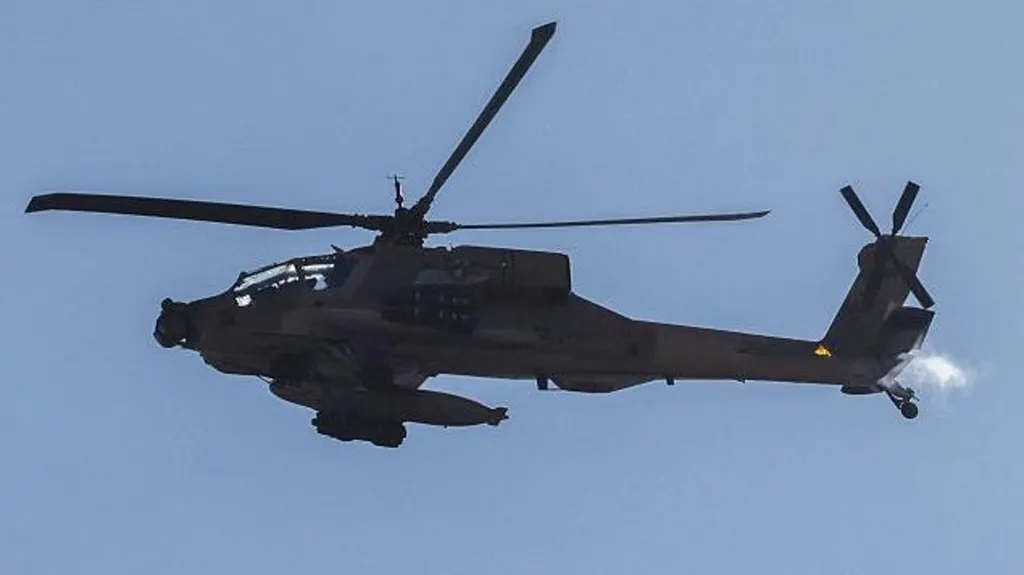
The US and Iran have exchanged fire after President Donald Trump blamed Tehran for the downing of an American military helicopter over the Strait of Hormuz on Monday.
The US Central Command (Centcom) said it launched airstrikes at Iranian targets at 17:00 ET (21:00 GMT) on Tuesday and later said the operation was complete.
In response, Iran’s Islamic Revolutionary Guard Corps (IRGC) said it launched strikes on two US bases in the region, one in Bahrain and the other in Jordan, while Kuwait’s army said it was also intercepting an attack.
The US has described its strikes as “a proportional response” for the Apache helicopter downing, while the IRGC described the attacks as “vicious”.
The exchange of fire comes after two crew members of the downed helicopter were rescued by an American sea drone on Monday, Centcom said. It was the first time the US military publicly confirmed that type of vessel was used in such an operation.
According to US officials, Iran used a drone to launch the attack on the helicopter. But it’s not clear whether the Iranian drone had deliberately attacked, an unnamed US official told CBS News, the BBC’s US partner. The semi-official Mehr News Agency reported that Iran had not claimed responsibility for the downed aircraft.
In response, Centcom said US fighter jets “struck Iranian air defense, ground control stations, and surveillance radar sites near the Strait of Hormuz”.
The IRGC said US strikes had damaged a telecommunications tower and two water tanks.
Iran said the US had targeted the cities of Jask and Sirik, and Qeshem – an island in the Gulf.
Centcom released the statement saying the mission was “completed” just over three hours after it announced an initial wave of strikes triggered by the downing of the US helicopter on Monday.
US officials are yet to comment on reports of attacks on its bases and it is unclear if there has been any damage. However, an air raid alert was issued in Bahrain, according to local authorities who said Iranian attacks had been repelled.
US President Donald Trump said earlier on Tuesday the downed helicopter had been patrolling the Strait of Hormuz, a critical shipping channel that was effectively closed days after the US launched its first strikes on Iran in late February.
“There were two pilots involved, both are safe and uninjured,” Trump wrote on Truth Social. “Nevertheless, the United States must, of necessity, respond to this attack.”
In Washington, US House Speaker Mike Johnson said he was in the room with Trump when he decided that US attacks on Iran should resume.
“We lament that it became necessary,” said the top Republican in Congress, adding that “we’re gonna have to take care of this business”.
Iran’s foreign minister issued a threat to the US in the aftermath of the renewed US attacks, saying the country “will leave no attack or threat unanswered”.
“Despite its defeats on the battlefield, the US opted to test our determination,” Iran’s Foreign Minister Abbas Araghchi wrote on X.
He added: “Leave our region if you want to be safe.”
Araghchi said on Tuesday that foreign forces near Iran’s territory were at “constant risk on account of their own human errors, plain accidents or potentially being caught in crossfire”.
“To reduce risk, best solution is for them [foreign forces] to leave,” the Iranian leader said in a post on X.
Minutes before Trump’s comments on the downed American Apache helicopte on Tuesday, Iran’s top negotiator in peace talks with Washington, Mohammad Baqer Qalibaf, took to social media to signal retaliation.
“We prefer the language of diplomacy, but we speak other languages far more fluently. Break your commitments, and we’ll switch to what we speak best.”
“You ride the horse you saddled!,” he wrote.
The flare-up between the US and Iran comes after Israeli forces carried out strikes across southern Lebanon on Tuesday.
Tehran had warned that Israeli attacks on southern Lebanon would trigger another wave of retaliatory strikes.
Israel and Iran halted attacks on each other after exchanging fire over the weekend for the first time since April’s truce.
Trump publicly told both countries to “immediately stop ‘shooting’” because they were jeopardising negotiations between Washington and Tehran on a deal to end the regional war.
He said on Truth Social that Israel and Iran are looking to do “an immediate ceasefire” but peace is “subject to ignorance or stupidity getting in its way”.
On Tuesday he also told journalists: “We’re in the final throes of what will be a very, very good deal,” adding that it could take “two or three days” and the Strait of Hormuz would open immediately after.
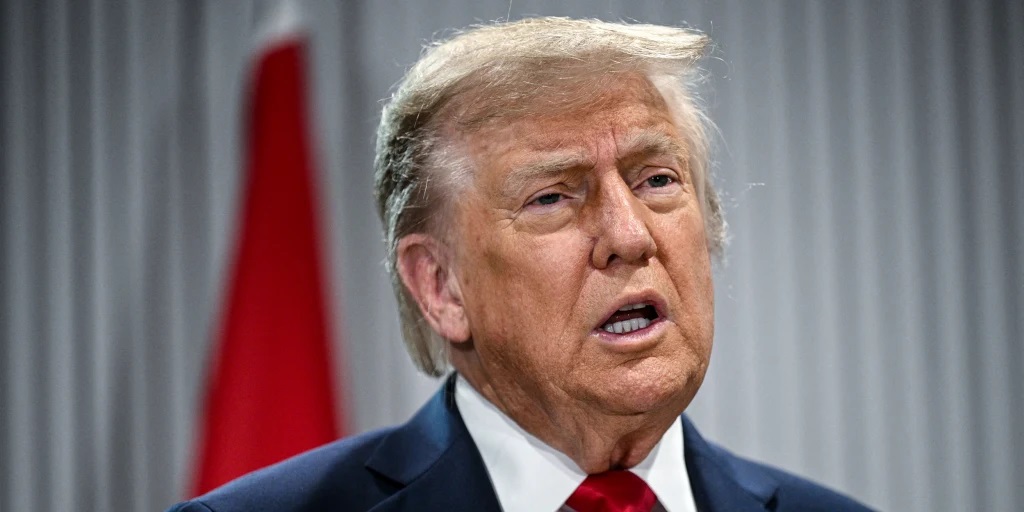
US President Donald Trump abruptly walked out of an interview with NBC after being repeatedly challenged on several claims by the show’s presenter Kristen Welker.
During the interview, which aired on Sunday’s Meet The Press, the president claimed both the current primary elections in California and the 2020 presidential election were “rigged”.
When pressed for evidence on California’s vote by Welker, he said: “All I have to do is look, and I listen.”
After the presenter replied “that’s not evidence”, Trump accused the media of being “crooked”, before ending the interview: “Sorry, let’s call it quits because I’ve had enough.”
The president has had a fraught relationship with traditional media outlets, often accusing them of bias against him.
The interview, set in a barn as Trump appeared at an event with farmers in Wisconsin, was delayed repeatedly due to technical difficulties and rain hitting the metal roof. NBC reported that he walked out 50 minutes after sitting down for it on Friday.
Much of the interview involved Welker questioning Trump over the conflict with Iran, with him insisting the US needed to act to stop Iran from getting a nuclear weapon and that it would not be “an endless war”.
“We’re there for a few months and the threat is largely over,” he said.
Around six minutes before he left the set, the pair discussed the “anti-weaponisation” fund, a now-dropped plan to create a $1.8bn (£1.3bn) fund to compensate individuals who claim they were unfairly targeted or investigated by the government.
The plan drew strong criticism from Democrats and some Republicans, who argued it could result in payments to people prosecuted over the US Capitol riot on 6 January 2021.
The pair then moved onto discussing that riot, and Trump was challenged after he repeated his unsubstantiated claim that the 2020 election was rigged.
Trump turned to the California primary elections, where votes are still being counted to determine which two candidates in a series of races – including governor of the state – will be on the ballot in November’s midterm elections.
He said the results had not been called after four days, adding: “They’re cheating on the election.”
“Do you have evidence to support that?” Welker responded.
“All I have to do is look, and I listen,” the president replied.
“But that’s not evidence,” she interjected.
Full results have not yet been called in the state where delays are common due to a particularly meticulous vote-counting process and broad use of mail-in ballots. Mail-in voting has long irked the president.
“They’re crooked,” he continued, “just like you’re crooked.”
Welker said: “To be fair, I’m not crooked. But let’s continue.”
Trump then told Welker “you’re either crooked or you’re stupid”, and after a further exchange said: “Let’s call it quits because I’ve had enough. Thank you darling, have a good time.”
Welker attempted to continue the interview, but Trump interrupted: “I’ve sat in the rain with you for an hour, on and off in the rain, and I’ve given you enough time.
“You ought to straighten out your press, because you know what? A country can never be great with a dishonest press.”
He then gestured to people behind the camera, saying “come on, let’s go”, before standing up and walking off the set.
After the interview was broadcast, Welker said: “I spoke with President Trump on Saturday and we both acknowledged the complications during the interview posed by the rain. He agreed to sit down with me for another Meet the Press interview.”

Iran still has “21, 22 per cent” of its missiles left, US President Donald Trump said Friday, in a week in which Tehran fired dozens of them toward regional neighbours, despite a sputtering ceasefire.
“They still have capacity. They have some missiles, they have some drones. I would say, percentage wise, maybe 21, 22 percent of their missiles,” Trump told NBC News in an interview.
That figure for Iran’s missile stockpile is higher than one of 18 per cent Trump gave in May. He has often claimed to have completely destroyed Iran’s war-fighting capacity.
Iran’s military said Friday it had fired “warning missiles” at two US destroyers in the Gulf of Oman — a claim promptly denied by the US military. Two days earlier, Kuwait said it had intercepted 30 ballistic missiles fired as part of “heinous Iranian aggression.”
AFP

Ronaldo React After 2–1 Victory Over Super Eagles in Friendly

U.S. Cancels Over 600 Visas in Crackdown on Birth Tourism Networks

Insecurity has so engulfed Nigeria that bandits collect taxes, Govt offers excuses — Donald Duke




-

 News24 hours ago
Tinubu orders urgent diplomatic action to bring back 300 Nigerians jailed in Ethiopia after inmates die in custody
-

 News24 hours ago
NCC: Telecom operators to deploy 12,000 new sites as 75m subscribers get compensation
-

 News19 hours ago
Watch moment VP Shettima arrives at venue of commissioning of Arterial RN5 Obafemi Awolowo Way today
-
 News24 hours ago
Obi drags former political acolyte Okonkwo to court over alleged defamatory bribery claims
-
 Opinion23 hours ago
EPL’S SUNDERLAND AFC AS METAPHOR FOR DEVELOPMENT
-

 News20 hours ago
Red carpet reception for banned referee Artan on arrival in Somalia
-

 Sports23 hours ago
2026 World Cup of confusion: Protesters barricade road to stadium
-

 News12 hours ago
Binani Air Celebrates First Month in the Skies, Eyes Bigger Future