
Politics
George-Kelly Withdraws From Rivers APC Governorship Primaries After Fubara’s Decision

- /home/naijuinz/public_html/wp-content/plugins/mvp-social-buttons/mvp-social-buttons.php on line 27
https://naijablitznews.com/wp-content/uploads/2026/05/Alabo-George-Kelly-1000x600.jpg&description=George-Kelly Withdraws From Rivers APC Governorship Primaries After Fubara’s Decision', 'pinterestShare', 'width=750,height=350'); return false;" title="Pin This Post">
- Share
- Tweet /home/naijuinz/public_html/wp-content/plugins/mvp-social-buttons/mvp-social-buttons.php on line 72
https://naijablitznews.com/wp-content/uploads/2026/05/Alabo-George-Kelly-1000x600.jpg&description=George-Kelly Withdraws From Rivers APC Governorship Primaries After Fubara’s Decision', 'pinterestShare', 'width=750,height=350'); return false;" title="Pin This Post">


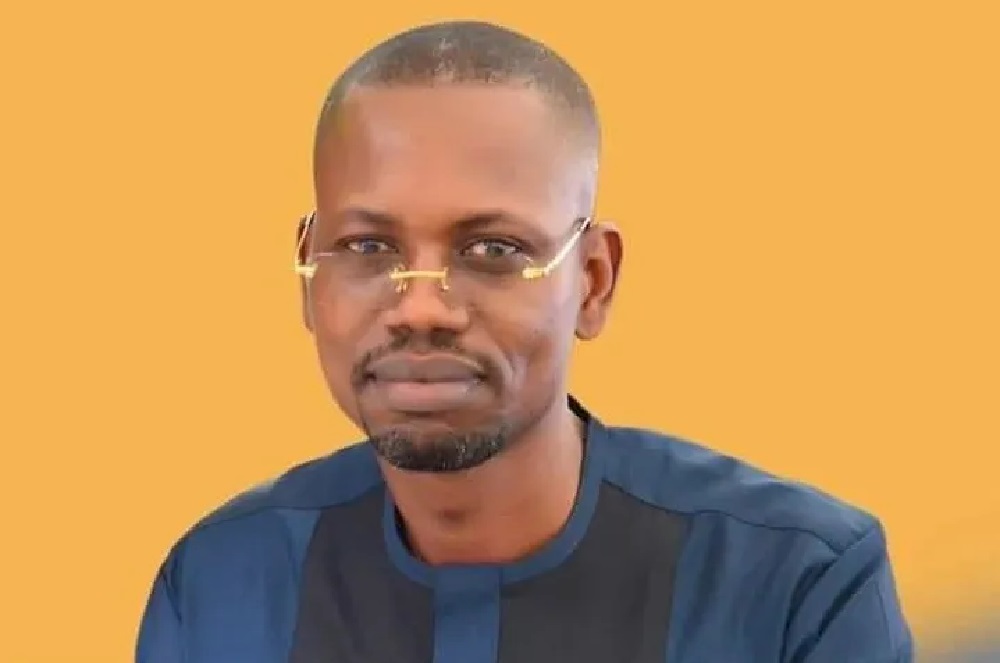
A governorship aspirant of the All Progressives Congress (APC) in Rivers State, Alabo George-Kelly, has withdrawn from the party’s forthcoming governorship primaries, pledging support for whoever emerges as the party’s candidate.
His withdrawal comes hours after Rivers State Governor, Siminalayi Fubara, also announced his decision to step down from the APC governorship primary race in what observers see as part of ongoing political realignments within the party ahead of the 2027 General Elections.
In a statement issued on Wednesday, George-Kelly said his decision followed a crucial stakeholders’ meeting convened by the national leadership of the APC, where deliberations focused on the future of the party in Rivers State and the need for unity and strategic alignment.
The aspirant, who described himself as a committed member of the Rivers State Rainbow Coalition for President Bola Tinubu under the leadership of FCT Minister Nyesom Wike, said extensive consultations with members of his political team and other stakeholders informed his decision.
“Following that meeting, and after wide consultations with members of my political team and other critical stakeholders, I have taken the decision, in the overriding interest of party unity and in deference to the supremacy of the party, to withdraw from the forthcoming primaries,” he stated.
“Accordingly, I hereby formally announce my withdrawal from the race and pledge my unwavering support, loyalty, and cooperation to whoever emerges as the party’s candidate at the conclusion of the primaries,” he added.
The withdrawal further signals intensifying political consultations and strategic recalibrations within the Rivers APC as the party prepares for the 2027 elections.
George-Kelly said his political journey has always been guided by leadership, loyalty, and respect for constituted authority, stressing his continued commitment to the APC and President Bola Tinubu’s political project in the state.
“The 2027 General Elections present us with a defining opportunity, and I remain fully committed to playing my part in securing victory for our President, our party, and the good people of Rivers State,” the statement said.
He also urged his supporters and members of the coalition to remain united and continue working together for the progress of Rivers State and the APC.
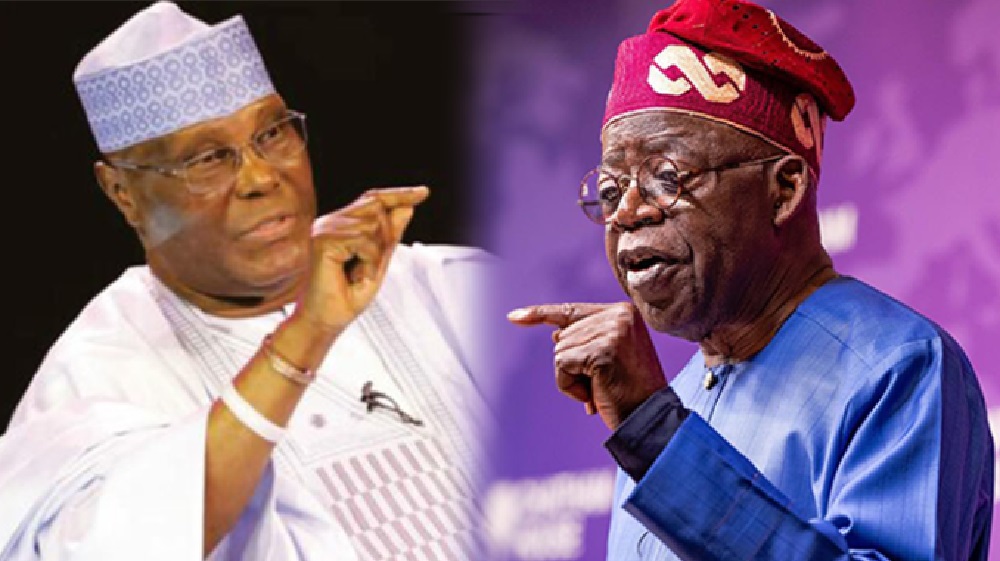
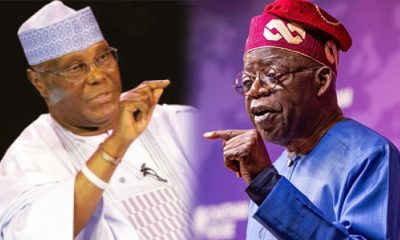
Presidential candidate of the African Democratic Congress (ADC), Atiku Abubakar, has challenged President Bola Tinubu to open up his records for public scrutiny, just as he has done, insisting that the renewed circulation of decades-old allegations against him is a distraction from the president’s own reluctance to submit to similar examination.
In a statement issued on Friday by his Senior Special Assistant on Public Communication, Phrank Shaibu, the former vice president, described the resurfacing of allegations rooted in the political battles of the President Olusegun Obasanjo era as the convulsion of political opponents cornered by their own failures, unable to defend the hardship Nigerians are enduring and now desperately searching for an Atiku controversy because they cannot survive scrutiny of their own economic record.
“At some point, desperation announces itself. When those defending this government can no longer explain why food, transportation, electricity, rent, education, insecurity and healthcare are increasingly beyond the reach of ordinary families, they rummage through twenty-year-old files looking for an escape route. This is panic dressed up as accountability,” the statement read.
Atiku maintained that the allegations had already been tested through the full machinery of the state during his political disagreement with the Obasanjo administration, and none resulted in a conviction. “Let us not rewrite history. The Obasanjo administration did not protect me. At the height of our political disagreement, these matters travelled through the EFCC, an administrative panel, the National Assembly and the courts. The machinery of the state was fully deployed, and the political hostility was public. Yet no court convicted me on these allegations. That is the record.”
He questioned what new evidence had emerged to justify reviving the allegations nearly two decades later.
According to him, “A petition is not a conviction, an acknowledgement stamp is not evidence of guilt, and repetition cannot magically become a judgment of court.” Anyone with credible evidence against me should bring it out and test it before the law. I have issued that challenge before, and I repeat it today without hesitation.”
Drawing a contrast with the President, Atiku pointed to Tinubu’s intervention in an American court case seeking the release of FBI and Drug Enforcement Administration DEA records concerning him.
“While I am saying, ‘bring out your evidence,’ Tinubu actually went to an American court to intervene in a case seeking FBI and DEA records concerning him, citing privacy interests in records he argued should not be disclosed. It is like a man ordering his neighbour to empty his pockets while keeping his own firmly zipped.
A man seeking protection for his own records has no business waving petitions at somebody else. My challenge is simple: let every lawful record be opened and every allegation tested. Let Nigerians see who welcomes scrutiny and who reaches for privacy arguments when the files concern him,” he said.
He argued, however, that the exchange of allegations does little to address the everyday economic struggles of Nigerians.
Atiku also cautioned against the use of the Economic and Financial Crimes Commission EFCC as a tool for political battles, stressing that the agency belongs to the country and not to any individual or party.
He said no amount of recycled allegations could substitute for governance that improves the lives of ordinary Nigerians.
According to him, the coming elections would ultimately be decided on record and performance, not on old political battles. “The old script did not stop me then, and it will not stop me now. In 2027, Nigerians will judge us by our records, the lives they are living and the future we offer them. Those afraid of that judgment may continue rummaging through the archives. We are facing the Nigerian people.”

The African Democratic Congress has unveiled its governorship and deputy governorship candidates for the 2027 general elections in 28 states, including former presidential aide Gbadebo Rhodes-Vivour in Lagos, former Kaduna State governorship candidate Isa Ashiru and former Attorney-General of the Federation, Abubakar Malami.
The party also fielded former Delta State governorship candidate Great Ogboru, Senator Ahmad Babba Kaita in Katsina.
The candidates were announced in a statement on Friday, with the party saying they would carry its banner and commitment to providing Nigerians with credible leadership and a “real alternative” in the 2027 elections.
A release by the party’s spokesperson, Bolaji Abdullahi also shared on X disclosed this.
Other notable candidates include Senator Halliru Dauda Jika in Bauchi, former House of Representatives member Herman Iorwase Hembe in Benue, former House of Representatives member Zakari Mohammed in Kwara and former Nigerian Army officer Brigadier General John Sunday Sura in Plateau.
The party also fielded candidates in Adamawa, Akwa Ibom, Borno, Cross River, Ebonyi, Enugu, Gombe, Jigawa, Kano, Nasarawa, Niger, Ogun, Oyo, Rivers, Sokoto, Taraba, Yobe and Zamfara.
In Lagos, Rhodes-Vivour will contest the governorship with Gbadamosi Babatunde Olalere as his running mate, while Ashiru will fly the party’s ticket in Kaduna alongside Kantiok Irmiya Ishaku.
Ogboru is paired with Afiari Gloria in Delta, while Kaita will contest in Katsina with Aminu Yar’adua Ahmed as his running mate.
In Kebbi, Malami will contest alongside Zagi Musa Mohammed.
The ADC said the candidates represented its commitment to offering Nigerians an alternative ahead of the 2027 elections.
ADC unveiled the candidates ahead of the February 6, 2027 governorship elections.
Also, governorship campaigns are scheduled to begin on September 9, 2026.
Here is the full list:
ADC governor & deputy governor candidates
Abia: Governor – Kalu Kalu Agu; Deputy Governor – Alozie Ogidimma Darlington.
Adamawa: Governor – Modibbo Hammantukur Ribadu; Deputy Governor – Aguwa Kevin Iliya.
Akwa Ibom: Governor – Akpanudoedehe John James; Deputy Governor – Nsien Mkpombuk Tommy.
Bauchi: Governor – Sen. Halliru Dauda Jika; Deputy Governor – Sama’ila Mohammed Kabir.
Benue: Governor – Rt. Hon. Herman Iorwase Hembe; Deputy Governor – Abba John Abba.
Borno: Governor – Babagana Buhari; Deputy Governor – Mamman Dauda.
Cross River: Governor – Nkoyo Toyo; Deputy Governor – Okwoche Andrew Adagbor.
Delta: Governor – Chief Great Ogboru; Deputy Governor – Afiari Gloria.
Ebonyi: Governor – Ukpai Mba Udeh; Deputy Governor – Onwe Daniel Ede.
Enugu: Governor – Ocho Obodoze Chukwuma; Deputy Governor – Eze Arinze Christopher.
Gombe: Governor – Bala Bello; Deputy Governor – Bala Sani Isa.
Jigawa: Governor – Sabo Mohammed Nakudu; Deputy Governor – Musa Ya’u Balarabe.
Kaduna: Governor – Isa Mohammed Ashiru; Deputy Governor – Kantiok Irmiya Ishaku.
Kano: Governor – Ibrahim Ali Amin; Deputy Governor – Shehu Abdulkadir Bari.
Kastina: Governor – Sen. Ahmad Babba Kaita; Deputy Governor – Aminu Yar’adua Ahmed.
Kebbi: Governor – Abubakar Malami; Deputy Governor – Zagi Musa Mohammed.
Kwara: Governor – Zakari Mohammed; Deputy Governor – Olawuyi Julius Olayide.
Lagos State: Governor – Gbadebo Rhodes Vivour; Deputy Governor – Gbadamosi Babatunde Olalere.
Nasarawa: Nuhu Angbazo — Governor; Ahmed Yusuf — Deputy Governor
Niger: Dr. Mohammed Kpautagi — Governor; Musa Mamman — Deputy Governor
Ogun: Biodun Collins Ogundipe — Governor; Muraina Oluwaranti Oluyemi — Deputy Governor
Oyo: Taofeek Adegboyega Adegoke — Governor; Wahab Adeniyi — Deputy Governor
Plateau: Brig. Gen. John Sunday Sura — Governor; Pwajok-Kele Chundung Bitrus — Deputy Governor
Rivers: Gabriel Pidomson — Governor; Okumgba David Amapakaye — Deputy Governor
Sokoto: Manir Mohammad Daniya — Governor; Isah Bello Ambarura — Deputy Governor
Taraba: Abubakar Umar Tutare — Governor; Kwetishe Haruna Kwenyan — Deputy Governor
Yobe: Kassim G. Gaidam — Governor; Kori Lawan Mohammed — Deputy Governor
Zamfara: Shinkafi Bilyaminu Yusuf — Governor; Muhammad Abdulmuddalib Auwal — Deputy Governor
Politics
Lere Olayinka: Some Presidential Candidates Are Not Contesting To Win 2027 Election But To Make An Impression

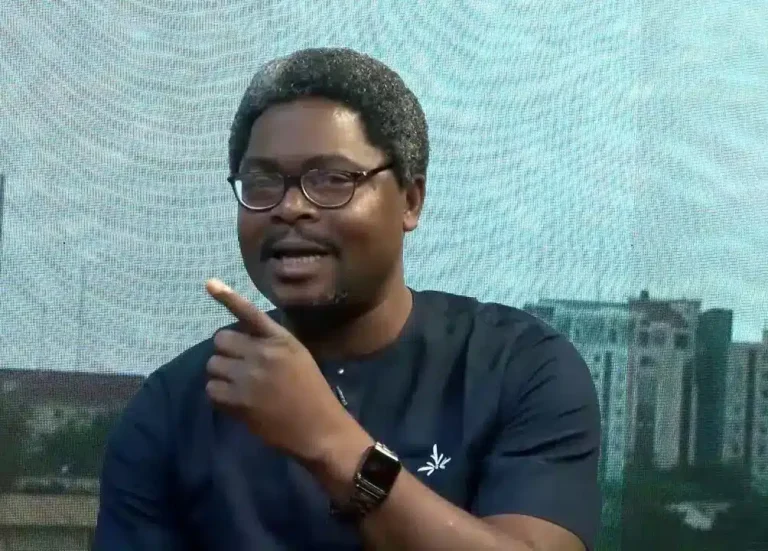
Lere Olayinka, spokesperson to the Minister of the Federal Capital Territory, Nyesom Wike, has said some presidential candidates in the 2027 election are not contesting with the intention of winning but to register their presence and make an impression.
Olayinka stated this during an interview on Arise News on Friday while discussing the political landscape ahead of the 2027 general election.
He said the number of presidential candidates on the ballot did not necessarily mean that all of them were contesting with the mindset of winning.
“So it is not everybody that contests elections that wants to win. There are people that contest elections just to register their presence. For instance, in this 2027 election, we have 19 presidential candidates.
“Can we say honestly that all the 19 are contesting with the mindset of winning? The answer is no.”
Olayinka cited the 2023 performance of the African Action Congress presidential candidate, Omoyele Sowore, as an example of why he believed some candidates could not realistically win the presidential election.
“For instance, the candidate of AAC, Omoyele Sowore, had 14,600 votes in 2023. How would that person win the election next year? They know that they cannot win.
“They are just contesting.”
He also extended his argument to the party of former Anambra State governor and 2023 presidential candidate Peter Obi.
“Even NDC, the party of Peter Obi, they know they cannot win the election. They are just contesting to try to register their presence.”
According to Olayinka, a party’s grassroots structure and presence across states would also be critical to its ability to compete effectively in a presidential election.
“You don’t have a governorship candidate in 15 states. You only have it in 13. There was an election in Ekiti and Osun recently.
“NDC did not fit candidates. How do you win an election when you don’t have people on ground to canvass votes for you, to manage elections for you?”
He said political parties needed substantial personnel at polling units to effectively manage their operations on election day.
“In Nigeria today, there are 176,846 polling units. To make good impression on election day, you need at least five people to manage each polling unit for you.
“At least. You need five people. We have done elections before, so we know what it is.
“It is not about making noise.”

Nigeria’s External Reserves Hit $54bn, Highest Since 2008

Atiku’s camp angry as El-Rufai spends 200 days in prison

2Baba’s daughter laments separation of her parents




-
 News14 hours ago
Just in: Massive Explosion Rocks APC Governorship Candidate’s Convoy in Borno as Terrorists Attack
-
 Politics14 hours ago
Lere Olayinka: Some Presidential Candidates Are Not Contesting To Win 2027 Election But To Make An Impression
-

 News13 hours ago
Obi vows to protect 2027 election votes with his life
-

 News13 hours ago
See Dollar to Naira exchange rate today, September 4, 2026
-

 News13 hours ago
Bandits Kill Five, Abduct Several as Sokoto Community Comes Under Fresh Attack
-
 News13 hours ago
NERD: UNIBEN, ABU, UNICAL, EKSU, Kwara State Poly Lead Nigeria’s Academic Digitisation Drive as Country crosses 400,000 academic submissions
-
 Metro4 hours ago
Protesters storm Katsina streets over rising bandit attacks, urge govt to step up action
-
 Politics4 hours ago
FBI records: I’m ready for scrutiny, unlike you, Atiku tells Tinubu