
News
Lawyer Petitions NBC, Seeks Suspension of BBNaija Over Alleged Indecent Content




A Nigerian lawyer and DStv subscriber, T. V. Ramnap, Esq., has filed a formal complaint and pre-action notice against Multichoice Nigeria Ltd over the broadcast of Big Brother Naija on DStv.
The complaint, dated May 25, 2026, was submitted to the Director-General of the National Broadcasting Commission at the commission’s office in Asokoro, Abuja. Ramnap said the petition was filed pursuant to Section 2(1)(b) and (c) of the National Broadcasting Commission Act, Section 24 of the Nigerian Broadcasting Code, 6th Edition, and Chapter II of the 1999 Constitution.
In the petition, the lawyer alleged that recent episodes of Big Brother Naija contained scenes and conduct he described as indecent and contrary to Nigerian cultural and moral values.
According to him, the alleged violations included nudity, housemates allegedly engaging in romantic acts, the use of vulgar and indecent language, unmarried male and female housemates sleeping on the same bed in compromising positions, alleged uncensored sexual activity between housemates and repeated use of obscene language. He stated that video clips from recent episodes were attached to the complaint as evidence.
Ramnap argued that the programme violated Section 24 of the NBC Code, which prohibits broadcast materials that offend good taste or decency or are capable of encouraging crime or disorder.
He also cited Section 2(1)(b) of the NBC Act, stating that the commission is empowered to regulate broadcasting in a manner that promotes decency and public morality.
The lawyer further relied on Sections 21, 22 and 23 of the 1999 Constitution, arguing that the broadcast undermines constitutional objectives relating to the protection of Nigerian culture, customs, traditions, national ethics, discipline, integrity, dignity, social justice and patriotism.
According to him, the NBC Act and the Broadcasting Code are statutory mechanisms designed to enforce those constitutional objectives. He maintained that failure by the commission to sanction the programme would amount to allowing violations of both the broadcasting code and constitutional values.
Ramnap demanded that the NBC, within 30 days of receiving the petition, declare Big Brother Naija in its current format illegal and in breach of the NBC Code, the NBC Act and Chapter II of the Constitution.
He also asked the commission to direct Multichoice Nigeria Ltd to immediately suspend the programme, sanction the company in line with Section 14 of the NBC Act and provide him with written details of actions taken on the complaint.
The lawyer warned that if the NBC fails to act within the 30-day period, he would file a suit at the Federal High Court against the NBC, Multichoice Nigeria Ltd and the Attorney-General of the Federation.
According to the notice, the proposed suit would seek the enforcement of rights and public interest, a declaration that the programme is unlawful, an order compelling the NBC to carry out its statutory duties and an injunction restraining further broadcast of the show.
Ramnap said the complaint was filed in good faith and in the public interest to protect Nigerian culture, public morality and constitutional values.


Pope Leo XIV has warned against the potential risks of artificial intelligence, urging governments and societies to ensure that rapid technological advancement does not come at the expense of human dignity and values.
The Pope issued the warning during his four-day visit to France, where he addressed French government and Catholic officials at the Élysée Palace in Paris after meeting President Emmanuel Macron.
Pope Leo cautioned against “losing our humanity amid a paradise of machines,” stressing the need to keep human beings and their dignity at the centre of technological development.
His remarks come amid growing global debate over the impact of artificial intelligence on society, employment, education and human relationships.
The Pope’s visit to France is expected to draw hundreds of thousands of people, with more than 500,000 expected to attend Mass in Paris on Saturday.
French authorities have stepped up security around the Champs-Élysées and other parts of the capital ahead of the major events. An altar has also been erected at the Place de la Concorde for the Mass.
Pope Leo arrived at Orly Airport on Friday, where he was received by Macron. He is expected to travel through Paris in the popemobile, with large crowds anticipated along his route to Notre-Dame Cathedral.
Macron is not expected to attend the Pope’s Masses because of France’s strict separation of church and state. His wife, Brigitte Macron, and Prime Minister Sébastien Lecornu are, however, expected to attend Saturday’s service.
Other senior French political figures, including Marine Le Pen, Édouard Philippe, Gabriel Attal and Bruno Retailleau, are also expected to be present.
Officials at the Élysée Palace have dismissed reports of tensions between the French presidency and the Vatican over the Pope’s visit.
French officials said the government had offered Pope Leo several ceremonial engagements traditionally arranged for visiting heads of state. However, he reportedly declined Macron’s proposal to meet artisans involved in the reconstruction of Notre-Dame Cathedral, citing a busy schedule.
After visiting Notre-Dame on Friday, the Pope is expected to meet about 80,000 young people at the Stade de France in northern Paris.
On Sunday, around 150,000 people are expected to attend Mass at the Catholic sanctuary of Lourdes in the Pyrenees.
Pope Leo will conclude his visit on Monday in Metz, northeastern France, where he is expected to honour Robert Schuman, one of the founding figures of the European Union and a Catholic currently being considered for beatification.
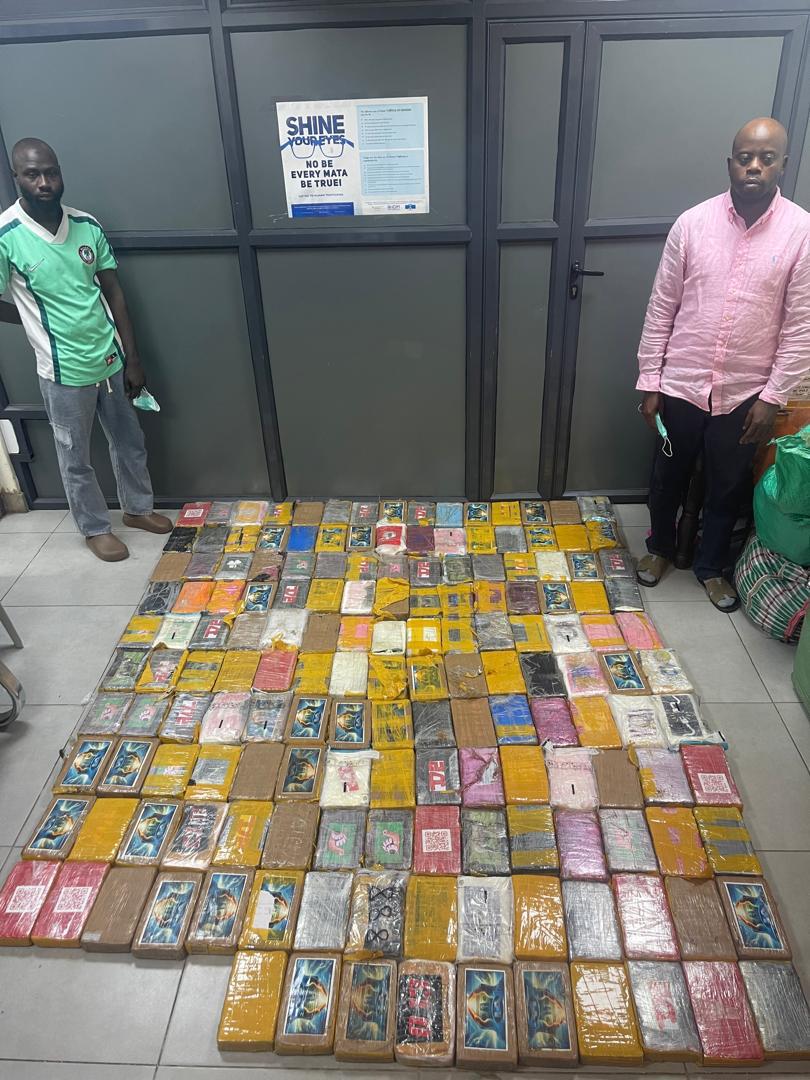
. As Agency presses 22-count charges over UK-bound drug haul
The National Drug Law Enforcement Agency (NDLEA) on Friday 25th September 2026 arraigned Afolabi Kazeem Michael, popularly known as KC Luxury, and two other accomplices, Boniface Freeman Ochoche Sule and Ikechukwu Ekugo Patriarch, before Hon. Justice Ayokunle Olayinka Faji of the Federal High Court, Lagos, on a 22-count charge bordering on cocaine trafficking, illegal export of narcotics and money laundering.
The defendants, who were accused of conspiring between 28th July and 1st August 2026 to export 184.5 kilograms of cocaine concealed in five consignments through a Lagos-based courier logistics firm to London, United Kingdom, pleaded not guilty to all counts when the charges were read to them.
Count one of the charge sheet, marked FHC/LAG/CR/755/2026, accuses Afolabi, alongside Boniface and Ikechukwu, of conspiring with Atandare Oladipupo Oluwarotimi and Latifat Yusuf, already arrested in London in connection with the same case, to export the narcotic drug using consignments bearing Airway Bill Numbers 2079998314, 8224082370, 2079973571, 7181131742 and 2211893902, under the shipper’s name Yemi Ejide.
Other counts detail how Boniface procured Ikechukwu to facilitate the export while Afolabi is accused of procuring a staff member of BOT Express Logistics on Lagos Island to process the illicit consignment, and of unlawfully possessing the cocaine ahead of export.
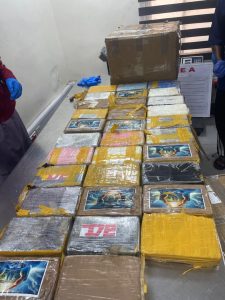
The charge sheet further links Afolabi to the payment of ₦13.2 million from a Mallamawa Ventures Zenith Bank account to BOT Express Logistics as consideration for the shipment.
On the financial trail, no fewer than sixteen counts bordering on money laundering, contrary to the Money Laundering (Prevention & Prohibition) Act, 2022, accuse Afolabi of funnelling several billions of naira through a web of companies and personal accounts, including Mallamawa Ventures, Fateey Man Multi-Purpose Nig. Ltd, Patonifa Ltd, Ade-Lak Resources, Holmestas Global Services Limited, La Capital Enterprises and others, with the funds used, among other things, to acquire motor vehicles and various landed properties, in a bid to conceal the true origin of the proceeds of the illicit trade. He is also alleged to have failed to declare his assets to the Agency as required by law.
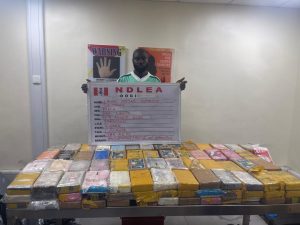
After the not-guilty plea was entered and their bail application argued, the NDLEA prosecutor Abu Ibrahim who opposed the bail application prayed the court to remand the defendants in a correctional facility pending trial, citing the gravity of the offences. Justice Faji thereafter ordered that the defendants be remanded in the Agency’s facility, and adjourned the matter till 4th October 2026 for ruling on the application.
Afolabi, (a.k.a. KayCee Luxury, KayCee Lux, KC, Mr. Luxury, Yemi Ejide) who paraded himself online as a luxury goods dealer and lifestyle influencer, was arrested by NDLEA operatives on the night of 13th August 2026 as he attempted to flee Nigeria on a business-class flight to Paris from the Murtala Muhammed International Airport, Lagos, following the interception of the 184.5kg cocaine consignment estimated to be worth about N39 billion. A subsequent search on him and his Banana Island apartment led to the recovery of exotic vehicles, foreign currency and jewellery believed to be proceeds of the illicit trade.
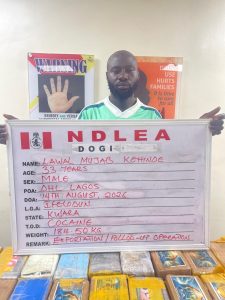
Count one of the charge reads: “That you: 1. Afolabi Kazeem Michael a.k.a. KayCee Luxury, KC, Yemi Ejide, 2. Boniface Freeman Ochoche Sule and 3. Ikechukwu Ekugo Patriarch, Male,
Adults, on or about the period between the 28t July 2026 and 1s day of August
2026 conspired with the duo of Atandare Oladipupo Oluwarotimi and Latifat
Yusuf (both of whom have been arrested in London, the United Kingdom in
respect of this case) to export 184.5 Kilograms of Cocaine, a Narcotic Drug
contained in five (5) consignments with Airway Bill Numbers 2079998314,
8224082370, 2079973571, 7181131742, 2211893902 with shipper’s name as
‘Yemi Ejide’ and you thereby committed an act which is an offence against and
punishable under section 14(b) of the National Drug Law Enforcement Agency
Act Cap. N30, Laws of the Federation of Nigeria, 2004.”

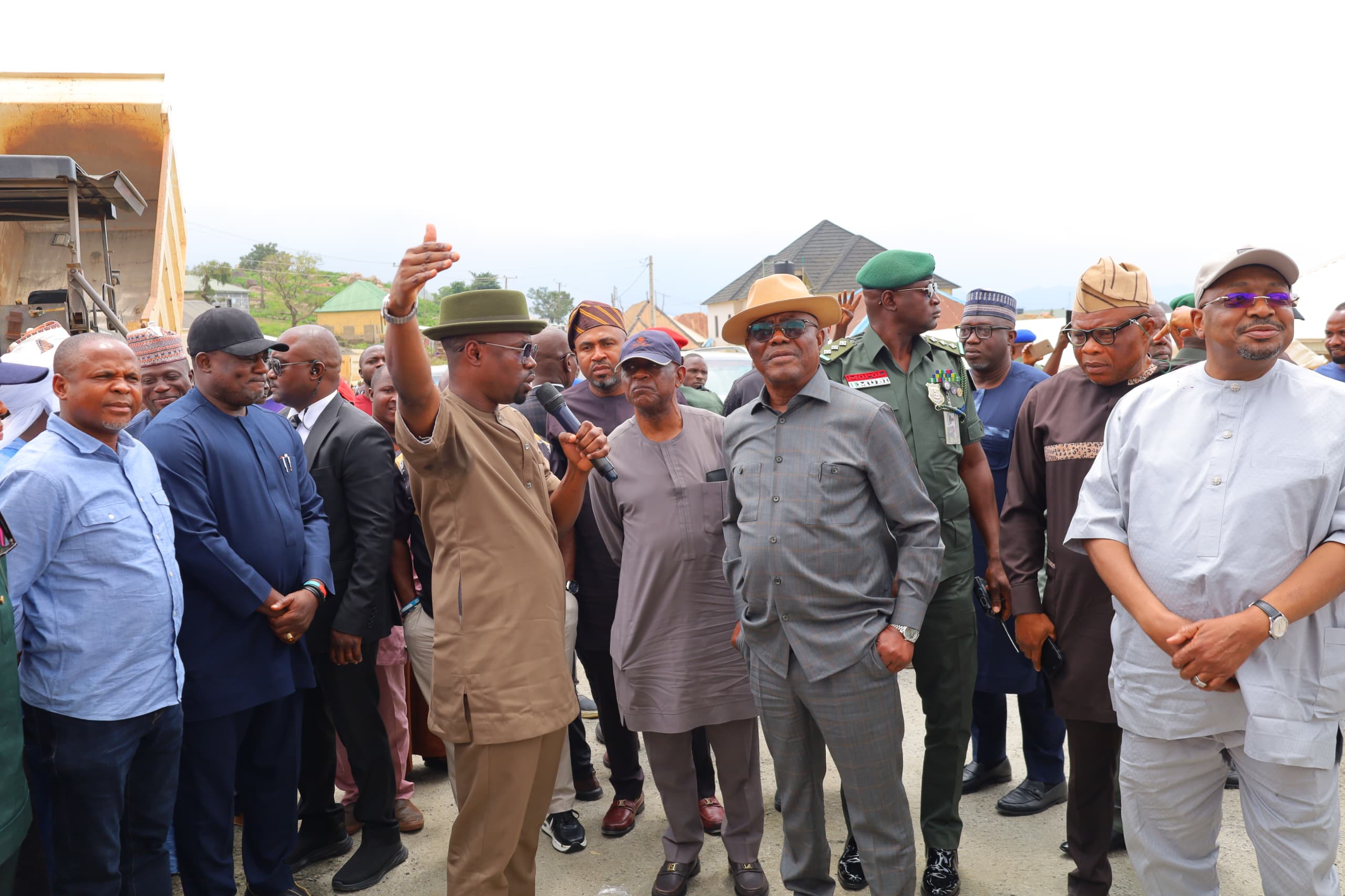
This is Chukuku, along Kuje – Gwagwalada road, Kuje Area Council of the FCT.
Wike don reach here.
Watch:

Pope Leo XIV Warns Against AI Risks, Urges World to Protect Human Dignity

184.5kg cocaine bust: NDLEA docks KC Luxury, 2 accomplices, remanded in custody ( Photos)

2027: Wike to lead campaign team for Tinubu’s re-election in FCT, Rivers


-
 News14 hours ago
Adeleke justifies UNIOSUN VC’s tenure extension
-
 News27 minutes ago
Pope Leo XIV Warns Against AI Risks, Urges World to Protect Human Dignity
-
 News14 hours ago
Ghanaian lawmaker collapses while addressing students
-

 News7 hours ago
FCT minister Wike spreads devt as he visits Chukuku in Kuje(Video)
-
 Opinion3 hours ago
A Hall Where No One Listens: Can the UN Still Keep the Peace?
-
 Politics2 hours ago
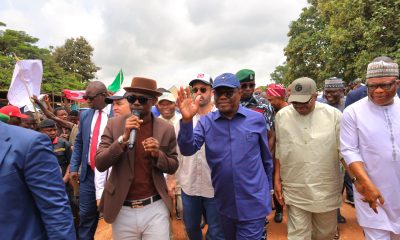
2027: Wike to lead campaign team for Tinubu’s re-election in FCT, Rivers