Economy
Middle East Tensions: Oil Prices Jump as Iran Suspends Peace Talks with US
- /home/naijuinz/public_html/wp-content/plugins/mvp-social-buttons/mvp-social-buttons.php on line 27
https://naijablitznews.com/wp-content/uploads/2024/03/crude-oil-production.jpg&description=Middle East Tensions: Oil Prices Jump as Iran Suspends Peace Talks with US', 'pinterestShare', 'width=750,height=350'); return false;" title="Pin This Post">
- Share
- Tweet /home/naijuinz/public_html/wp-content/plugins/mvp-social-buttons/mvp-social-buttons.php on line 72
https://naijablitznews.com/wp-content/uploads/2024/03/crude-oil-production.jpg&description=Middle East Tensions: Oil Prices Jump as Iran Suspends Peace Talks with US', 'pinterestShare', 'width=750,height=350'); return false;" title="Pin This Post">
Global oil prices recorded significant gains on Monday after Iran announced the suspension of ongoing peace talks, heightening concerns over regional stability and the security of global energy supplies.

The development sent shockwaves through international markets, with investors reacting to fears that escalating tensions in the Middle East could disrupt crude oil exports and further strain global supply chains.
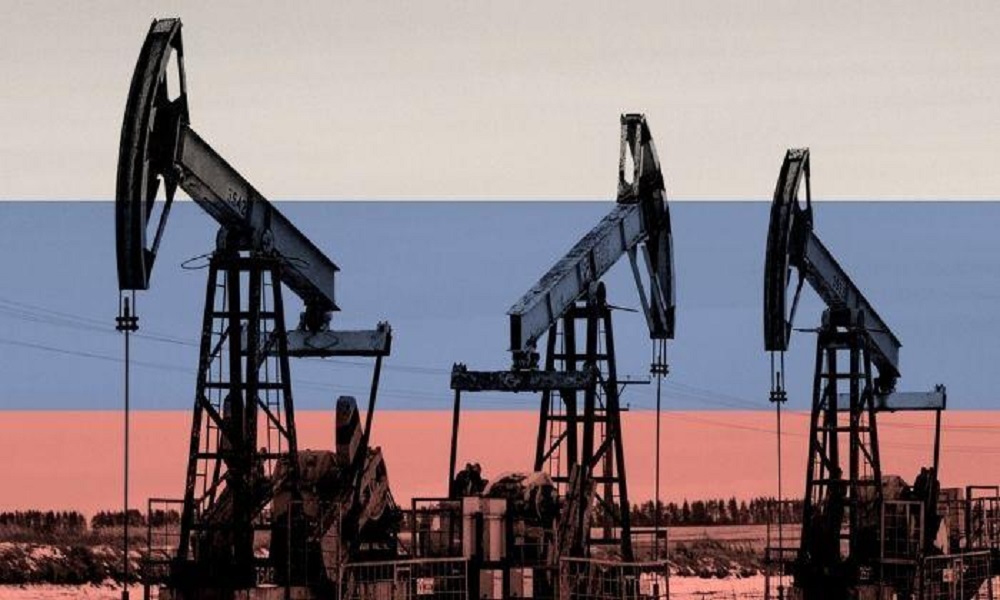
Brent crude futures climbed sharply, approaching the $100-per-barrel threshold, while U.S. West Texas Intermediate (WTI) crude also posted strong gains during trading. Analysts attributed the rally to growing uncertainty surrounding diplomatic efforts aimed at easing tensions in the region.

Reports indicated that Tehran halted negotiations amid increasing hostilities involving Iran, Israel, and allied forces across the Middle East. The suspension of talks has raised concerns that prospects for a diplomatic resolution may be diminishing, potentially increasing the risk of broader regional instability.
Energy traders are particularly focused on the Strait of Hormuz, one of the world’s most critical oil transit routes. The narrow waterway handles approximately 20 percent of global oil shipments, making it a strategic chokepoint for international energy markets.
Market analysts warned that any threat to shipping activities through the Strait of Hormuz could trigger further price increases and intensify inflationary pressures across major economies.
“The market is reacting to geopolitical risk premiums,” energy analysts noted, explaining that uncertainty over future supply remains a key factor driving oil prices higher.
The spike in crude prices also weighed on global equity markets, with investors expressing concerns that sustained increases in energy costs could impact economic growth, corporate earnings, and consumer spending.
Financial markets in Europe, Asia, and North America recorded mixed performances as traders assessed the potential implications of a prolonged diplomatic standoff and its impact on global energy security.
Experts say developments in the coming days will be closely monitored by governments, energy companies, and investors worldwide. Should tensions continue to escalate without renewed diplomatic engagement, oil prices could breach the $100-per-barrel mark and remain elevated for an extended period.
The latest surge underscores the sensitivity of global energy markets to geopolitical developments in the Middle East, a region that remains central to worldwide oil production and supply.This version follows a standard NewsMediang news-report format with a stronger lead, broader market context, and balanced analysis.
Iran says it suspended peace talks with the United States mainly because it believes Washington has failed to restrain Israel’s military actions and has not honored broader ceasefire understandings linked to the negotiations.
According to Iranian officials and state-affiliated media, Tehran is angry over continued Israeli strikes in Lebanon and Gaza while diplomatic efforts were ongoing. Iran argues that any ceasefire or peace arrangement should apply across all fronts in the region, not only between Iran and the U.S.
Key reasons Iran has given include:
Israeli military operations in Lebanon and Gaza: Iran says the attacks undermine the atmosphere needed for negotiations and violate understandings reached through mediators.
Lack of trust in the U.S.: Iranian officials have repeatedly said they do not believe Washington can guarantee that agreements will be respected, pointing to previous disputes and failed negotiations.
Disagreements over Iran’s nuclear and missile programs: The U.S. has pushed for stricter limits on uranium enrichment, missile development, and support for allied armed groups, while Iran insists on protecting what it calls its sovereign rights.
Regional security demands: Iran wants broader guarantees, including an end to attacks by Israel, withdrawal from contested areas, and security assurances against future military action.
Iranian Foreign Minister Abbas Araqchi has warned that if hostilities continue in Lebanon and elsewhere, Tehran sees little value in continuing negotiations.
The United States, however, has given mixed signals. President Donald Trump said he had not been formally informed that talks were over and later insisted discussions were still continuing, despite Iran’s announcement.
The suspension has heightened fears of a wider Middle East conflict, which is why oil prices rose sharply as traders worried about potential disruptions to supplies moving through the strategic Strait of Hormuz.
Economy
NEC approves $4.5bn refinancing of $3.3bn oil-backed loan
The National Economic Council on Monday approved the refinancing of the $3.3bn Project Gazelle Pre-Export Finance Facility through a new $4.5bn facility named Project Gazelle 2.
The approval came at the 159th meeting of NEC, held virtually and chaired by Vice President Kashim Shettima, following a presentation by the Minister of Finance and Coordinating Minister of the Economy, Dr Taiwo Oyedele, on the significance of the refinancing arrangement.
The approval allows the Nigerian National Petroleum Company Limited to refinance the outstanding balance of approximately $1.5bn under the original 2023 facility while unlocking an additional $3bn in liquidity to strengthen Nigeria’s external reserves and support ongoing fiscal and infrastructure priorities.
Senior Special Assistant to the President on Media and Communications in the Office of the Vice President, Stanley Nkwocha, revealed details of the approval in a statement he signed Monday titled ‘NEC Approves Refinancing of $3.3bn Project Gazelle to Optimise Cost, Unlock Additional Liquidity.’
According to Nkwocha, Council observed the significance of unlocking additional liquidity for the federation and pledged its support for the actualisation of the initiative.
Briefing journalists after the meeting, Oyedele explained that the new arrangement had been structured on considerably more favourable terms than the original facility, including a substantial reduction in the volume of crude oil pledged to secure the loan.
He explained, “The refinancing has been structured on more favourable terms than the original facility, including a reduction in the volume of pledged crude oil from 90,000 barrels of oil per day to approximately 78,750 barrels of oil per day, a 12.5 per cent reduction.”
Oyedele said the reduction in pledged volume translated directly into more crude available for the federation to sell and retain revenue from outside the terms of the facility.
“Under the new arrangement, an additional 11,250 barrels of oil per day for the federation will be released, while there will be a reduction in the pledged crude volumes by NNPC Limited,” he said.
The Minister described the refinancing as a dual achievement, improved liquidity access on better terms while simultaneously strengthening the country’s overall financing structure.
He stated, “While accessing additional liquidity on improved terms, the arrangement is freeing up resources for strategic national priorities while strengthening the country’s financing structures.”
In his opening remarks to Council, Vice President Shettima called for the design of a responsive, scalable and data-driven social protection policy to confront multidimensional poverty in Nigeria, framing the challenge in vivid and deeply human terms.
He argued, “Government policies are often heard before they are seen they speak through the price of food, the condition of hospitals, the records in schools, the strain on families, the confidence of those who invest their labour in the nation’s future, and, very importantly, the ambitions of state governments.”
The VP urged Council members to ensure that every decision reached at NEC left ordinary Nigerians with confidence that their government was attentive and responsive to their daily struggles.
“Every decision we make must assure the citizens that their government is paying attention to the pulse of the nation and is resolved to respond with competence, compassion and purpose,” he said.
Project Gazelle was originally structured in 2023 as a pre-export finance facility secured against future crude oil sales, designed to provide Nigeria with dollar liquidity to defend the naira and support foreign exchange market stability amid the sharp currency volatility that followed the administration’s unification of exchange rate windows.
The refinancing under Project Gazelle 2 extends and restructures that facility on improved terms, reflecting both the larger size of the new facility and NNPC Limited’s improved negotiating position following three years of oil sector reforms aimed at attracting fresh investment from international oil companies and boosting domestic production capacity.
Economy
CBN lists 5 strategies to drive next stage of Fintech growth in Nigeria
The Central Bank of Nigeria (CBN) has disclosed that the next stage of fintech development in Nigeria must focus on five important outcomes to achieve sustainable growth of the initiative.
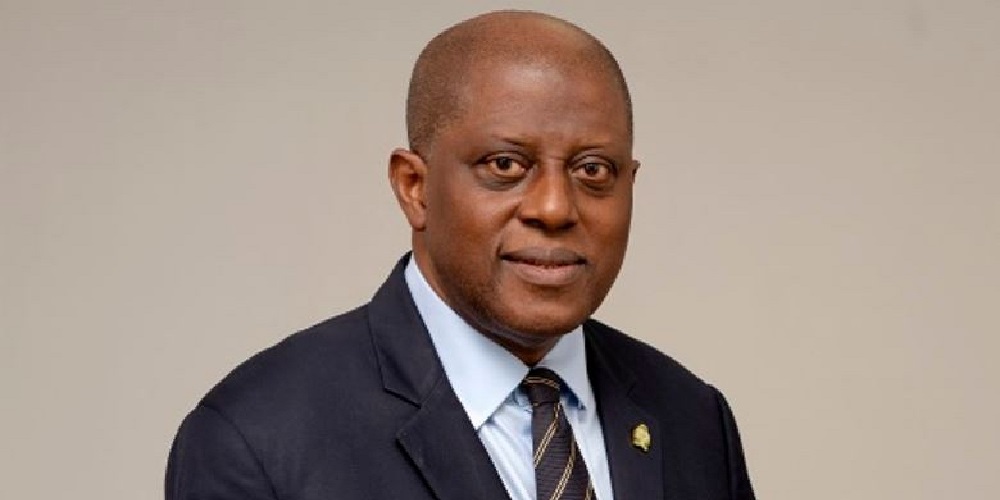
The CBN Governor, Mr. Yemi Cardoso, said in a goodwill message at the 3rd Business Journal Fintech & Financial Inclusion Roundtable 2026 in Lagos that Nigeria’s fintech development must deliver digital financial services that are reliable, secure, fair and accessible.
Cardoso, who was represented by Dr. Rakiya Yusuf, Director, Payments System Supervision, added that Nigerians should be able to transact with confidence, including during periods of high demand.
He said, “Charges should be clear, complaints resolved promptly and failed transactions addressed without unnecessary hardship to customers, Cybersecurity and fraud prevention must remain a shared responsibility, institutions must continually invest in secure technology, effective controls and practical customer education.”
Mr. Babatunde Ajiboye, Assistant Director at CBN, who stood in for Yusuf, said another major strategy is to ensure that “competition must also remain open and fair, with qualified participants having equal access to essential payment infrastructure.”
The apex bank said it cannot achieve these strategies alone, saying that banks, fintech companies, mobile money operators, switches, processors, telecom companies, consumer groups and government institutions all have important roles to play to realise the outcomes.
Looking ahead, the CBN said: “The future of Nigeria’s digital financial ecosystem is promising. Our population is young, entrepreneurial and increasingly connected. Our financial institutions have demonstrated a strong capacity for innovation.
“With appropriate regulation, responsible conduct and sustained investment, Nigeria can build a digital financial system that serves as a model for Africa and the wider world.”
The CBN governor promised that the apex bank will continue to support innovation that solves real problems, expands access and strengthens the economy.
“We will also continue to act where market conduct, concentration, weak governance or operational risks threaten customers or the stability of the system. Our message is simple: innovation welcome, fair competition is essential and public trust must remain at the centre of everything we do.”
He commended the Business Journal Media Group for organising the Roundtable and encouraged participants to engage openly and develop practical recommendations that will advance a safer, fairer and more inclusive digital financial ecosystem in Nigeria.
Economy
See Dollar to Naira exchange rate today, August 3, 2026
The naira opened the week with a relatively stable performance against the United States dollar at both the official Nigerian Foreign Exchange Market (NFEM) and the parallel market on Monday, August 3, 2026.
Data published by the Central Bank of Nigeria showed that the official NFEM rate was trading around ₦1,368 per dollar, with the most recent available closing rate at ₦1,368.22/$ as of August 2. The CBN stated that the NFEM rate is derived from the volume-weighted average of trades executed in the market.
The official market has remained within a narrow band in recent sessions. Historical NFEM data indicate that the dollar closed at about ₦1,365.12 on July 31 and ₦1,365.53 on August 1, suggesting only mild day-to-day fluctuations in the official exchange window.
In the parallel market, commonly referred to as the black market, currency traders in Lagos quoted the dollar at about ₦1,410 per dollar for buying and ₦1,425 per dollar for selling on the latest available market update. This places the gap between the official and parallel market rates at roughly ₦57 per dollar.
The spread between both markets has narrowed considerably compared with the wider premiums seen during the height of Nigeria’s foreign exchange volatility in 2024, reflecting improved liquidity conditions and reduced speculative pressure in recent months.
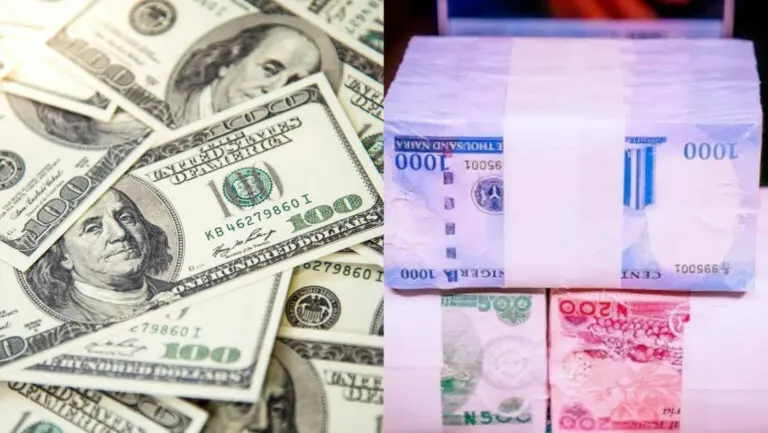
For individuals and businesses, this means $100 would exchange for about ₦136,800 at the official NFEM window and about ₦142,500 at the parallel market selling rate, depending on the channel used.
Analysts say the naira’s near-term direction will continue to depend on foreign exchange inflows from oil exports, portfolio investors, remittances, and the Central Bank’s liquidity management operations in the official market.
-
News13 hours agoAdeleke kicks as IG returns CP Gotan to Osun ahead of governorship poll
-
News12 hours agoRep OK Chinda’s political network sparks across Rivers
-
Metro13 hours ago21-Year-Old Nigerian Basketball Player Arrested in U.S. Over First-Degree Rape Charge
-
Politics13 hours agoFocus on Winning Osun, Everything Else Can Wait – Uzodinma to APC Campaign Team
-
Foreign13 hours agoMan Jailed for Keeping His Mom’s Dead Body in a Freezer for Nearly 3 Years While Receiving Her Financial Benefits
-
News13 hours agoOyo 2027: Busari Drags Accord, Hamzat to Court Over Governorship Ticket
-
News7 hours agoNigerian Tech Founder Launches AI-Powered School Management Platform To Transform Education Administration
-
News5 hours agoREAD FCT minister Wike’s media chat in punches