

Connect with us

News

FG to start paying youth unemployment benefits to graduates, sets up consumer credit programme

Published

on

ADVERTISEMENT
Zoom Ad
ADVERTISEMENT
Zoom Ad

By Emmanuel Agaji

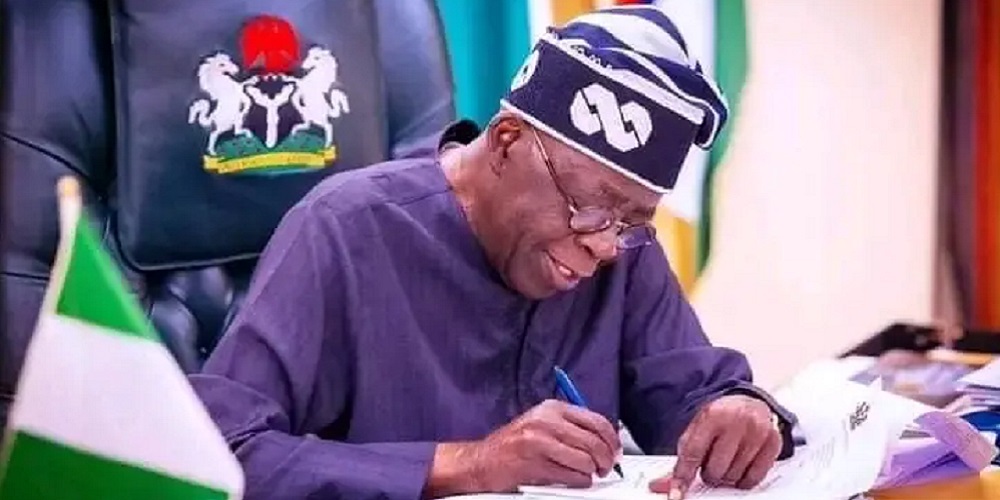
The Federal Government on Monday said it would extend its social security payments net to graduates with qualifications from NCE and upwards.

Addressing journalists after the Federal Executive Council meeting on Monday, the minister of finance and coordinating minister of the economy, Wale Edun, disclosed that the programme would see unemployed Nigerian youths being paid stipends.

“At this period of heightened food prices, Mr. President has committed to doing all that can be done to assist in giving purchasing power to the poorest and in that line.

Advertisement

“He has committed and instructed that the Social Security unemployment programme be devised, particularly to cater for the youth, for the unemployed graduates, as well as the society as a whole.

“So, we have coming, in the nearest future, an unemployment benefit for the young unemployed, in particular,” the Minister announced.

Similarly, Edun said the FG will urgently establish a consumer credit scheme to alleviate the pains of economic adjustment.

He explained that the Chief of Staff to the President, Femi Gbajabiamila, will lead a committee that includes the Minister of Budget and Economic Planning, the Attorney-General of the Federation and himself, the Coordinating Minister of the Economy.

Advertisement

“There is coming a social consumer credit programme. By making consumer credit available, goods become more affordable, the economy even gets a chance to revive faster, because people have purchasing power that allows them to order goods, products,” he stated.

Edun also spoke on the review implemented by the Special Presidential panel on the National Social Investment Programme, which has submitted a preliminary report to the president.

He noted that the president gave the highlights to the Council meeting noting that what was done was “a review of the existing mechanisms, a review of the existing programmes, and where there have been successes, such as the 400,000 beneficiaries of the GEEP programme.”

He added, “So, the direct payments to 12 million households comprising 60 million Nigerians is to resume immediately with the important proviso that every beneficiary will be identified by their national identity number and the bank verification number.

Advertisement

“Therefore, payments will be made into bank accounts or mobile money wallets. So, that whether it is before or after, there is verification of the identity of beneficiaries.

“Each person that receives 25,000 Naira for a total of three months will be identifiable, even after they have received the money, it will be clear who it went to and when it went to them. And that is the big change that has allowed Mr. president to approve the restart of that direct payments to beneficiaries programme.”

On his part, the Minister of Communications and Digital Economy, Dr Bosun Tijjani, explained that beneficiaries would be vetted through their Bank Verification Number and National Identity Numbers to avoid multiple payouts to one individual.

He said, “One of the initial moves that we’re making is leveraging the existing dataset that we have on our people. As you know, the BVN is well known to be extremely credible. NIN on the other side, which is now the most popular data identity system for Nigeriansm, is also to a largest and credible, and it covers quite a significant number of people as well.

Advertisement

“And what we’re looking to do here is the triangulation of this data set to ensure that not only are we using the register that has been properly populated, but that we also do proper verification of every individual that will benefit from that social investment programme, which means we will get commitment to ensuring that no one is paid twice, because you have to be properly IDed before you can benefit from that programme.”

Continue Reading
Advertisement

News

‘I Don’t Want to Return to Nigeria’ — Chimamanda Adichie Speaks After Son’s Death

Published

on

ADVERTISEMENT
Zoom Ad
ADVERTISEMENT
Zoom Ad

Nigerian author Chimamanda Ngozi Adichie has revealed that the death of her 21-month-old son, Nkanu, has profoundly changed her feelings towards Nigeria, saying she no longer wants to return to the country.

Adichie made the disclosure in an interview with The New York Times, where she was asked whether Nigeria still felt close to her heart.

“My feelings toward Nigeria have changed,” the award-winning author said, before adding, “I do not want to go back to Nigeria.”

Nkanu, one of Adichie’s twin sons, died in December 2025 following a medical emergency at Euracare in Nigeria.

Advertisement

According to Adichie, Nkanu initially developed a fever and was placed on antibiotics by her husband, Ivara Esege. However, when his condition failed to improve, he was taken to hospital for further medical evaluation.

She said her son was sedated with propofol during an MRI before suffering cardiac arrest and dying the following day.

Recounting the devastating experience, Adichie said a doctor approached her after the procedure and told her: “Well, look, they gave him too much Propofol.”

“That was his exact words, which I will never forget until the day I die,” she recalled.

Advertisement

Adichie had previously raised allegations of medical negligence concerning her son’s treatment. The circumstances surrounding Nkanu’s death are currently the subject of a coroner’s inquest, amid disagreements between the family and the hospital over what happened.

The author said her children could ultimately be the only reason she would consider returning to Nigeria, noting that her daughter still regards the country as her “happy place.”

Reflecting on the loss of her son, Adichie described her grief as surreal.

“I mean, it is so surreal, all of this. I still can’t believe we’re talking about my son who died,” she said.

Advertisement

“You’re going through something, but you also feel like you’re outside of it.”

Continue Reading

News

Break-Up Fears Grip UK as Scotland, Wales, Northern Ireland Leaders Plot New Constitutional Front

Published

on

ADVERTISEMENT
Zoom Ad
ADVERTISEMENT
Zoom Ad

Leaders of Scotland, Wales and Northern Ireland are set to meet in Cardiff on Monday in an unprecedented summit that could intensify calls for greater autonomy and a potential break-up of the United Kingdom.

Scottish First Minister John Swinney, Welsh First Minister Rhun ap Iowerth and Northern Ireland First Minister Michelle O’Neill are expected to discuss a joint approach to constitutional reform, including the right of their respective nations to determine their own futures.

They will be joined by Mary Lou McDonald, president of Sinn Féin and leader of the opposition in the Republic of Ireland.

The meeting at the St David’s Hotel overlooking Cardiff Bay is expected to focus on four broad areas: the economy, energy, relations with Europe and the wider international community, and self-determination.

Advertisement

The leaders are also expected to endorse a joint declaration asserting the democratic right of Scotland, Wales and Northern Ireland to determine their constitutional futures, potentially including independence referendums.

The gathering comes amid growing pressure for a major overhaul of the UK’s constitutional structure and greater powers for the devolved nations.

‘Status quo is not sustainable’

Swinney, whose Scottish National Party (SNP) has long campaigned for Scottish independence, has described the meeting as evidence of a fundamental shift in the political landscape.

Advertisement

“For the first time ever, Scotland, Wales and Northern Ireland are led by pro-independence first ministers,” he said, arguing that the development showed that the existing constitutional arrangement was becoming unsustainable.

“The momentum behind serious constitutional change is undeniable,” Swinney added.

He has also suggested that Westminster must prepare for a future in which the United Kingdom’s current structure could fundamentally change.

Independence and Irish unity

Advertisement

The summit could give fresh momentum to separate constitutional campaigns across the three nations.

In Scotland, the SNP continues to press for another independence referendum, while Plaid Cymru is seeking greater autonomy for Wales.

Northern Ireland’s Sinn Féin, meanwhile, is campaigning for Irish reunification under the terms of the Good Friday Agreement.

Sinn Féin is expected to use Monday’s meeting to argue that preparations for a referendum on Irish unity should begin now.

Advertisement

A party source said the agreement provided a democratic route for Northern Ireland to determine its future and that Irish unity should no longer be treated as a distant possibility.

Wales demands more powers

For Wales, the talks are also expected to focus on demands for greater control over taxation, public spending, policing and rail infrastructure.

Plaid Cymru is particularly pushing for Wales to receive revenues generated from the Crown Estate, including income from seabed areas used for offshore wind projects, rather than having the money transferred to the UK Treasury.

Advertisement

The party has argued that closer cooperation among the three devolved nations could deliver practical benefits while strengthening their collective bargaining position with Westminster.

Burnham pushes back

The growing constitutional debate has also drawn attention from Andy Burnham, who has previously indicated that another Scottish independence referendum could potentially be considered if there were a clear public consensus.

However, Burnham has since insisted that another referendum is not on the table before the next UK general election.

Advertisement

In a letter to Swinney, he said there was no clear consensus for Scottish independence and no evidence that a majority in Northern Ireland currently wanted to leave the United Kingdom.

Burnham also pointed to Labour’s 2024 election manifesto, which stated that the party did not support Scottish independence or another referendum.

He argued that reopening the issue would distract from the government’s priorities of economic growth and tackling the cost-of-living .

Advertisement
Continue Reading

News

Sad! One Cadualty, Four Rescued as Four-Storey Building Collapses in Enugu

Published

on

ADVERTISEMENT
Zoom Ad
ADVERTISEMENT
Zoom Ad

One person has died and four others have been rescued after a four-storey building under construction collapsed on Ogbalu Street, Independence Layout, Enugu State.

The building reportedly caved in at about 6 a.m. on Sunday, trapping workers who were sleeping at the construction site.

Rescue teams recovered the body of one worker from the rubble, while four others were pulled out alive and taken to the Enugu State Teaching Hospital for medical attention.

According to the Enugu State Capital Territory Development Authority, six people were sleeping at the site when the building collapsed. One of them, however, had stepped out shortly before the incident.

Advertisement

Emergency responders, including the National Emergency Management Agency (NEMA), Nigerian Red Cross Society, Enugu State Emergency Management Agency (SEMA), Enugu State Capital Territory Development Authority and the police, have joined the rescue operation.

Officials are yet to determine what caused the structure to collapse.

The incident has renewed concerns over compliance with building regulations, construction standards and safety measures at building sites across Enugu and other parts of Nigeria.

Building collapses remain a recurring safety concern in the country, with poor construction practices, use of substandard materials, weak supervision and failure to comply with approved building standards often cited among the factors that can contribute to structural failures.

Advertisement

Authorities are expected to investigate the Enugu collapse and establish whether any construction or regulatory violations were involved.

Continue Reading

Trending

Copyright © 2024 Naija Blitz News