
News
FG backpedals on tax laws guidelines, cites uncertainty



The federal government has halted the issuance of guidelines for the implementation of the new tax laws, citing uncertainty over the final version, Taiwo Oyedele, Chairman, Presidential Tax Reform Committee, has revealed.
He said he had told the Nigeria Revenue Service (NRS) and the Joint Revenue Board (JRB) to wait because guidelines on the implementation of tax laws cannot be issued.
Oyedele spoke in Lagos yesterday while responding to questions after delivering a keynote address on the 2026 Economic Outlook organised by the Institute of Chartered Accountants of Nigeria, with the theme ‘ICAN@60: Accountability as the Bedrock for National Development.’
He said concerns over whether the documents currently in circulation represent the final version of the laws prompted him to instruct his team to buy a printed copy of the law from the government’s printer.
He said the feedback from his staff revealed that the National Assembly had taken custody of all printed copies of the tax laws and directed that they should not be sold or made available to the public until lawmakers conclude their review.
Efforts by Daily Trust to get a reaction from the Senate’s spokesman, Senator Yemi Adaramodu (APC, Ekiti South), were unsuccessful as he neither answered several phone calls nor responded to a WhatsApp message seeking his comments on the matter.
Also, calls to the mobile telephone line of the spokesperson of the House of Representatives, Akin Rotimi, did not go through last night.
While acknowledging that legislative review is a normal part of the lawmaking process, Oyedele noted that the restriction on access has reintroduced uncertainty into the tax reform process.
He said: “The Acts Authentication Act says whatever the government printer publishes is the evidence of the law that was passed.
“That government printer published something, which we said is the official version. Lawmakers said it is not what they passed. So, they said they would do their own gazettes.
“They set up their committee, they did their own review, they did their own gazettes. They sent me a copy, soft copy. But that’s not what the Acts Authentication Act says.
“So, I sent my staff, go to the government printer and go and buy. They went there, but as of last week, they said it’s not ready. That they should wait.
“So, I also told everybody, the NRS, JRB, you too wait, because we cannot issue guidelines.
“We are not 100 per cent certain that this is the final official position. I called my staff this (yesterday) morning, I said go back there, follow up every day, go, go there, don’t call them, go and sit down there.
“And I got feedback as I was here that says that… I don’t even know whether I should say this or not because I don’t know what the press will report. But in the interest of accountability and transparency, my staff told me that they said everything that they printed, the National Assembly collected from them and said they shouldn’t sell to anyone; that they want to complete their review. While that is good, it also creates uncertainty again.”
The laws — the National Revenue Service (Establishment) Act, the Joint Revenue Board of Nigeria (Establishment) Act, the Nigeria Tax Administration Act, and the Nigeria Tax Act — which took effect on January 1, had elicited criticisms following alleged alterations to the gazetted laws as against the versions passed by the National Assembly.
At the House of Representatives’ plenary in December, Abdussamad Dasuki (PDP, Sokoto) had raised a matter of privilege, alleging discrepancies between the tax laws passed by the National Assembly and the versions gazetted and made available to the public.
Rising under Order Six, Rule Two of the House Rules, Dasuki said his legislative privilege had been breached, insisting that the content of the gazetted tax laws did not reflect what members debated, voted on, and passed.
He said after spending the past three days to carefully review the gazetted copies alongside the Votes and Proceedings of the House as well as the harmonised version adopted by both chambers, he observed discrepancies.
The House later set up a seven-man committee to investigate the allegations and report within one week, which elapsed on December 25.
The legislature on January 3 released Certified True Copies (CTCs) of the approved versions of the tax laws as earlier passed by both chambers and transmitted for presidential assent.
A comparison of the CTCs to the earlier “altered” gazetted versions showed that the discrepancies had been addressed, with the National Assembly approving the versions it passed and disowning the controversial gazetted copies that had stirred public concern.
Reacting yesterday to the allegations that the tax laws had been altered, Oyedele downplayed the impact of any changes, saying they should not affect the core provisions of the tax laws.
“So, in other words, what I’ll say to you is, the explanation we have provided about the law, because all this issue of they’ve altered, they’ve not altered, it’s not even a lot.
“There are few items that shouldn’t affect the main thing that people need, nothing about the tax rate, about the tax burden, the filing deadline.
“So, but this is the best I can say to you, as we speak,” he said.
Oyedele expressed worry over stiff opposition to the tax reforms, including spread of misinformation aimed at undermining the reforms.
The tax expert said some Nigerians were being paid to protest against the report.
“We’ve seen people who have been paid to protest against this reform.
“You see a group, they gave them N30 million to go and protest. In the process of sharing N30 million, this agreement broke. Some of them went to the media and said, we are not doing it again,” he said.
He narrated how misinformation made Nigerian stocks lose a whopping N4.6trn in a day in November 2025.
“The new tax laws exempt someone who sells up to 150 million Naira a year. Why are people selling 1 million Naira in panic?
The danger of misinformation. That fake news, because it’s fake, it’s not supported by data, led to real losses for people, including some people whose pensions are with PFAs, lost money,” he said.
Speaking on the theme, Oyedele described accountability as a bridge between reform and results.
“Your reforms can be brilliant. I’ve never seen any reform idea in Nigeria that is not brilliant.
“We’re just not very good with execution. And one of the reasons why execution failed is poor accountability,” he said.
He called on Nigerians and professionals to build trust and seek knowledge while demanding accountability.
“When trust rises, reforms are easier, and resistance to reform declines and results are better. Number two, let’s seek knowledge,” he said.
At the panel session, the Director-General of the Lagos Chamber of Commerce and Industry (LCCI), Dr Chinyere Almona, demanded interagency engagement during the implementation of the tax reform laws in order to produce the desired result.
Almona noted that usually there are conflicts within the policy execution architecture, while calling for the use of technology and a centralized system in monitoring execution of the policies.
Also speaking, the Director-General of the Manufacturers Association of Nigeria (MAN), Segun Ajayi-Kadir, called for the policy implementation that brings about inclusive growth “without compromising competitiveness.”
He said contribution of the manufacturing sector to the GDP has not been up to 10 per cent, while lamenting the myriad of challenges confronting the sector.
He also expressed worry over what he called escalation of the unsold inventory, which he puts at N2 trillion across the sector.
Earlier, the chairman in session, Mohammed Hayatudeen, noted that Nigeria was entering 2026 with a delicate but defining moment.
He said after the turbulence of the 2023–2024 reform cycle, the economy had regained stability with inflation moderated, the exchange rate stabilised, and external revenue strengthened.
Despite this, Hayatudeen expressed worry that the poverty rate is still high in the country.
He called for proper implementation of the tax reform laws into “favourable outcomes.”
He said: “This also raises important questions for practitioners and policymakers alike. Will ambition in tax policy be matched by capacity in tax administration and compliance? Laws alone do not raise revenue, capacity does. Systems do and professionals do. How these reforms are executed will test institutions in terms of their durability and efficacy.”
In his welcome remarks, the ICAN President, Mallam Haruna Nma Yahaya, said accountability remains critical to Nigeria’s economic stability and long-term development, as the country navigates ongoing reforms and fragile recovery.
He said the 2026 ICAN Economic Outlook was a deliberate platform to link professional responsibility with national progress.
Yahaya noted that Nigeria’s economy showed signs of stabilisation in 2025, with real GDP growth rising above 4 per cent in the second quarter, driven by improvements in manufacturing, trade, and services.
He added that inflation eased toward the mid-14 percent range by the end of the year, reflecting tighter monetary policy and improved supply conditions, with expectations of further moderation in 2026 if fiscal discipline is sustained.
According to him, external buffers also strengthened as foreign exchange reserves rose to multi-year highs, supported by stronger exports and reforms in the foreign exchange market. He said trade and current-account balances returned to surplus, while private-sector activity improved, with the Purchasing Managers’ Index (PMI) reaching 57.6 points, indicating strong expansion and improved business confidence.
Despite these gains, Yahaya warned that progress remains fragile and could be undermined without discipline, transparency, and strong institutions.
“Accountability is not merely governance ideal; it is an economic imperative,” he said, stressing that weak enforcement of laws, corruption, and poor consequences for misconduct continue to erode public trust and slow economic transformation.
He cited global evidence showing that countries with strong institutions and transparent systems perform better economically than those with weak governance structures.
The ICAN president urged participants to move beyond diagnosis to proposing practical solutions that strengthen institutions and improve governance outcomes.
He expressed optimism that ICAN’s impact in the coming years would surpass its achievements over the past six decades, calling on members and stakeholders to remain committed to accountability as a driver of national development.
Reacting on Wednesday to the allegations that the tax laws had been altered, Oyedele downplayed the impact of any changes, saying they should not affect the core provisions of the tax laws.
“So, in other words, what I’ll say to you is, the explanation we have provided about the law, because all this issue of they’ve altered, they’ve not altered, it’s not even a lot.
“There are few items that shouldn’t affect the main thing that people need, nothing about the tax rate, about the tax burden, the filing deadline.
“So, but this is the best I can say to you, as we speak,” he said.
Oyedele expressed worry over stiff opposition to the tax reforms, including spread of misinformation aimed at undermining the reforms.
The tax expert said some Nigerians were being paid to protest against the report.
“We’ve seen people who have been paid to protest against this reform.
“You see a group, they gave them N30 million to go and protest. In the process of sharing N30 million, this agreement broke. Some of them went to the media and said, we are not doing it again,” he said.
He narrated how misinformation made Nigerian stocks lose a whopping N4.6trn in a day in November 2025.
“The new tax laws exempt someone who sells up to 150 million Naira a year. Why are people selling 1 million Naira in panic? The danger of misinformation. That fake news, because it’s fake, it’s not supported by data, led to real losses for people, including some people whose pensions are with PFAs, lost money,” he said.
Speaking on the theme, Oyedele described accountability as a bridge between reform and results.
“Your reforms can be brilliant. I’ve never seen any reform idea in Nigeria that is not brilliant.
“We’re just not very good with execution. And one of the reasons why execution failed is poor accountability,” he said.
He called on Nigerians and professionals to build trust and seek knowledge while demanding accountability.
“When trust rises, reforms are easier, and resistance to reform declines and results are better. Number two, let’s seek knowledge,” he said.
At the panel session, the Director-General of the Lagos Chamber of Commerce and Industry (LCCI), Dr Chinyere Almona, demanded interagency engagement during the implementation of the tax reform laws in order to produce the desired result.
Almona noted that usually there are conflicts within the policy execution architecture, while calling for the use of technology and a centralized system in monitoring execution of the policies.
Also speaking, the Director-General of the Manufacturers Association of Nigeria (MAN), Segun Ajayi-Kadir, called for the policy implementation that brings about inclusive growth “without compromising competitiveness.”
He said contribution of the manufacturing sector to the GDP has not been up to 10 per cent, while lamenting the myriad of challenges confronting the sector.
He also expressed worry over what he called escalation of the unsold inventory, which he puts at N2 trillion across the sector.
Earlier, the chairman in session, Mohammed Hayatudeen, noted that Nigeria was entering 2026 with a delicate but defining moment.
He said after the turbulence of the 2023–2024 reform cycle, the economy had regained stability with inflation moderated, the exchange rate stabilised, and external revenue strengthened.
Despite this, Hayatudeen expressed worry that the poverty rate is still high in the country.
He called for proper implementation of the tax reform laws into “favourable outcomes.”
He said: “This also raises important questions for practitioners and policymakers alike. Will ambition in tax policy be matched by capacity in tax administration and compliance? Laws alone do not raise revenue, capacity does. Systems do and professionals do. How these reforms are executed will test institutions in terms of their durability and efficacy.”
Accountability critical to economic stability – ICAN President
In his welcome remarks, the ICAN President, Mallam Haruna Nma Yahaya, said accountability remains critical to Nigeria’s economic stability and long-term development, as the country navigates ongoing reforms and fragile recovery.
He said the 2026 ICAN Economic Outlook was a deliberate platform to link professional responsibility with national progress.
Yahaya noted that Nigeria’s economy showed signs of stabilisation in 2025, with real GDP growth rising above 4 per cent in the second quarter, driven by improvements in manufacturing, trade, and services.
He added that inflation eased toward the mid-14 percent range by the end of the year, reflecting tighter monetary policy and improved supply conditions, with expectations of further moderation in 2026 if fiscal discipline is sustained.
According to him, external buffers also strengthened as foreign exchange reserves rose to multi-year highs, supported by stronger exports and reforms in the foreign exchange market. He said trade and current-account balances returned to surplus, while private-sector activity improved, with the Purchasing Managers’ Index (PMI) reaching 57.6 points, indicating strong expansion and improved business confidence.
Despite these gains, Yahaya warned that progress remains fragile and could be undermined without discipline, transparency, and strong institutions.
“Accountability is not merely governance ideal; it is an economic imperative,” he said, stressing that weak enforcement of laws, corruption, and poor consequences for misconduct continue to erode public trust and slow economic transformation.
He cited global evidence showing that countries with strong institutions and transparent systems perform better economically than those with weak governance structures.
The ICAN president urged participants to move beyond diagnosis to proposing practical solutions that strengthen institutions and improve governance outcomes.
He expressed optimism that ICAN’s impact in the coming years would surpass its achievements over the past six decades, calling on members and stakeholders to remain committed to accountability as a driver of national development.

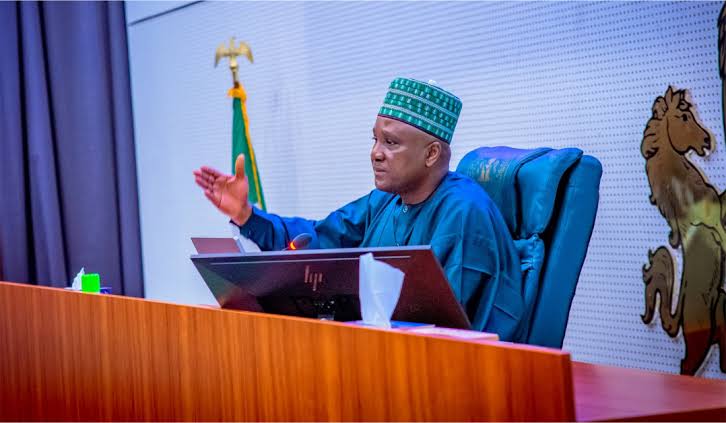
The Speaker of the House of Representatives Hon. Abbas Tajudeen, has saluted Nigeria’s Armed Forces for their courage, service, patriotism, and discipline as they secure the country against internal and external aggression.
Speaker Abbas especially hailed members of the Armed Forces who have paid the supreme price while on duty call, describing them as national heroes whose labour should never be in vain.
The Speaker, in his message to commemorate the 2026 Armed Forces Remembrance Day, paid glowing tribute to the fallen heroes and the resilience of men and women in service, who have committed their lives to protecting citizens and non-citizens within the Nigerian territory.
While commending the Armed Forces for being critical stakeholders in the maintenance of Nigeria’s democracy, Speaker Abbas said their service has contributed to the socio-economic and political stability the country has enjoyed since 1999.
The Speaker restated the commitment of the House to empowering the security and intelligence agencies towards ensuring the safety of life and property, which is the primary duty of the government.
He also expressed his confidence in the administration of President Bola Ahmed Tinubu, GCFR, to address the security challenges facing the country, especially with the significant adjustments in the country’s security architecture.
The Speaker wished Nigeria’s Armed Forces a happy Remembrance Day.


Seven persons have been killed in a motor accident along Damaturu-Damagum Road, Gaggaba village in Fune Local Government Area of Yobe State.
The spokesman, Yobe Police Command, Dungus Abdulkarim, said the incident occurred around 01:20 pm on Thursday.
“The Yobe State Police Command regrets to inform the public of a fatal motor vehicle accident that occurred on 15th January, 2026, at about 0120 hours, at Gaggaba Village, within the Damagum area,” Abdulkarim said.
“Preliminary investigation revealed that a accident involved a DAF trailer with Registration Number DAL 963 YY, driven by one Malam Abubakar, aged 35 years, of Maiduguri, Borno State, who was travelling from Lagos to Maiduguri, and a Mitsubishi Canter with Registration Number XA 437 NNR, driven by one Salisu Ibrahim, of Dirra Village, via Fune Local Government Area” the police spokesman said in statement.
“It was gathered that upon reaching a point at Gaggaba Village, the Mitsubishi Canter, allegedly driven at excessive speed, veered off its lane and rammed into the oncoming DAF trailer.”
He said as a result of the collision, both drivers, three occupants of the trailer, and two occupants of the Mitsubishi Canter, making a total of seven persons, lost their lives on the spot.
While sympathizing with the families of the deceased, The Commissioner of Police, Emmanuel Ado, expressed concern over the rising cases of road traffic accidents—which claimed 120 lives across the state in 2025—calls for collective solutions.

Four astronauts returned safely to Earth early on Thursday after an undisclosed serious medical condition affecting one of them forced an end to their International Space Station mission a few weeks early.
Their SpaceX capsule splashed down in the Pacific off California, capping a 10-hour-plus descent from the space station and fiery re-entry through Earth’s atmosphere.
It was the first time that NASA has cut short the rotation of an ISS crew due to a health emergency.
The Crew Dragon spacecraft dubbed Endeavour parachuted into calm seas off San Diego at about 12:45 a.m. PST (0845 GMT).
The finale of the abbreviated mission was carried live by a NASA-SpaceX webcast.
Moments later, several dolphins were visible swimming near the capsule, their dorsal fins breaking the surface of the ocean, as the spacecraft bobbed gently upright in the water.
In a radio transmission to the SpaceX flight-controcentreer near Los Angeles, Endeavour’s commander, NASA astronaut Zena Cardman, 38, was heard saying, “It’s good to be home.”
Joining her on the return voyage were fellow U.S. astronaut Mike Fincke, 58, Japanese astronaut Kimiya Yui, 55, and Russian cosmonaut Oleg Platonov, 39.
In less than an hour, SpaceX recovery teams had secured their heat-scorched capsule and hoisted it onto the deck of a retrieval vessel, then helped the astronauts out of the spacecraft for their first breath of fresh air in nearly 24 weeks.
Each of the crew members, still garbed in helmeted white-and-black space suits, smiled and gave a thumbs-up as they emerged and were helped to their feet. It was not evident from their appearance which one was ailing.
Unable to bear their own weight on Earth after spending months in microgravity, the four were each assisted onto special gurneys and escorted to an onboard medical station for routine checkups at sea.
Afterward, they were to be flown to a local hospital for further medical exams, SpaceX said.
SERIOUS MEDICAL CONDITION
The decision to bring all four home early was announced January 8, with NASA Administrator Jared Isaacman saying one of the astronauts faced a “serious medical condition” that required immediate attention of doctors on the ground. Isaacman was also present at mission control for the splashdown on Thursday.
NASA officials have not identified the crew member of concern or described the nature of the medical issue, citing privacy requirements.
Fincke, a retired Air Force colonel who has now logged five missions to space, and Cardman, a rookie astronaut and geobiologist, had been scheduled to conduct a six-hour-plus spacewalk last week to install hardware outside the station.
The spacewalk was canceled on January 7 over what NASA then characterized as a “medical concern” with an astronaut.
NASA Chief Health and Medical Officer James Polk later said the medical emergency did not involve “an injury that occurred in the pursuit of operations.”
As the 11th regular ISS crew flown to orbit by SpaceX, Cardman, Fincke, Yui and Platonov arrived at the space station following a launch from Florida in August. They departed on Wednesday afternoon on a 10 1/2-hour flight home, ending a 167-day mission.
The return from orbit capped a plunge through Earth’s atmosphere generating frictional heat that sent temperatures surrounding the outside of the capsule soaring to 3,500 degrees Fahrenheit (1,900 degrees Celsius).
The astronauts’ space suits, fitted to special ventilation systems, are designed to keep them cool as the cabin heats up.
Live infrared video of the splashdown showed deployment of the two sets of parachutes from the nose of the free-falling capsule, slowing its rate of descent to about 15 miles per hour (25 kph) before it gently hit the water.
Crew-12 is expected to launch to the space station in mid-February with four more astronauts. In the meantime, the orbiting laboratory remains occupied by NASA astronaut Christopher Williams and two cosmonauts who flew to the ISS aboard a Russian Soyuz spacecraft in November.
[Reuters]

Remembrance Day: Speaker Abbas salutes Nigeria’s Armed Forces

Venezuelan opposition leader, Machado, says she presented Trump with her Nobel peace prize medal

Final Death Toll From Hong Kong Fire Put At 168

Edo Killings: Jibrin Shares Details of His Discussion with Okpebholo

Jail break: One of Seven Escaped Ilesha Inmates re-arrested in Lagos

Police neutralise bandit, rescue 5 kidnapped victims in Katsina
-

 News3 hours ago
ADC slams Tinubu’s absence at Armed Forces Remembrance Day
-
 News3 hours ago
Emir Of Kano, Sanusi Lamido Returns To School
-
 News3 hours ago
Makinde Announces Ladoja, Chairman, Oyo Council of Obas
-

 Sports18 hours ago
AFCON: Ghanaian referee’s Instagram brought down after Nigeria lose to Morocco
-
 Sports19 hours ago
‘Nigeria Remains Proud Of You’, FG Tells Super Eagles After AFCON Semi-Final Exit
-

 News3 hours ago
NCC seeks stakeholder input on satellite Direct-to-Device connectivity
-

 News13 hours ago
Nigeria’s inflation hits 15.15% in December-NBS
-

 News12 hours ago
Armed Forces Remembrance Day: HoR minority caucus honour Nigeria’s fallen heroes, say “your sacrifices not forgotten”