
Opinion
How SPESSE is driving Nigeria’s procurement reform



By Sufuyan Ojeifo
For years, public procurement in Nigeria moved to a familiar rhythm. Files circulated. Committees met. Rules were cited. Yet something essential was missing. The instincts that turn policy into habit and compliance into culture never quite took root. Procurement functioned, but it rarely learned. This created challenges.
It was into this quiet gap that the Sustainable Procurement, Environmental and Social Standards Enhancement, a World Bank-funded project, better known as SPESSE, stepped more impactfully at the start of 2025. Many assumed it would follow a familiar path, another certification exercise with modest administrative ambitions.
Under the steady stewardship of the Director General of the Bureau of Public Procurement (BPP), Dr Adebowale Adedokun, it did something else entirely. By the close of the year, SPESSE had emerged as a compass for directing and locating professionalism in the country’s procurement ecosystem.
The most important achievement of 2025 was not numerical. It was a change in the way procurement is perceived in its entirety.
● Reframing Procurement as a Profession
Under the leadership of Dr. Adedokun, the BPP made a clear and deliberate pivot from treating procurement as a clerical necessity to establishing it as a regulated profession. This shift did not arrive with fanfare. It came through standards patiently defined and enforced.
Procurement officers were increasingly spoken of as custodians of public value rather than processors of paperwork. This distinction matters.
Nations do not bleed resources by accident. They do so when systems quietly reward mediocrity and call it normal.
Training under the SPESSE project was therefore never approached as a numbers game. The Bureau insisted on structured learning pathways that privileged depth over attendance and competence over certificates.
The underlying logic was simple yet profound. A procurement officer should understand value for money with the same seriousness a physician applies to dosage.
Technical proficiency was fused with sustainability, due process, and fiscal discipline. To be clear, the aim was to produce professionals trained to think, weigh, and judge rather than merely tick boxes.
● Restoring Discipline and Integrity
Importantly, the BPP did not suspend its regulatory instincts in the name of capacity building. One of the year’s most consequential, if uncelebrated, achievements was the consolidation of oversight around procurement training itself. By anchoring SPESSE project firmly within a regulated ecosystem, the Bureau restored order and credibility to a space long vulnerable to opportunism.
This act of deliberate discipline protected the reform from dilution. It ensured that capacity building did not become an open market of good intentions.
Ethics, too, moved from aspiration to architecture.
Integrity was treated not as a sermon but as a skill. Modules on conflict of interest, transparency thresholds, and accountability norms were woven directly into the curriculum.
In this design, lay a subtle but powerful reframing. Procurement, long caricatured as a corruption exposed function, was repositioned as a frontline institution of public trust and a bedrock of good governance.
● Locking Reform into the System
This recalibration found its clearest expression in a landmark policy move. With the backing of President Bola Ahmed Tinubu’s wider governance reform agenda, Dr Adedokun secured preliminary approval to make SPESSE project-bolstered professional procurement certification mandatory for all federal procurement officers. This alignment between political will and institutional leadership proved decisive.
By embedding the professional certification programme into the formal requirements of service, SPESSE project was freed from the uncertainties of funding cycles. It was elevated into a permanent feature of professional statecraft.
Last year’s tangible outcomes have given weight to this foundational work. Between April and June alone, over 3,429 officials successfully completed professional examinations across procurement and social and environmental standards.
The total number of Nigerians to be trained under SPESSE programme is put at over 85,000 in the public and private sectors. The scale speaks for itself. It is simply ambitious, yet achievable.
The programme met all its core objectives for the year. It earned a satisfactory rating from the World Bank and secured approval for extended funding through 2026.
● Preparing the ground for 2026
Change, however, is rarely just technical. It is emotional and institutional. On this front, the BPP displayed uncommon attentiveness. By engaging professional associations and practitioner communities as co-owners rather than passive recipients, SPESSE shed the posture of an external imposition.
The Bureau’s messaging was steady and reassuring. This was about strengthening professionalism, not displacing people. Anxiety softened into aspiration. Reform gained allies within the very system it sought to improve.
By the close of 2025, the cumulative effect was unmistakable. Procurement officers were not merely better trained. They were better oriented. Standards were clearer. Expectations were firmer. Regulatory authority was exercised with calm purpose.
As the SPESSE project moves through 2026, the ambition subtly shifts. The task ahead is not expansion alone but also consolidation.
With mandatory certification on the horizon, deeper integration with MDAs, and a growing emphasis on applied competence rather than classroom learning, the programme is poised to shape behaviour as much as knowledge.
If sustained with the same institutional discipline and political backing, SPESSE in 2026 will begin to do what mature systems do best. It will make good practice routine, and poor judgement costly. This is not a small thing. It is patiently and almost imperceptibly how countries grow up.
■ Sufuyan Ojeifo is a journalist, publisher, and communications consultant based in Abuja.

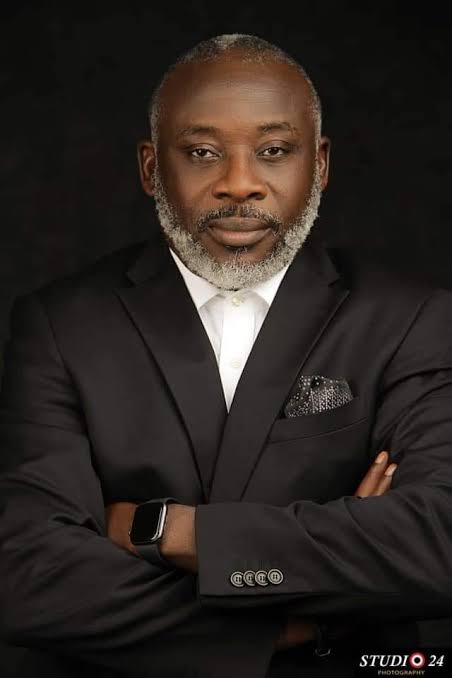
The popular phrase, “different strokes for different people,” resonates time and time again. It is usually evident in issues of national interest. While some people argue that there are milestones recorded since the birth of the 4th Republic in May 1999, others disagree. The latter group believes that we have been experiencing tottering growth. They reasoned that it is traceable to political parties. They believe that the formation, objectives, and operations of many parties, have contributed, largely to where our democracy is at the moment. Since 1999, there have been regular, consistent registration of political parties by the Independent National Electoral Commission, (INEC) – almost becoming embarrassingly ridiculous. Critical analysis of the vast majority of these countless associations; which desire to scale INEC’s hurdles and morph into parties reveals certain features. No clear cut ideologies, objectives, and vision. Sadly, the registered parties are not too different.
The reverse is the case in some other countries that also practice democracy. It is an overkill comparing our democratic evolution with what obtains in developed countries; it can be described as difference between night and day. Perhaps, it is imperative to juxtapose our democratic system with that of developing nations. In South Africa, political parties are driven by ideologies that are peculiar and distinct. The African National Congress (ANC); the county’s ruling party is built on social democracy, and regional nationalism. Democratic Alliance (DA) – liberalism and federalism; uMKhontoweSizwe (MK) – socialism and nationalism; Economic Freedom Fighters (EFF) – communism and pan africanism. In Ghana, the National Democratic Congress (NDC); New Patriotic Party (NPP); and a few others have clearly defined ideologies. Citizens of respective countries know these ideologies. More importantly, members remain committed and rooted in their parties; with or without electoral victories.
Different rhymes and lyrics are prevalent in Nigeria. Cynically described as “jumpology,” varied lexicons like defection, dumping, and porting are used in the media to announce the movement of politicians from one party to the other. The ease is akin to changing clothes. Since there are no realistic differences; other than gaining power, politicians find it convenient to crisscross parties, at the slightest opportunity. Between 1999 and now, the vast majority of politicians have perfected the arts of moving parties. In 26 years of the 4th Republic, some politicians have switched parties two, three, or more times. Of all parties registered in 1999, the Peoples Democratic Party, (PDP) has been the greatest loser. Many of the foundation members, including those who occupied various elective and appointive positions have since abandoned the umbrella in search of greener pastures. A few of the old, generational members, and some younger elements resolved to stay back.
The subject of this piece; TeeJay Yusuf belongs to the group of members that have refused to turn their backs against PDP. The three-term member of the House of Representatives, who joined the party in 2009 said at a recent interview that, “Not minding the present challenges, I choose to remain with the party because you don’t abandon your leaking house and go to your neighbors but stay back and fix it.” At some other functions, he repeatedly stressed that, “as a son of nobody, the party gave me the platform to contest and win elections into the Legislature on three different occasions. I think it is immoral, and the height of ingratitude and disloyalty to turn my back against the party.”
There are unconfirmed reports that the Kogi-born politician has been under tremendous pressures, since 2015 to join the All Progressives Congress, (APC). According to decent sources, Yusuf consistently ward off any and every overtures from senior members and leading officials of the APC in Kogi State, and at the national level. Described as an unapologetic member of the PDP, Yusuf, in strict adherence to the party’s decision on the choice of Speaker for the House of Representatives in 2019, was denied the leadership of any Committee; despite being a senior ranking, and third-termer. Such is the level of his fidelity, commitment, and passion for party growth and development.
Yusuf has shown consistent loyalty to the PDP; even at some huge personal cost and loss, he remains committed. This, has not gone down well with some of his supporters who believe he should leverage on his positive attributes to shore up his political endeavors. Perhaps, they may be right, particularly in a democracy where sacrifice and selflessness has taken the backseat. Sadly, honour and integrity have become scarce and scant among the political class. Described as a frank and fearless politician, Yusuf, in 2012, moved the motion against the removal of fuel subsidy by the Jonathan administration; in spite of being in the same party. Rt. Hon. Silas Agara, Director-General, National Directorate of Employment, (NDE), a friend of over three decades said, “TeeJay does not approbate and reprobate on any issue, you know where he stands.” Somehow, Yusuf is giving life to the admonition of George S. Clason, “have the courage to say no..have the courage to face the truth..do the right thing because it is right.”
His brand of politics, approach to public service, and personal development has generated concerns, and attracted serial pillorying by some people. Though a few associates commend his passion for inclusivity but dislike his penchant for denying himself certain privileges and opportunities towards ensuring party cohesion. For them, it is loyalty and sacrifice taken too far. However, there are those who see him as an inspiration, and encouragement in a society where debased moral values, reckless pursuit of ephemeral positions and power have become the new normal. Unknown to him, there are institutions that have been tracking his political career and public engagements.
Convinced about his consistency to political development, the Centre for Credible Leadership and Citizens Awareness, (CCLCA) in conjunction with NaijaBlitzNews and Hellosis Media awarded Yusuf with the 2025 Leadership Award in “Vision, Courage, and Commitment to Politics.” The organizers of the yearly awards described him as, “an outstanding politician who focuses on human values, and national development anchored on transparency, and service to the nation and humanity.” They also acknowledged his consistent roles in resolving the protracted crisis in the PDP, and his laudable contributions to national discourse. At the awards presentation, Yusuf, pledged “to do more for national development and the well-being of Nigerians, as I dedicate it to God and humanity.”
Though Yusuf have repeatedly won awards from different organizations and groups, while in the House of Representatives, this was special in many ways. Indeed, it opened the floodgates for a few others, that came in quick succession. The Law Students Association of Godfrey Okoye University, Enugu, presented an Award of Recognition to him for outstanding contributions to education, and youth development. As Yusuf garnered endorsements variously across the country, reputable institutions and groups in Kabba; his community were not left out.
His ancestral lineage; Odogba Descendants Royal Family honoured him with an Award of Excellence for meritorious service to the community. The ’80s Connect Club; a frontline social group decorated him with the Award of Excellence as an outstanding federal lawmaker. Ibiobigha Lowe Sisters; an all-female group with emphasis on the provision of welfare, medicare, and other necessary facilities, recognized Yusuf’s support and contributions towards ensuring the achievement of their community development initiatives. Many more Awards were won in 2025 by the atypical politician and consummate humanist whose network of friends, acquaintances, and associates spread across the country and beyond.
* BOLAJI AFOLABI, a Development Communications specialist was with the Office of Public Affairs, The Presidency, Abuja.

By Sonny Aragba-Akpore
Twenty years after the establishment of World Summit of Information Society(WSIS),nothing significant has changed.
“WSIS was born from a shared belief that digital innovation must reflect human needs, not just match the pace of technological change,” according to International Telecommunications Union (ITU) Secretary-General Doreen Bogdan-Martin.
“As artificial intelligence accelerates our transition from an Information Society to an Intelligent Society, WSIS helps keep our focus where it should be – on people-centred, inclusive digital development.”
On December 16 to 17,2025,WSIS held the Digital Conference in collaboration with the United Nations General Assembly (UNGA) specifically to review how far the society had faired in 20 years.
“Twenty years ago, leaders from all sectors came together and determined to chart a path where digital technologies could support sustainable development and prosperity,”‘ said Haoliang Xu, UNDP Associate Administrator. “Today is about both celebrating progress and charting a path forward. At UNDP, we are convinced of the power of technologies for accelerating development and serving people and the planet.”
But at the Digital UNGA,short of passing a vote of no confidence,participants kept mute on the realities on ground.
Although,significant progress has been made ,there are billions of unconnected persons across unserved and underserved communities.
The disparities have led to the establishment of the United Nations Sustainable Development Goals where it is envisaged that the 2.6 billion unconnected population will be connected by 2030.
Formed from summits in 2003 in Geneva, Switzerland, and 2005 in Tunis, Tunisia, the WSIS process has focused the public and private sectors on people-centred and sustainable digital development aimed at ensuring that the benefits of technologies reach everyone.
To set the stage for the General Assembly review, the Digital@UNGA WSIS+20 Edition examined the impact of emerging technologies, governance and digital public infrastructure on building information and knowledge-based societies.
Laudable as the plans may have been,WSIS is Work in Progress.
The special Digital@UNGA event highlighted public-private cooperation to connect some of the world’s hardest-to-reach communities, with the Partner2Connect (P2C) Digital Coalition’s yearly Meeting for 2025 that took place as part of the event.
During the event, new P2C commitments were announced that reflect growing multistakeholder engagement to accelerate global progress on connectivity.
Partner2Connect – the ITU-led pledging platform dedicated to mobilizing resources, partnerships, and commitments to achieve universal meaningful connectivity and sustainable digital transformation – is an action-oriented mechanism that can connect communities and spur digital progress, following the original WSIS vision.
Partner2Connect pledges are categorized under WSIS Action Lines – a set of 11 priority areas for UN efforts to leverage fast-evolving technologies for human development.
To date, over USD 80 billion has been mobilized as part of the goal to reach USD 100 billion in 2026.
Digital@UNGA was a joint initiative of ITU and UNDP to explore how digital technologies can drive progress for people and prosperity everywhere. The organizers are thankful to Digital@UNGA Lead Supporters and P2C Champions for supporting the Digital@UNGA: WSIS+20 Edition.
Apart from ITU and the UNDP,the event brought together representatives of government, industry, civil society, academia, the technology community and the UN system, serving as a bridge to the WSIS+20 review .
“WSIS was born from a shared belief that digital innovation must reflect human needs, not just match the pace of technological change,” said ITU Secretary-General Doreen Bogdan-Martin. “As artificial intelligence accelerates our transition from an Information Society to an Intelligent Society, WSIS helps keep our focus where it should be – on people-centred, inclusive digital development.”
Two decades since the World Summit on the Information Society (WSIS) created an international dialogue for the digital age, the global digital community voiced support at a special event at UN headquarters for the WSIS process as the framework to guide digital cooperation.
Participants at the Digital@UNGA WSIS+20 Edition looked back at 20 years of multi-stakeholder cooperation, welcomed new commitments, and discussed a common vision for the digital future in advance of the UN General Assembly’s WSIS+20 Overall Review .
WSIS major milestone was to review progress, reimagine the future information society, and align with new frameworks like the Global Digital Compact (GDC).
The Geneva Plan of Action and Tunis Agenda provide core principles for inclusive digital societies, forming the basis for global digital policy.
In terms of multi stakeholders platform the yearly WSIS Forum serves as a unique global platform for governments, civil society, private sector, and technical communities to collaborate and exchange ideas.
This dovetails into the WSIS Action Lines.
These 11 lines provide a roadmap for using ICTs for development, covering infrastructure, access, capacity building, security, and specific applications including e-gov, e-health, among others.
A database documents thousands of successful ICT projects, and the yearly WSIS Prizes recognize innovative solutions, promoting replicable best practices.
A digital Cooperation is Fostered for the creation of the Internet Governance Forum (IGF) and strengthened UN agency collaboration (UNGIS) for coordinated digital development.
SDG Alignment.
WSIS efforts have successfully integrated with and accelerated the achievement of Sustainable Development Goals through digital transformation initiatives.
Despite the seemingly slow pace of the implementation of WSIS,Smartphones account for about 87% of mobile phones in use, with around 7.4 billion in circulation.
They account for ubiquitous ownership where mobile phones are widespread, with over three-quarters of people aged 10+ owning one according to ITU, 2023 reports.
Eighty four percent of adults in developing nations own a mobile phone, but basic phones are more common in regions like Sub-Saharan Africa.
Women and low-income adults are less likely to own phones, with gaps more pronounced in smartphone ownership than basic devices.
Mobile data usage is immense, with video traffic alone requiring storage equivalent to billions of DVDs monthly.
Mobile technologies contribute significantly to the global economy, expected to add nearly $11 trillion by 2030.


By Titus Agbo
Hon. Professor Paul Sunday Nnamchi, the member representing Enugu East/Isi Uzo Federal Constituency in the House of Representatives, is a product of education. A man empowered by learning, he rose from humble beginnings in Ako-Nike, a remote community in Enugu East Local Government Area, to become a global personality.
This journey has spurred him to prioritize education since entering politics. He believes that empowering youths through education will catalyze development in his constituency, which is largely agrarian. He has championed this in several dimensions through skill-based trainings, scholarships and pursuit for establishment of educational institutions in Enugu East/Isi Uzo.
Since his election in 2023, Professor Nnamchi has expanded the annual Information and Communication Technology (ICT) training program he initiated while at the University of Nigeria, Nsukka (UNN), to include secondary school students from Isi Uzo Local Government. The first program in Isi Uzo, held in August 2023, and attracted about 300 participants in a 30-day intensive training. By 2025, participation surged to over 1,000 students in Isi Uzo and about 1,500 in Enugu East, including adults.
Graduation ceremonies were festive, with cultural performances and students reciting ICT concepts, showcasing their learning. Prizes were awarded, and resource persons received laptops to enhance their work. Program coordinator Mr. Daniel Nwachukwu praised the initiative for its impact and thanked Professor Nnamchi for his support. Professor Nnamchi in turn pledged to establish ICT hubs in both local governments before his tenure ends to further strengthen the program.
Beyond ICT training, Professor Nnamchi is attracting educational institutions to Enugu East/Isi Uzo. Within two years, he sponsored fifty-three bills three of which were for new institutions and a motion to upgrade Eha-Amufu College of Education to a degree-awarding institution.
He secured presidential assent for the Federal University of Agriculture, Ako-Nike. Other bills for a College of Entrepreneurship Studies in Ikem and a College of Health Technology in Mbu, Isi Uzo, are progressing. Given the federal government’s focus on health and skill-based education, these bills have strong potentials with proper support to materialize.
Supporting Professor Nnamchi’s return to the National Assembly in 2027 is crucial for continuing this progress. Despite zoning debates between Enugu East and Isi Uzo, his achievements—like attracting a federal university and sponsoring 53 bills—demonstrate his capacity. His longer stay will bring further development and amplify our constituency’s voice in parliament. As they say in football, you don’t change a winning team. Let’s be wise and back his continued leadership.

SERIAKE DICKSON: A TRIUMPHANT DIAMOND JUBILEE: CELEBRATING A TITAN OF DEMOCRACY AND PATRIOTISM

Sit-At-Home: Why We Don’t Open Shops On Mondays – Onitsha Market Trader

Senate Defers Consideration, Plans Executive Session over Electoral Act Repeal Bill

Edo Killings: Jibrin Shares Details of His Discussion with Okpebholo

Jail break: One of Seven Escaped Ilesha Inmates re-arrested in Lagos

Police neutralise bandit, rescue 5 kidnapped victims in Katsina
-
 News23 hours ago
FCT HoS orders striking workers to resume duties immediately
-

 News23 hours ago
Video: FCT minister, Wike bares it all, says we’ve fulfilled 10 out of 14 demands requested by workers
-
 News23 hours ago
Reps Pledge Rigorous Review of 2026 Budget
-
 News21 hours ago
VIDEO; FCT minister Wike blows hot asks striking workers to resume duties or face disciplinary action
-

 News12 hours ago
Presidency dismisses Tinubu’s stumble in Ankara as minor incident
-

 News12 hours ago
Teacher becomes instant millionaire, goes home with FG’s N50m
-

 Sports20 hours ago
League toppers, Arsenal announce endorsement of two players
-

 Sports11 hours ago
NFF Mourns Ndidi’s Father After Fatal Road Accident