
Opinion
Finishing Strong: Behold the Hour Cometh…


By Rt Hon Eseme Eyiboh, mnipr
There are moments in a nation’s life when institutions are reminded—quietly but unmistakably—that time does not negotiate with comfort. Nigeria’s Senate, returning from the conviviality of Christmas recess and New Year reflection to the discipline of plenary, has arrived at such a moment. The period of acclimatization has passed. The era of testing intentions is over. What remains is a phase in which time asserts itself, when the calendar ceases to be a backdrop and becomes an active force in governance.
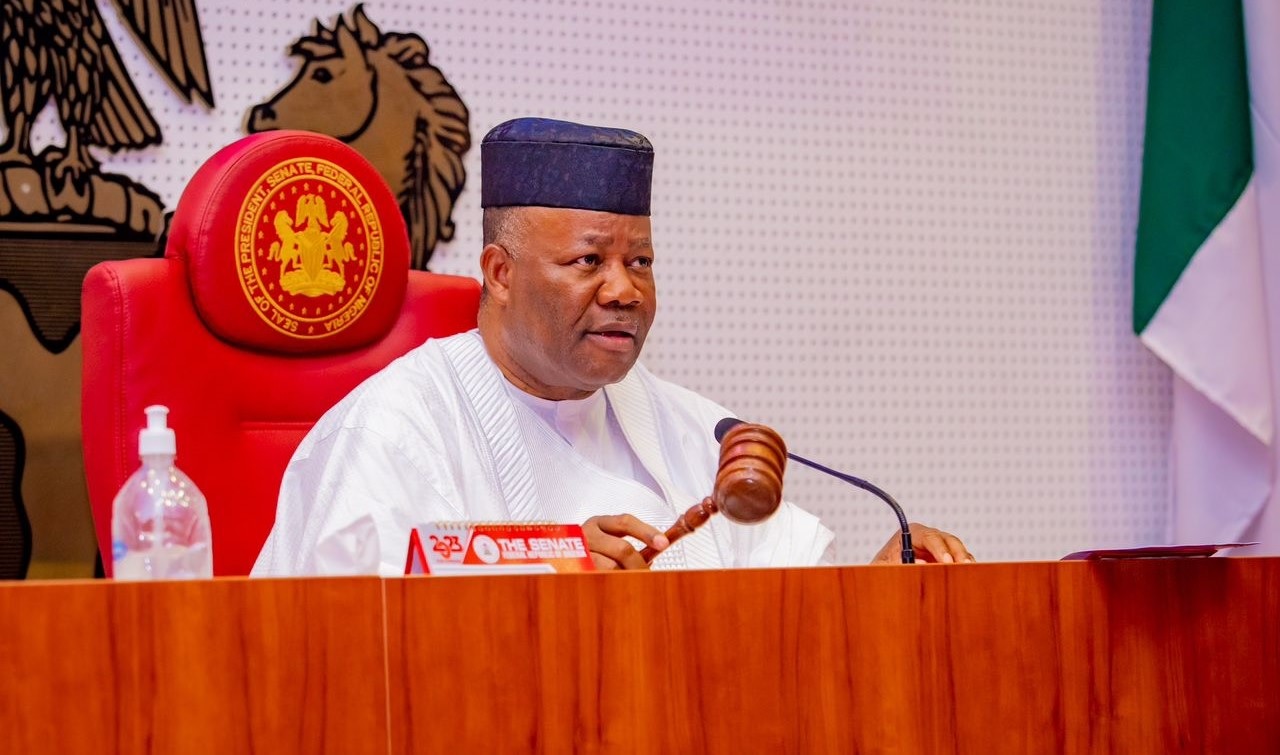
When the President of the Senate, Godswill Obot Akpabio, rose to welcome colleagues back to the chamber in early 2026, he spoke with an ease that respected ceremony while remaining alert to consequence. The tone was cordial but unsentimental; reflective without wandering. Beneath the courtesy was a clear intimation that the Tenth Senate had crossed from the comfort of beginnings into the gravity of its defining phase.
He began where seriousness often takes root—not with policy, but with people. The recess, he reminded senators, was not an escape from accountability but an extension of it: time spent among constituents, re-engaging voices that do not echo within the chamber, absorbing frustrations that do not arrive neatly packaged as memoranda, and reconnecting with the human weight behind legislative abstractions. In doing so, Akpabio quietly reaffirmed representation as a lived obligation rather than a procedural formality.
The Senate, however, resumed its work under the shadow of loss. The death of Senator Godiya Akwashiki during the recess lent the chamber a gravity that could not be ignored. Akpabio’s tribute was spare, almost austere, and for that reason it carried weight. He spoke of diligence, humility, and responsibility—not as ornament, but as the unobtrusive virtues that prevent institutions from emptying themselves of meaning. The moment of silence that followed served as a reminder that democracy rests not only on arithmetic and procedure, but on the moral character of those entrusted to serve.
The address then widened its lens to the nation beyond the chamber. Nigeria, Akpabio observed, did not pause while the Senate recessed. Economic pressures persisted. Security challenges endured. Social demands intensified. Yet threaded through this catalogue of strain was a firm insistence on resilience. Nigerians, he argued, have continued to endure and adapt, expressing themselves not only through protest or complaint, but through work, enterprise, and a stubborn conviction that tomorrow need not be a repetition of today.
This framing mattered. It acknowledged hardship without normalizing it, and resilience without romanticizing suffering. More importantly, it returned responsibility to leadership. Public expectations, Akpabio cautioned, have not diminished with time; they have sharpened.
Security, inevitably, commanded attention. The Senate President welcomed ongoing military cooperation between Nigeria and the United States as part of a broader effort to confront terrorism and safeguard stability. Yet strategy did not eclipse humanity. His condolences to families bereaved by insecurity were measured but sincere, underscoring a truth often obscured by briefings and statistics: security is not an abstraction, but the difference between return and absence, between continuity and grief.
Equally sobering was the warning that as many as 35 million Nigerians may face hunger in the coming year. This was not treated as a distant projection to be acknowledged and deferred, but as an imperative demanding legislative urgency, rigorous oversight, and collaboration. Food security, in this context, is not charity; it is statecraft.
As the political season approaches with its familiar excesses, Akpabio’s appeal for civility and restraint was timely. Democracy, he implied, is not weakened by competition but by recklessness; not threatened by ambition but by the abandonment of responsibility. National unity, he warned, must never become collateral damage in the contest for power.
The address also made deliberate space for Nigerians whose lives remain suspended in captivity within their own country. Akpabio urged continued remembrance and prayer, resisting the political impulse to move on too quickly. Progress that ignores unresolved pain, he suggested, is progress in name only.
Threaded through the address was an endorsement of the Renewed Hope Programme of the Tinubu administration—not as a panacea, but as a collective undertaking requiring patience, discipline, and cooperation. Hope, in this telling, is not sentiment; it is work.
Then came the central fact. With less than one year and five months remaining, the Tenth Senate has entered its final stretch. Akpabio stated this plainly, without theatrics. The final stretch, he argued, is where participation yields to performance—where urgency must be embraced without panic, reform pursued without recklessness, and productivity demanded without compromising standards.
What followed was a concise legislative philosophy.
The months ahead must be reform-driven. Laws passed now must strengthen institutions, secure lives and property, unlock growth, and restore confidence in the Nigerian state. There was a pointed warning against legislative clutter and symbolic excess. History, Akpabio reminded his colleagues, is unimpressed by volume; it is persuaded by value.
He described the task ahead as institutional housekeeping: clearing bottlenecks, completing what was begun, and leaving behind laws that function rather than frustrate. The imagery was modest, but the implication was serious. Governance, at its best, is stewardship rather than spectacle.
The vision outlined was ambitious yet restrained: a Nigeria more governable than it was met; more just than it was found; more hopeful than it was entrusted to this generation of lawmakers. Institutions stronger than individuals. Laws that serve rather than burden. It was nation-building language—and an invitation to judgment.
Practicalities were not ignored. The budget, Akpabio noted, requires rigorous scrutiny, responsible passage, and faithful implementation. Oversight should correct rather than merely criticize. Collaboration with the Executive remains essential, grounded in constitutional responsibility rather than convenience.
Perhaps the most demanding reminder was the simplest. Senators, he said, are the ears, the eyes, and the legislative voice of Nigerians. It was not grandiose. It was exacting.
As the address concluded, the themes of time and memory returned. The clock is moving. The nation is watching. History is recording. This, Akpabio insisted, is not a moment for anxiety but for purpose. When the Tenth Senate reaches the end of its tenure, let it be remembered not as a body that slowed near the finish, but one that accelerated.
In many respects, the address captured the tone Akpabio has sought to establish since assuming the Senate presidency: stability over spectacle, substance over noise, legacy over applause. Whether the Senate finishes strong will depend not on rhetoric, but on deeds. As a declaration of intent, however, this was a serious one.
The final stretch has begun! Behold the hour cometh! The work remains unfinished. The trust has been acknowledged; it now awaits to be honored. In the end, nations remember less what was promised at the threshold, and more what was delivered before the door finally closed.
Rt Hon Eseme Eyiboh, mnipr,is Special Adviser on Media and Publicity and Official Spokesperson to the President of the Senate.



By Akpo Ojo
The Central Bank of Nigeria (CBN) has released a comprehensive assessment of Nigeria’s fintech landscape, outlining the priorities needed to sustain innovation, strengthen system integrity, and support the next phase of digital financial growth.
The report examines the scale and maturity of Nigeria’s fintech ecosystem, highlighting the country’s leadership in real-time payments and the structural factors shaping recent growth.
It positions fintech innovation as a complementary force within the financial system, expanding access, efficiency, and reach, while preserving stability and resilience.Informed by surveys and extensive stakeholder engagement.
Furthermore, the report outlines practical policy directions to improve regulatory coordination, strengthen supervisory capability, and support responsible innovation, including cross-border scale.
It underscores interoperability, proportional regulation, and effective execution as critical enablers of sustainable ecosystem development.
The publication forms part of an ongoing series through which the CBN will continue to engage the financial sector, provide clearer regulatory direction, and support more coordinated execution. I
t is intended to serve as a shared reference point for banks, fintech firms, regulators, infrastructure providers, investors, and partners as Nigeria consolidates its position within the regional and global fintech landscape.

By Emmah Uhieneh
The office of the Clerk to the National Assembly is not designed for comfort. It is designed for balance. Balance between urgency and procedure, between political will and administrative law, between the impatience of elected power and the slow discipline of institutions that must endure long after headlines fade.
For Kamoru Ogunlana, Esq., who marks one year in office this February, that balance has been less a theoretical challenge than a daily, practical test of judgement. As he noted during the induction of 785 new staff members, “Working in the National Assembly is more than a routine service; it is a calling that requires deep knowledge of legislative practice and procedures, high moral standards, and personal discipline.”
As head of the National Assembly bureaucracy, the Clerk occupies a uniquely sensitive space. He answers to the leadership of the Senate and the House of Representatives, each with its own rhythms, priorities and pressures.
At the same time, he presides over a bureaucracy that must function predictably, lawfully and fairly, regardless of political mood. His first year has therefore been an exercise in calibration rather than command.
One of the clearest arenas in which this balance has played out is the management of legislative operations. In a Parliament often criticised for delays or inefficiency, administrative bottlenecks quickly become political liabilities.
Ogunlana’s response has not been cosmetic fixes, but structural adjustments. Financial administration has been standardised, ensuring that standing imprest is disbursed equitably to directors and heads of departments. This seemingly technical intervention has had tangible effects. Committees function with fewer delays, directorates plan with greater certainty, and lawmakers receive more consistent administrative support.
Crucially, transparency and accountability have been elevated. Checks and balances have been strengthened across contract awards, procurements, postings, promotions and salary payments, all in strict adherence to the Public Procurement Act and public service rules.
Without a doubt, this is where bureaucracy quietly earns its right to exist: not by competing with politics, but by enabling it to work.
The same logic underpins Ogunlana’s push for parliamentary autonomy, particularly in relation to the ownership and management of the National Assembly complexes in Abuja and Lagos. While the issue is often framed as a political demand, it is equally a bureaucratic necessity. An institution that does not control its own assets struggles to fully control its operations.
By pursuing legislative reforms to vest these complexes in the National Assembly Management, Ogunlana has aligned political aspiration with administrative efficiency, reinforcing the legislature’s status as a truly co-equal arm of government. This effort builds on his broader call for reviewing the National Assembly Service Act to promote efficiency, while recognising the vital role of his management team in sustaining institutional progress.
It must be acknowledged that staff welfare has been another delicate frontier. In a Service shaped by years of constrained budgets, morale is not sustained by rhetoric. Under Ogunlana’s watch, salaries and allowances have been paid promptly, arrears from wage adjustments settled, and training expanded on an unprecedented scale.
Over 4,200 staff and legislative aides have been trained within the past year, many of them exposed to international best practices. Ongoing training and re-training have been prioritised to help the Service adapt to global changes, alongside the distribution of tools such as computer sets and laptops to better equip the workforce.
In reassuring over 3,000 legislative aides of job security and improved remuneration, Ogunlana has further demonstrated a commitment to staff welfare, including prompt salary payments and the settlement of outstanding allowances.
This emphasis on welfare has been paired with a consistent insistence on discipline and accountability. The message has been clear: welfare is not indulgence. It is an investment, one that must be matched by professionalism, competence and respect for institutional rules. This dual focus has helped steady the bureaucracy, preventing the drift that often follows welfare-focused reforms.
Still, the reality remains that the tension inherent in the office has not suddenly disappeared. Inadequate office space, limited budgetary allocation and outdated digital infrastructure remain stubborn constraints.
The Clerk’s acknowledgement that the digitalisation of administrative and legislative processes is long overdue is a stoic recognition of reality. A modern legislature cannot run on analogue systems, no matter how committed its leadership. To this end, Ogunlana has advanced ICT capabilities, equipping staff to become one of the most internet savvy parliamentary teams worldwide.
What distinguishes Ogunlana’s first year is not the absence of tension, but the manner in which it has been managed. Political demands have been engaged, not resisted. Bureaucratic rules have been upheld, not weaponised. Progress has been incremental, not theatrical.
To be fair, external assessments have echoed this approach. One commentary cited commendation from a senior figure associated with the United States Congress, highlighting Ogunlana’s “dedication to professionalism, competence, exemplary performance, sincerity of purpose, sense of direction, patriotic fervour, leadership focus, vigour, and fortitude.”
In the end, the strength of a democracy is not measured only by the laws it passes or the debates it broadcasts. It is also measured by the quiet competence of those who translate political intent into institutional action. As Ogunlana himself has stated, “Our democracy has continued to stabilise, with no threat of military intervention, and the National Assembly as an institution has grown stronger, more professional, and more responsive to the needs of the Nigerian people.”
One year in, the Office of the Clerk has shown that balancing political demands and bureaucratic realities is about ensuring that neither side of the equation overwhelms the system meant to serve the nation.
● Emmah Uhieneh is the Publisher of The Congresswatch magazine.
By Akpo Ojo
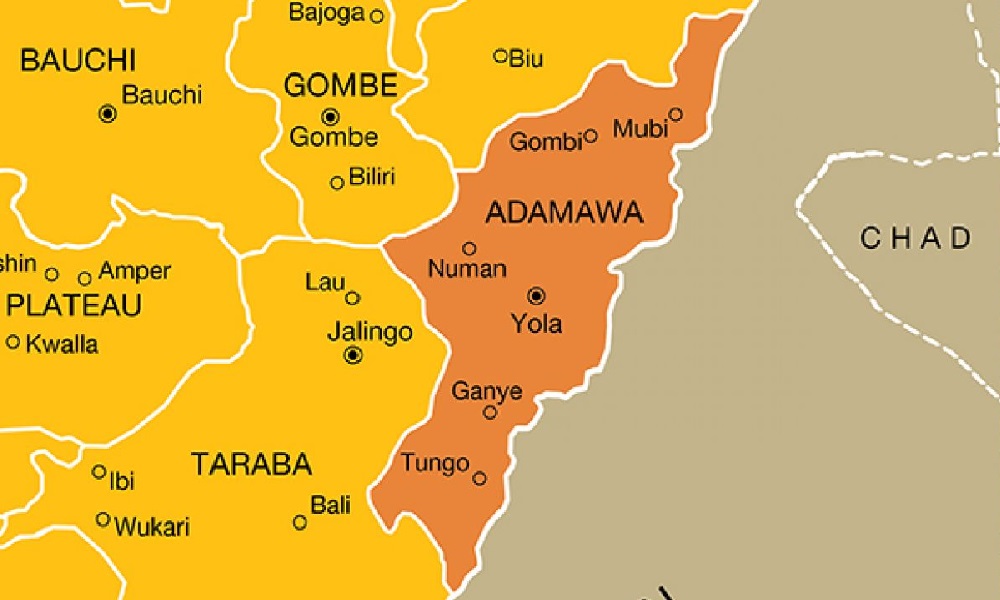
The Chamba chiefdom and Yandang ethnic nationality in Adamawa State have declared an end to political support for leaders and aspirants who are not of indigenous origin in their respective local governments.
The declaration was made during an interactive business fora with the Gongola Peoples’ Forum (GPF), which is touring local governments to inaugurate interim executives at ward and council levels.
If implemented, the stance is expected to reshape political calculations in the axis, with potential implications for prominent figures of Fulani minority extraction from the area, including former Vice President Atiku Abubakar, ex-PDP National Chairman Bamanga Tukur, and Dr. Ardo.
Speaking at meetings with GPF national officials, the two ethnic nationalities said the era of “support politics” was over, insisting it was time to take ownership of leadership in their ancestral lands.
Leaders of the groups, the largest in the Ganye electoral district, lamented what they described as decades of political missteps, arguing that their ancestors had established organized kingdoms as far back as 1750—long before the arrival of those they accused of dominating political power.
“We see no benefit in continuing to support non-indigenous leaders who treat us as subjects on our own land,” the groups said.
They commended the GPF for providing a unifying platform to mobilize indigenous nationalities across the state, describing the movement as an “unstoppable force” for reclaiming political relevance.
The meetings led to the inauguration of interim GPF executives in Toungo, Ganye, Jada and Mayo Belwa Local Government Areas.
Earlier, the forum completed a similar exercise in the Northern Senatorial District, inaugurating executives in Madagali, Michika, Mubi North, Mubi South and Maiha.
Addressing journalists last week, GPF National General Secretary, L.D. Nzadon, who led the first phase of the tour, said the organization had “no place for hate” and was not set up to fight any individual or group.
“GPF is bigger than politics, but we cannot leave our people in the hands of leaders who lack compassion,” he said.
“We are not a political party, but we will continue to work for justice and equity to ensure indigenous peoples take their rightful place in the state.”
Nzadon praised Governor Ahmadu Fintiri for creating seven chiefdoms and emirates, describing the move as bold and irreversible.
He dismissed fears of policy reversal as unfounded, insisting the new traditional institutions were permanent.
“This is not business as usual. The chiefdoms and emirates have come to stay,” he said.
He also declared the GPF’s resolve to dismantle what he termed the politics of religion and money.
“If you think money will buy votes, think twice. Our people are ready to demystify money politics,” Nzadon warned.
The GPF tour is expected to continue in the Southern and Central Senatorial Districts of the state.

PCRC Restates Media Alliance, Flags Marginalisation of Retired Female Officers

Bomb: Many escaped death on Abia church premises
CBN publishes report: shaping future of fintech in Nigeria

Edo Killings: Jibrin Shares Details of His Discussion with Okpebholo

Jail break: One of Seven Escaped Ilesha Inmates re-arrested in Lagos

Police neutralise bandit, rescue 5 kidnapped victims in Katsina
-

 News22 hours ago
Coup Attempt: I Was A Target, Supposed To Be Shot — Gen Musa
-

 News21 hours ago
Sit-at-home: IPOB, police showdown looms in S’East today
-

 News22 hours ago
‘At Least 200’ Feared Dead In DR Congo Landslide, Says Govt
-

 Sports22 hours ago
Man Utd Strike Late To Beat Fulham In EPL Thriller
-

 News21 hours ago
Scores of terrorists killed as Military foils Civilian attack
-

 Entertainment17 hours ago
Wizkid, Burna Boy, Asake to herald Afro Nation 2026 in Portugal
-

 News21 hours ago
Oil Discovery: Ogun Govt Reaffirms Jurisdiction Over Eba Island
-

 News8 hours ago
Read full welcome address of PDP BoT chairman(Photos/Video)