Home Blog Page 7

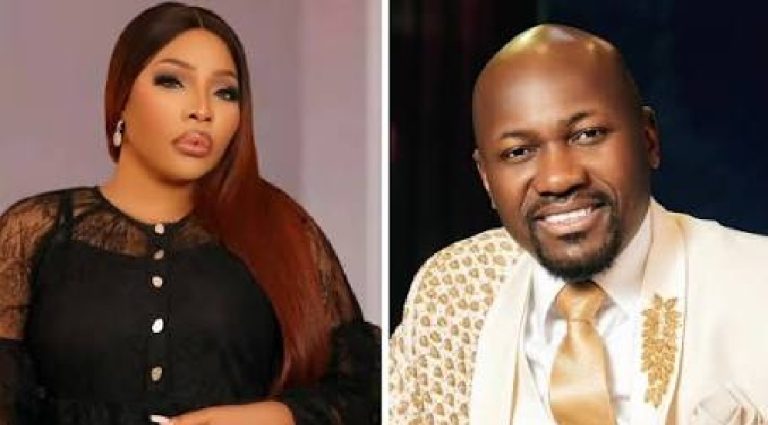
I Know A Lot, I’ll Expose You To The World – Doris Ogala Tackles Apostle Suleman

0

Nollywood actress Doris Ogala has criticized the General Overseer of Omega Fire Ministries International, Apostle Johnson Suleman, over his comments about the performance of Abia State Governor, Alex Otti.

Suleman had recently spoken positively about Otti’s administration, saying the governor could win a second term without doing much campaigning.

Ogala, who is the African Action Congress (AAC) governorship candidate in the forthcoming Abia State election, reacted to the clergyman’s comments in an Instagram post.

The actress questioned Suleman’s conduct as a pastor and challenged his assessment of developments in Abia State

Ogala also alleged that Suleman had not visited Abia State despite making public claims about the situation in the state.

She particularly disputed his claim concerning the availability of electricity in the state.

The actress further accused some people who identify as pastors of using religion to mislead members of the public instead of engaging in legitimate work.

She said: “Most people you see that call themselves pastors are lazy people. Who couldn’t work but decided to call themselves and start deceiving by claiming God called them. Some even go extra mile to involve in voodoo. Suleman Johnson, what is his work? Does that man look and behave like a pastor?

“Suleman, I know a lot that will shock the world. Forget the fact I said I don’t know you. I know a lot that happened at Protea Hotel Lagos including room numbers. How dare you come to lie that there is 24 hrs light in Abia? And you claim you were not campaigning.

“Not under my watch, I will not allow people like Johnson Suleman deceive my people any more, their target are people in diaspora. The main people living on the ground in Abia are suffering. You haven’t been to Abia and you openly affirmed Alex Oti. Suleman, it will shock you when I decide to expose you to the whole world. I’m not like the others you experienced.

The world knows I don’t lie. I speak with evidence. This is a direct attack on me and the people of Abia and it will not be tolerated. Bring your police and judiciary. I will face you head on.”

Bungudu Council Chairman, Four Others Escape From Terrorists’ Captivity In Zamfara

0

The Chairman of the Bungudu Local Government Area of Zamfara State, Nura Umar Abdullahi, and four other kidnap victims have escaped from terrorists’ captivity and been received by troops of the Joint Task Force North West, Operation FANSAN YAMMA.

The five victims escaped in the early hours of Thursday in the general area of Kaura Namoda Local Government Area of Zamfara State.

According to a statement issued by the Media Information Officer of the Joint Task Force (North West), Operation FANSAN YAMMA, Lt Col Aliyu Danja, the victims escaped during an intelligence-led military operation targeting a suspected terrorists’ location in the area.

Danja said the victims were received by troops deployed in the vicinity after regaining their freedom.

“Troops of the Joint Task Force North West, Operation FANAN YAMMA, have received and secured the Chairman of Bungudu Local Government Area of Zamfara State, Hon. Nura Umar Abdullahi, and four other kidnap victims who escaped from terrorists’ captivity in the early hours of Thursday in the general area of Kaura Namoda Local Government Area,” the statement said.

Abdullahi was abducted from his residence in Bungudu town in July 2026. The Theatre Command had previously issued a statement concerning his abduction.

The military said the victims were provided with security cover and evacuated to a military medical facility after they were rescued.

“They were provided with security cover and evacuated to a military medical facility, where they are responding to treatment and undergoing evaluation and routine debriefing,” Danja said.

The victims are expected to undergo further assessment as part of the military’s routine process following their recovery from captivity.

The Joint Task Force also disclosed that one of the five victims had already been reunited with their family, while arrangements were being made to reunite the remaining victims with their families and the Zamfara State Government.

The Theatre Command commended the victims for their conduct during their captivity and their efforts to regain their freedom.

“The Theatre Command commends the courage, resilience and determination of the victims in regaining their freedom after a prolonged period in captivity,” the statement said.

It also praised the troops involved in receiving and securing the victims following their escape.

The command described the return of the victims as “a welcome relief” to their families, residents of Bungudu Local Government Area and the wider Zamfara State.

“The return of the victims is a welcome relief to their families and the people of Bungudu Local Government Area, and Zamfara State as a whole,” the statement said.

The development comes as security forces continue military operations aimed at disrupting terrorist activities and improving security in parts of Zamfara State and the wider North-West.

The Theatre Command said troops of Operation FANSAN YAMMA would sustain clearance and dominance operations across the general area to disrupt terrorist activities and protect communities.

“Troops of Operation FANSAN YAMMA will sustain clearance and dominance operations across the general area to disrupt terrorist activities and protect communities, and remain committed to securing the safe return of any other persons still held or missing,” Danja said.

Earlier in July, SaharaReporters reported that suspected bandits abducted the Chairman of the Bungudu Local Government Area of Zamfara State, Bungudu, after attacking his residence in a late-night raid that left four security personnel dead.

The attack occurred in the Zango area of Bungudu town, less than 20 kilometres from Gusau, the Zamfara State capital.

According to residents, the gunmen stormed the council chairman’s residence, where they engaged security personnel in a fierce gun battle before abducting the chairman.

A resident, who spoke on condition of anonymity, said that the assailants killed two police officers and two vigilantes assigned to protect the chairman’s residence.

“They killed two policemen and two vigilantes, including one volunteer vigilante who had been actively helping to protect the town from bandit attacks,” the source said.

Nigerian Policemen Harass, Clash With Youths Who Confronted Trucks Carrying Lithium In Abuja Community

0

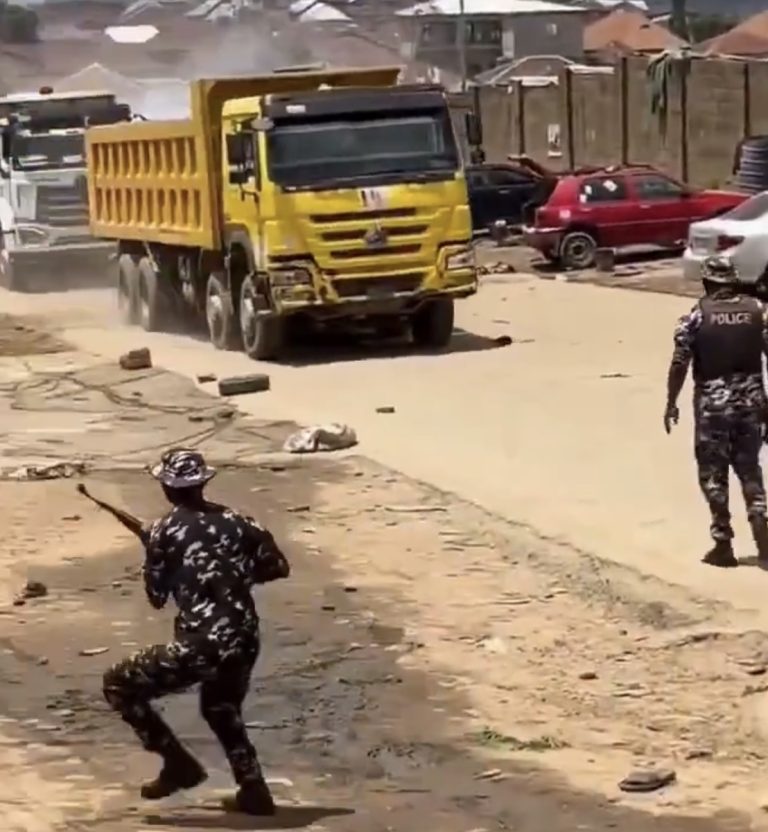
Police officers attached to the Katampe Division of the Nigeria Police Force have allegedly been caught on camera shooting at youths during a confrontation over trucks attempting to pass through Mpape community in the Federal Capital Territory (FCT), Abuja.

The incident reportedly occurred in Mpape, a densely populated hillside community where residents allegedly blocked trucks said to be transporting natural resources, including lithium.

However, it remains unclear what the trucks were carrying. Some eyewitnesses said they were transporting lithium, while others suggested they could have been carrying chippings or other materials commonly transported through the area.

A video circulating on social media and seen by SaharaReporters shows police officers with firearms drawn during the confrontation with residents.

The circumstances that led to the confrontation were not immediately clear. Eyewitness accounts indicated that some residents had blocked the trucks and prevented them from proceeding through the community.

Mpape has a major access road serving the densely populated community, meaning confrontations involving heavy-duty trucks and residents can quickly cause significant obstruction and tension.

While residents blocking trucks on the road could create a dangerous situation, concerns have also been raised over the decision by the police officers to approach the confrontation with firearms drawn.

An eyewitness who spoke about the incident said residents should not stand directly in front of moving trucks, but also questioned the manner in which the police responded to the situation.

“Two wrongs don’t make a right,” the eyewitness said, adding that police officers should not arrive at a crowded one-way community with rifles already drawn and seemingly ready to shoot.

The eyewitness said the presence of armed police officers in such a tense environment could escalate rather than de-escalate the situation.

The video did not independently establish whether the officers fired live ammunition or where the shots, if any, were directed. SaharaReporters could also not independently verify what the trucks were carrying at the time of filing this report.

The incident comes amid concerns over the movement of heavy-duty trucks transporting natural resources and other materials through communities in the FCT, particularly where residents and commercial operators share narrow access roads.

The media contacted the FCT Police Command spokesperson, Superintendent of Police Josephine Adeh, through WhatsApp messages and phone calls seeking clarification on the incident, the identity of the officers involved and whether any shots were fired.

She had not responded to the messages or calls as of the time of filing this report.

FULL LIST: Atiku unveils campaign council, names El-Rufai, Momodu, Melaye

0

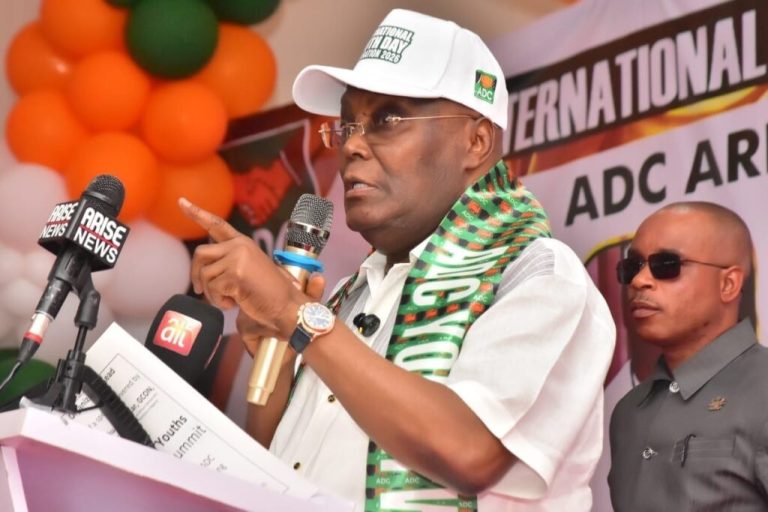
The African Democratic Congress presidential candidate, Atiku Abubakar, has approved the composition of his Presidential Campaign Council, headed by Kashim Ibrahim-Imam as chairman and Nasir El-Rufai as deputy chairman.

This was disclosed in a statement issued on Thursday by the Director, Strategic Communications of the council, Phrank Shaibu, who is also Senior Special Assistant on Public Communication to Atiku.

According to the statement, the council was structured to reflect the economic realities confronting Nigerians, including rising food prices, transport costs and shrinking incomes.

Senator Austin Akobundu was named Director-General and Campaign Manager, with responsibility for translating the council’s strategy into coordinated action.

Six Deputy Directors-General will superintend the council’s operational directorates, working alongside 30 directors assigned specific portfolios.

Campaign principals

Presidential candidate: Atiku Abubakar
Vice-presidential candidate: Rotimi Amaechi
National Chairman: Senator David Mark
Council Chairman: Kashim Ibrahim-Imam
Deputy Chairman: Nasir El-Rufai
Director-General/Campaign Manager: Senator Austin Akobundu

Campaign Advisory Board

Chairman: John Oyegun
Deputy Chairman: Lawal Batagarawa
Secretary: Eyitayo Jegede, SAN
Members: Senator Ireti Kingibe, Hajia Naja’atu Mohammed

Policy Team

Chairman: Mohammed Hayatudeen
Deputy Chairman: Prof. Mohammed Sagagi
Members: Dr Kingsley Moghalu, Prof. Mustapha Akinkunmi, Senator Abdul Ningi
Secretary: Aare Aremijoye

Senior Campaign Advisors

Aminu Waziri Tambuwal, Abdulfatah Ahmed, Emeka Ihedioha, Adamu Maina Waziri, Senator Ehigie Uzamere, Senator Felix Ogunwale, Senator Patricia Akwashiki

Campaign Management Committee

Director-General/Campaign Manager: Austin Akobundu
Head, Research and Documentation: CID Maduabum
Head, Legal Services: Shaibu Enejo Aruwa, SAN

Administration Directorate
Deputy Director-General: Yusuf Suleiman. Units: Administration (Dr Ajuji Ahmed), General Services (Abubakar Kanike), Special Duties (Dr Nicholas Msheliza), Finance and Accounts (Abdussamad Dasuki), Logistics (Prof. Gold Emmanuel), Head of Protocol (Prof. Onyi Nwagbara), Medical Services (Dr Amina Mohammed).

Operations Directorate
Deputy Director-General: Chief Ralph Nwosu. Units: Organisation and Field Operations (Abdullahi Maibasira), Strategy and Planning (Mohammed Kumalia), Security (retired Gen. Kabiru G. Nadama), Diaspora and Foreign Operations (Nnena Ukeje). Intelligence head left blank on the chart.

Media and Communications Directorate
Deputy Director-General: Dele Momodu. Units: Strategic Communication (Phrank Shaibu), Media and Publicity (Kola Ologbondiyan), Branding (Ladan Salihu), Digital and Online Media (Moji Rhodes-Vivour), Content Development (David Iyofor). Spokespersons: Kenneth Okonkwo, Keturah King, Nana Kazaure, Dr Uche Diala, Alh. Dahiru Maishanu. Campaign MC: Chief Charles Ojugbana.

Contact and Mobilisation Directorate
Deputy Director-General: Senator Dino Melaye. Units: Mandate Protection (Solomon Dalung), Women Mobilisation (Naomi Labari), Persons with Disabilities (Dr Chike Okogwu), Stakeholder Engagement (Oladimeji Fabiyi), Youth Mobilisation (Balarabe Rufai).

Diversity and Support Groups Directorate
Deputy Director-General: Salihu Tanko Yakasai. Units: Support Groups (Aliyu Audu), NGOs and Civil Society Organisations (Rhoda Sanda), Business and Professional Bodies (Hafiz Bayero), Gender Issues (Zainab Buba Galadima), Entertainment and Creative Industry (Dr Don Pedro Obaseki).

Technical and Systems Directorate
Deputy Director-General: Lauretta Onochie. Units: Election Operations and Management (Chille Igbawua), Polling Unit Operations (Ezeokolie Blessing Jack), Voter Intelligence (Dr Alex Adum), Monitoring and Evaluation (Prof. Ola Olateju), Situation Room (Chief Teddy Ezeaghauche).

Shaibu quoted Atiku as saying the council’s success would be measured by how clearly it addressed the cost of living, unemployment, insecurity and declining purchasing power.

Nigeria-EU Push to Seal Long-delayed Readmission Deal

0

By Gloria Ikibah

Nigeria and the European Union have renewed efforts to conclude the long-pending EU-Nigeria Re-Admission Agreement as both sides seek to deepen cooperation on migration, legal mobility and security.

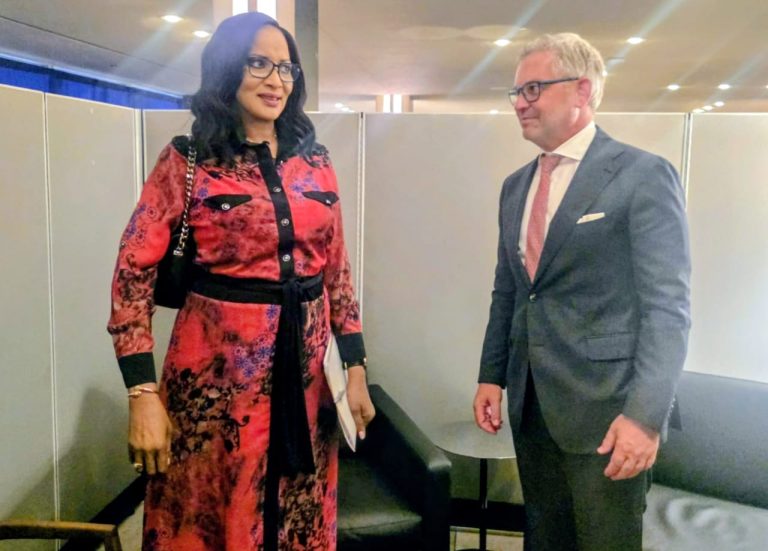
The issue featured prominently during a meeting between the Minister of Foreign Affairs, Ambassador Bianca Odumegwu-Ojukwu, and the EU Commissioner for Internal Affairs and Migration, Magnus Brunner, on the sidelines of the 81st United Nations General Assembly in New York. The  .

In a statement by the Nigerian Foreign Ministry the proposed agreement which was initiated in 2016, was also extensively discussed during the eighth Nigeria-EU Ministerial Dialogue in March 2026.

Brunner stressed the importance of concluding the agreement, saying its finalisation would provide a basis for broader cooperation between Nigeria and the EU on migration.

Odumegwu-Ojukwu, however, emphasised that any migration partnership should address Nigeria’s development interests, including support for the reintegration of returnees, infrastructure development and expanded legal pathways for Nigerians seeking opportunities abroad.

She also stressed the need for structured and lawful mobility opportunities for Nigeria’s large and youthful population.

The EU delegation indicated that Nigeria’s concerns had been incorporated into a proposed broader migration and security cooperation framework.

The framework is expected to cover strategic dialogue on talent partnerships, legal migration pathways, reintegration of returnees, border management and support from the European Border and Coast Guard Agency, Frontex.

The proposed cooperation will also explore an arrangement for information exchange with Europol to strengthen Nigeria’s capacity to combat transnational organised crime.

Brunner said the EU was interested in developing legal migration pathways through talent partnerships, which could help address skills shortages in Europe while creating opportunities for Nigerian professionals.

The initiative is also expected to address concerns surrounding brain drain by creating more structured opportunities for Nigerians to work abroad while maintaining links with their home country.

The two sides further discussed cooperation against irregular migration, with Brunner indicating that progress in tackling irregular migration could help create greater opportunities for legal migration.

The European commissioner expressed interest in continuing discussions during a proposed visit to Abuja in November 2026, although the specific date is yet to be agreed by both sides.

The renewed engagement comes as the EU continues work towards formalising the readmission agreement. EU Council documents published in July 2026 also showed proposals for the signing and conclusion of an agreement with Nigeria covering the return and readmission of people who no longer meet the conditions for entry, presence or residence in the territories of either party.

The Nigeria-EU discussions therefore seek to address irregular migration and return while also expanding legal mobility, reintegration assistance, border management, security cooperation and opportunities for Nigerian professionals and young people.

STOP DIALING AROUND US IN THE MINISTRY OF FOREIGN AFFAIRS: Nigeria Is Hospitable, Not Helpless

0

By Ambassador Sola Enikanolaiye

In diplomacy, process is as important as substance.

It is in this spirit that I wish to draw attention to a growing practice in Abuja which, though often well-intentioned, runs contrary to established diplomatic procedure and the spirit of mutual respect that guides our relations.

It has become increasingly common for some Embassy officials, rather than transmitting a Note Verbale to the Ministry of Foreign Affairs as required by international law and custom, they reach out directly by telephone to the State House, Honourable Ministers, or heads of agencies to pursue official matters, thereby bypassing the Ministry entirely.

At a recent meeting where I praised the ASEAN nations in Nigeria for upholding diplomatic protocol in this regard, I noted that adherence to proper channels strengthens, rather than hinders, partnershipI stressed: “Going forward, strict compliance with diplomatic channels will be expected…”

This was shortly before the important interactive session we had with the Diplomatic Community on Thursday 17th September 2026, when the Honourable Minister of Foreign Affairs, Ambassador Bianca Odumegwu-Ojukwu, convened her first formal briefing with the Corps since assuming office as substantive Minister.

Her message was clear, candid and timely. I associate myself fully with it: The Ministry of Foreign Affairs is your diplomatic home. Our doors and appropriate channels remain open, but established diplomatic channels must be respected.

Government has simplified our diplomatic operations
It is important to acknowledge that the Federal Government has significantly simplified diplomatic operations in Nigeria to make the work of missions easier and to avoid any vacuum in representation.

Today, a newly appointed Ambassador or High Commissioner is allowed to commence official functions and operate fully as soon as he or she submits the copie d’usage_ — the working copy of Letters of Credence — to the Ministry of Foreign Affairs, without waiting for the formal presentation to Mr. President.

The new envoy is therefore at liberty to perform his or her duties, engage Ministries, Departments and Agencies and conduct bilateral matters, save only for events and ceremonies that would bring such envoy before Mr. President, until after the formal presentation of Letters of Credence.*

This facilitation was granted in good faith and in trust. That trust should be reciprocated with strict adherence to protocol.

The Vienna Convention Is Clear
As custodians of diplomacy, we are all bound by the Vienna Convention on Diplomatic Relations (1961):

Article 41(1):“…it is the duty of all persons enjoying such privileges and immunities to respect the laws and regulations of the receiving State. They also have a duty not to interfere in the internal affairs of that State.”

Article 41(2):“All official business with the receiving State, entrusted to the mission by the sending State, shall be conducted with or through the Ministry for Foreign Affairs of the receiving State or such other ministry as may be agreed.”

There is no exception for influence, familiarity, or access. To bypass the Ministry of Foreign Affairs is to violate a treaty we all signed.

The Ministry As A Bridge, Not An Obstacle
As the Honourable Minister emphasized during her briefing, and I reiterate:

The Ministry of Foreign Affairs remains the official channel of communication between Diplomatic Missions and the Government of the Federal Republic of Nigeria, including the Presidency, Federal Ministries, Departments and Agencies and other Government institutions.*

Missions must ensure that official communications and requests intended for these institutions are routed through the Ministry. This is not intended to impede access or create unnecessary bureaucracy. Rather, it ensures proper coordination, consistency and effective follow-up. The Ministry provides the institutional memory, diplomatic expertise and policy context necessary to support such engagements.

Bypassing established channels risks conflicting information, duplication and avoidable misunderstandings.

There is also an important principle of reciprocity. Just as Nigerian Missions abroad are expected to respect the diplomatic channels of their host governments, we expect the same consideration for Nigeria’s institutions.

As Amb. Bianca aptly put it: “The Ministry is not an obstacle between you and the Nigerian Government; we are your bridge to the Nigerian Government.”

The Abuse of Diplomatic Plates Must End
Equally worrisome is the increasing use of diplomatic number plates by unauthorized individuals who are not entitled to them under the Convention. This is a clear breach of Article 41(1).

Diplomatic plates are issued in trust by the receiving State to facilitate legitimate mission functions, not as a means to evade traffic regulations or law enforcement. This abuse creates security risks and brings the diplomatic corps into disrepute. It must stop.

Why This Backdoor Diplomacy Is Dangerous
Respect is reciprocal. If you want Nigeria’s diplomats to respect protocol in your capitals, you should respect protocol in ours.

1. Not doing so undermines the President: When embassies lobby the State House behind the MFA’s back, they deny the President the benefit of vetted, professional foreign policy advice.

2. It creates policy confusion: If a mission secures a phone promise from an MDA while the MFA’s official position differs, which one stands? The result is embarrassment for everyone.

3. It is a national security threat: Bypassing the MFA means bypassing security vetting. Sensitive requests slip through informal calls.

4. It breeds corruption of process: Backdoor calls are used to push positions and interests that would not survive transparency and glinteragency scrutiny.

_5. It insults our national institutions:The MFA is not a post office. It is the sole legal gateway for state-to-state communication.

_6. It destroys reciprocity:The precedent we allow in Abuja becomes the treatment our envoys will receive abroad. If we accept bypassing the MFA to lobby the Villa in Abuja, should Nigeria expect to bypass the Presidency and Palaces of other sovereigns? The answer, in every capital, is No.

7. It erodes trust: When backdoor promises collapse — as they often do — missions blame Nigeria for “not keeping its words,” when no official word was ever given.

8. It exposes senior officials to manipulation: A direct call presents only one side of the story, without history, legal context, or institutional memory. The MFA exists to provide that balance.

Nigeria’s Foreign Policy Direction and Our Commitment
As Amb Bianca Ojukwu outlined, the foreign policy direction of the Administration of President Bola Ahmed Tinubu, GCFR, is anchored on the four Ds: Demography, Development, Democracy and Diaspora.*

Through Demography, we seek to harness the potential of our youthful population through education, technology, innovation, entrepreneurship and skills development. Development places economic diplomacy at the heart of our international engagement, with emphasis on trade, investment, infrastructure, agriculture, energy and technology. Democracy reflects our commitment to constitutional governance, strong institutions and the peaceful resolution of political differences, while Diaspora recognizes Nigerians abroad as important partners and assets in investment, knowledge transfer and national development.

These pillars place Nigeria and Nigerians at the center of our foreign policy.

Our approach is therefore Nigeria-centered, Africa-conscious and globally engaged.* We remain committed to our neighbours, ECOWAS and Africa, while engaging constructively with the wider international community.

Nigeria will equally continue to exercise strategic autonomy in its international relations. We seek friendship and cooperation with all nations, but our positions and partnerships will be guided by our national interest, mutual respect, reciprocity and our international obligations. Strategic autonomy does not mean isolation; it means preserving Nigeria’s sovereign right to determine the relationships and positions that best serve our people, Amb Bianca Odumegwu-Ojukwu pointed out.

In the same manner she noted that the Ministry is also paying renewed attention to outstanding Joint Commissions and Bi-national Commissions*, some of which have remained inactive due to administrative and logistical challenges. We intend to work with Missions to revitalize these mechanisms and use them more effectively to advance cooperation in trade, investment, security, education, technology, health, agriculture and other areas of mutual interest.

Ultimately, the strength of our diplomatic relationships should be measured not only by the warmth of our engagements, or the number of visits by Heads of State to Nigeria but by the tangible benefits our engagement ms produce for our people.

Nigeria Is Hospitable, Not Helpless
Nigeria is warm, generous, and open for partnership. But our hospitality must not be mistaken for weakness. Nigeria remains a willing, capable and strategic partner.

Do not bypass the Ministry of Foreign Affairs to lobby the Villa.

My Ministry’s job is to make your work easy. Use us.

The proper channel remains: Embassy → Note Verbale → MFA → MDA/Presidency → MFA → Embassy.

Under President Bola Ahmed Tinubu’s Renewed Hope Agenda, Nigeria is open for business. But openness requires order.

Drop the phone. Pick up the pen. Write the Note Verbale.

Ambassador Sola Enikanolaiye
Ministry of Foreign Affairs, Federal Republic of Nigeria

Foreign Policy Begins at Grassroots, Enikanolaiye Tells LG, Traditional Rulers 

0

By Gloria Ikibah

Minister of State for Foreign Affairs, Ambassador Sola Enikanolaiye, has said Nigeria’s grassroots development and mobilisation are central to the country’s foreign policy projection and international image.

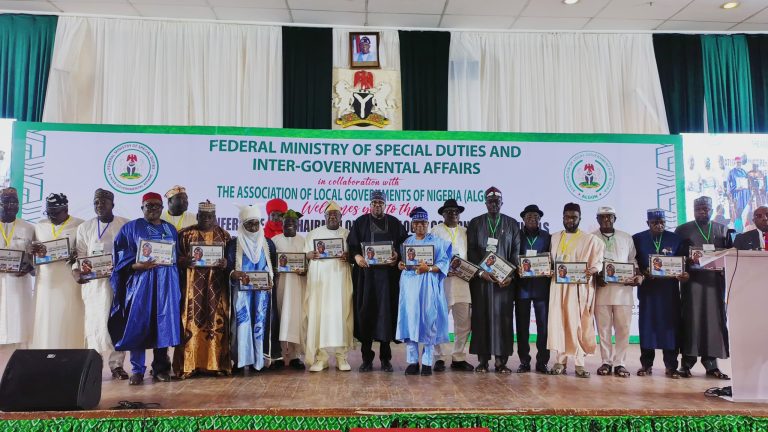
The Minister stated this on Tuesday in Abuja while delivering a goodwill message at the 2026 maiden National Conference of the 774 Local Government Chairmen and Chairmen of Traditional Rulers’ Councils at the State House Banquet Hall.

The conference, convened by the Federal Ministry of Special Duties and Inter-Governmental Affairs, was themed, “Cascading President Bola Ahmed Tinubu’s Renewed Hope Agenda to the Grassroots.”

Enikanolaiye said policies implemented at the local level could have implications for Nigeria’s image and relations with other countries.

He said: “For us in the Ministry of Foreign Affairs, we believe that every aspect of our government policy at home has implications for foreign policy and Nigeria’s international relations. Which is why we are interested in everything that goes on domestically because foreign policy is also a projection of domestic policy. And in this context, grassroots mobilization and development is critical to what we do abroad”.

He argued that inclusive governance should be built from the grassroots upwards, rather than imposed from the top, while describing traditional rulers as an important component of Nigeria’s governance structure.

Enikanolaiye commended President Bola Ahmed Tinubu for approving the conference and for recognising the roles of local governments and traditional rulers in the ongoing constitutional amendment process.

Linking his remarks to President Tinubu’s four-D foreign policy doctrine of demography, development, democracy and diaspora, the minister said the success of the Renewed Hope Agenda would ultimately depend on its impact at the grassroots.

On demography, he said Nigeria’s youthful population across the 774 local government areas represented a major asset that could strengthen the country’s position globally if properly empowered.

“On Demography, Nigeria’s youth in the 774 LGAs is our greatest global asset – empower the LGAs, convert numbers to power,” he said.

On development, Enikanolaiye said productive local governments were essential to achieving Nigeria’s economic ambitions, citing agriculture, mineral resources and major infrastructure projects as areas with potential to attract foreign investment.

“On Development, a $1 trillion economy is impossible without productive LGAs. With agriculture booming, 44+ minerals across 500 sites, and massive infrastructure like the Lagos-Calabar and Sokoto-Badagry highways, grassroots stability is what attracts FDI,” he stated.

The minister also linked stronger local governance to democracy, saying empowered local governments and traditional institutions would demonstrate the practice of participatory governance.

“Speaking On Democracy, empowering LGAs and traditional rulers proves Nigeria practises real, bottom-up democracy,” he said.

On the diaspora component of the doctrine, Enikanolaiye said improved conditions at home could encourage Nigerians living abroad to invest in the country and promote a positive image of Nigeria internationally.

“On Diaspora, when home is secure and working, the Diaspora will invest and sell the Nigerian story with confidence,” he noted.

He said the Ministry of Foreign Affairs would support the foreign policy component of grassroots development through investment matchmaking via Nigeria’s 110 diplomatic missions abroad and partnerships with Nigeria’s international partners.

The ministry, he added, would also leverage the community-level knowledge of traditional rulers in support of national security.

In a separate goodwill message, the Head of the Civil Service of the Federation, Mr Olumuyiwa Enitan Abel, represented by Dr Vitalis Obi, said local governments remained the closest tier of government to the people and were central to service delivery.

He also described traditional rulers as important actors in peacebuilding and reaffirmed the commitment of the civil service to accountability and measurable results.

Earlier, the Permanent Secretary, Special Duties and Inter-Governmental Affairs, Dr Onwusoro Maduka Ihemelandu, said the government lacked timely and verifiable data on interventions at the local government level.

He said the ministry had consequently developed an E-Tracking Framework to monitor projects, including their locations, values, timelines and verification status.

*PIGD Calls For United Response To Plateau Violence*

0


The National Coordinator of the Plateau Initiative for Growth and Development (PIGD), Nengak David, has appealed to residents to remain vigilant and help prevent further violence following renewed attacks in the state.
David urged people with credible information about threats, armed movements or plans for reprisals to alert the police or trusted community leaders promptly, without putting themselves in danger.
“Vigilance means recognising a threat and reporting it early. Tell the authorities where and when you saw it, and give only what you know firsthand. Do not approach armed people or attempt to confront them,” he said.
The appeal follows attacks in Barkin Ladi and Mangu. Plateau police confirmed the deaths of a senior officer and three civilians in separate incidents in Barkin Ladi, while a community group reported the killing of three men in Mangu.
David called on residents to reject reprisals and resist attempts to blame entire ethnic or religious communities for crimes committed by individuals.
“Every killing must be investigated, and those responsible must answer for it. Another innocent family must not suffer because someone chooses revenge or blames a whole community,” he said.
He urged traditional rulers, religious leaders, women and youth representatives to bring emerging disputes to trusted mediators before tensions escalate. The United Nations Development Programme has identified local mediation and early warning as ways communities can help prevent conflict.
The PIGD coordinator also cautioned against circulating old videos, unverified casualty figures and inflammatory claims. “Before forwarding a frightening message, check when and where it was recorded. A false claim can spread fear and provoke harm long after the truth catches up,” he said.
David asked residents of Barkin Ladi, Bokkos and Mangu to observe the state’s 6 p.m. to 6 a.m. curfew and motorcycle ban, announced to remain in effect until further notice. He also appealed for food, shelter and other assistance to reach affected neighbours through trusted local groups, regardless of their background.
“Residents can share information and refuse provocation. Government, in turn, must act on credible reports, protect those who come forward and investigate every killing fairly,” David said.

2027: Tinubu’s good governance ‘ll secure FCT victory – Wike

0


Minister of the Federal Capital Territory (FCT), Nyesom Wike, has expressed confidence that the visible achievements of President Bola Tinubu’s administration will secure victory for the ruling party, All Progressives Congress (APC) in the FCT during the 2027 general elections.

Wike, who stated this after inspecting the ongoing Apo-Karshi and Bwari-Kubwa road projects, stressed that good governance remains the most reliable metric for political success.

He said that the administration’s performance in infrastructure delivery, particularly in long-neglected satellite towns, leaves the opposition with nothing to offer voters beyond empty stories.

He argued that the tangible results on the ground make an unassailable case for President Tinubu’s re-election, including Sen. Philip Aduda (FCT) and House of Representatives candidate John Gabaya (Bwari Federal Constituency).

He said; “If good governance is a barometer to measure whether a government has succeeded or not, then we have nothing to fear.

“Now, the Tinubu administration has come and it’s not only listening to you, it’s not only caring for you, it’s solving your problems. Why will they want to change their mind?”

Dismissing opposition rhetoric, the minister said; “This is the campaign. The people who will come, what will they come with?

“They will tell them stories. But we have not come with stories, we have come with facts, verifiable facts. I can beat my chest, I can close my eyes and go home and sleep with my two eyes closed, that Tinubu will emerge. I have no fear at all.”

The minister pointed out that Tinubu’s Renewed Hope Agenda has shifted development priorities beyond the city centre to directly touch satellite communities.

“The Renewed Hope administration has redefined infrastructure delivery as far as FCT is concerned, not just within the city, but also within the satellite towns.

“We thank God Almighty that has given us a President who has come to listen and to change the narrative that development must not only be concentrated within the city centers, but also spread in the satellite towns,” he said.

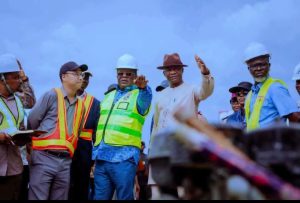
Speaking on the projects, Wike said the long-delayed Apo-Karshi road project was on course for completion in November.

He also said that the dualisation of the Bwari-Kubwa road, where residents turned out in large numbers to welcome his delegation, would also be delivered in December.

“Work on site is set to intensify by the first week of October as seasonal heavy rains abate,” he said.

NDLEA busts Nigerian-Mexican meth cartel, docks kingpins over Enugu clandestine lab(Photos)

0

. Dismantling the syndicate is another proof transnational drug networks won’t have any space to operate in Nigeria, says Marwa

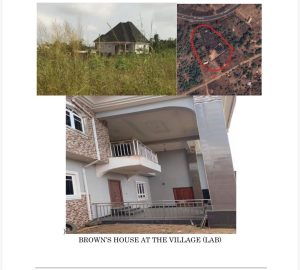
The National Drug Law Enforcement Agency (NDLEA) has once again struck a decisive blow against transnational organised crime with the dismantling of a Nigerian-Mexican drug cartel operating a clandestine methamphetamine laboratory in Eziama community in Obeagu, Awgu Local Government Area of Enugu State.

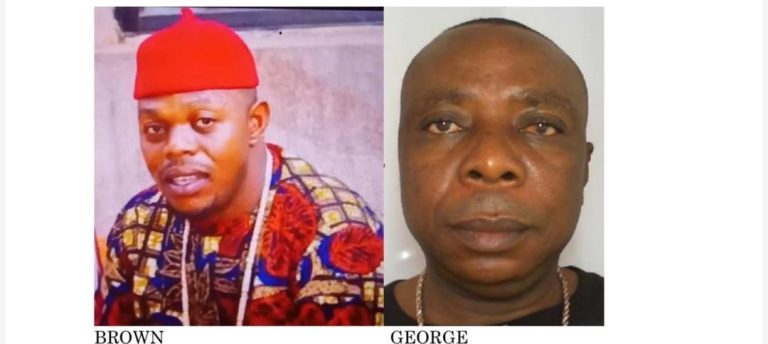
Two kingpins: 45-year-old Chukwu Obumneme Christopher, alias Brown, and 60-year-old Chukwu Georginus Monday, alias George, were arrested in connection with the operation of the meth lab in partnership with a notorious Mexican drug cartel member, Rodriguez Villanueva, based in Mexico City, Mexico, after several months of intelligence and surveillance on the syndicate.
As a result, they were arraigned before Hon. Justice Mabel Taiye Segun-Bello of the Federal High Court, Enugu Judicial Division, on a five-count charge bordering on conspiracy, the organisation, management and financing of a Drug Trafficking Organization, and unlawful possession of precursor chemicals used in methamphetamine production, contrary to the NDLEA Act. After their plea, Justice Segun-Bello has now scheduled their trial for 21st October 2026, following an application by the Agency for an accelerated hearing.

Also named in the charge, and currently at large, are Uchenna, alias Uche; Celestine Ikemefuna Iwuchukwu; and Rodriguez Villanueva, who is a notorious member of a Mexican drug cartel.

Investigations by a Special Operations Unit (SOU) of NDLEA revealed a sophisticated, transnational operation by the Nigerian-Mexican cartel. Surveillance activities by NDLEA between 1st and 4th December, 2025, tracked Brown’s movements between Lagos, Enugu and Anambra States, ultimately leading operatives to a compound in Obeagu where a clandestine laboratory capable of producing methamphetamine in commercial quantities was uncovered. The lab, fitted with improvised reactors and distillation apparatus, mirrored similar facilities recently dismantled in Ogun, Oyo and Ebonyi.

A search of the premises led to the recovery of vast quantities of precursor chemicals, including 690 litres of methylamine, 1,000 litres of isopropyl alcohol, 300 litres of hydrochloric acid, 290 litres each of toluene and acetone, 400 litres of liquid sodium hydroxide, 125 kilograms of N-phenylacetamide, 414 kilograms of lead acetate, and 769.6 kilograms of tartaric acid, among other controlled substances, a haul consistent with a high-potency, P2P-based methamphetamine manufacturing operation.

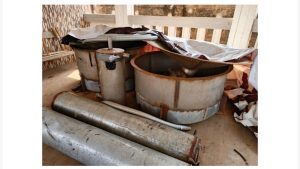
A related search of George’s family residence yielded eight large fuel tanks, four commercial gas burners, four dehydrators, and 11 kilograms of ephedrine, further underscoring the scale of the cartel’s operations.
Reacting to the development, Chairman/Chief Executive of the NDLEA, Brig. Gen. Mohamed Buba Marwa (Rtd), reaffirmed the Agency’s unwavering resolve to track down every fleeing suspect connected to the cartel, and ensure that they all face the full weight of the law.

He
commended all NDLEA officers involved in the operation for their professionalism and doggedness in cracking yet another international drug syndicate. He described the Enugu lab bust as further proof that Nigeria will not be allowed to become a haven for transnational drug cartels, warning that the Agency’s intelligence-driven operations and international partnerships would continue to close every loophole exploited by drug barons, whether local or foreign. He reiterated his charge to all NDLEA personnel to sustain the momentum of relentless enforcement until the nation is rid of the scourge of illicit drug production and trafficking.

MURIC Faults NMDPRA Over 830,000-Tonne Petrol Import Approval

0


The Muslim Rights Concern (MURIC) has criticised the Nigerian Midstream and Downstream Petroleum Regulatory Authority (NMDPRA) for approving the importation of 830,000 tonnes of Premium Motor Spirit (PMS) in the fourth quarter of 2026.

MURIC described the approval as unnecessary, wasteful and counterproductive, arguing that greater priority should be given to Nigeria’s domestic refineries.

The organisation made its position known in a statement signed by its Executive Director, Prof. Isiaq Akintola, and made available to journalists on Thursday.

NMDPRA recently approved the importation of 830,000 tonnes of PMS for the fourth quarter of 2026. However, MURIC said the decision was difficult to justify amid increased domestic refining capacity, particularly with the operations of the Dangote Refinery.

Akintola urged the petroleum industry regulator and other relevant government agencies to work closely with local refineries and reduce the country’s reliance on imported refined petroleum products.

According to him, continued importation could undermine investments in Nigeria’s refining sector and frustrate efforts to achieve greater domestic fuel production.

“We expect NMDPRA and all other government agencies in the petroleum industry to cooperate with our local refineries. The importation of refined fuel should stop forthwith,” he said.

The group argued that Nigeria should prioritise locally refined petroleum products as part of efforts to strengthen the domestic economy and maximise investments in the country’s refining infrastructure.

“The Downstream Petroleum Regulatory Authority, NMDPRA, has approved 830,000 tonnes of Premium Motor Spirit, PMS, imports for the fourth quarter of 2026 despite ample evidence of petrol self-sufficiency in the country with the presence of local production efficacy courtesy of Dangote Refinery.

“MURIC considers this move as unnecessary, wasteful, counterproductive, regressive and unpatriotic. We therefore condemn it in the strongest terms,” the statement added.

Court nullifies Pantami’s ticket, orders fresh PDP guber primary in Gombe

0


A Gombe Federal High Court has ordered the Peoples Democratic Party, PDP, to conduct a fresh primary election for its governorship ticket in Gombe State.

Justice Amina Aliyu Mohammed gave the order while ruling on a suit filed by Usman Aliyu Garry to challenge the emergence of Prof. Isa Ali Pantami as the PDP governorship candidate in the state.

Garry had challenged Pantami’s emergence after the party announced him as its sole candidate on June 26, 2026, arguing that the required primary election was not conducted.

Pantami, who was a gubernatorial aspirant in the All Progressives Congress, APC, had defected to the PDP after the APC settled for Jamilu Gwamna as its consensus candidate in Gombe.

Pantami subsequently secured the PDP ticket through voice affirmation during the party’s governorship primary held in May.

But in its judgment delivered on Thursday, the court ordered the PDP to conduct a fresh primary election in Gombe State, in accordance with the party’s guidelines and relevant electoral laws.

ADC Rivers guber candidate, Ibraye dumps party, says 2027 tickets on quicksand

0


ADC Rivers governorship candidate, Ibraye dumps party, says 2027 tickets on quicksand
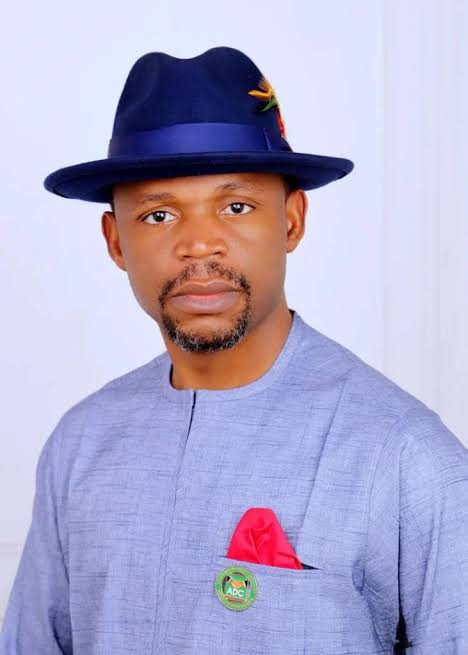
The 2023 governorship candidate of the African Democratic Congress (ADC) in Rivers State, Dr Tonte Ibraye, has resigned from the party, citing concerns over its internal leadership crisis and the foundation of its 2027 electoral process.

Ibraye announced his resignation in a letter dated Thursday and addressed to the ADC Ward Chairman in Degema Ward 16, Bille.

He said the party’s internal leadership crisis, particularly the dispute surrounding the David Mark-led faction, had made it impossible for him to remain a member.

According to him, he had remained committed to the party’s principles of internal democracy, fairness and respect for legitimate structures, but recent developments had undermined those values.

Ibraye accused some new members of attempting to take over legitimate party structures across the country despite ongoing legal disputes over the party’s leadership.

He warned that allowing a disputed leadership to determine candidates for the 2027 elections could create problems for those seeking office on the party’s platform.

“The continued attempt by a disputed leadership to determine ADC candidates for the 2027 elections raises questions about the legitimacy and stability of such candidatures,” he said.

He added that political tickets emerging from the process were being built “on quicksand rather than solid ground.”

The former governorship candidate argued that no political movement could build a credible future while its internal foundation remained unsettled.

Ibraye also criticised the broader opposition, saying it had focused more on removing President Bola Tinubu than presenting Nigerians with a clear plan for governance.

“I have therefore decided that I can no longer remain on what I consider a sinking political ship,” he said.

He said he would begin consultations with his supporters, political associates and political leaders across the 23 local government areas of Rivers State to determine his next political move.

Ibraye thanked ADC members and supporters who had worked with him over the years.

He added that his resignation would not change his commitment to the development of Rivers State and Nigeria or his belief in accountable and people-centred leadership.

Niger Bridge: Works minister directs workers to bring all ads down to be replaced with Tinubu’s photos

0


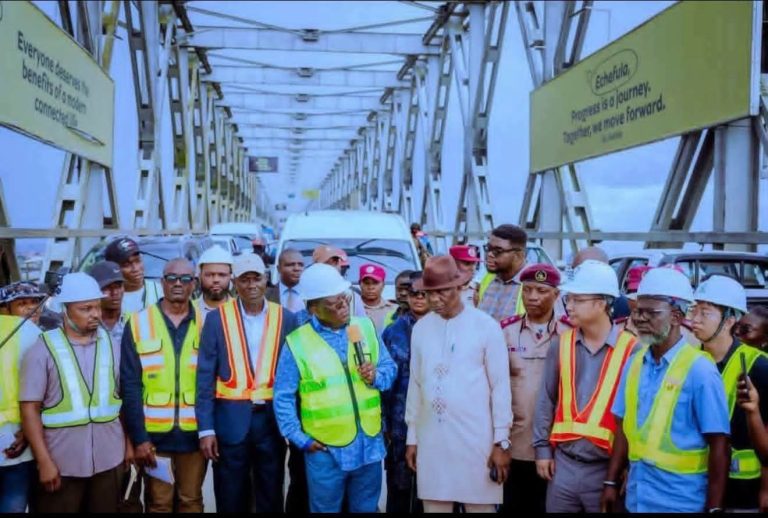
The Federal Government is repairing the First Niger Bridge to restore its structural integrity, but Works Minister David Umahi has introduced a political dimension to the rehabilitation: President Bola Tinubu’s photographs are to adorn the bridge once the engineering works are completed.

Umahi, who inspected the bridge linking Onitsha in Anambra State to Asaba in Delta State, directed the removal of illegal advertisements from the public infrastructure, while saying the cleared spaces would, “for now,” carry photographs of President Tinubu.

The directive has immediately raised questions over the distinction between prohibited commercial displays and politically favourable imagery on public infrastructure.

If unauthorised advertisements are considered an improper use of the bridge, the question is whether presidential photographs require a different regulatory specification simply because they carry the image of the nation’s president.

The issue is particularly striking because the bridge is currently undergoing emergency structural intervention after vandals removed critical components, including bolts, nuts and portions of its expansion-joint steelwork.

The bridge was closed to vehicular traffic on September 7, 2026, to allow contractors to execute the emergency works. The rehabilitation includes removal of the deteriorated asphalt surface, installation of a new approximately 40-millimetre wearing course, replacement and repair of damaged structural components, and installation of solar streetlights and CCTV systems.

The original September 21 reopening target was pushed back by a week after persistent rainfall disrupted construction activities and affected some completed sections.

Following his September 23–24 inspection, Umahi said the bridge would reopen next week, subject to completion of critical works and safety certification.

That safety-first position is consistent with basic civil-engineering logic: a bridge cannot be reopened merely because a political or administrative deadline has arrived. Structural integrity, load capacity, expansion-joint performance, carriageway condition and overall safety must determine when traffic resumes.

For now, motorists have been diverted to the Second Niger Bridge through Obosi.

But while engineers are calculating loads and replacing compromised components, another kind of load is being placed on the public infrastructure – the political symbolism of presidential imagery.

The First Niger Bridge is not merely another transport structure.

Built by the French construction company Dumez following feasibility studies by Netherlands Engineering Consultants (NEDECO), the approximately 1,404-metre steel bridge was constructed principally between 1964 and 1965 and opened to traffic in December 1965.

It was commissioned by then Prime Minister Sir Abubakar Tafawa Balewa shortly before the political crisis that culminated in his assassination in January 1966.

The bridge subsequently endured the Nigerian Civil War, during which it was partially destroyed, before being repaired and returned to service.

For decades, it has remained one of Nigeria’s most important east-west transport corridors, carrying enormous volumes of commercial and passenger traffic between the South-East and South-South.

Its engineering history is therefore one of endurance, reconstruction and continuous maintenance.

But the current controversy is not about steel fatigue, asphalt failure or expansion-joint displacement.

It is about where public infrastructure ends and political messaging begins.

Umahi’s position creates an unusual visual equation: illegal advertisements are to be removed, yet the President’s photographs are to occupy the resulting space.

That distinction may require more explanation than the bridge’s expansion joints.

A public bridge is designed to carry traffic – not political branding. Its structural drawings specify dead loads, live loads, wind loads and safety factors; they do not ordinarily contain a political billboard schedule.

The government may legitimately determine what can be displayed on federal infrastructure. But where one category of display is removed as illegal and another is permitted, the regulatory basis for that distinction becomes a legitimate matter of public scrutiny.

The engineers may be repairing the bridge’s physical load-bearing system. The government may now have to explain the political load it is asking the same bridge to carry.

BRICS: International Journalists Ring Closing Bell at Historic Bombay Stock Exchange

0

By Gloria Ikibah

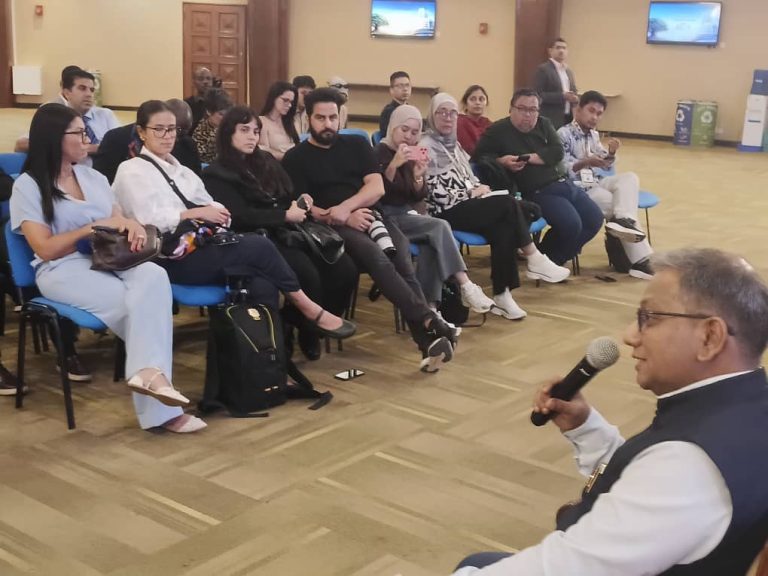
A delegation of international journalists has been given the rare honour of ringing the market-closing bell at the Bombay Stock Exchange (BSE), bringing to a close a familiarisation visit to Asia’s oldest stock exchange.

The symbolic ceremony was led by BSE Managing Director and Chief Executive Officer, Sundararaman Ramamurthy, who hosted the visiting media representatives at the exchange’s historic headquarters in Mumbai.

The bell-ringing followed a briefing during which Ramamurthy traced the 151-year-old institution’s remarkable journey from its beginnings under a banyan tree to its emergence as one of the world’s leading stock exchanges.

The journalists were also taken through the historic trading hall where brokers once conducted transactions through open outcry, relying on hand signals and shouted bids before the introduction of electronic trading.

Ramamurthy told the delegation that India’s capital markets had undergone a dramatic transformation, with trading now carried out electronically and increasingly through smartphones, enabling investors to access the market from virtually anywhere.

He also highlighted the growth in investor participation in India, the development of modern settlement systems and the expanding role of technology in promoting transparency and protecting investors.

The visiting journalists were briefed on the BSE’s contribution to capital formation and economic development, as well as India’s growing role in global derivatives and options trading.

The ceremonial closing bell provided the international media representatives with a firsthand experience of one of the longstanding traditions associated with stock exchanges around the world.

The visit was part of efforts to familiarise international journalists with India’s financial markets and the evolution of one of the country’s most important economic institutions.

BREAKING: NECO releases 2026 SSCE results

0

Finally, the National Examinations Council, NECO has released the results of the 2026 Senior School Certificate Examination, SSCE Internal, with 804,948 candidates, representing 58.67 per cent, obtaining five credits and above, including English Language and Mathematics.

The results were released 63 days after the last paper of the examination was written.

Registrar of NECO, Prof. Dantani Wushishi, announced the results at a press conference in Minna, Niger State, on Thursday.

He said 1,378,048 candidates registered for the examination, while 1,371,992 candidates sat for the exercise, which commenced on June 15 and ended on July 23, 2026.

Wushishi disclosed that 1,162,118 candidates, representing 84.70 per cent, obtained five credits and above, irrespective of their performance in English Language and Mathematics.

The NECO registrar also announced a significant decline in examination malpractice, saying 1,406 candidates were involved in various forms of malpractice in 2026, compared with 3,878 candidates recorded in 2025.

He said the figure represented a 64.74 per cent reduction in examination malpractice.

Wushishi thanked President Bola Tinubu for reappointing him for a second tenure as NECO registrar, as well as the Minister of Education, Dr Tunji Alausa, for his confidence in his leadership.

He also commended security agencies, particularly the Nigeria Security and Civil Defence Corps, NSCDC, and the Department of State Services (DSS), for their vigilance, presence and support during the examination.

According to him, the agencies’ efforts helped reinforce discipline, deter wrongdoing and protect the integrity of the examination.

Wushishi reassured stakeholders and the public that NECO would remain committed to its mandate and continue to uphold the integrity of its examinations.

Akwa Ibom @ 39: Akpabio Rallies Support for Tinubu, Eno, Predicts Sweeping Victory for APC

0

President of the Senate, Godswill Akpabio, has signaled a strategic shift in the nation’s political landscape, predicting a decisive victory for the ruling All Progressives Congress (APC) in Akwa Ibom State.

Speaking during the state’s 39th-anniversary celebrations, Akpabio, who is the country’s third-highest-ranking official—touted the political stability achieved in the oil-rich Niger Delta region as a blueprint for the national electoral roadmap. He explicitly called for the re-election of President Bola Ahmed Tinubu and the incumbent state governor, Umo Eno and himself

Addressing a diverse crowd of stakeholders, Akpabio framed the 2027 election as a referendum on continuity and structural reform. He argued that the economic policies initiated by President Tinubu, while demanding significant sacrifice from the populace, are vital for Nigeria’s long-term industrialization and infrastructure development.

“The case for re-electing President Tinubu rests on national stabilization and long-term economic reforms,” Akpabio said. “The ‘Renewed Hope’ Agenda is a trajectory that Nigeria must maintain to achieve sustained prosperity.”

For international observers, the Senate President’s endorsement of Governor Eno—a member of the opposition who has cultivated a non-partisan, pragmatic approach to local governance—highlights a growing trend of “developmental governance” where state-federal collaboration is being prioritized over traditional partisan combat. Akpabio lauded the governor for bridging historical political divides, effectively creating a unified front that local analysts believe is essential for regional stability in the Niger Delta.

Beyond the ballot box, Akpabio utilized the anniversary platform to advocate for greater regional integration. Drawing on the cultural and historical ties between Akwa Ibom and neighboring Cross River State, the Senate President urged for enhanced formal cooperation between the two states.

“We are one people, one history, and one future,” Akpabio declared, suggesting that the South-South zone’s economic potential could only be fully unlocked through cross-border collaboration and institutionalized regional partnership.

The anniversary served as both a political rally and a moment of historical reflection. Founded on the dreams and advocacy of local leaders, Akwa Ibom has transformed from a modest administrative territory into one of Nigeria’s most consequential states.

Akpabio paid tribute to the pioneers of the state, noting that its development has been driven primarily by the resilience and intellectual capital of its citizens. “Our greatest resource has always been our people,” he remarked, citing their achievements across sectors ranging from academia and sports to the global professional services industry.

By framing re-election not just as a partisan victory, but as a commitment to a unified national development strategy, the APC leadership is clearly aiming to preemptively consolidate support ahead of a contentious 2027 cycle. As Akwa Ibom prepares to hit the four-decade milestone next year, the alignment between the local government in Uyo and the federal administration in Abuja appears to be the primary pillar of the party’s upcoming campaign strategy.

Nasarawa PDP Suffers Setback as Alebura, Supporters Join Labour Party

0

By Gloria Ikibah

The Peoples Democratic Party (PDP) in Nasarawa State has suffered a setback following the defection of its former state youth leader, Hon. ABM Jacob Alebura, to the Labour Party (LP) alongside several other party members.

The development is expected to strengthen the Labour Party’s structure in the state, particularly ahead of the 2027 governorship election, in which Hon. Jonathan Gbefwi Gaza is the party’s governorship candidate.

Gaza, who chairs the House of Representatives Committee on Solid Minerals, represents the Karu/Keffi/Kokona Federal Constituency of Nasarawa State in the National Assembly.

Alebura formally expressed his intention to join the Labour Party in a letter sighted by Naijablitznews.com, stating that he had also registered as a member under the Doma Local Government Area structure of the party.

He said his decision was driven by his commitment to the ideals of the Labour Party and his desire to contribute to building a stronger political movement.

“I’m writing to formally express my intent to join the Labour Party LP and to officially register myself as a full member of the Labour Party, under the Doma Local government area structure Nasarawa state, effective from today.

“I’m committed to upholding the ideals, values and constitution of the Labour Party and I look forward to actively participating in the activities of the party at the ward level, towards building a stronger, more inclusive, and people-oriented political movement for the progress of our community and our nation,” the letter read.

Alebura had on September 19, 2026, resigned from the PDP, citing what he described as marginalisation by party leaders and stakeholders.

He also pointed to an unresolved dispute between him and the PDP chairman in Doma Local Government Area as one of the reasons for his departure from the party.

The former PDP youth leader was received into the Labour Party alongside other defectors by the state chairman and the leadership of the party in Doma Local Government Area, as well as other party stakeholders.

The latest movement adds to the political realignment taking place in Nasarawa State ahead of the 2027 elections, with the Labour Party seeking to consolidate its structures across the state.

FG Cuts Late Tax Payment Interest as New Rate Takes Effect October 1

0

By Gloria Ikibah

The Federal Government has reduced the interest rate charged on late payment of taxes, with the new regime taking effect from October 1, 2026.

The Minister of Finance and Coordinating Minister of the Economy, Taiwo Oyedele, issued the Nigeria Tax Administration (Interest on Late Payment of Tax) Order, 2026, under Section 65 of the Nigeria Tax Administration Act, 2025.

The new order applies uniformly to federal, state and FCT tax authorities and links the interest charged on late tax payments more closely to prevailing market rates.

Under the new arrangement, interest on tax payable in naira will be charged at the Central Bank of Nigeria’s Monetary Policy Rate plus one percentage point.

However, the rate will not fall below the yield on 364-day Treasury Bills, reflecting the government’s cost of funding when tax payments are delayed.

The new spread represents a reduction from the previous five percentage-point margin.
For taxes payable in foreign currency, the interest rate will be based on the Secured Overnight Financing Rate (SOFR) plus six percentage points. Where SOFR is discontinued, its official successor rate will apply.

The applicable rate will be reviewed monthly and fixed on the last business day of the preceding month.

The Nigeria Revenue Service has been directed to publish the applicable rate on its website by the third business day of every month.

The interest will be calculated as simple interest on a daily basis, running from the tax due date until payment is made.

Explaining the rationale behind the new order, Oyedele said the cost of delaying tax payments should reflect the cost to government of making up for the shortfall.

“Tax that is due belongs to the public. When it is paid late, Government may have to borrow to fill the gap, and the cost falls on everyone. This Order ties the cost of late payment to real market rates, so that delaying tax does not become a cheaper form of credit than the market itself,” he said.

The minister said the new system would also provide taxpayers with greater certainty by ensuring that the applicable rate is published regularly and applied consistently by tax authorities.

“Just as important is certainty. Every taxpayer, whether dealing with the Nigeria Revenue Service or a State revenue service, will know the rate in advance, see it published every month, and be charged in the same way. Clear rules make compliance easier and support a fair, predictable tax system,” he added

The order covers tax payments made through self-assessment, as well as assessments administered by the Nigeria Revenue Service and the State and FCT Internal Revenue Services.

The ministry said the new rates will apply to interest arising from October 1, 2026, including interest on tax liabilities that became due before that date.

However, interest that arose before October 1 will remain subject to the rules in force at the time, where specifically provided for under those rules.
The order also supersedes the 2017 notice on interest on unpaid taxes and other earlier notices on the matter.

The ministry clarified that the new order does not alter the 10 per cent penalty for late payment provided under Section 65 of the Nigeria Tax Administration Act.

It added that relevant tax authorities retained powers under Section 66 of the Act to waive penalties or interest where good cause was established.

The Federal Ministry of Finance advised taxpayers to file their returns and pay applicable taxes on time, while those with outstanding liabilities were encouraged to settle them promptly or engage the relevant tax authority.

Judge Directs Trump To Restore White House Access For CNN, MS NOW, Politico

0

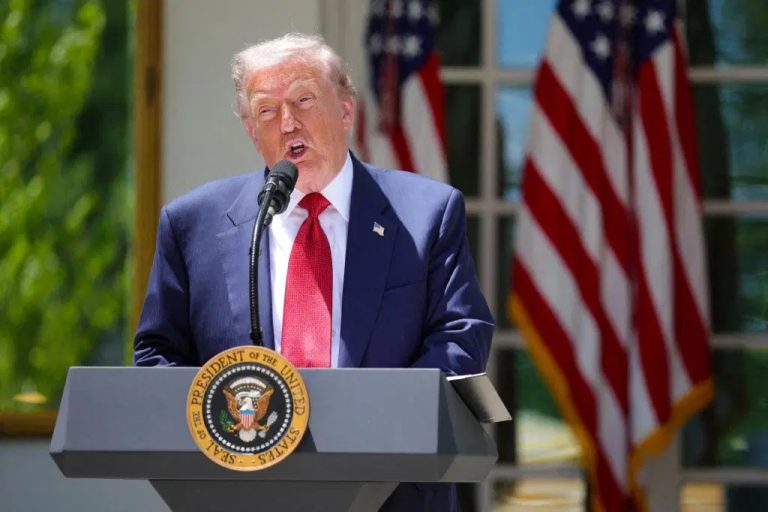
The Trump administration must immediately reinstate White House access for CNN, MS NOW and Politico, a US federal judge ordered Thursday, after their reporters were banned from the premises.

Trump has long attacked media outlets that have aired critical coverage of his campaigns and administrations, repeatedly blasting the press as the “enemy of the people.”

The three outlets were barred from the White House by the billionaire former reality TV star on Friday as punishment for distributing what he branded “fake news” and “fiction and lies.”

CNN, MS NOW and Politico filed a joint lawsuit asking for a temporary restraining order against the ban on the grounds that it violates the First Amendment of the US Constitution, which upholds the right to a free press.

Judge Timothy Kelly found that the revocation of press passes “likely violated their constitutional due process rights,” according to the eight-page ruling issued Thursday.

“The ‘general rule’ is that ‘individuals must receive notice and an opportunity to be heard before the Government deprives them’ of a constitutionally protected interest,” Kelly wrote.

A reporter looks at his phone in the James S. Brady Press Briefing Room at the White House in Washington, DC, on September 19, 2026.

The judge said that press credentials held by employees of the three outlets will be reinstated “until further Order of the Court or the expiration of this Temporary Restraining Order”, which is to remain in effect for 14 days.

Kelly added that the order cannot be immediately appealed.

Ahead of the ruling, the Department of Justice had argued Trump can “control reporters’ access to restricted presidential areas, such as the Oval Office.”

“Access to the White House is a privilege — not a right,” it said.

‘National security’

The White House Press Office accused CNN in a letter to the cable news outlet of “trafficking in verifiable falsehoods about national security and other issues, and publishing sensitive or classified information,” with similar accusations leveled against MS NOW and Politico.

The letter to CNN cited several stories about the US-Iran war and a story on Trump’s plans to build a military bunker below the planned East Wing ballroom which allegedly “disclosed ‘top-secret’ construction details.”

Theodore Boutrous, representing the media outlets in court on Wednesday, told the judge that in Trump’s Truth Social post announcing the bans, the president “didn’t say anything about national security.”

Boutrous argued that being punished for reporting on national security issues “that the government would rather have not be reported on is just contrary to First Amendment principles.”

Kelly said the stories identified in letters to the outlets were “routine”.

“The Court is skeptical — at least on this record — that Defendants’ interest in safeguarding national security is the actual motivation for, or is even advanced by, the revocation of Plaintiffs’ hard passes,” Kelly said, referring to the White House press credentials.

Journalists for the three news organizations were denied access to the White House grounds on Saturday and had their passes confiscated, in the latest flare-up of the 80-year-old Republican president’s assault on mainstream US media.

‘Shouldn’t be here’

In a previous case involving CNN during Trump’s first term, Kelly, a Trump appointee, ordered the White House to temporarily restore access for a CNN reporter whose pass had been revoked.

In a rare move, the top five US broadcasters said Monday that they were halting pool coverage of the White House — where a broadcaster films on behalf of all television outlets for the day — in solidarity with CNN.

“The public has a vital interest in receiving accurate, independent information about its government. No administration should restrict a news organization because it objects to its reporting,” ABC, CBS, CNN, Fox and NBC said.

The White House Correspondents’ Association and nearly 50 news organizations also filed a brief with the court calling for the bans on CNN, MS NOW and Politico to be reversed.

Trump appeared to suggest on Tuesday that CNN should not be covering him outside of the White House either.

“I’m surprised that CNN is here covering me. You shouldn’t be here,” Trump told a reporter at the UN General Assembly in New York.

The White House launched a streaming channel, Trump TV, on Monday which it said would show “top videos, major remarks, and must-see highlights streaming 24/7 and updated in real time.”

The ban came at a time when Trump’s approval ratings are at record lows, his Republican Party risks losing control of Congress in November’s midterm elections, and the Middle East conflict drags on with no end in sight.

AFP