




Economy
My job, The Second Most Difficult on Earth – CBN Governor, Cardoso
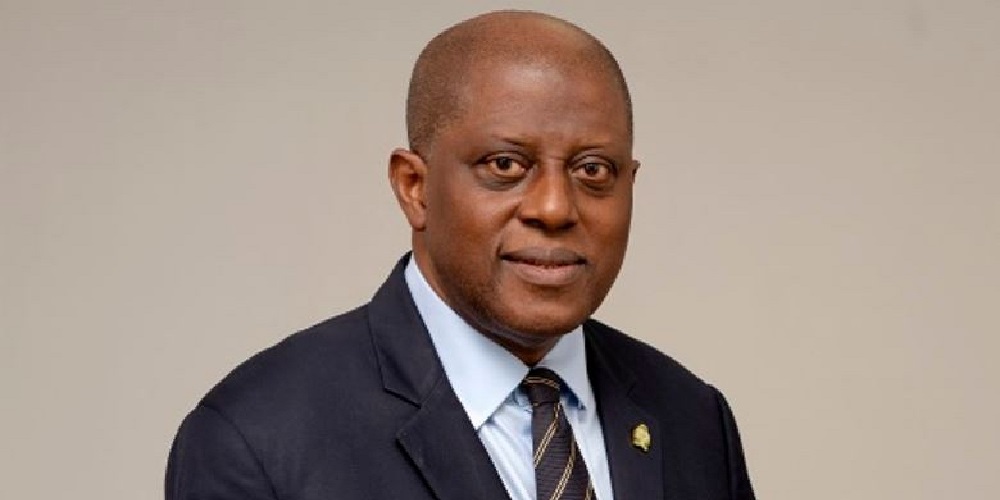
Governor of the Central Bank of Nigeria (CBN), Olayemi Cardoso, has described his job as the second most difficult on the globe.
This is as he said the Federal Government’s reform and other actions are paying off.
Cardoso spoke Sunday in Abuja at the opening of the 2024 First Plenary Assembly of the Catholic Bishops Conference of Nigeria (CBCN).
The event was themed, “Synod on Synodality: Areas of Concern for the Church in Nigeria “
“I will continue to remember that in spite of (my job) the second most difficult job on the face of the planet, this is really something that remains very memorable,” the CBN governor said.
Cardoso, who was the Chairman of the occasion, expressed optimism that despite all the difficulties, there is light at the end of the tunnel.
“As a result of some of the recent reports from the CBN, over the course of the last week, about $1.8bn came into the markets.
“As long as the country can sustain a positive trajectory, Nigeria will get out of its economic woes and the foreign exchange market will begin to moderate itself,” he said.
He said the apex bank will soon hold the Monetary Policy Committee (MPC) meeting, where very critical decisions will be made to continue making the economy more investor-friendly.
Cardoso said an attempt to merge the official rate with the black market rate had been made, adding that the difference between the two is now significantly lower.
“There is a positive outlook on that. The positive outlook comes from the fact that a series of reforms have been made by the federal government and the Central Bank, which are now paying off in such a way that international investors are coming back in again,” he said.
He said one of the problems of economic advancement in Nigeria is finding ways to move as a country beyond being a consumer nation and shelf appetite for foreign goods.
“You have got to move as a country beyond being a consumer nation. And it is something that we as Nigerians have been talking about for so long, but really, we’ve not been able to actualize it.
“The other thing, of course, is to moderate appetite for foreign goods. And that’s closely related to what I had said earlier with respect to becoming a producer nation, because at the end of the day, many of the things you see and many of the things that bother a lot of people with respect to foreign exchange are all essentially down to demand and supply,” Cardoso said.
Economy
CBN sets 18 as minimum age for BVN registration
The Central Bank of Nigeria (CBN) has set 18 years as the minimum age for Bank Verification Number (BVN) registration, as part of new measures aimed at strengthening identity verification and improving security in the Nigerian banking system.
The directive forms part of a set of circulars issued by the apex bank to banks, other financial institutions and payment service providers on March 12, 2026.
Under the new rule, only individuals who are 18 years and above will be allowed to enrol for a BVN. The CBN said the decision is intended to strengthen customer identification processes and reduce the risk of misuse of bank accounts for fraudulent activities.
The bank also introduced new controls within the BVN system to tighten monitoring of suspicious financial transactions across the banking industry.
According to the circular, financial institutions are now required to create a temporary watchlist for BVNs linked to suspected fraudulent transactions. A BVN may remain on the watchlist for a period of up to 24 hours while the affected customer is contacted to clarify the transaction in question.
The CBN explained that the measure will allow banks respond quickly to suspicious activities while still giving customers the opportunity to explain legitimate transactions.
In another change to BVN operations, the apex bank placed restrictions on modifications to phone numbers linked to BVN records.
Under the new directive, customers will only be allowed to change the phone number associated with their BVN once. The CBN said the measure is intended to prevent fraudsters from repeatedly altering phone numbers in order to bypass security checks.
The bank also stated that access to the BVN database will remain strictly limited to financial institutions licensed by the regulator. However, the CBN noted that it may grant access in special circumstances in accordance with existing laws. The new BVN rules are scheduled to take effect from May 1, 2026.
Alongside the BVN reforms, the apex bank also introduced new security measures for instant payment services used for electronic money transfers across Nigerian banks.
The CBN directed all financial institutions offering instant payment services to introduce additional safety features that will allow customers control how their accounts are used for electronic transfers.
Under the new arrangement, customers will be able to voluntarily opt out of instant transfer services if they wish to temporarily stop online transfers from their accounts.
The CBN said once the opt-out option is activated, the customer will not be able to carry out electronic transfers either within the same bank or to other banks.
However, the account holder will still be able to visit a bank branch physically to carry out a transfer.
The apex bank explained that the opt-in and opt-out process must be protected by multi-factor authentication to ensure that only the account owner can activate the feature.
Customers will also be allowed to set their own transfer limits for instant payments. While the existing maximum limits of N25 million for individuals and N250 million for corporate accounts remain unchanged, customers may decide to set lower limits to reduce their exposure to fraud.
According to the circular, any change to transaction limits must pass through enhanced verification procedures and risk assessment by the financial institution.
The CBN also instructed banks to deploy enterprise fraud monitoring systems capable of tracking both incoming and outgoing transactions in real time to detect suspicious activities quickly.
In addition, banks must strengthen identity checks when customers open accounts online or attempt to reactivate inactive accounts.
The apex bank said accounts opened online must undergo liveliness checks, while customer details must be validated immediately against the BVN and National Identity Number databases.
Enhanced authentication tools such as biometric verification, soft tokens and hard tokens are also expected to be used during online account reactivation. The regulator further directed banks to tighten security around mobile banking applications.
Under the new rules, a mobile banking app will only be allowed to operate on one device at a time, meaning customers will not be able to use the same banking application simultaneously on multiple phones.
When a customer switches to a new device, the application will require fresh authentication before it becomes active.
The CBN also introduced temporary transaction limits for newly activated mobile banking applications.
For the first 24 hours after activation, the maximum amount that can be transferred will not exceed N20,000, whether the account is new or an existing account being accessed on a new device.
Similarly, customers accessing internet banking on a new device for the first time will be required to complete additional authentication steps. The instant payment rules will take effect from July 1, 2026.
In a separate circular, the CBN also reviewed guidelines on the management of dormant bank accounts and unclaimed balances in the banking sector.
The apex bank said banks will now be allowed to accept requests for the reactivation of dormant accounts through alternative channels instead of insisting only on physical visits to bank branches.
Financial institutions may adopt these alternative channels provided they put in place strong identity verification measures to ensure that the request is coming from the rightful account owner.
The CBN also removed the requirement for customers to provide an affidavit when reactivating dormant accounts, provided the funds in the account have not yet been transferred to the Unclaimed Balances Trust Fund Pool Account.
However, the bank clarified that affidavits will still be required when customers are reclaiming funds that have already been transferred to the trust fund pool account.
The regulator also directed banks and other financial institutions to improve transparency by publishing information about dormant accounts and unclaimed balances.
Under the directive, banks must display certain details on their official websites, including the name of the account holder, the type of account, the name of the bank and the branch where the account is domiciled.
Financial institutions without operational websites are expected to publish the information on the websites of their industry associations.
Banks are also required to publish the list of dormant accounts once every year in at least two national daily newspapers.
Where the list is very long, the CBN said the bank may publish a short notice directing customers to a section of its website where the full details are available.
State and unit microfinance banks are not required to publish the information in newspapers but must display the details at their business locations.
The apex bank explained that the publication of such information does not violate the Nigeria Data Protection Act 2023 because the law allows personal data to be processed when it is necessary to comply with legal obligations.
The CBN added that its authority to issue the directive is supported by provisions of the Banks and Other Financial Institutions Act 2020, which empowers the regulator to issue guidelines on the management of unclaimed funds held by financial institutions.
The circular on dormant accounts takes immediate effect and replaces an earlier directive issued in February 2025.
Economy
Naira Strengthens To N1,363.5/$ At Official FX Market
Nigeria’s currency recorded a notable recovery at the official foreign exchange market on Friday, closing at ₦1,363.5 against the United States dollar after weakening earlier in the week.
Data obtained from the website of the Central Bank of Nigeria showed that the naira had opened the week under pressure before gradually regaining strength in subsequent trading sessions.
At the start of the week, the local currency depreciated to ₦1,425 per dollar on Monday, compared with ₦1,398 per dollar recorded the previous Friday.
The decline represented the weakest closing level for the naira since January 12, 2026, when it previously traded at the same rate.
Market conditions, however, improved the following day as the currency appreciated to ₦1,390.5 per dollar on Tuesday.
Additional gains were recorded on Wednesday when the naira strengthened further to ₦1,373.5 against the dollar.
The upward movement continued on Thursday, with the exchange rate improving to ₦1,370 per dollar at the official market.
By Friday, the currency extended its recovery, settling at ₦1,363.5 per dollar after gaining more than ₦60 within four trading days.
Officials of the Central Bank said the country’s improving external reserve position could help shield the naira from sustained pressure in the foreign exchange market.
According to the apex bank, Nigeria’s net foreign exchange reserves increased to about $34.80 billion by the end of 2025, reflecting stronger external liquidity.
The Governor of the Central Bank, Olayemi Cardoso, explained that ongoing monetary and foreign exchange reforms are designed to boost market confidence and enhance liquidity in the financial system.
Economy
Oil tops $100 as Iran vows to keep Hormuz closed
Oil prices soared above $100 and stock markets extended losses as Iran’s new supreme leader ordered the Strait of Hormuz to be kept closed.
Concerns about a long, drawn out conflict were not assuaged by US President Donald Trump saying that stopping the Islamic republic’s “evil empire” was more important than crude prices.
Global markets have been roiled since the United States and Israel launched attacks on Iran. Tehran’s retaliatory strikes on shipping and Gulf neighbours have nearly cut off maritime traffic through the Strait of Hormuz, through which pass around a fifth of the world’s oil and liquefied natural gas.
“Oil prices are up by double-digit percentages again today, as the realisation sinks in that the US is not about to either end the war or institute some kind of convoy system in the region,” said analyst Chris Beauchamp at IG trading and investment platform.
Energy Secretary Chris Wright acknowledged the US military was currently “not ready” to escort tankers through the critical Strait of Hormuz.
Brent North Sea crude, the international benchmark contract peaked at $101.59 per barrel on Thursday.
At $100 per barrel, Brent is up around 38 percent from the eve of the conflict, which began on February 28 when the United States and Israel launched airstrikes against Iran. It is up nearly two-thirds from the start of the year.
Iran’s new supreme leader Mojtaba Khamenei called on Thursday for using “the lever of blocking the Strait of Hormuz”, which the country’s Revolutionary Guards vowed to carry out.
The call followed fresh attacks against Gulf energy targets: an attack on two oil tankers off Iraq killed at least one crew member, while a cargo ship caught fire after being hit by shrapnel.
Oil prices pared their gains after Iran’s deputy foreign minister said that Tehran had allowed ships from some countries to cross the Strait of Hormuz.
The International Energy Agency said the Mideast war “is creating the largest supply disruption in the history of the global oil market”, a day after its member countries agreed to unlock 400 million barrels of oil from their reserves — their largest release ever.
Analyst David Morrison at Trade Nation said that if the announcements of the release of oil from strategic reserves “were supposed to cap prices, then they failed dismally”.
The moves may have “suggested some panic as hostilities across the Middle East intensified”, he added.
The rise in energy prices could cause prices to rise throughout the economy.
“The longer the oil price remains elevated, the more damaging and long lasting the inflation shock will be for the global economy,” noted Kathleen Brooks, research director at trading group XTB.
Wall Street’s main stock indices were down more than one percent in early afternoon trading.
Europe’s leading equity markets closed lower, as did most Asian markets.
eToro US investment analyst Bret Kenwell said that while US equities had held up rather well to date, a long conflict would have a profound impact on businesses.
“If oil doesn’t retreat meaningfully, the pressure won’t just be felt at the pump — it will bleed into margins, spending, and potentially quarters of softer growth,” he said.
The dollar rose further against major rival currencies.
“The dollar has strengthened, driven by safe-haven demand, fears of inflation, and higher-for-longer interest rate expectations,” said Victoria Scholar, head of investment at Interactive Investor.
– Key figures at around 1630 GMT –
Brent North Sea Crude: UP 8.6 percent at $99.88 per barrel
West Texas Intermediate: UP 9.3 percent at $95.38 per barrel
New York – Dow: DOWN 1.2 percent at 46,871.01 points
New York – S&P 500: DOWN 1.2 percent at 6,698.16
New York – Nasdaq Composite: DOWN 1.4 percent at 22,389.89
London – FTSE 100: DOWN 0.5 percent at 10,305.15 (close)
Paris – CAC 40: DOWN 0.8 percent at 7,978.98 (close)
Frankfurt – DAX: DOWN 0.2 percent at 23,589.65 (close)
Tokyo – Nikkei 225: DOWN 1.0 percent at 54,452.96 (close)
Hong Kong – Hang Seng Index: DOWN 0.7 percent at 25,716.76 (close)
Shanghai – Composite: DOWN 0.1 percent at 4,129.10 (close)
Euro/dollar: DOWN at $1.1525 from $1.1574 on Wednesday
Pound/dollar: DOWN at $1.3355 from $1.3419
Dollar/yen: UP at 159.20 yen from 158.92 yen
Euro/pound: UP at 86.31 pence from 86.25 pence
-
News19 hours agoWatch moment FCT minister Wike inspecting ongoing construction of bridge, road linking Jahi with Gwarimpa(Video)
-
Sports20 hours agoFIFA hammers Nigeria, DR of Congo over World Cup misconduct
-
News19 hours agoFCT minister inspecting ongoing construction of roads in Karsana, linking Renewed Hope Estate with Kubwa road(Video)
-
News19 hours agoVideo: FCT minister Wike inspecting ongoing airport road linking Kuje
-
News17 hours agoTinubu distributes free rice nationwide for Ramadan and Lent
-
Metro4 hours agoExplosions Shake Maiduguri After Insurgents Attack Military Post
-
Sports18 hours agoBreaking: Chelsea slammed with transfer ban, £10m fine over Premier league rule breach
-
Foreign3 hours ago‘We will not submit to lawless aggression’ – Iran tells UN