Politics
Why APC flushed out Gov Uzodinma Edo APC primary chairman
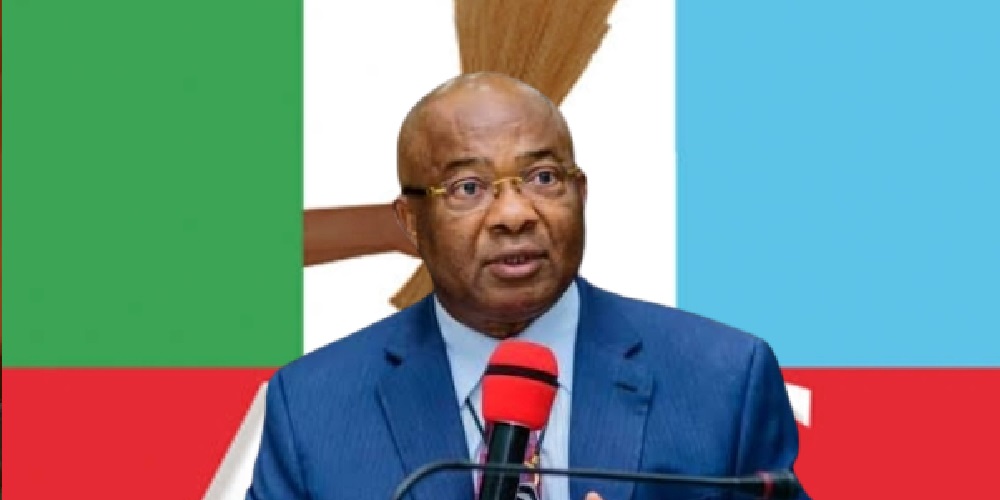
The All Progressives Congress, APC has dismissed news reports to the effect that Governor Hope Uzodimma was sacked as chairman of the party’s election committee for the party governorship primaries in Edo State.

The APC in a statement on Thursday said that Uzodimma was unavailable for the rescheduled primary in Edo because of prior commitment at the National Economic Council, NEC.
Party spokesman, Felix Morka in a statement made available to GWG.ng said the clarification came following news reports that Uzodimma was sacked by the APC from the committee handling the election in Edo State.

He said: The attention of the All Progressives Congress (APC) has been drawn to reports in sections of the media suggesting that the Governor of Imo State, and Chairman of the Progressives Governors’ Forum (PGF), His Excellency, Hope Uzodinma, was sacked or dropped as the Chairman of the Edo Gubernatorial Primary Election Committee, and replaced with the Governor of Cross River State, His Excellency, Bassey Otu.
We wish to clarify that Governor Uzodinma was neither “sacked” nor “dropped”, as has been erroneously reported, but was unavoidably unavailable to lead the completion of the Party’s Edo State Gubernatorial Primary Election Process due to his prior scheduled attendance of, and presentation of a report, to the National Economic Council meeting today February 22, 2024.
As a result, His Excellency Bassey Otu, Governor of Cross Rivers State, who was the Deputy Chairman of the Committee, graciously accepted to serve as Chairman, and to complete the Edo State Gubernatorial Primary Election Process.
Mr Morka’s clarification may have come to squash insinuations that the APC may have devalued Uzodimma on account of the controversies that trailed the election in Edo State.
Politics
NDC Dissociates Itself From OK Movement PCC, Says Political Party Is Serious Business
The Nigeria Democratic Congress (NDC) has dissociated itself from the Presidential Campaign Council (PCC) recently announced under the name of the OK Movement, declaring that the structure was not authorised by the party.
The position was contained in a press statement dated September 19, 2026, and signed by the National Chairman of the NDC, Senator Moses Cleopas.
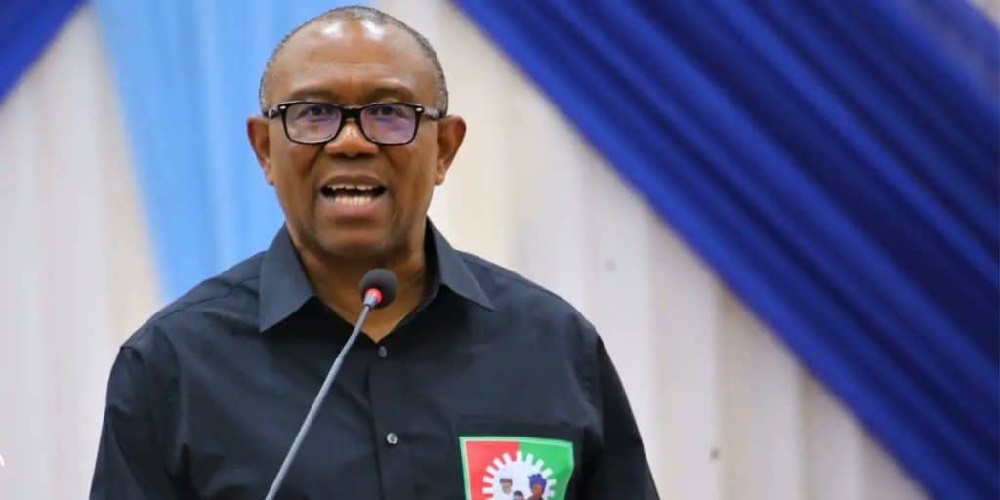
The development follows the unveiling of a 59-member Presidential Campaign Council by the OK Movement, a platform associated with the political activities of NDC presidential candidate Peter Obi and his running mate, Rabiu Kwankwaso. Reports said the council included zonal and state coordinators.
In the statement titled “Re: Purported OK Movement PCC Announcement,” the NDC said it had noted a publication credited to John Ugulu announcing a Presidential Campaign Council under the guise of the OK Movement.
The party stated categorically that the announcement did not originate from its leadership and should be disregarded by the public and the media.
“The party hereby dissociates itself in totality from the said OK Movement PCC announcement. It did not emanate from the party and should be disregarded by the public and the media.”
The position is consistent with reports published on Saturday that the NDC leadership had disowned the campaign council announced by the movement.
The NDC further reminded its candidates and support groups that candidates contesting under the party’s platform remain subject to its authority and disciplinary structures.
“All candidates of the party must appreciate that they are not running as independent candidates,” the statement said.
“They are products of the party and remain subject to the authority and discipline of the party.”
The party added that only its leadership has the authority to constitute and announce a Presidential Campaign Council.
It consequently directed that no individual, candidate or support group should announce or publish any campaign council, structure or organ in the name of the NDC without prior approval from the National Working Committee (NWC).
Also speaking on the development, Theo Abu Agada, spokesperson to NDC National Leader Seriake Dickson, warned the OK Movement against actions that could undermine the political party on whose platform its principals are contesting.
Agada described a political party as a serious organisation and said the NDC would not tolerate what he described as acts of insubordination by its members.
“You can’t undermine a party that gave you a platform,” he said.
The comments come against the backdrop of the formal entry of Obi and Kwankwaso into the NDC earlier in 2026. The two politicians were subsequently presented with NDC membership cards by the party leadership.
Despite its objection to the purported PCC, the NDC said it recognises and appreciates the contributions of support groups and would continue to work with groups that identify with its political objectives.
However, it said such groups must not regard themselves as alternative party structures or parallel organs.
The party also called for an end to what it described as unnecessary public attacks against the NDC, urging members and support groups with grievances to use the party’s internal channels for resolution.
The NDC statement also announced disciplinary action against John Ugulu, citing the purported PCC announcement, what it described as his excesses during the party’s Lagos State primary and repeated disregard for party authority.
The party said Ugulu had been referred to the appropriate disciplinary organ for necessary action in accordance with the provisions of the NDC constitution.
The NDC concluded by saying it remained focused on its issue-based political programme and its commitment to delivering what it described as a “New Nigeria that is possible.”
Opinion
Beyond the Politics of Name-Calling: Time to Put Development Front and Center
By Dr. Osamhanze Akugbe Idahosa.
Nigerian politics has a familiar rhythm that repeats itself with the certainty of the rainy season. As an election approaches, the airwaves fill not with policy proposals or development blueprints, but with recycled scandals, resurrected controversies, and character assassinations dressed up as accountability. Old files are reopened. Rumours are given new life. Personalities are dissected forensically, while the economy — the very thing that determines whether ordinary Nigerians eat, work, and hope — is left to fend for itself in the background noise.
This is not new. It is, in fact, a pattern the late Professor Claude Ake diagnosed with uncomfortable precision decades ago. In his enduring body of work on how politics has underdeveloped Africa, Ake argued that the continent’s governing elites have rarely treated development as politics’ central business. Instead, politics became the prize — an unrelenting contest for power and its spoils, disconnected from any serious commitment to transforming people’s material conditions. Development was talked about, promised, and occasionally budgeted for, but it was never the organizing logic of governance. Power for its own sake was.
Nigeria, in many painful ways, has continued to prove Ake right. A country blessed with abundant human capital, fertile land, solar potential across its northern belt, gas reserves that could power industries for generations, and a youthful population bursting with energy and ambition, still finds itself struggling with basic questions of electricity, food security, and job creation. The paradox is not a mystery. It is the direct consequence of a political culture that majors on the minor and minors on the major—one where cutthroat politicking consistently displaces the harder, slower, less theatrical work of nation-building.
The Noise That Drowns Out the Signal
Every election cycle in Nigeria seems to produce its own theatre of distraction. Certificates are questioned. Personal histories are excavated. Allegations, some genuine and many manufactured for effect, are deployed not to inform the electorate but to overwhelm them. The result is a public conversation so saturated with noise that the signal — what each aspirant actually intends to do about unemployment, inflation, infrastructure decay, and industrial collapse — gets lost entirely.
This is not to say that character and integrity do not matter in leadership. They do, profoundly. But there is a difference between legitimate scrutiny of a candidate’s fitness for office and the wholesale substitution of personality warfare for policy debate. When name-calling becomes the primary currency of political engagement, it does more than distract; it actively erodes the electorate’s capacity to hold anyone accountable for economic outcomes, because the entire conversation has shifted away from outcomes altogether.
What 2027 Should Really Be About
As Nigeria edges toward the 2027 electioneering season, there is a genuine opportunity to break this cycle — but only if electorates themselves insist on it. The question voters ask of every aspirant should not primarily be “what has this person done to embarrass their opponent,” but rather “what, brick by brick, will this person do to build an economy that works?”
Brick by brick is the operative phrase, because national economic transformation is not a single grand gesture. It is the cumulative result of deliberate choices: stable macroeconomic policy that tames inflation without strangling growth; a manufacturing and agro-industrial base that converts raw endowments into finished value rather than exporting them raw; an education and skills pipeline that matches the needs of a modern economy; an investment climate credible enough to attract long-term capital rather than speculative inflows; and an energy infrastructure reliable enough to let businesses plan beyond the next generator refueling.
None of this makes for exciting soundbites. It does not trend the way a scandal trends. But it is the substance that determines whether Nigeria remains a country of enormous unrealized potential or becomes genuinely competitive within the comity of nations — able to stand alongside the economies it is so often, and so wistfully, compared to.
Change for the Sake of Change Is Not Change
The revered Benin monarch, Oba Ewuare II, recently offered a formulation that deserves wider circulation in the run-up to 2027: change should not be pursued for its own sake, but only where it promises something demonstrably better than what already exists. This is a subtle but important corrective to a political culture that often treats “change” as a self-justifying slogan, detached from any rigorous comparison of what is being offered versus what is being replaced.
Applied to Nigeria’s coming election, the royal father’s counsel suggests a discipline that both aspirants and voters would do well to adopt. Aspirants should be pressed to show, in concrete, measurable terms, how their vision improves on the present—not merely that they are different from the incumbent or from a rival. And voters should resist the seduction of change as spectacle, insisting instead on change as substance: a credible, costed, and coherent pathway to shared prosperity.
A Call to Refocus
Nigeria’s governing class, and the political ecosystem that surrounds it — commentators, party strategists, media platforms, and yes, the electorate itself — bear collective responsibility for the terms on which political contests are fought. If the 2027 cycle is allowed to descend, once again, into a contest of who can most effectively humiliate whom, the country will have squandered another opportunity to have the conversation it desperately needs: the conversation about how to convert its abundant natural and human endowments into the kind of broad-based prosperity that reduces poverty, creates jobs, and restores national dignity.
Professor Ake’s warning was never simply academic. It was a call to reorder national priorities before politics as usual consumes what remains of the country’s developmental promise. As 2027 approaches, that call deserves to be heard again — not as a lament, but as an instruction: look beyond the name-calling, beyond the personality contests, and ask instead what each aspirant will actually build.
Dr. Osamhanze Akugbe Idahosa is of the Africa Development Studies Center and writes from Abuja.
Politics
“Lecturers pledging loyalty to TInubu cannot supervise elections”-Atiku tells INEC
The Atiku Media Office has expressed concern over the reported endorsement of President Bola Ahmed Tinubu by hundreds of lecturers from universities across Northern Nigeria, warning that academics who openly declare partisan allegiance should not subsequently be entrusted with sensitive electoral responsibilities by the Independent National Electoral Commission (INEC).
Lecturers have every constitutional right to support, campaign for, and vote for any candidate of their choice. That right is not in dispute. What is unacceptable, however, is for persons who have publicly taken partisan positions to later present themselves as neutral electoral officials.
Any academic who openly endorses a presidential candidate should not come anywhere near sensitive INEC assignments as returning officers, collation officers or officials entrusted with the collation, declaration and announcement of election results. Electoral credibility requires not only actual neutrality, but also public confidence in the neutrality of those administering the process.
More disturbing is the reported presence of elected governors and a serving Minister of Defence at the endorsement. That senior officials of the ruling party would lend the weight of their offices to such an overtly partisan gathering of academics is deeply troubling and speaks to the desperation surrounding the Tinubu administration’s quest for re-election.
It is a shame that the Tinubu administration appears determined to strip our scholars of the dignity of their academic gowns and dress them instead in the garb of partisan political rascality. Universities should remain centres of independent thought, scholarship and intellectual freedom, not recruitment grounds for the political machinery of a desperate ruling party.
What we are witnessing tells the story of a government increasingly prepared to push against every moral boundary in its determination to secure another term in office, regardless of the damage done to institutions that ought to command public trust.
This principle must apply equally to academics who openly support Atiku Abubakar or any other presidential candidate. No one should be allowed to play today and referee tomorrow.
“You cannot wear a party jersey today and expect Nigerians to accept you as an impartial referee on election day.
INEC must take note and ensure that academics who have publicly declared partisan allegiance are excluded from sensitive electoral responsibilities in the 2027 elections.
-
News12 hours agoNicki Minaj follows Peter Obi on X after viral repost
-
News12 hours agoTikToker remanded over alleged defamation of Kano politician
-
News12 hours agoSocial media abuzz as Aisha Buhari, Seyi Tinubu, Dino Melaye, others attend pre-wedding in Spain
-
Politics12 hours agoNDC Dissociates Itself From OK Movement PCC, Says Political Party Is Serious Business
-
Metro12 hours agoNDLEA officer drowns chasing drug suspect into Delta river
-
News12 hours agoHow ASUU brought snake to my office – Former VC