Connect with us

Economy

SIM-NIN linkage: Blocked lines rise to 40 million

Published

on

ADVERTISEMENT
Zoom Ad
ADVERTISEMENT
Zoom Ad

No fewer than 40 million telephone lines were barred by telecommunication operators over the weekend following the expiration of the February 28, 2024 deadline issued by the Nigerian Communications Commission mandating telecom consumers to link the Subscriber Identity Module to their National Identity Numbers.


This represents a 28 million increase from the 12 million telephone lines initially planned to be deactivated by telcos, following the NCC directive.

In a December 2023 notice, the NCC had asked telcos to bar SIMs that had not been linked to their owners’ NINs by February 28, 2024.

On Thursday, the NCC Director of Public Affairs, Reuben Mouka, ruled out an extension of the deadline, warning that telcos that failed to enforce the deadline would be sanctioned.

Advertisement

The Chairman of the Association of Licensed Telecommunications Operators of Nigeria, Gbenga Adebayo, then disclosed to The PUNCH telcos would bar 12 million lines as a result of the directive.

However, on Sunday, the ALTON chair revealed that the number of barred lines had risen to 40 million, pointing out that SIMs without NIN were included in the number.

In an exclusive interview with The PUNCH, Adebayo said, “I can tell you that over 40 million lines have been blocked and the affected customers are those who didn’t submit their NIN at all. Some persons have not presented any NIN to operators. They haven’t registered their SIMs or participated in the harmonisation programme.

They simply haven’t made any presentation of the NIN number to their operators and those were the persons blocked. So why is the number so alarming despite repeated warnings? It shows many people still communicate but are not registered.”

Advertisement

In the December 2023 notice, the NCC had also asked the Global Satellite Mobile Communications operators to bar SIMs holders whose NINs have been submitted but not verified by March 29, 2024; and interdict those who have less than five lines linked to an unverified NIN by April 15, 2024.

The Federal Government had, on December 16, 2020, introduced the SIM-NIN synchronisation initiative meant to enable security agencies to track criminals.

The synchronisation involves validating the NIN with the National Identity Management Commission and matching the subscriber’s NIN records with the SIM registration information (verification) to ensure proper subscriber identification.

However, Nigerians have raised questions on why security agencies have not used the SIM-NIN linkage to track criminals, especially bandits and kidnappers, who often use mobile telephone lines to speak with victims’ families during ransom negotiations.

Advertisement

Presently, there are 224.7 million active mobile telephone lines in the country, according to the information released by the NCC on its website.

On Sunday, the ALTON chairman did not give the breakdown of subscribers or SIMs that were deactivated by telcos over the weekend.

He said, “No, we currently don’t have the breakdown of disconnected lines per network right now but I know over 40 million lines have been deactivated.”

Adebayo further hinted that another series of disconnections would be implemented by the end of the month and mid April.

Advertisement

Adebayo said, “The second tier of disconnections that will happen are those who have provided NIN but have more than five Mobile Subscription Identification Numbers associated with their NIN, and these have not been verified.

This is because some have differences in the order of their names, and some have differences in their date of birth.

The information provided to the operator when they did the SIM registration is different from what they provided (to NIMC) when they did their NIN. Some subscribers also have some differences in other records that are very critical to their verification process.

“So these people who have more than five MSINs attached to their NIN and haven’t been verified will be disconnected effective March 30, 2024. So we may have more disconnections happening by the end of this month.

Advertisement

If somebody has given a name that has not been verified and has been receiving text messages to verify and they haven’t done that, by March 30th, those people will be disconnected and the figures will further increase.”

He explained, “There are two sources of data-primary and secondary. During the first registration process, the customer’s information is on-boarded to a server when everyone did the SIM registration but the secondary record is for details given during NIN. Hence your primary record has to be uniform with the secondary data across the platforms before you can be verified.

“Furthermore, for those who have less than five MSINs, by April 15th, they will be disconnected if they don’t harmonise their records before then. So we are going to go through a series of disconnections or service suspensions over the next two months if people don’t follow the laid down regulations.”

Reacting, the President, National Association of Telecoms Subscribers, Adeolu Ogunbanjo, has said the body will seek redress in court on Thursday if the deadline is not extended.

Advertisement

Adeolu, who confirmed that the number of barred subscribers was above 12 million earlier indicated, asked the NCC to consider the plight of customers and grant a 31-day extension.

In an interview with The PUNCH on Sunday, he said, “We have appealed to the Nigerian Communication Commission to extend the deadline till March 31st. But if this is not done, we will observe the situation for the next three days, that is Monday to Wednesday and if this is not granted, we will have to file a case in court on Thursday.

“We have and still appealing that this deadline be extended. We understand their position concerning security issues but a 31-day extension would not harm anyone and that is why we didn’t ask for three months. The NCC boss should please give us this gift as a resumption gift and not punish subscribers.”
Advertisement
Continue Reading
Advertisement

Economy

Telcos to spend $76 billion CapEx in five years

Published

on

By

ADVERTISEMENT
Zoom Ad
ADVERTISEMENT
Zoom Ad

Telecommunication operators in Nigeria and other parts of Africa are expected to inject over $76 billion as capital expenditure (CapEx) into their various networks in five years.

GSMA said this projection is for between 2025 and 2030. It, however, said that for the investment to translate into improved coverage, quality and capacity, there is a need for an improved regulatory and cost environment.

According to the telecom body, markets that have reduced rights-of-way costs, enabled infrastructure sharing and provided regulatory predictability are seeing faster and broader capital deployment.

Infrastructure-sharing models in particular are emerging as a structural solution for extending coverage into areas where individual operator economics alone cannot justify the investment, it said.

Advertisement

MTN Nigeria’s quarterly CapEx this year has been extremely aggressive, starting with N390.3 billion in Q1 and reaching N620.5 billion by H1, while Airtel Africa invested $389 million in Q1 2026 alone, its highest first quarter rollout.

Both operators are front loading investments to expand 4G/5G coverage and fibre infrastructure.
For FY 2025, MTN Nigeria’s CapEx surged to N1 trillion, more than doubling from N443.5 billion in FY 2024. This was driven by aggressive investment in broadband coverage and spectrum leasing.

CapEx intensity stood at 19.3 per cent of revenue, reflecting heavy reinvestment into infrastructure.

Airtel Africa CapEx rose to $884 million in FY 2026, a 31.9 per cent increase year-on-year. The company rolled out over 3,250 new sites and expanded fibre by 3,200 km, with plans to accelerate spending to $1.1 billion in FY 2027.

Advertisement

Both operators are scaling aggressively to meet surging data demand and smartphone penetration.

MTN’s investment intensity is higher relative to revenue, while Airtel is focusing on pan-African expansion with Nigeria as a key growth driver.

For FY 2026, Airtel reported 47.5 per cent constant currency revenue growth in Nigeria, showing strong returns on its infrastructure push.

Airtel Africa is balancing pan African expansion with Nigeria as a key growth driver. Its CapEx is more diversified across regions but still heavily weighted toward network densification.

Advertisement
Continue Reading

Economy

NAICOM revokes Nigeria Reinsurance’s licence, appoints Muiz Banire as receiver/liquidator

Published

on

By

ADVERTISEMENT
Zoom Ad
ADVERTISEMENT
Zoom Ad

The National Insurance Commission, NAICOM, has revoked the operating licence of Nigeria Reinsurance Corporation over its failure to meet the statutory Minimum Capital Requirement, MCR, and appointed Dr. Muiz Banire, SAN, as Receiver/Provisional Liquidator to wind up the company’s affairs.
The appointment took effect on August 3, 2026, following the cancellation of the corporation’s certificate of registration by the insurance regulator.

In a public notice dated August 4, 2026, Banire said he was appointed by NAICOM, in exercise of its statutory powers, to take charge of the receivership and liquidation of Nigeria Reinsurance Corporation (RR-002).

According to the notice, the company’s licence was revoked after it failed to comply with the prescribed Minimum Capital Requirement applicable to its category of licence within the stipulated compliance period, in accordance with the Nigerian Insurance Industry Reform Act (NIIRA) 2025 and other extant laws, regulations and guidelines.

Banire said his appointment empowers him to immediately trace, recover, secure and take possession of all assets belonging to the company, collate and settle its liabilities in accordance with the NIIRA 2025, liaise with NAICOM on matters relating to the liquidation, and submit periodic reports to the Commission.

Advertisement

He also directed banks, financial institutions, insurance policyholders and members of the public not to honour any instruction relating to the company except those issued by him or persons expressly authorised by him.

As part of the liquidation process, Banire announced that all bank accounts belonging to Nigeria Reinsurance Corporation had been frozen with immediate effect pending further directives from his office.

He warned that any transaction carried out without his authorisation would be at the risk of the parties involved.

“Members of the general public, banks and financial institutions in Nigeria are hereby informed that no financial transactions should be conducted pursuant to any instruction from anyone except those that I issue as the Receiver/Provisional Liquidator,” the notice stated.

Advertisement

According to him, only instructions bearing his official seal and stamp as a legal practitioner, or those issued by persons duly authorised by him, will be recognised throughout the liquidation process.

The regulatory action marks a significant enforcement measure by NAICOM and underscores the Commission’s resolve to ensure that insurance and reinsurance companies operating in Nigeria comply with statutory capital requirements designed to safeguard policyholders and strengthen the financial stability of the industry.

The liquidation process is expected to involve the recovery and realisation of the company’s assets, verification and settlement of valid claims and liabilities, and the orderly winding up of its affairs in accordance with the provisions of the law.

The public notice serves as formal notification to policyholders, creditors, banks and other stakeholders that all dealings concerning Nigeria Reinsurance Corporation must henceforth, be channelled through the Receiver/Provisional Liquidator until the liquidation process is concluded.

Advertisement
Continue Reading

Economy

See Black Market Dollar To Naira Exchange Rate Today 5th August 2026

Published

on

ADVERTISEMENT
Zoom Ad
ADVERTISEMENT
Zoom Ad

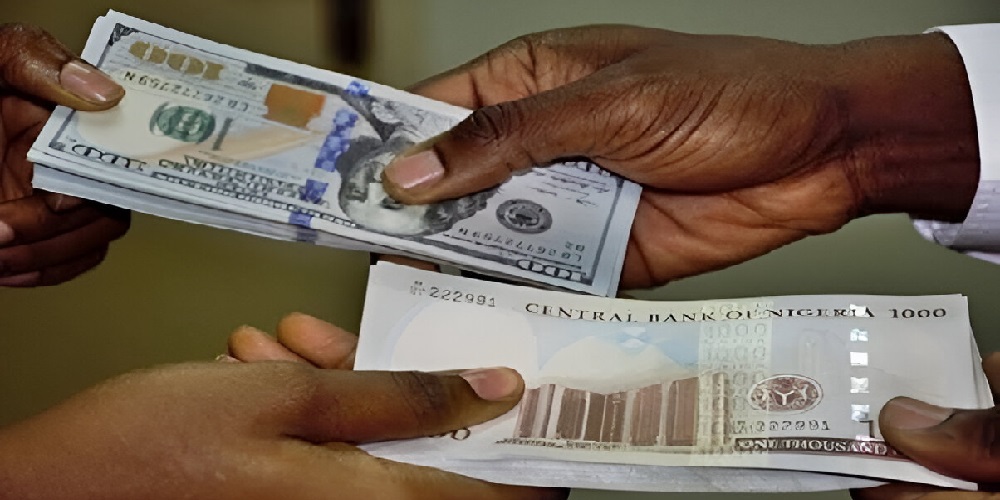
The Black Market Dollar-to-Naira Exchange Rate for 5th August 2026 Can Be Accessed Below.

NOTE: The exchange rate changes hourly. It depends on the volume of dollars available and the Demand. This means…you can buy or sell 1 dollar at a certain rate, and the price can change (high or low) within hours.

The official naira black market exchange rate in Nigeria today, including the Black Market rates, Bureau De Change (BDC), and CBN rates.

The exchange rate fluctuates hourly based on the supply and demand of dollars in the market.
What’s the dollar to naira black market today, 5th August 2026?
The exchange rate for a dollar to naira at Lagos Parallel Market (Black Market) players sell a dollar for ₦1425 and buy at ₦1410 on Wednesday, 5th August, 2026, according to sources at Bureau De Change (BDC).
Please note that the Central Bank of Nigeria (CBN) does not recognize the parallel market (black market), as it has directed individuals who want to engage in Forex to approach their respective banks.

Advertisement

Dollar to Naira Black Market Rate Today
Dollar to Naira (USD to NGN) Black Market Exchange Rate Today
Selling Rate ₦1425
Buying Rate ₦1410
Dollar to Naira CBN Rate Today
Dollar to Naira (USD to NGN) CBN Rate Today
Highest Rate ₦1364
Lowest Rate ₦1361

Continue Reading

Trending

Copyright © 2024 Naija Blitz News