

Connect with us

Economy

CBN Naira To Dollar Rate Today 7th March 2024

Published

on

ADVERTISEMENT
Zoom Ad
ADVERTISEMENT
Zoom Ad


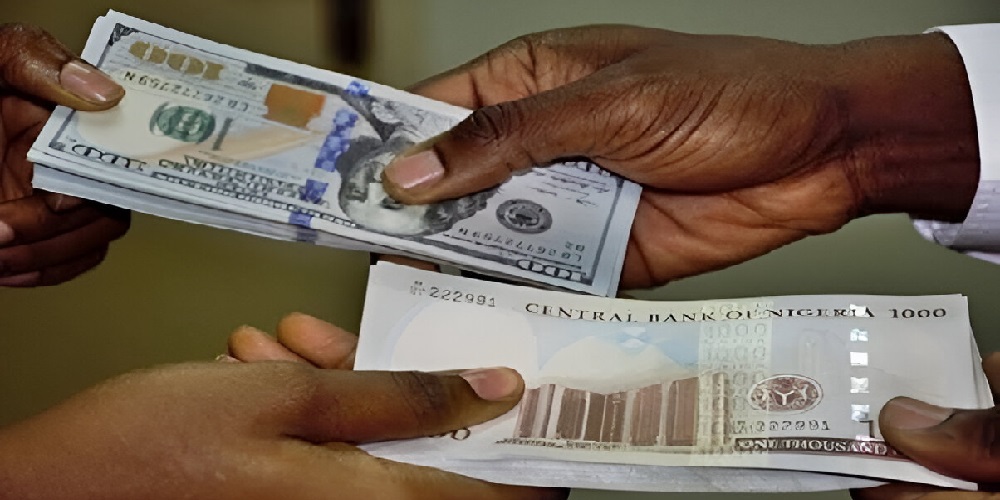
CBN naira to dollar rate today 7th March 2024 can be accessed below.

The official CBN Dollar To Naira exchange rate today, which also includes exchange rates of Pounds to Naira, Euro to Naira, and more popular currencies used by Nigerians.

IMPORTANT NOTICE: Please keep in mind that the Central Bank of Nigeria (CBN) does not recognize the parallel market (black market) and has recommended individuals interested in Forex contact their respective banks before proceeding.

Advertisement

The parallel exchange rate (black market rate) always differs from the CBN rate. The exchange rate between the USD and the Nigerian Naira significantly impacts the Nigerian economy.

As the Naira falls in value, inflation takes over the economy, which usually impacts the inhabitants. The Central Bank has stated that the Nigerian economy needs a significant turnaround and has asked Nigerians to work toward this goal, such as increasing exports.

The black market rate for dollars is frequently higher than the Central Bank of Nigeria (CBN). The CBN Exchange rate is the rate at which you can purchase or sell dollars for Naira on the CBN dollar-to-naira website.

The dollar-to-naira bank rate is the rate you use when you buy something from a foreign website with your Naira MasterCard or Debit card from a Nigerian bank. These rates are almost always cheaper than those on the black/parallel market.

Advertisement

What is the CBN naira to dollar rate today?

The CBN Dollar to naira exchange rate today: The exchange rate for a dollar to naira at the official window is ₦1,591 as of Thursday, 7 March 2024, according to the data published by CBN. The CBN exchange rate of dollar to naira today, according to the data posted on the Central Bank of Nigeria (CBN) Currency Exchange Rate where forex is official is as follows:

Date Currency Buying(NGN) Central(NGN) Selling(NGN)
3/5/2024 US DOLLAR 1590.169 1590.669 1591.169
3/5/2024 POUNDS STERLING 2019.6736 2020.3087 2020.9437
3/5/2024 EURO 1725.6514 1726.194 1726.7366
3/5/2024 SWISS FRANC 1797.2073 1797.7724 1798.3375
3/5/2024 YEN 10.5997 10.603 10.6064
3/5/2024 CFA 2.5331 2.5431 2.5531
3/5/2024 WAUA 2049.8681 2050.5127 2051.1572
3/5/2024 RIYAL 423.9885 424.1219 424.2552
3/5/2024 DANISH KRONA 231.4589 231.5317 231.6045
3/5/2024 SDR 2112.3805 2113.0447 2113.7089
Dollar to Naira CBN Rate Today

The official exchange rate of the US dollar to the Nigerian naira, as of today, 7 March 2024, is ₦1,591 per US dollar.

Advertisement

Dollar to Naira (USD to NGN) CBN Rate Today
Buying Rate of $1 ₦1,590
Selling Rate of $1 ₦1,591
Factors Influencing Foreign Exchange Rate

Here are some of the causes of the dwindling dollar to naira exchange rate.

Inflation Rates: It is well known that inflation directly impacts black market exchange rates. If the Nigerian economy can be stabilized and inflation is controlled, the naira will benefit; however, if the naira continues to fall, it may indicate that food and other necessities are becoming more expensive daily.

Interest Rates: Another tool to keep an eye on is interest rates. If the interest rate at which banks lend money rises, it would harm the economy, causing it to contract and, as a result, the value of the naira to fall.

Advertisement

Government Debt: National debt can impact investor confidence and, as a result, the influx of funds into the economy. If inflows are high, the naira exchange rate will rise in favor of the naira.

Speculators: Speculators frequently impact the naira-to-dollar exchange rate. They stockpile money in anticipation of a gain, causing the naira to plummet even lower.

Conditions of Trade: Favorable trade terms will increase the value of the naira to the dollar, although Nigeria is currently experiencing a trade deficit. Everything comes from China, India, and the majority of Asian countries.
Advertisement
Continue Reading
Advertisement

Economy

Nigerian Airline Operators Issue 7-Day Ultimatum Over Jet Fuel Crisis, Warn Of Flight Shutdown

Published

on

By

ADVERTISEMENT
Zoom Ad
ADVERTISEMENT
Zoom Ad

Nigeria’s aviation industry is staring at a possible collapse within days as airline operators warn that flight operations may grind to a halt nationwide if the federal government fails to urgently intervene in the escalating aviation fuel crisis.

Operators under the Airline Operators of Nigeria (AON) say the cost of Jet A1 has reached “unsustainable” levels, with prices reportedly surging by as much as 250 percent in Nigeria, far above global increases estimated at about 70 percent.

Industry players say the distortion is pushing airlines to the brink, with operating costs now heavily dollarised while access to credit remains trapped in a high-interest environment reportedly ranging between 30 and 35 percent.

Air Peace Chairman Allen Onyema warned after a tense industry meeting that carriers may have no choice but to suspend operations if nothing changes within seven days.

Advertisement

“We are being pushed to the wall. At these levels, no airline can continue to operate sustainably,” Onyema said, adding that carriers may be forced to ground operations if no solution emerges within days.

Onyema said Nigerian airlines are under severe pressure due to a sharp rise in aviation fuel prices, which he argued is disproportionately higher than global trends following the U.S.–Iran conflict.

He explained that while aviation fuel prices typically move in line with crude oil increases, Nigeria has recorded a surge of about 250 to 270 percent, compared to roughly 70 percent in other countries, including elsewhere in Africa.

Onyema said the situation is making airline operations unsustainable and has pushed operators to the brink, prompting urgent discussions between government officials, airline operators, and fuel marketers to find a resolution.

Advertisement

“We have deliberated extensively today, and they have also shared their pain points. We have also shared ours. We are going to go back and wait for the outcome of their deliberations with the regulators,” he said.

“When they do that, we expect that within the next 48 hours, something drastic will be done, because no airline in this country will be able to fly within the next seven days if nothing is done.

“Not because airlines do not want to fly, but because the pricing, not only of our tickets but also of the fuel products we need to operate, may become unsustainable.

“We are already operating under heavy financial pressure, borrowing at 30 to 35 percent interest just to stay afloat, and we cannot continue to spend all our revenue on fuel alone.”

Advertisement

“The good news, as we observed yesterday, is that the President is listening, and this is very encouraging for us. We are hopeful. The country should also be hopeful, because the President, even while we were there, made a call to the honourable minister,” he added.

The warning comes amid a worsening standoff between airlines, petroleum marketers, and regulators over pricing mechanisms for aviation fuel, which operators insist has become artificially inflated through inefficiencies and market manipulation.

A crucial meeting convened by the Minister of Aviation and Aerospace Development, Festus Keyamo (SAN), ended in deadlock, with no agreement reached on how to immediately crash or stabilise Jet A1 prices.

Keyamo admitted after the closed-door session that the crisis was threatening the survival of domestic airlines, adding that discussions would continue for 48 to 72 hours in search of a compromise.

Advertisement

He also acknowledged that airlines may be forced to increase ticket prices further if the situation persists, a development that could push air travel beyond the reach of ordinary Nigerians already battling inflation and a weakened currency.

Despite the stalemate, the minister said the meeting was held with presidential backing, noting that President Bola Tinubu had been briefed and was monitoring developments closely.

Operators, however, remain unconvinced, insisting that repeated assurances without concrete price relief will not prevent what they describe as an imminent aviation shutdown.

Advertisement
Continue Reading

Economy

See Dollar to Naira exchange rate today, April 23, 2026

Published

on

ADVERTISEMENT
Zoom Ad
ADVERTISEMENT
Zoom Ad

The Nigerian Naira displayed a slight softening against the US Dollar in the early trading hours of Thursday, April 23, 2026, across both the official and parallel foreign exchange markets. Financial analysts are keeping a close eye on the market as mid-week demand for the greenback continues to influence rate stability.

In the Nigerian Foreign Exchange Market (NFEM), the Naira opened the trading day with a modest depreciation.

According to real-time data from the FMDQ Securities Exchange, the Naira is currently trading at an average of 1,351.59 NGN per 1 USD. This represents a marginal decline compared to the opening rates observed earlier in the week, where the currency had seen support near the 1,347 NGN level.

Market turnover at the official window remains a key point of focus for investors, as the Central Bank of Nigeria (CBN) maintains its policy of managed float to curb excessive volatility while ensuring essential sectors have access to foreign currency.

Advertisement

Parallel Market Trends

The informal or parallel market continues to trade at a significant premium compared to the official rate. Early morning reports from Bureau De Change (BDC) operators in major hubs such as Lagos (Ikeja and Broad Street), Abuja (Wuse Zone 4), and Kano suggest that the Dollar is being exchanged at rates ranging between 1,465 NGN and 1,480 NGN.

The spread between the NFEM and the parallel market currently sits at approximately 113 Naira, a gap that experts attribute to the unmet demand from small-scale importers and individuals seeking personal travel allowances (PTA) who often find the official channels more stringent.

Economic Factors and Outlook

Advertisement

The current pressure on the Naira is largely attributed to sustained demand for the Dollar to fund international trade obligations and service foreign debt. Additionally, the recent fluctuations in global oil prices—Nigeria’s primary source of foreign exchange—continue to dictate the strength of the nation’s external reserves.

As the trading session progresses into the afternoon, participants expect the rate to stabilize, though any significant intervention from the apex bank or shifts in market liquidity could alter the closing figures for the day. Market watchers are advised to monitor official closing reports for a comprehensive view of the day’s performance.

Continue Reading

Economy

FG, states, LGs share N2.036trn March revenue

Published

on

By

ADVERTISEMENT
Zoom Ad
ADVERTISEMENT
Zoom Ad

The Federation Account Allocation Committee (FAAC), has shared N2.036 trillion among the Federal Government, states and the Local Government Councils (LGCs).

The revenue was shared at the April meeting of FAAC in Abuja.

The N2.036 trillion total distributable revenue comprised statutory revenue of N1.320 trillion, Value Added Tax (VAT) revenue of N515.391 billion and Agumentation of N200 billion.

A communiqué issued by FAAC indicated that total gross revenue of N2.364 trillion was available in the month of March.

Advertisement

It said that total deduction for cost of collection was N81.084 billion, while total transfers, refunds and savings was N246.872 billion and Agumentation of N200 billion.

The communiqué said gross statutory revenue of N1.699 trillion was received for the month of March 2026.

This is higher than the sum of N1.561 trillion received in the preceding month by N137.914 billion.

“Gross revenue of N664.425 billion was available from VAT in March 2026.

Advertisement

“This was lower than the N668.450 billion available in the month of February 2026 by N4.025 billion,” it said.

The communiqué said from the N2.036 trillion total distributable revenue, the Federal Government received total sum of N789.159 billion and the state governments received total sum of N657.596 billion.

It said that the LGs received N468.826 billion, while the sum of N120.759 billion (13 per cent of mineral revenue) was shared to the benefiting State as derivation revenue.

“On the N1.320 trillion distributable statutory revenue, the Federal Government received N632.260 billion and the state governments received N320.691 billion.

Advertisement

“The LGs received N247.239 billion and the sum of N120.759 billion (13 per cent of mineral revenue) was shared to the benefiting States as derivation revenue,” it said.

It said that from the N515.391 billion distributable VAT revenue, the Federal Government received N51.539 billion, the state governments received N283.465 billion and the LGs received N180.387 billion.

It said that from the N200 billion Augmentation, the Federal Government received N105.360 big government received N53.440 billion, and the LGs received N41.200 billion.

It said that in March, Companies income Tax (CIT), CGT, SDT and Excise Duty increased significantly.

Advertisement

It said that Petroleum Profit Tax (PPT), Hydrocarbon Tax (HT), Oil and Gas Royalty, Import Duty and CET decreased considerably, while VAT decreased marginally.

(NAN)

Continue Reading

Trending

Copyright © 2024 Naija Blitz News