

Connect with us

News

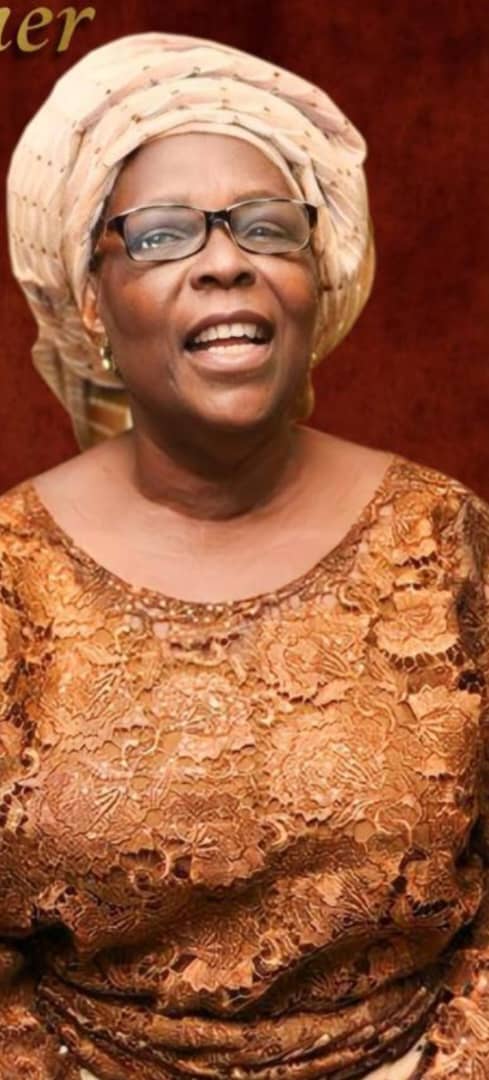
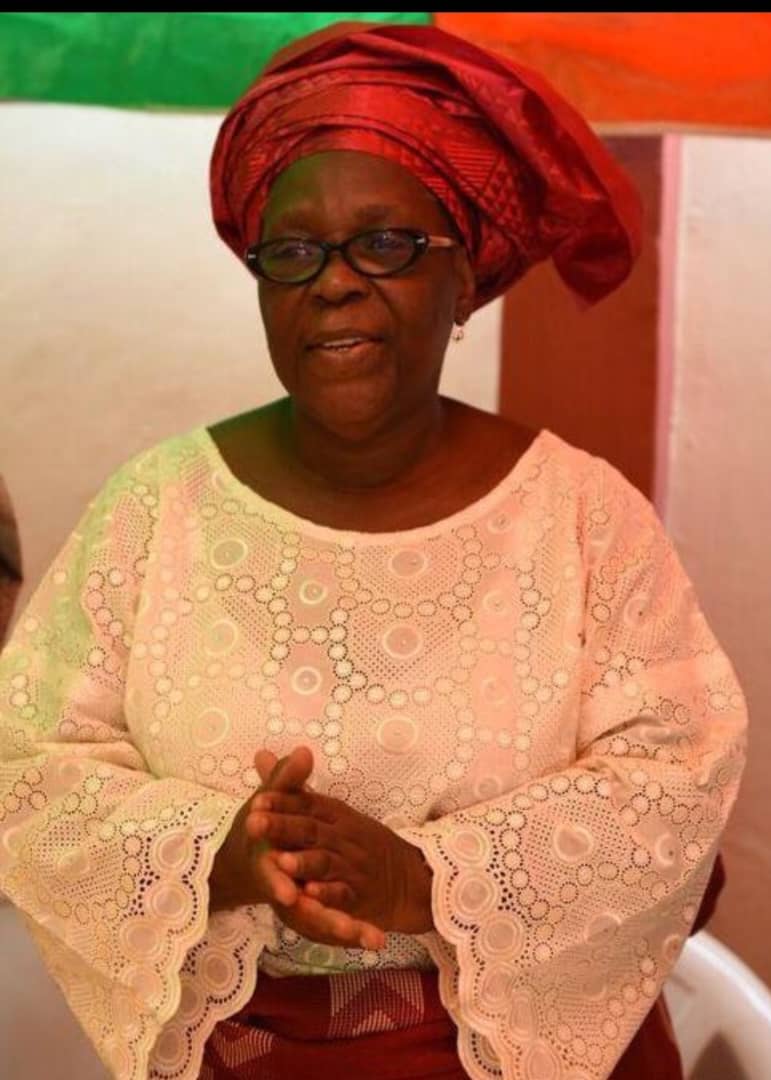
ADIEU MAMA CHRISTIANAH IBIRONKE OSHUNTOLA, CLASSIC “IYANIWURA”

Published

on

ADVERTISEMENT
Zoom Ad
ADVERTISEMENT
Zoom Ad

*By Tunde Olusunle*

Except you have the luxury of a precursor from your family, or you previously cultivated concrete amities, residential accommodation for a new employee deployed to work in Lagos can be a palpable challenge. I was recruited by the primordial Daily Times of Nigeria Plc in 1990 when Yemi Ogunbiyi, the charismatic, visionary and stamina-imbued former university scholar was chief executive of the organisation. My letter of employment was dated April 1990 but didn’t get to me until four months later. Even at that I had every cause to be thankful that it finally came. What if it got missing in the hands of the Nigerian Postal Service, (NIPOST) as was very plausible under the organisation’s virtual monopoly of mail distribution and courier services those days? I couldn’t wait to disengage from the services of the Kwara State government under which I had served in the four preceding years as a graduate teacher. So, Lagos, here I come!
I was a quasi-nomad during the first few months of resumption at the Agidingbi, Ikeja, Lagos complex of the erstwhile Daily Times. I stayed with a cousin in *Idi-Araba* and subsequently with Gbenga Ayeni my classmate and brother from our first day in the university who was already settled in the Daily Times. He was in the Lagos bureau of the London-based *West Africa* magazine which was owned by the Daily Times of Nigeria Plc. Such was the foresight of the iconic Babatunde Jose, first indigenous chief executive of the Daily Times octopus. I remember asking Ayeni during one of our exchanges whether the organisation was not bothered about the welfare of its personnel. Cruelly but matter-of-factly, he told me that so long as I diligently filed your copies, it wouldn’t matter to the newspaper behemoth whether I slept beneath Lagos bridges!

I reached out to my father in Ilorin who once told me he had a friend and former colleague in Lagos. My father had worked with Livestock Feeds Ltd which was a subsidiary of Pfizer Nigeria Ltd, from the late 1960s to the late 1970s. He was variously manager at the Kaduna and Benin City plants. Within the period, he had met Pastor Femi Oshuntola and both men developed a close relationship. They had both retired and settled variously in Ilorin and Lagos. I couldn’t continue living in Lagos like a *Fulani* herdsman so my father graciously gave me a note to his friend in Lagos and asked me to locate his friend.

I traced Baba Oshuntola’s place in Ifako-Ijaiye one of those evenings. Fortuitously, I met him. I introduced myself and handed over the note from my father to him. He pored through the correspondence and shook hands with me. He immediately called out to Mama Oshuntola his wife, introduced me and handed me over to her. The “handing over ceremony” had barely been completed when Mama called Jide and Bankole the two boys in the family. “He is your elder brother,” Mama told them. “He is the son of one of your father’s very close friends and works with the Daily Times. He will stay in your room for as long as he is with us so please tidy up the place and make it available.” And that was how I was taken in and integrated into the Oshuntola family. I participated in the daily family morning devotions and attended the Foursquare Gospel Church which was the family’s denomination.

As media practitioners our official schedules can be unpredictable. Technology was not as advanced those days as different from the pampering it has availed us in today’s world where we can do almost everything with our handheld devices. As a reporter or writer, you had to physically go after the story, interview your subjects and attend events from which you could derive your reports or essays. You wrote in longhand, secretaries in the newsrooms typed your copies, you proofread them, and in some instances you planned the pages as part of the newspaper production process. The open-ended process ensured you couldn’t place your hands on a specific closing time from work. As a young man, I also sat out with friends from time to time to have a few drinks and also take in some culinary ancillaries. The Oshuntolas understood my situation very well and never for once did they chastise me or lock me out. Rather, Mama’s worry would be about if I had had a meal all day or not.

Advertisement

My wife, Funmi and I were still in courtship and she worked with “CSS Bookshop Press” in Lagos. I introduced her to the Oshuntolas and she was wholly and totally embraced. She was accredited to Mama Oshuntola’s kitchen and she took turns with the ladies in the family at the time, Yemisi, Bunmi and Opeyemi to prepare meals for the family. A trained and retired nurse like my own mother, Mama Oshuntola operated the “Golden Mother Clinic and Maternity Centre” within the complex of the family house which was established in 1985. It remains the go-to medical facility in the Ifako-Ijaiye district on account of its uncompromising professionalism. To be sure, the very first child with which my family was blessed, was born into Mama Oshuntola’s arms! I was out there chasing what to write about when my wife fell into labour. By this time we had secured an apartment a whistling distance from the Oshuntolas. Once they got to know that my wife was feeling the pangs of birth, Baba Oshuntola quickly drove to our home to pick up my wife. Such unparalleled affection by the Oshuntola clan.

The good news was conveyed to me via land telephone which was the vogue those days while I was attending a meeting of the editorial board in Daily Times. I promptly obtained permission to go see my folks. I went straight to Mama Oshuntola’s office on arrival to thank her for her motherly kindness. She referred me straightaway to the private ward my wife and newborn were. “Go to that room,” she ordered, “Greet your wife and kiss her, take the baby in your arms and pray together as a blessed family.” If that was touching, then wait for the next. After complying with her guidance I returned to her office to ask for our bill. “You have no bill to settle,” she shocked me. “But quickly get across to your mother in Ilorin and your mother-in-law in Ibadan. Mother and child remain under my watch until I see one of the grandmas.” That was how conscientiously motherly, how generous in spirit she was.

On one of my cross-country tours prospecting for business opportunities, I experienced more bowel movements than normal. My driver had to pull over from the road on many occasions. I had a message to deliver to the Oshuntolas as I got into Lagos on that occasion so their residence was my first port of call and I planned to proceed to the hotel thereafter. I was welcomed by Mama Oshuntola who promptly took me to her office. “You look dehydrated, pale and fatigued,” she said as she checked my vitals. I told her my experience on the trip. Unknown to me, I was suffering from food poisoning. She summoned one of the senior hospital staff and I was taken to a VIP ward. My wrist watch and telephone were taken and handed over to Bankole as a drip was set up for me. I was monitored all through the night. That is the classic Mama Oshuntola.

Christianah Ibironke Oshuntola (nee Odeneye) was born on new year’s day, January 1, 1946 in Ijebu-Awa, Ijebu-Igbo local government area of Ogun State. She had her foundational education in primary and secondary schools in her home community. She was briefly a teacher in Aperin near Ibadan before crossing over to the Catholic Hospital, Oke-Agbo, Ijebu-Igbo as an auxiliary nurse in 1963. Committed to the pursuit of her dream nursing career, she attended the Nursing School in Eleiyele, Ibadan and completed her practical training at the Ijebu-Igbo General Hospital. Upon qualifying as a nurse and duly certificated, she worked at the Ikeja General Hospital, Lagos, between 1969 and 1970. She proceeded to the Island Maternity Hospital, Lagos for her midwifery training from 1970 to 1971.

Advertisement

She obtained a one-year “out-station” experience at the Ejirin Health Centre, Epe and returned to the General Hospital, Ikeja in 1972 and stayed on till 1979. Mama Oshuntola desired to impact her community with her knowledge and experience in healthcare provision. The Ifako-Ijaiye area was just developing and the visionary Mama Oshuntola reckoned that residents of the emergent district could do with proximal medical facilities as against more distant ones. For six years beginning from 1979 therefore, she garnered requisite insights in managing a private health concern by working at County Hospital, Ogba, Ikeja. In March 1985, her dream for a self-owned clinic came to fruition with the setting up of “Golden Mother Clinic and Maternity.” That name is the authentication of who she truly was, a mother with a heart of gold. The outfit will be 40 years in 2025.

Mama got wedded to Pastor Olufemi Oshuntola in 1966 and the union has been blessed with five children and many grandchildren, biological and adopted. Baba Oshuntola passed in 2013 and was interned in Oyo his hometown in Oyo State. Mama Oshuntola was as diligent in service to God as she was in her profession as a lifesaver. She was well-known at the local, zonal and district levels of the Foursquare Gospel Church. She was President of the Foursquare Women International, (FWI) for six years and was ordained a “Deaconess” for her good works. She was further promoted to the rank of “Elder” as she ascended higher leadership levels in the mission. Within her local community, Mama Oshuntola was President of the “Ifako Progressive Union,” (IPU) for 10 years.

Mama turned 78 on Monday January 1, 2024 and passed on a few weeks later. Her rites of passage have been scheduled for Thursday March 21 and Friday March 22, 2024 in Lagos. She was an incredibly generous, affectionate and inspirational matriarch. We will all miss her warmth, candour and earthiness. May her soul rest in the bosom of the Lord.

*Tunde Olusunle, PhD, is a Fellow of the Association of Nigerian Authors, (FANA)*
Advertisement
Continue Reading
Advertisement

News

Army Deploys AI, Simulation Tech to Sharpen War Against Terrorists

Published

on

ADVERTISEMENT
Zoom Ad
ADVERTISEMENT
Zoom Ad

The Nigerian Army is stepping up the deployment of artificial intelligence (AI), simulation technology and data analytics to strengthen battlefield decision-making and improve its readiness to confront terrorists and other security threats.

The Chief of Army Staff (COAS), Lt.-Gen. Waidi Shaibu, disclosed this on Tuesday while declaring open a Simulation Training Seminar at the Land Forces Simulation Centre Nigeria (LFSCN), Giri, Abuja.

Shaibu, who was represented by the Coordinator, Nigerian Military Training Support Assistance Team, Maj.-Gen. Umar Yusuf, said simulation technology would allow commanders to test operational plans, anticipate adversary moves and identify capability gaps before they become costly realities on the battlefield.

He described simulation as more than a training tool, saying it had become a critical command instrument for threat analysis, testing operational plans, strengthening predictive capabilities and exploiting identified vulnerabilities of adversaries.

Advertisement

«“Simulation is far more than a training aid but rather a critical command instrument for supporting data analysis, strengthening predictive capabilities and enabling commanders to match our strengths against identified adversary vulnerabilities,” he said.»

The COAS charged the centre to become a strategic hub for wargaming current and future operations, testing military doctrine and refining contingency plans.

He also directed the centre to draw continuously from lessons learned in operational theatres to identify weaknesses in existing plans and address capability gaps before they affect mission execution.

According to him, simulation-based training will not only boost combat readiness but also cut the financial and logistical burden associated with live exercises, including ammunition consumption and equipment wear.

Advertisement

Shaibu said the seminar, themed “Harnessing Simulation Technologies to Strengthen Nigerian Army’s Roles across Joint, Multi-Agency and Combined Operational Environments,” was particularly relevant to his command philosophy.

He said the initiative aligned with the Operational Readiness pillar of his vision of transforming the Nigerian Army into a professional, adaptable, combat-ready and resilient force.

The Army chief said the seminar’s mix of technical presentations, operational case studies and practical simulation exercises would equip participants with better tools for evaluating operational plans and predicting adversary behaviour.

He urged participants to translate the lessons into improved wargaming, operational planning, command decisions and battlefield outcomes.

Advertisement

Earlier, the Director-General of LFSCN, Maj.-Gen. Mohammed Wabili, said emerging technologies were increasingly being exploited by both security forces and terrorist groups.

Wabili noted that robotics, unmanned aerial vehicles, artificial intelligence and simulation software were becoming more accessible because of their dual-use applications.

He said the development had made it imperative for the Army to continuously adapt its strategies and integrate emerging technologies to maintain an operational edge over its adversaries.

«“The Land Forces Simulation Centre Nigeria is therefore in a unique position to employ advanced simulation software for continuous validation of operation plans and contingency plans,” he said.»

Advertisement

Wabili said the seminar would draw on the operational experience and expertise of resource persons to examine the application of simulation technology from different perspectives.

The seminar, which ends on Thursday, is expected to produce practical methodologies and recommendations for strengthening simulation-based training and operational planning in the Nigerian Army.

The News Agency of Nigeria (NAN) reports that Shaibu also inaugurated the Shooting Simulation Range at the centre.

Advertisement
Continue Reading

News

INEC Sets September 19 for By-Elections in Four States

Published

on

ADVERTISEMENT
Zoom Ad
ADVERTISEMENT
Zoom Ad

The Independent National Electoral Commission (INEC) has fixed September 19, 2026, for five by-elections across four states — Gombe, Kano, Bauchi and Delta.

INEC’s Chief Press Secretary to the Chairman, Dayo Oketola, disclosed this in an interview with the News Agency of Nigeria (NAN) in Abuja on Tuesday.

Oketola said the elections would cover one federal and four state constituencies.

The federal constituency election will hold in Gombe/Kwami/Funakaye Federal Constituency of Gombe State.

Advertisement

The four state constituency elections will take place in Disina and Sakwa constituencies in Bauchi State, Udu Constituency in Delta State, and Dawakin Kudu Constituency in Kano State.

The commission is expected to release further details on the electoral arrangements ahead of the polls.

Continue Reading

News

NGF Inaugurates State Procurement DGs Forum, BPP Boss Hailed for Reform Drive

Published

on

ADVERTISEMENT
Zoom Ad
ADVERTISEMENT
Zoom Ad

The Nigeria Governors’ Forum (NGF) has inaugurated the Forum of State Directors-General of Public Procurement, with stakeholders describing the initiative as a major step towards strengthening transparency, accountability and efficiency in public spending across Nigeria.

The inauguration was held on Tuesday at the NGF Secretariat in Abuja and brought together Directors-General of the Bureau of Public Procurement (BPP), or their equivalents, from the 36 states and the Federal Capital Territory.

Development partners and other stakeholders in the procurement sector also attended the event.

Speaking at the ceremony, the Director-General of the NGF, Abdulallateef Shittu, said the inauguration came at a critical time when the country was seeking to recalibrate its economic architecture.

Shittu stressed the enormous responsibility before state procurement authorities, noting that public procurement plays a critical role in budget implementation and the delivery of government projects at all levels.

He urged members of the forum to uphold professionalism, transparency and efficiency in the discharge of their responsibilities.

Advertisement

The Director-General of the federal BPP, Adebowale Adedokun, said President Bola Ahmed Tinubu was aware of the inauguration of the Committee of Practice of Public Procurement and had given his support to the initiative.

According to him, the initiative aligns with the administration’s Renewed Hope Agenda and its commitment to improving living standards and reducing poverty.

Adedokun described the inauguration as a significant development in Nigeria’s procurement history, saying an effective and transparent procurement system could attract foreign direct investment, boost GDP and stimulate the growth of domestic industries.

He urged members of the forum to strictly adhere to due process, fairness and transparency in the implementation of public projects.

Advertisement

ADSC, DDI Commend BPP Leadership

In a goodwill message, Dr Osahanze Idahosa, who represented the President/CEO of the Africa Development Studies Centre (ADSC) and Douglas Development Institute (DDI), commended Adedokun for creating an enabling environment for collaboration and capacity development in the procurement sector.

Idahosa said Adedokun’s openness to partnerships had enabled ADSC and DDI to contribute to efforts aimed at strengthening Nigeria’s procurement systems at the federal level.

He described the inauguration as significant not only to the forum but also to the broader public procurement reform agenda, particularly at the subnational level.

Advertisement

“Subnational procurement systems are where policy meets people, where transparency and value for money either take root or falter,” Idahosa said.

He urged the new leadership of the forum to deepen accountability, efficiency, professionalism and transparency in public procurement across the states.

According to him, ADSC and DDI have supported procurement transformation through capacity-building programmes, study exchanges and institutional development initiatives aimed at modernising public spending.

Idahosa also recalled a study exchange to South Africa involving one of the forum’s members, saying the experience underscored the need to extend procurement reforms achieved at the federal level to the states.

Advertisement

He said public procurement was too important to governance to be left to isolated efforts, stressing the need for collective commitment across federal and subnational institutions.

He further noted that public procurement accounts for an estimated 15 to 30 per cent of GDP and is linked to between 50 and 60 per cent of leakages in public financial management.

ADSC and DDI congratulated the new leadership and pledged continued support through training, research, knowledge-sharing platforms and international study exchanges.

New Chairman Promises Collective Leadership

Advertisement

In his acceptance speech, the newly elected Chairman of the forum, Ehimoni Ibiyomi, described his appointment as the beginning great of things.

“Today is not simply another meeting or gathering of procurement regulators. It represents the beginning of a new institutional chapter in our collective efforts to strengthen public procurement administration, regulation and professional practice at the sub-national level in Nigeria.I am deeply grateful to my colleagues for the confidence reposed in me and for the opportunity to serve as Chairman of this Forum.I accept this responsibility with full recognition that the office is not about an individual. It is about collective leadership, institutional cooperation and a shared commitment to improving the quality of public procurement across our States.

APPRECIATION TO THE NIGERIAN GOVERNORS’ FORUMLet me begin by expressing our profound appreciation to the leadership and Management of the Nigerian Governors’ Forum Secretariat for providing the platform for the formal inauguration and recognition of this Forum.

“This gesture is significant.For the Forum to function effectively, there must be a structured relationship between the institutions responsible for procurement regulation and the political leadership of the States.

Advertisement

“The Nigerian Governors’ Forum provides an important national platform through which the collective interests of State Governments can be discussed and advanced.

The recognition of our Forum within this broader institutional environment therefore creates an opportunity for procurement to receive the level of strategic attention it deserves in the governance and development agenda of our States.We are particularly grateful for the confidence demonstrated through this engagement, and we assure the Nigerian Governors’ Forum that we will justify this confidence through professionalism, responsibility, transparency and measurable results.

APPRECIATION TO THE FEDERAL BUREAU OF PUBLIC PROCUREMENT

“I also wish to acknowledge the presence and support of the Federal Bureau of Public Procurement.

Advertisement

The Federal BPP has a critical role in Nigeria’s public procurement architecture, and the relationship between the Federal BPP and State Procurement Regulatory Authorities must be one of partnership, knowledge exchange, coordination and mutual institutional respect.Our Forum does not seek to duplicate or compete with the Federal BPP.Rather, we seek to complement the national procurement reform agenda by strengthening the sub-national procurement institutions and ensuring that the experiences, innovations and challenges of the States are effectively brought into national conversations on procurement reform.We look forward to a closer and more structured relationship with the Federal BPP in the areas of technical support, capacity building, professional development, regulatory knowledge sharing, research, standardization and procurement reform.APPRECIATION TO THE WORLD BANK AND DEVELOPMENT PARTNERS

“Our appreciation also goes to the World Bank, particularly the team working under SPESSE, for its continued commitment to strengthening public procurement systems and professional capacity in Nigeria.

“The establishment and formal recognition of this Forum comes at a time when procurement is increasingly being recognized not merely as an administrative function, but as a critical instrument for achieving fiscal responsibility, value for money, infrastructure development, service delivery and sustainable economic development.We therefore see development partners not merely as sources of funding, but as strategic partners in institutional development, knowledge transfer, innovation, research, capacity building and sustainable reforms.

“As a Forum, we are prepared to develop practical programmes that can attract technical assistance and partnership from the World Bank and other development partners.We would particularly welcome collaboration in areas such as:professionalization of State procurement institutions;continuous capacity development for procurement officers;sustainable and socially responsible procurement;digital procurement and procurement data management;procurement performance measurement;development of procurement policies and guidelines;institutional strengthening;research and knowledge development; andpeer learning and exchange programmes.

Advertisement

APPRECIATION TO OTHER INSTITUTIONAL PARTNERS

“I equally acknowledge the presence and interest of the African Development Study Center, the Association of Procurement Professionals of Nigeria, the Corporate Affairs Commission, and other invited institutions and stakeholders.Their presence demonstrates a fundamental reality: public procurement cannot be successfully reformed in isolation.Procurement intersects with corporate governance, business registration and compliance, professional standards, research, finance, technology, infrastructure development and broader public-sector reform.

“For this reason, our Forum intends to pursue strategic partnerships with relevant institutions and organizations whose mandates can contribute to improving the quality and effectiveness of public procurement across the States.

THE VISION OF THE FORUM Distinguished ladies and gentlemen,As we commence this new chapter, we must be clear about what we want this Forum to become.Our vision is to build a strong, professional, collaborative and nationally recognized platform for the Heads of State Public Procurement Regulatory Authorities, capable of contributing meaningfully to procurement reform and good governance in Nigeria.

Advertisement

“We want a Forum that does not merely meet, but delivers”, he added.

Continue Reading

Trending

Copyright © 2024 Naija Blitz News