News
EFCC To Declare Ex-kogi Governor, Yahaya Bello Wanted

- /home/naijuinz/public_html/wp-content/plugins/mvp-social-buttons/mvp-social-buttons.php on line 27
https://naijablitznews.com/wp-content/uploads/2024/03/yahaya-bello.jpg&description=EFCC To Declare Ex-kogi Governor, Yahaya Bello Wanted', 'pinterestShare', 'width=750,height=350'); return false;" title="Pin This Post">
- Share
- Tweet /home/naijuinz/public_html/wp-content/plugins/mvp-social-buttons/mvp-social-buttons.php on line 72
https://naijablitznews.com/wp-content/uploads/2024/03/yahaya-bello.jpg&description=EFCC To Declare Ex-kogi Governor, Yahaya Bello Wanted', 'pinterestShare', 'width=750,height=350'); return false;" title="Pin This Post">


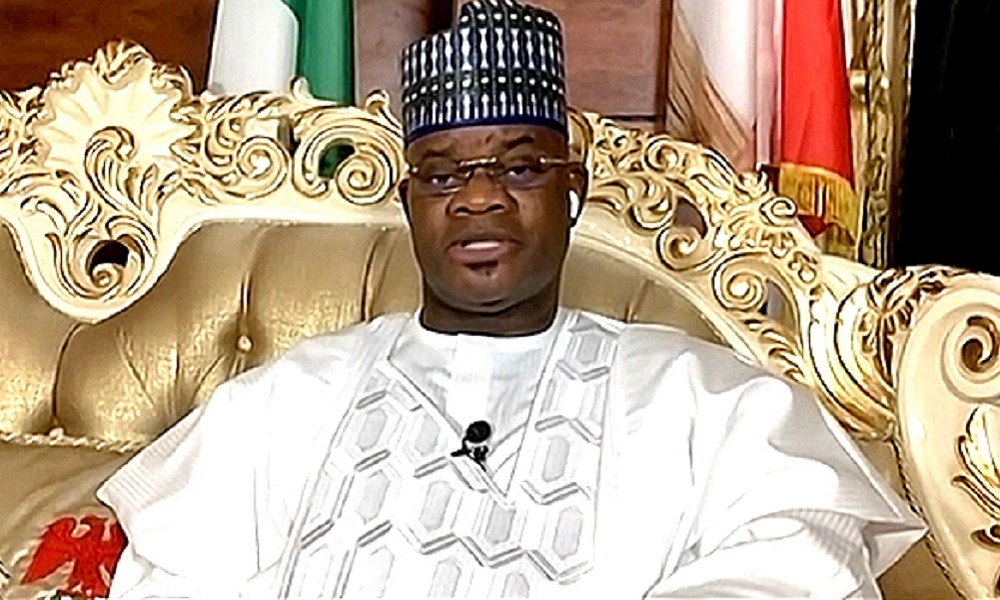
The House of Representatives candidate for Dekina/Bassa in the 2023 elections, Usman Okai, on Saturday called on the Economic and Financial Crimes Commission, EFCC, to declare former Kogi State Governor, Yahaya Bello wanted over the misappropriation of funds.
Okai also issued a fervent call to safeguard the interests of the people of Kogi State regarding the misappropriation of funds by Bello.
He said despite the arduous task of protecting the state, it is imperative not to overlook the plight of civil servants grappling with the repercussions of fiscal misdeeds.
Recall that on August 31, 2021, Justice Tijani Garba Ringim, a vacation judge, had ordered the freezing of the account following an ex-parte application filed by the Economic and Financial Crimes Commission (EFCC).
The anti-graft agency, in a 13-paragraph affidavit in support of the ex-parte application, had stated that it received credible and direct intelligence, which led to the tracing of funds reasonably suspected to be proceeds of unlawful activities in an account No. 0073572696 domiciled in Sterling Bank Plc with the name Kogi State Salary Bailout Account.
Moving the application for the interim forfeiture of the funds on August 31, 2021, A. O. Mohammed, counsel to the EFCC, had urged the court to grant the order to prevent further dissipation of the funds in the account.
Mohammed had also told Justice Ringim that the N20 billion meant to augment payment of salary and running cost of the government was kept in an interest-yielding account with the bank.
According to him, “Instead of using the money for the purpose it was meant for, Sterling Bank Plc, acting on the instruction of the Kogi State government, transferred it from the loan account and placed it in a fixed deposit account.”
Reacting, Kingsley Fanwo, Kogi State Commissioner for Information debunked the allegation, stating that the state government judiciously used the funds for its intended purpose.
Countering Fanwo’s comment, Okai said, “It is untenable to shield any individual, including former Governor Yahaya Bello, at the expense of the welfare of Kogi workers. The ramifications of such actions are profound, with millions of lives hanging in the balance.”
Recently, the Economic and Financial Crimes Commission (EFCC) named former Kogi State Governor Yahaya Bello in an ongoing corruption case but has yet to formally charge him.
Bello’s nephew, Ali Bello, and his associate, Dauda Suleiman, the two defendants in the case, were accused of diverting funds belonging to Kogi State.
But in the newly introduced count, the two defendants in the case were accused of conspiring with Mr Bello to convert the total sum of N80.2 billion (N80,246,470,089.88) belonging to Kogi State Government to personal use.
However, in a statement he signed, Okai urged the indigenes of Kogi and all concerned Nigerians to galvanize support for the EFCC’s efforts to bring him to justice.
He underscored the urgency for enhanced scrutiny of Bello’s alleged transgressions.
According to Okai: “What is EFCC waiting for to declare Bello wanted? And why does EFCC put 2015 in the charges, or are they trying to give ex-Governor a soft landing to escape judgment?
“The staggering loss of billions of naira, a burden borne by the citizens, serves as a stark reminder of the imperative to uphold accountability and transparency in governance.
“Moreover, revelations of property acquisitions in lucrative locales like Dubai, Maitama, and Lagos raise serious questions about fiduciary responsibility.
“It is disconcerting that despite the confiscation of numerous properties by the Economic and Financial Crimes Commission (EFCC), investigations were impeded by immunity provisions.
“Now, with Bello out of office, I urge Kogites and all concerned Nigerians to galvanize support for the EFCC’s efforts to bring him to justice. The misappropriation of public funds cannot be tolerated, and those responsible must be held accountable irrespective of their former positions.”
Speaking further, Okai said, “This call to action is not driven by personal animus but rather by a steadfast commitment to the principles of good governance and fiscal probity.
“As the wheels of justice turn, it is incumbent upon every citizen to remain vigilant and resolute in demanding transparency and accountability from those entrusted with the stewardship of public resources.
“The future well-being of Kogi State hinges upon the integrity of its leaders and the diligence of its citizens in upholding the rule of law.”

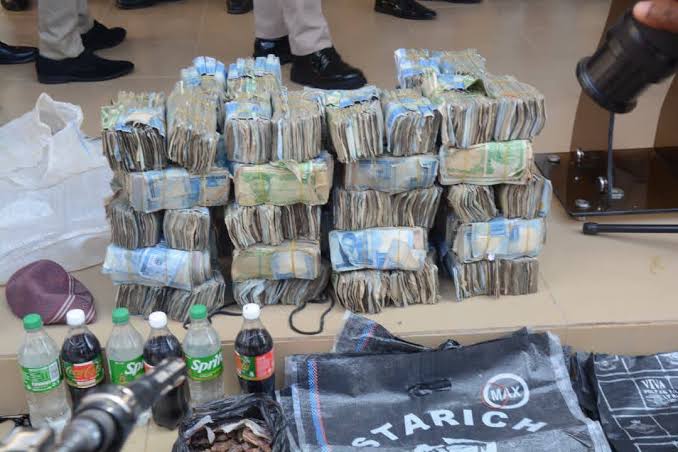
The Nigeria Immigration Service (NIS) has intercepted two persons in Adamawa State with ₦34 million in cash, with the suspects allegedly linked to a kidnapping syndicate.
The suspects were intercepted with the cash during an operation in the state.
The Comptroller of Immigration Service, Sani Sule-Jega, disclosed this at a media briefing in Yola, the Adamawa State capital.
According to him, preliminary investigations showed that the suspects claimed the money was intended to pay ransom for their abducted brother.
In a separate operation, the Adamawa State Command of the NIS also intercepted 17 irregular migrants at Rumde Baruw in Yola North Local Government Area of the state.
The undocumented migrants were intercepted at a private three-bedroom residence during an operation by officers of the command.
Sule-Jega said preliminary profiling showed that 13 of the migrants were Cameroonian nationals, comprising eight males and five females, while the remaining four were Chadian nationals, all males.
The Comptroller noted a shift in the accommodation pattern of undocumented migrants, particularly their increasing use of private and unregistered apartments instead of conventional lodging facilities such as hotels.
He said the service was intensifying surveillance and intelligence-led operations to identify and address emerging patterns of irregular migration in the state.
Sule-Jega reiterated the command’s commitment to safeguarding Nigeria’s territorial integrity, improving migration management and strengthening border security.
He urged members of the public to remain vigilant and provide credible information that could assist security agencies in maintaining peace and security across the state.
The suspects and recovered cash have been taken into custody for further investigation and necessary action in accordance with established procedures and applicable laws.
The Comptroller General of Immigration has directed that the suspects and exhibits be handed over to the Nigeria Police Force for further investigation.
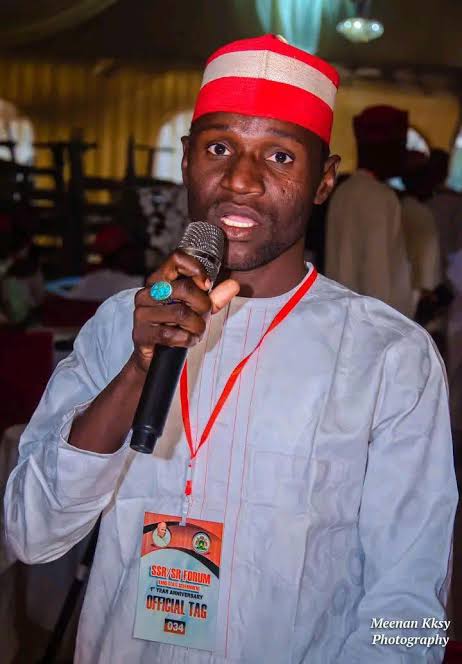
A popular Kano social media political commentator, Ibrahim Khalil Dan Shagamu, has been reportedly killed in his apartment in Kano State.
Dan Shagamu, who operated under the brand Dan-shagamu International, was known for his social media videos and commentary on political, religious and community issues.
Amnesty International Nigeria confirmed his killing in a statement posted on X on Wednesday, saying his body was found in a pool of blood at his home.
“Amnesty International strongly condemns the killing of a social media political commentator Ibrahim Khalil Dan Shagamu whose body was found today in a pool of blood at his home in Kano,” the organisation said.
“He was brutally slaughtered after being overpowered by his killers.”
Details surrounding the circumstances of the killing were still unclear as of Wednesday.Amnesty International called on the Nigerian authorities to investigate the killing and ensure that those responsible are brought to justice.
“The Nigerian authorities must investigate this incident and ensure that those suspected of responsibility are brought to justice,” it said, while tagging the Nigeria Police Force.
The rights organisation also expressed concern over what it described as increasing politically related threats and intimidation ahead of the elections.
“As the elections approach, we continue to receive disturbing reports of politically related threats to life and intimidation,” Amnesty said.
News of Dan Shagamu’s death has sparked an outpouring of grief among his followers and residents, with many taking to social media to express shock and offer prayers for his soul.
Reports circulating on social media said Dan Shagamu was killed in a gruesome manner, with some describing the attack as “yankan rago”, a Hausa expression referring to throat-slitting.

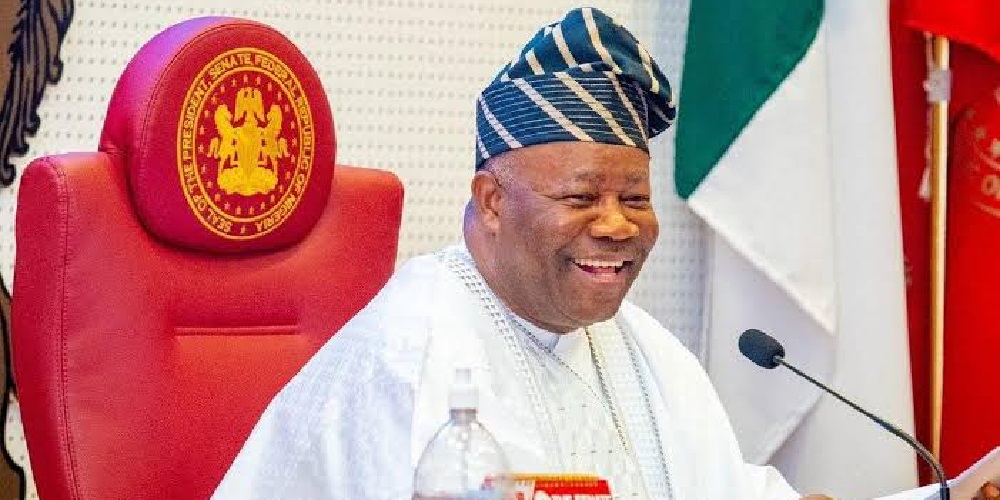
Senate President Godswill Akpabio has petitioned the Department of State Services (DSS) to investigate a viral social media statement allegedly attributed to him in which he purportedly warned Northerners that they would “suffer the most” if President Bola Tinubu loses the 2027 election.
The statement, circulated on Facebook and other digital platforms alongside Akpabio’s photograph and official designation, has sparked controversy, prompting the Senate President to formally deny making the remark.
In a petition signed by his Chief of Staff, Chinedu Akubueze, Akpabio described the publication as “manifestly false, inflammatory and dangerously divisive,” urging the DSS to investigate its origin and distribution.
The viral graphic attributes the following statement to Akpabio: “Northerners, you will be the ones to suffer the most, if you allow Tinubu to lose the election.”
Akpabio, however, said there is no credible evidence linking him to the statement.
According to the petition, no identifiable date, venue, speech, interview, audio or video recording, official statement or credible media report has been produced to authenticate the alleged quotation.
The Senate President alleged that the graphic was deliberately fabricated and presented as an authentic statement with the aim of misleading the public, inflaming regional sentiments and portraying him as hostile to Nigerians from the North.
Akpabio also drew the DSS’s attention to several individuals allegedly identified through a preliminary review of publicly accessible Facebook records as among the early amplifiers of the disputed material.
The petition named Abdullai Musa, who allegedly shared the graphic in a Facebook group known as “Sheik Muhammad bin Uthman Group 24,” and Uzoma Chilaka, whose Facebook post allegedly reproduced the graphic alongside commentary attributed to Boniface Uzoma Chilaka and Engineer Ibrahim Umar Ammar.
It further referenced a verified Facebook account belonging to Ibrahim Umar Ammar, which allegedly later reproduced the graphic and substantially similar commentary.
Akpabio’s office, however, stressed that the individuals mentioned in the petition should not be presumed guilty, describing them only as “material persons of interest” whose activities could assist investigators in tracing the origin and circulation of the disputed publication.
The Senate President is asking the DSS to investigate the publication records, devices, communications and provenance of the graphic in accordance with Nigerian law.
The petition comes amid heightened political activity ahead of the 2027 general elections and growing concerns over the spread of inflammatory, misleading and fabricated political content on social media.
The statement was issued by Jackson Udom, Special Assistant to the President of the Senate on Media.

2027: Taraba Central Women Rally Behind Manu, Kefas, Tinubu, APC Candidates (Photos)

Immigration nabs two with N34m allegedly for kidnap ransom

Finally, FG pays university, polytechnic, lecturers eight months tool allowance




-

 Entertainment23 hours ago
Why I Rejected Political Offers That Could Have Made Me Billionaire – Actress Omotola
-
 Metro23 hours ago
I sold my newborn twins for N300,000, stole other children for baby factory — Suspect
-
 Sports23 hours ago
NFF Appoint Augustine Eguavoen As Super Falcons Interim Head Coach
-
 Entertainment23 hours ago
Socialite Igho “Tiny” underwent 5 different penis enlargement procedures with us — Clinic reveals
-
 News22 hours ago
FG Moves To End Certificate Fraud With Nat’l Learner ID
-
 News23 hours ago
National Open University Appoints Acting Bursar Days After Marafa Was Shot Dead In Zamfara
-
 News15 hours ago
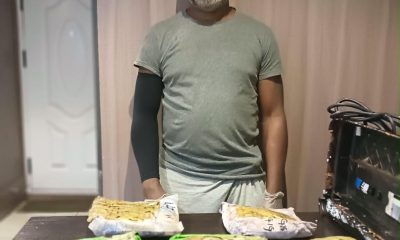
49.70kg heroin: Fugitive drug kingpin, Festus Ibewuike, arrested after years on the run+Photos
-

 Economy17 hours ago
See Dollar to Naira exchange rate today, September 9, 2026