Connect with us

News

King Charles to attend Easter Sunday service

Published

on

ADVERTISEMENT
Zoom Ad
ADVERTISEMENT
Zoom Ad

By Francesca Hangeior

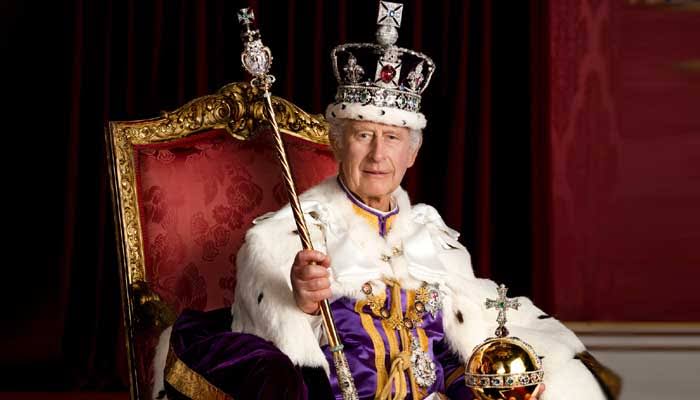
Britain’s head of state, King Charles III, will attend an Easter Sunday church service, Buckingham Palace announced Tuesday, in his most high-profile engagement since revealing a cancer diagnosis.

Charles and his wife, Queen Camilla, will attend the Easter Mattins Service at St George’s Chapel at Windsor Castle — a long-standing annual tradition of Britain’s royal family.

The announcement comes after the 75-year-old king’s daughter-in-law Catherine, Princess of Wales, last week said that she was also receiving treatment for cancer.

Advertisement

That leaves the monarchy in an unprecedented crisis in modern times, with two of its most senior members simultaneously fighting serious illness.

Catherine, 42, is married to Charles’s eldest son and heir, Prince William, making her a future queen.

Charles was just 17 months into his reign when the palace announced in early February that he had cancer and would be pausing all public-facing engagements as he commenced treatment.

He had been admitted for surgery for a benign prostate condition in January but was subsequently diagnosed with an unrelated cancer.

Advertisement

The type of cancer has not been disclosed.

He has been continuing with behind-the-scenes work and holding some in-person meetings and increasingly attending official events.

On Tuesday, he was photographed receiving community and faith leaders at Buckingham Palace in central London.

Last week, photos showed him meeting diplomats at the palace, as well as veterans of the Korean War, at two separate engagements.

Advertisement

Charles said in a statement earlier this month that he would continue to serve “to the best of my ability”, and he had been “deeply touched” by people’s wishes for his health.

He praised Kate, as she is widely known, for her bravery last week by revealing in a video message that she was undergoing chemotherapy.

She was last seen at a public engagement on December 25, then underwent abdominal surgery in January, after which cancer was found.

Her Kensington Palace office said at the time that she was not expected to be ready to return to public duties until after Easter.
Advertisement
Continue Reading
Advertisement

News

Troops Repel Terrorists’ Attack on Military Post in North-east, Eliminate 12 ISWAP/Boko Haram Fighters

Published

on

By

ADVERTISEMENT
Zoom Ad
ADVERTISEMENT
Zoom Ad

Troops of the Joint Task Force (North East), Operation Hadin Kai (OPHK), have eliminated 12 ISWAP and Boko Haram fighters during a failed attack on a military position in the Kirawa axis of Sector 1 OPHK Area of Responsibility in the early hours of May 22, 2026.

The operation was carried out under Operation Desert Sanity and Siege Operations after suspected terrorists attempted to infiltrate positions occupied by troops of the 153 Task Force Battalion and other allied forces along the Nigeria-Cameroon border axis.

According to the Media Information Officer of Joint Task Force (North East) Operation Hadin Kai, Lieutenant Colonel Sani Uba, the attack was promptly detected and effectively repelled by troops and members of the Civilian Joint Task Force (CJTF), who responded with superior firepower and maintained control of their positions throughout the encounter.

The terrorists were subsequently forced to abandon the mission and retreat towards the Cameroon axis after suffering heavy casualties during the gun battle.

Advertisement

“Intelligence, Surveillance, and Reconnaissance assets, as well as platforms of the Air Component of OPHK and partner forces, provided coordinated support during the operation.

“Following the engagement, troops confirmed the neutralisation of 12 terrorists, while several others reportedly escaped with gunshot wounds, as evidenced by blood trails along their withdrawal routes.

“Recovered items included AK-47 rifles, rocket-propelled grenade systems, ammunition, and a PKT machine gun, further weakening the operational capability of the insurgents in the area,” the statement said.

Troops of OPHK, working alongside the Civilian Joint Task Force, have continued exploitation operations to track fleeing terrorists and recover additional weapons and equipment, while maintaining heightened vigilance across the area.

Advertisement

The Joint Task Force reaffirmed its commitment to sustaining pressure on terrorist groups until they are completely neutralised across the theatre of operations.

The military high command also commended the troops for their gallantry, professionalism, and swift response, which it described as the third successful operation recorded within the week, urging them to sustain the operational momentum in the interest of national security.

Continue Reading

News

Africa needs $2.8 trillion by 2030 to meet climate goals — Report

Published

on

By

ADVERTISEMENT
Zoom Ad
ADVERTISEMENT
Zoom Ad

Africa will require an estimated $2.8 trillion between 2020 and 2030 to effectively tackle climate change and meet its commitments under the Paris Agreement.

A new report policy analysis by Harrison Rehoboth Consulting, states that the continent needs about $277 billion annually to fund climate adaptation and mitigation projects.

The investment is aimed at reducing the impact of floods, droughts, desertification, and other environmental challenges threatening livelihoods across the region.

Femi Sekoni, spokesperson for Harrison Rehoboth Consulting, said the funding is critical to strengthen infrastructure, protect vulnerable communities, improve food security, expand renewable energy, and support a transition to cleaner, more sustainable economies.

Advertisement

Despite the growing climate crisis, the report notes that Africa remains heavily dependent on foreign sources for climate financing. Domestic investors contribute only a small portion of available funds.

Local institutions including banks, pension funds, insurance firms, and private investors account for roughly 10% of climate finance flowing into the continent. International organisations and development partners provide the larger share.

Uneven distribution and structural barriers

Climate financing across Africa remains unevenly distributed. Countries with stronger financial systems and investment structures—South Africa, Egypt, Nigeria, Morocco, and Kenya—attract a significant percentage of available funding.

Advertisement

Many other African countries facing severe climate threats struggle to attract large-scale investment.

The report cites weak institutions, limited project preparation capacity, policy uncertainties, and concerns over investment risk as key barriers.

The analysis also raises concerns about the structure of climate financing available to African countries.

A large portion comes in the form of loans rather than grants or concessional financing, which could worsen debt burdens for nations already facing rising debt-servicing obligations and economic pressure.

Advertisement

Climate adaptation projects such as flood control systems, drought resilience programmes, and coastal protection infrastructure often provide social and environmental benefits but generate little direct revenue.

This makes loan repayment difficult for governments.

The report notes that rising debt levels have fueled global discussions around climate justice and the need for wealthier nations to provide more grant-based support to vulnerable countries facing the harsh effects of climate change.

The report acknowledges efforts by institutions such as the African Development Bank and some African countries, including Rwanda, Kenya, Senegal, Egypt, and South Africa, to expand climate investment initiatives and develop financing frameworks capable of attracting private investors.

Advertisement

However, Harrison Rehoboth Consulting stresses that Africa’s climate finance gap cannot be closed through international promises alone.

It calls for stronger domestic financial systems, improved governance, better project planning, and reforms in global financial institutions to make climate funding more accessible.

Key recommendations include: increasing concessional financing and grants for adaptation projects; improving collaboration between governments and private investors; strengthening policies that encourage long-term investment in climate and infrastructure projects; and building domestic financial capacity to reduce over-reliance on external funding.

The report concludes that closing Africa’s climate finance gap will require coordinated action at national, regional, and global levels to ensure funding reaches the countries and communities most exposed to climate risk.

Advertisement
Continue Reading

News

Obi meets S’African leaders over xenophobic attacks on Nigerians

Published

on

By

ADVERTISEMENT
Zoom Ad
ADVERTISEMENT
Zoom Ad

Presidential aspirant in the Nigerian Democratic Congress (NDC), Peter Obi, has intensified efforts to protect Nigerians in South Africa following new reports of xenophobic attacks and rising depression among victims.

Obi made his involvement public in a Facebook post on Saturday, detailing a series of high-level meetings with South African government officials and political party leaders.

“After speaking with Nigerians in Cape Town yesterday, I was able to have meaningful discussions this morning with three South African ministers and political party leaders regarding the ongoing challenges related to immigration, regional collaboration, and fostering peaceful coexistence,” Obi wrote.

He revealed that he met with Mr. Leon Schreiber, South Africa’s Minister of Home Affairs and a prominent figure in the Democratic Alliance; Mr. Velenkosini Hlabisa, Minister of Cooperative Governance and Traditional Affairs and leader of the Inkatha Freedom Party (IFP); and Mr. Gayton McKenzie, Minister of Sports, Arts and Culture and leader of the Patriotic Alliance (PA).

Advertisement

Obi described the conversations as “productive and candid,” with a focus on migration, economic strains, youth unemployment, security issues, and rising tensions faced by African foreigners in South Africa.

He emphasised that Nigeria and South Africa—as two of the continent’s most prominent nations—must enhance dialogue and seek solutions based on justice, mutual respect, and the rule of law.

“In challenging times, leaders and citizens alike need to demonstrate responsible leadership, compassion, and restraint,” he said.

The discussions also stressed the importance of law-abiding behavior, avoiding violence, resisting hate or provocation, and allowing lawful institutions to address grievances through democratic processes.

Advertisement

“The progress of Africa hinges on our ability to create unity, foster economic inclusivity, invest in our communities, and uphold the dignity of every African, no matter where they live,” Obi added.

Continue Reading

Trending

Copyright © 2024 Naija Blitz News