
News
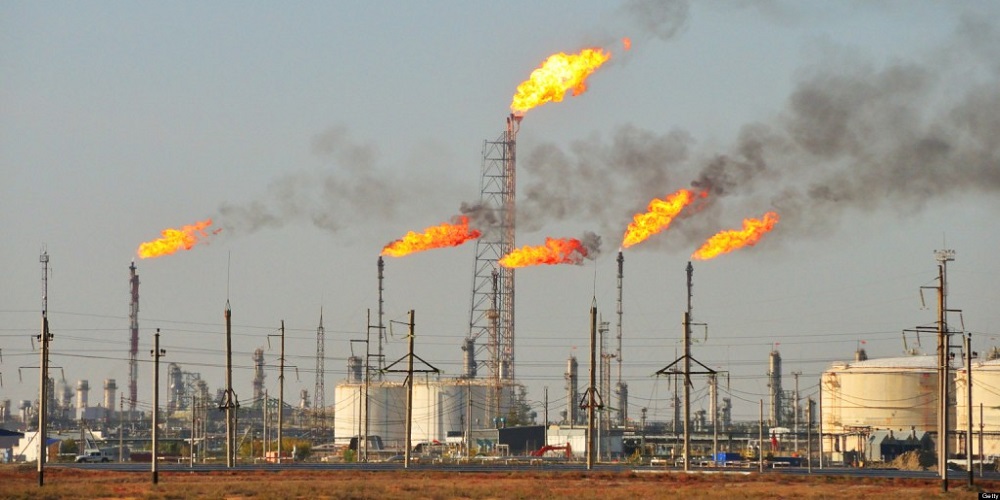
FG To Review Oil Firms’ Plans On Gas Flaring

- /home/naijuinz/public_html/wp-content/plugins/mvp-social-buttons/mvp-social-buttons.php on line 27
https://naijablitznews.com/wp-content/uploads/2024/03/Gas-Flaring.jpg&description=FG To Review Oil Firms’ Plans On Gas Flaring', 'pinterestShare', 'width=750,height=350'); return false;" title="Pin This Post">
- Share
- Tweet /home/naijuinz/public_html/wp-content/plugins/mvp-social-buttons/mvp-social-buttons.php on line 72
https://naijablitznews.com/wp-content/uploads/2024/03/Gas-Flaring.jpg&description=FG To Review Oil Firms’ Plans On Gas Flaring', 'pinterestShare', 'width=750,height=350'); return false;" title="Pin This Post">


The Minister of State for Environment, Dr Iziaq Salako, said that the ministry, in collaboration with the National Oil Spill Detection and Response Agency, will begin regular reviews of both international and indigenous oil companies’ plans to ensure alignment with the goal of ending routine gas flaring by 2030.
Salako said this in Abuja on Tuesday at the national stakeholders engagement meeting on methane mitigation and reduction in Nigeria’s oil and gas sector.
Methane, a potent greenhouse gas with significant warning potential compared to carbon dioxide, poses a major threat to the health and well-being of current and future generations and climate protection goals.
Reducing methane emissions, especially in the oil and gas sector, will strengthen climate action and unlock benefits for public health, food security, and economic development.
Salako said practical steps are being taken to address methane emissions in the country.
He noted that “Collaborative efforts of government institutions have led to the development of methane guidelines. In addition, the Federal Ministry of Environment through the National Oil Spill Detection and Response Agency will be commencing the periodic review of the plans of international and indigenous oil companies to ensure they stay on course to end routine gas flaring by latest 2030.
“Furthermore, Nigeria is poised to embark on methane reduction projects that will enable Nigeria’s commitment to methane reduction and meeting net zero emissions by 2060. It is, therefore, reassuring to see initiatives such as the project methane mitigation and reduction in Nigeria’s oil and gas sector, which is being initiated with today’s event.
“This national stakeholders engagement event is expected to serve as a platform to discuss the complexities of methane mitigation and reduction within Nigeria’s oil and gas industry. Presentations here today will provide insights and overview on existing policies and implementation strategies, including key stakeholders involved in these efforts. Through rigorous research and collaborative efforts, we can identify gaps, challenges, and opportunities for effective national actions.”
The minister stated that President Bola Tinubu is committed to environmental sustainability and climate action in line with the multilateral environmental agreements that Nigeria is party to.
The Permanent Secretary of the ministry, Mahmud Kambari, said it is necessary to address methane emissions in the oil and gas industry as the stakes and opportunities are high.
Kambari said, “Let’s harness our collective expertise, innovation, and resources to drive sustainable development, foster economic growth, and enhance energy security in Nigeria and beyond.
“As we engage in today’s discussions, let us be guided with openness and inclusivity. challenge assumptions, and explore creative solutions that align with the principles of equity, justice, and environmental integrity.”
In his remarks, the Executive Director of the Africa Policy Research Institute, Dr Olumide Abimbola, noted that there is a need to address the pressing impacts of methane emissions on climate and environment.
Abimbola, who was represented by Mr Chibuikem Agbaegbu, stated that methane, a potent greenhouse gas, poses a significant threat to both the health of our planet and the well-being of current and future generations.
“Recognizing this urgent need, APRI, in close collaboration with the Department of Climate Change, Federal Ministry of Environment, has embarked on a crucial project focused on methane mitigation and reduction within Nigeria’s oil and gas sector.
“This project, funded by the Government of Canada through Environment and Climate Change Canada, underscores the strategic importance of taking proactive steps to reduce methane emissions. Not only does it align with Nigeria’s climate action commitments, but it also offers opportunities to unlock co-benefits for public health, food security, and economic development, in line with Nigeria’s national and sustainable development goals.
“Today’s event marks a significant milestone in our collective efforts. It provides a platform for stakeholders from diverse sectors to come together, share insights, and chart a unified course towards sustainable methane mitigation and reduction in Nigeria. Through constructive dialogue and collaboration, we aim to identify challenges, explore opportunities, and pave the way for effective and sustained action,” he said.

The Council of Legal Education has revealed that 983 candidates failed the May 2026 Bar Final (Resit) Examination, representing 54.7 per cent of those who sat the examination.
The council disclosed this in a public notice signed by its Secretary and Director of Administration, Aderonke O. Osho, and shared on Monday.
The results were approved at the council’s Third Quarter Hybrid Meeting held on Thursday, August 13, 2026.
According to the notice, “a total of 1,955 candidates sat for the examination,” with “885 candidates” recording a pass, while “55 candidates” obtained conditional passes.
The council further stated that “983 candidates” failed the examination, while 32 candidates were absent and the results of 19 others were withheld.
The Council said, “The results recorded an overall pass rate of 45.3 per cent. 54.7 per cent of the candidates did not attain the prescribed pass mark.”
Meanwhile, the Council of Legal Education has released a list of 122 universities approved to offer Law in Nigeria as of August 2026.
The council warned prospective students against enrolling in unaccredited institutions, stressing that only universities accredited by it are authorised to admit students into the Bachelor of Laws programme.
It added that students admitted into unapproved Law programmes would not be eligible for admission into the Nigerian Law School.
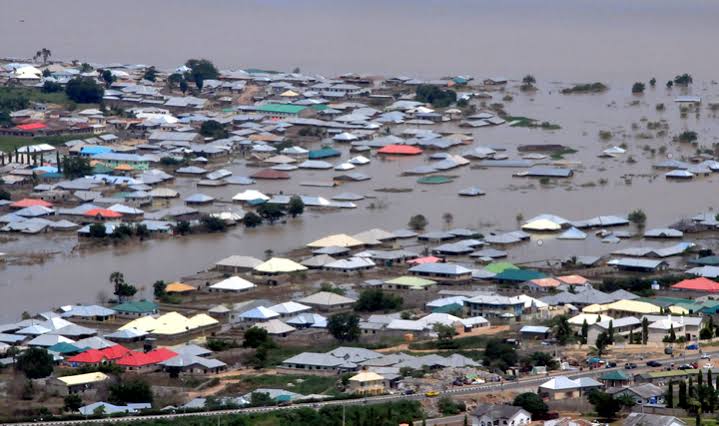
Flooding in Abuja and the Federal Capital Territory (FCT) is not a new phenomenon, nor did it begin with the current administration.
Available records and reports show that flooding has remained a recurring challenge across the nation’s capital for decades, affecting communities under successive administrations.
Historical reports indicate that flooding incidents were recorded in parts of the FCT as far back as 1995, with further incidents reported in 1999.
The problem became particularly severe in 2012, when several communities across the territory were affected by heavy flooding.
The pattern continued in subsequent years. In 2014, Trademore and other communities experienced flooding, while Lokogoma and surrounding areas were badly affected in 2017.
Flooding was also reported in Karshi and Kokosu in 2018, followed by severe incidents in Lokogoma in 2019.
In 2020, communities in Gwagwalada and other parts of the FCT were affected.
The following year, Trademore and Lugbe again witnessed serious flooding.
The scale of the problem increased in 2022, when several Abuja communities, including areas around the city centre, experienced major flooding. Trademore and other communities were again affected in 2023, while Orozo and other areas recorded flooding incidents in 2024.
The history makes one point clear: Abuja’s flooding problem predates the present administration and has persisted through different governments.
This, however, should not be used to dismiss the concerns of residents who continue to suffer losses whenever heavy rainfall overwhelms drainage systems and waterways.
Rather than turning every flooding incident into a political blame game, the focus should be on finding lasting solutions.
The FCT requires better and interconnected drainage systems, proper urban planning, protection of natural waterways, effective waste management and strict enforcement of regulations against construction on flood plains and drainage channels.
Urban development must also take account of changing rainfall patterns and the rapid expansion of Abuja and its satellite communities. Areas that were once sparsely populated are now densely built up, increasing pressure on existing drainage infrastructure.
The current FCT administration, led by Minister Nyesom Wike, therefore faces an important responsibility. The recurring nature of the problem provides an opportunity to develop a comprehensive flood-management strategy that goes beyond emergency interventions after every major rainfall.
Wike has repeatedly emphasised infrastructure development in the FCT. The real test will be whether ongoing and future projects can significantly reduce the frequency and impact of flooding across vulnerable communities.
Abuja’s flooding crisis should therefore be treated as a long-standing urban planning and infrastructure challenge, rather than simply a political weapon. What residents need is not an argument over who started the problem, but a sustainable solution that protects lives, homes, businesses and public infrastructure.
The history of flooding in Abuja is clear. The challenge is decades old; the responsibility to fix it is now.
News
“I Paid for His Flight, Hotel, Visa and Brought Him to the UK” — Lady Shares Ordeal After Lover Walked Away


A lady has shared her experience after allegedly sponsoring her partner’s relocation to the United Kingdom, claiming that their relationship ended just four months after he arrived in the country.
According to the woman, she bore the financial burden of making the relocation possible, including paying for his flight, hotel and visa.
However, she alleged that the relationship came to an end only a few months after his arrival in the UK.
The woman further claimed that the man’s family subsequently contacted her and asked her not to report the matter to the UK Home Office.
Sharing her experience, she said: “I paid for his flight, hotel, visa and brought him to the UK. He broke up with me four months after, and his family had the guts to tell me not to inform the Home Office.”
Her account has sparked reactions on social media, with many users debating the potential risks of taking on significant financial responsibility to facilitate a partner’s relocation abroad.
The incident has also renewed discussions about relationships involving immigration arrangements, financial commitments and the expectations that may arise when one partner plays a major role in helping the other relocate.

Council of Legal Education reveals 983 failed law school bar resit

(Analysis)Abuja Flooding Did Not Start Today: FCT Must Move Beyond Political Blame

Sad: Venezuela death earthquake toll hits 6,438




-

 News17 hours ago
See Dollar to Naira exchange rate today, August 17, 2026
-
 News20 hours ago
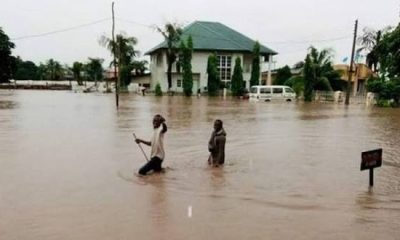
Abuja Flooding: FCT Minister’s Aide Takes a Swipe at Adeyanju
-
 News17 hours ago
NDLEA destroys N301bn worth of cocaine, heroin, opioids, others in Lagos (Photos)
-

 Politics17 hours ago
Edo Assembly elects Yekini Idiaye Speaker As Agbebaku Resigns
-
 News15 hours ago
Osun Poll: Davido’s Father Alleges APC Spent N60bn on Vote Buying
-

 News16 hours ago
Edo new speaker reveals why speaker was flushed out
-

 News13 hours ago
Nigeria Eyes Manufacturing Boom as FG Moves to Maximise China’s Zero-Tariff Policy
-

 News15 hours ago
Nigerian lands in Accra Court for attempting to rob three Ghanaian banks