Foreign
Iran Sentences Police Officer To Death For Killing Protester
An Iranian court has sentenced a police chief in northern Iran to death after he was charged with killing a man during mass protests in 2022, local media reported Wednesday.

Local police chief Jafar Javanmardi was arrested in December 2022 over the killing of a protester during the widespread demonstrations sparked by the death of Mahsa Amini in custody.
Iranian Kurd Amini, 22, died in custody in September that year following her arrest for allegedly violating the country’s strict dress code for women.

Javanmardi was sentenced to death “in accordance with the Islamic law of retribution, known as the ‘qisas’ law, on the charge of premeditated murder”, the lawyer for the victim’s family, Majid Ahmadi, told the reformist Shargh daily.
The protestor, Mehran Samak, 27, succumbed to injuries he sustained after being hit by shotgun pellets during a rally in the northern city of Bandar Anzali on November 30, 2022.
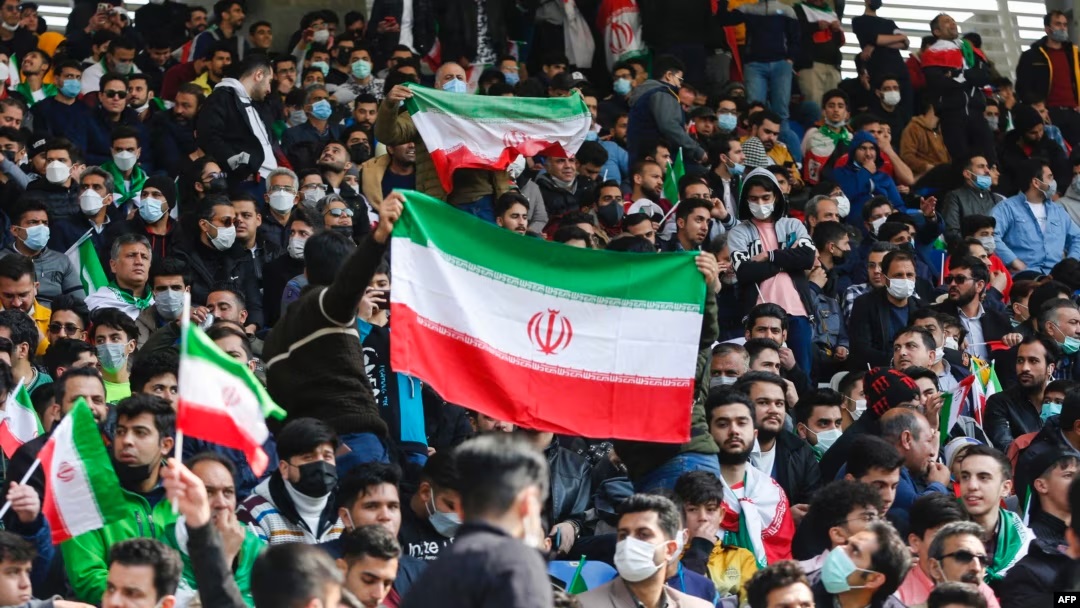
Rights groups based outside of Iran said Samak was shot dead by Iranian security forces after honking his car horn in celebration of Iran’s loss to the United States in the 2022 World Cup held in Qatar while at the Amini protest.
The defeat eliminated Iran from the football tournament and drew a mixed response from government supporters and opponents.
The lawyer, Ahmadi, said at the time that the police official was charged with “violating the rules for firearms usage, resulting in the death of Samak”.
In mid-January, the judiciary’s Mizan Online website said the Supreme Court had annulled a death sentence and referred the case to another court.
Gilan province, where Bandar Anzali is located, was a flashpoint of the nationwide protest movement that shook Iran.
Hundreds of people were killed during the months-long protests, including dozens of security forces, while thousands were arrested and nine men were executed in cases linked to the demonstrations.
Foreign
Serbia’s President Vucic resigns as ruling party faces youth-backed opposition
Serbia’s President Aleksandar Vucic announced his resignation on Sunday, seven months before his tenure was originally scheduled to expire.
56-year-old Vucic ended his second and final five-year term amid campaigning for the October 25 snap parliamentary vote to elect 250 members of the National Assembly.
His departure sets the stage for early presidential elections and allows him to be appointed Prime Minister if the Serbian Progressive Party (SNS) retains majority control of government.
“I have faithfully served you and my fatherland, Serbia. I am proud of what we have done together,” he told supporters at the Presidency building in Belgrade.
The populist politician, who previously served as Minister of Defence, said the first round of presidential elections will be held by the end of December.
Serbia’s constitution stipulates that the presidential election must be completed within 90 days, with the campaign lasting between 30 and 60 days.
Outgoing parliament Speaker Ana Brnabic will serve as acting President until her successor is elected. She was the Prime Minister from 2017 until 2024.
Factor Plus polling places public support for Vucic’s United Serbia, led by the SNS, at 49%. The youth-backed opposition challenger, known as the Student List, has about 37% popularity.
The movement stemmed from the “Students in Blockade” group after the collapse of the Novi Sad railway station canopy in November 2024, which sparked anti-corruption protests.
The group, which comprises academics, public figures, and professionals, gathered nearly 70,000 signatures and was proclaimed as number 3 on the ballot by the Electoral Commission.
Foreign
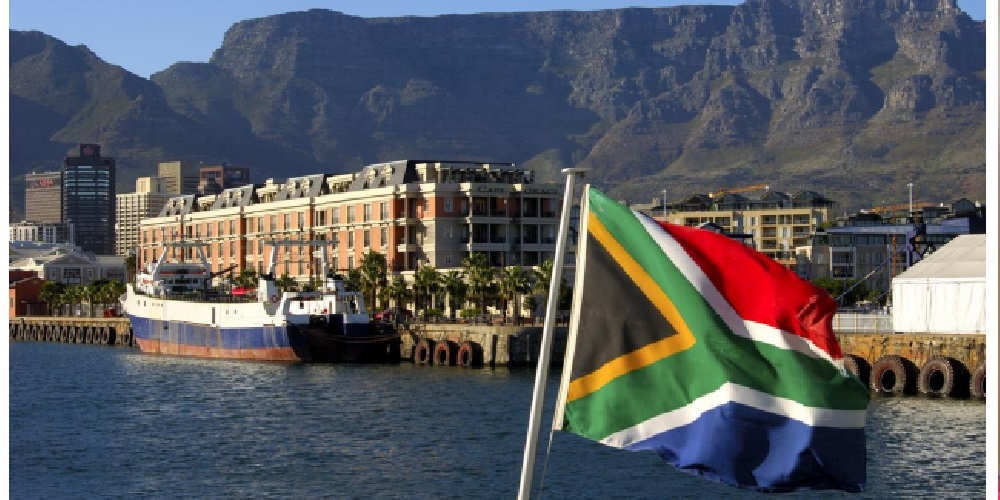
Sad! 27 Killed, 26 Injured in Two South Africa Mass Shootings as Police Hunt Gunmen
At least 27 people have been killed and 26 others wounded in two separate mass shootings near South Africa’s two biggest cities, Johannesburg and Cape Town, triggering a police manhunt for the attackers.
The shootings occurred within hours of each other, adding to growing concern over gun violence and organised crime in the country.
In the first attack, eight gunmen armed with assault rifles and pistols stormed a tavern in Wedela township, about 80 kilometres southwest of Johannesburg, at around 9:30 p.m. on Saturday.
Police said the attackers opened fire on patrons drinking outside before moving into the tavern and continuing the shooting.
Seventeen people — 13 men and four women — were killed, while 15 others sustained gunshot injuries.
The suspects reportedly searched some patrons and took their mobile phones before fleeing in two vehicles, which they later set ablaze. No arrests had been made as of Sunday, according to police.
The motive for the Wedela attack remained unclear. However, police said preliminary information suggested it could have been linked to an earlier incident at the same tavern.
Deputy provincial police commissioner Major General Fred Kekana said investigators had obtained images of the suspects and were confident they would eventually be identified and arrested.
The shooting occurred in an area where authorities have been intensifying operations against illegal mining and criminal networks operating around abandoned mine shafts.
Second attack near Cape Town
Hours later, another mass shooting was reported in Lwandle township, near Cape Town.
Police said gunmen opened fire at an entertainment venue selling grilled meat at about 1:46 a.m. on Sunday, killing 10 people and injuring 11 others.
Five victims died at the scene, while five others succumbed to their injuries after being taken to medical facilities.
Police said detectives were searching for the perpetrators, with no arrests reported in connection with the attack.
Videos circulating on social media showed people drinking and dancing before gunfire erupted, sending revellers scrambling for safety.
Ramaphosa vows action
The two attacks came just days after another mass shooting near Durban in which 11 people, including a pregnant woman, were killed at a house party.
South Africa has long struggled with high levels of violent crime, with shootings frequently linked to gangs, organised criminal groups and disputes involving local businesses.
President Cyril Ramaphosa condemned the latest attacks and said security agencies would continue efforts to reduce violent crime.
“This cannot go on like this,” Ramaphosa said, stressing that people should not be able to pick up firearms and randomly shoot others.
South Africa has repeatedly deployed soldiers to support police operations in areas affected by serious violence and organised crime.
Despite those efforts, shootings remain a persistent security challenge.
The latest attacks have renewed questions about the availability of firearms, organised crime and the ability of security agencies to prevent repeated mass-casualty shootings.
Police investigations into both incidents are ongoing, and authorities are urging anyone with information about the attackers to come forward.
Foreign
TikTok agrees to teen limits in US settlement
TikTok on Friday agreed to pay Alabama at least $100 million and enact time limits and other restrictions for teen users, avoiding trial with a settlement modelled on Instagram-owner Meta’s recent agreement with US states.
A trial had been set to begin Monday in the southern US state over claims by Alabama that TikTok misled parents about tools meant to shield children from harmful content.
Attorney General Steve Marshall hailed the settlement as “a great day for Alabama parents.”
“Tonight, they can rest easier knowing real protections are in place to shield their children from the dangers of social media addiction,” he said.
Under the settlement, TikTok will send $100 million to Alabama and could possibly pay up to $300 million in total if other states accept similar agreements.
Alabama’s suit was the latest in a wave of litigation targeting social media companies across the United States over the harm their apps allegedly cause young users.
In August, Meta agreed to pay $18 billion to settle a sweeping lawsuit brought by US states accusing it of designing Instagram and Facebook to get children addicted.
TikTok’s settlement with Alabama mirrors safety provisions agreed by Meta, including a two-hour daily time limit for teens, restricted access from midnight to 6:00 am, and suspending notifications during school hours.
It will also strengthen age verification, ban beauty filters for teenagers, and offer young users a non-personalised content feed.
In addition, it includes a conditional restriction that Meta also agreed to: expanding the nighttime shutdown period to 10:00 pm to 7:00 am, if other platforms also commit to do the same.
– More suits pending –
“TikTok’s priority has always been fostering a safe and positive space where people can be creative, discover what they love, and connect with their community,” a company spokesperson told AFP.
“This builds on our commitment and core objective to continually enhance our robust safety tools to protect teens,” the spokesperson added.
More than a dozen other states, including California and New York, still have active suits against TikTok.
The company has previously settled cases against it that were headed for trial, including a Los Angeles lawsuit brought by a young woman and a suit from a Kentucky school district.
Meta, by contrast, has taken its chances in court — with bruising results.
In March, a jury in New Mexico ordered the Facebook and Instagram owner to pay $375 million after finding it had misled the public about the safety of its platforms for children.
That same month, a Los Angeles jury found Meta and Google’s YouTube negligent in the case of a 20-year-old woman who said she became hooked on social media as a child, awarding her $6 million.
Going to trial would have exposed TikTok to unprecedented public scrutiny of how it handles safety internally, with company documents and executive testimony potentially aired in open court.
Alabama originally sued TikTok and its Chinese parent company ByteDance in April 2025, alleging the app was engineered to hook young users “just like a sophisticated gambling machine.”
The state later narrowed its case to claims under Alabama’s Deceptive Trade Practices Act, focusing on whether TikTok misrepresented the effectiveness of features such as “Restricted Mode” and “Kids Mode.”
Despite TikTok’s assurances that users in that mode should not see mature themes, the accounts were quickly served videos about suicide, self-harm, eating disorders, alcohol and sex, according to the filing.
AFP
-
News23 hours agoPastor Chris Breaks Silence on Mother’s Death, Reveals Lessons She Left With Him
-
News23 hours agoBandit Threat Shuts School, Hospital, Orphanage in Kwara — Cleric
-
Entertainment23 hours agoTimaya vows he cannot disrespect Fela or his family
-
News23 hours agoEurope-bound bridegroom excretes 72 wraps of cocaine at Enugu airport(Photos)
-
News23 hours agoGroup Demands Omosehin’s Removal as NAICOM Chief Over Recapitalisation Allegations
-
News22 hours agoReforms in NNPCL under Ojulari have increased Nigerians’ trust in current administration – Centre