

By Gloria Ikibah
The House of Representatives has resolved to investigate the alarming increase in human trafficking across Nigeria, mandating its Committees on Human Rights, Interior and Police Affairs to probe the activities of trafficking syndicates and the effectiveness of existing measures to combat the crime. 
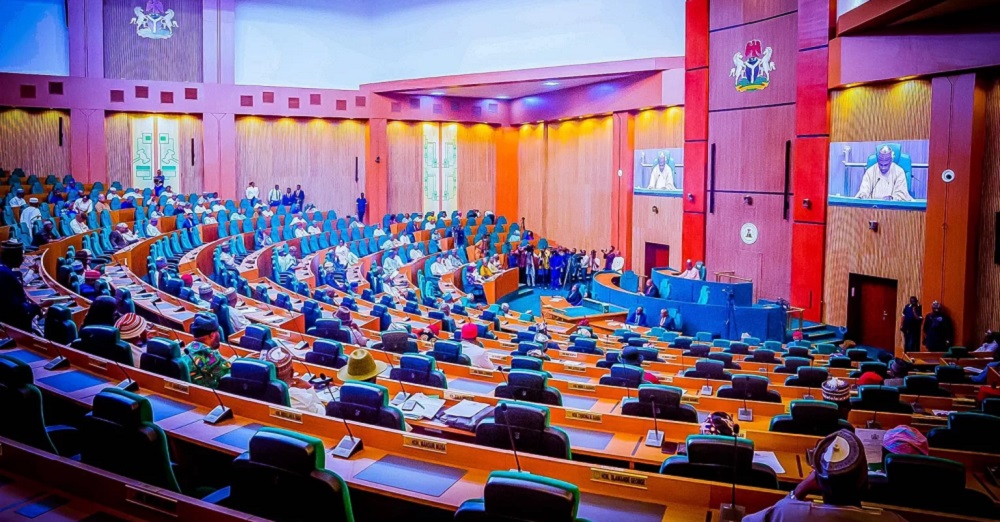
The resolution followed a motion sponsored by Rep. Dominic Okafor, on the “Need to Investigate the Alarming Increase in Human Trafficking in Nigeria”, on Wednesday at plenary.
The lawmakers drew attention to the growing threat posed by human trafficking, particularly to women, children and other vulnerable groups.
The House noted that human trafficking remained a grave violation of human rights and dignity, involving the recruitment, transportation, transfer, harbouring or receipt of persons through force, coercion, deception, abuse of vulnerability or other prohibited means for the purpose of exploitation.
Lawmakers expressed concern that victims were increasingly subjected to commercial sexual exploitation, forced labour, domestic servitude, forced begging, organ harvesting and other forms of degrading abuse.
They attributed the growing vulnerability of Nigerians to trafficking to poverty, unemployment, insecurity, displacement, irregular migration and the activities of organised criminal networks.
The House further observed that many victims were lured through false promises of employment, education, marriage and opportunities abroad, only to end up in exploitative conditions characterised by physical abuse, psychological trauma and, in some cases, death.
The lawmakers also expressed concern that trafficking networks operated across state and international borders, taking advantage of porous borders, inadequate public awareness, weak coordination among relevant agencies and difficulties in identifying and prosecuting offenders.
While acknowledging the efforts of the National Agency for the Prohibition of Trafficking in Persons (NAPTIP), the Nigeria Police Force, the Nigeria Immigration Service and other relevant institutions, the lawmakers stressed the need to strengthen their operational capacity, funding, intelligence-sharing and victim-support mechanisms.
The House recalled the provisions of the Trafficking in Persons (Prohibition) Enforcement and Administration Act, 2015, and other relevant legislation designed to prevent trafficking, prosecute offenders and protect victims.
Consequently, the lawmakers urged the Federal Government to intensify nationwide efforts to prevent and combat human trafficking through the enforcement of existing laws, intelligence-led investigations and effective prosecution of traffickers and their collaborators.
They also called for stronger victim identification, rescue, rehabilitation, psychosocial support, legal assistance and reintegration programmes, particularly for women, children and other vulnerable persons.
The House further urged the government to address the underlying factors that expose Nigerians to trafficking, including poverty, unemployment, limited access to education and the exploitation of displaced persons.
In addition, NAPTIP and other security and law-enforcement agencies were urged to strengthen surveillance, intelligence-sharing and coordinated operations against trafficking networks, particularly those operating across state and international borders.
The lawmakers also called on the Federal Ministry of Education, relevant state ministries, local government authorities, civil society organisations and community leaders to intensify public enlightenment campaigns on the tactics employed by traffickers and the dangers of deceptive recruitment and irregular migration.
The House subsequently mandated its Committees on Human Rights, Interior and Police Affairs to investigate the current scale and patterns of human trafficking in Nigeria.
The committees are also expected to examine the activities of trafficking syndicates, assess the adequacy of existing enforcement measures and identify the challenges confronting agencies responsible for combating the crime.
They are to report their findings to the House within four weeks for further legislative action.