News
Nigeria’s Senator Jibrin Elected As First Deputy Speaker of ECOWAS Parliament
- /home/naijuinz/public_html/wp-content/plugins/mvp-social-buttons/mvp-social-buttons.php on line 27
https://naijablitznews.com/wp-content/uploads/2024/02/Barau-Jibrin.jpg&description=Nigeria’s Senator Jibrin Elected As First Deputy Speaker of ECOWAS Parliament', 'pinterestShare', 'width=750,height=350'); return false;" title="Pin This Post">
- Share
- Tweet /home/naijuinz/public_html/wp-content/plugins/mvp-social-buttons/mvp-social-buttons.php on line 72
https://naijablitznews.com/wp-content/uploads/2024/02/Barau-Jibrin.jpg&description=Nigeria’s Senator Jibrin Elected As First Deputy Speaker of ECOWAS Parliament', 'pinterestShare', 'width=750,height=350'); return false;" title="Pin This Post">
…as Togo failed to attend inaugural ceremony

By Gloria Ikibah
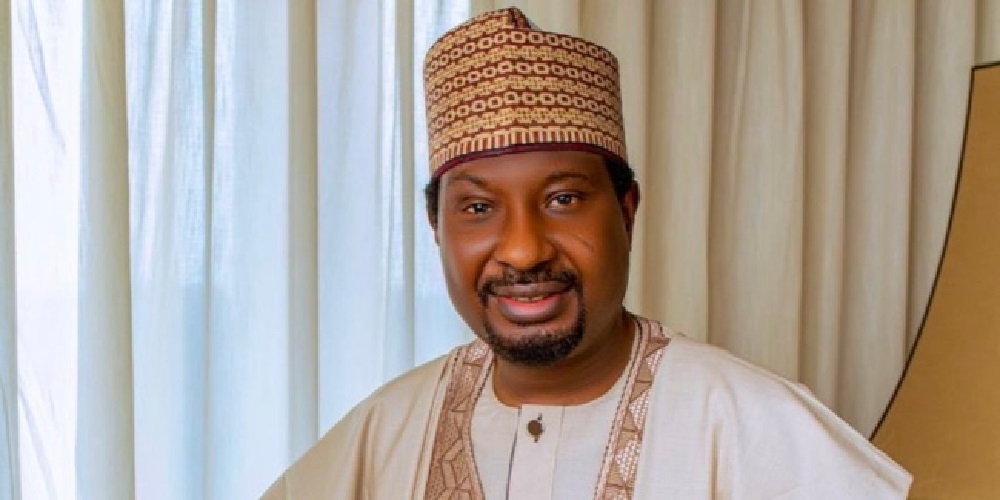
Nigeria has been elected the first Deputy Speaker of the Parliament of the Economic Community of West African States ECOWAS, with Senator Barau Jibrin clinching the position.

Naijablitznews.com recalled that President Bola Tinubu who is Chairman of the ECOWAS Authority of Heads of States and government inaugurated the Sixth legislature of the ECOWAS Parliament on Thursday in Abuja.
The inaugural Session of the Parliament formally marks the commencement of the business of the 6th legislature, is in pursuant to Article 28 of the Supplementary Act on the Enhancement of the Powers of the ECOWAS Parliament of 2016, following the end of the Fifth Legislature of the ECOWAS Parliament on March 8, 2024.
Members were also expected to elect The Speaker of the Sixth Legislature to serve a four-year tenure, in accordance with the provisions of the Supplementary Act 2016.
And Article 24 of the Supplementary Act of the Parliament relating to the Enhancement of the Powers of Parliament provides that the position of the Speaker of the Parliament shall be allocated to Member States by the Authority, in line with an established rotational system based on the alphabetical order of Member States.
The Republic of Togo comes next in
alphabetical order of Member States after Sierra Leone which held the position of Speaker in the just ended Fifth Legislature.
And in this legislature the Republic of Togo will be fielding a candidate for the position of the Speaker but this didn’t happen as Togolese delegates were absent for this auspicious occasion.
However, the regional legislature was unable to elect a substantive Speaker to lead the Parliament following the inability of Togo which the position was zoned, to produce the Speaker due the political situation in their country.
For the election of the four Deputy Speaker to take place, the Bureau must be constituted and with the inability to produce a speaker due to the absence of the Togolese delegates, the parliament nominated a pro-temporal speaker.
Inpursuant to the Supplementary Act the oldest member and the two youngest memebers of parliament were selected to constitute the Bureau. After this a motion was moved by an MP to nominate Hon. Edwin Snowe Jnr as the Speaker Pro-Tempo to enable the Parliament elect the first, second, third and forth Deputy Speakers.
The motion to make Hon. Snowe the Speaker Pro-Tempo was seconded and unanimously adopted by the MPs through a voice vote.
Hon. Barau was nominated by a Nigerian member of Parliament, Awaji- Inombek Dagomie Abiante, in a session presided by Liberia’s Edwin Snowe as Speaker Pro-Tempo. His nomination was seconded by another Nigerian member of Parliament, Senator Ireti Kingibe and he was voted unopposed.
The office of the Deputy Speaker of the ECOWAS Parliament is usually reserved for Nigeria anytime the country is not presiding as Speaker of the Parliament.
Also elected as Second Deputy Speaker was Hon. Adjaratou Traore Coulibally from Cote d’Ivoire, who polled 54 votes to beat Hon. Cecile Ahoumnon from Benin, who got zero vote.
The position of the Third Deputy Speaker was won by Hon. Alexander Kwamena Afenyo- Markin from Ghana in a unanimous voice vote.
The Fourth Deputy Speaker position was won by Hon. Billay Tunkara from The Gambia with 47 votes beating Hon. Orlando Pereira Dias from Cabo Verde who got 7 votes.
Outgoing Speaker of the Parliament, Sidie Mohammed Tunis, thanked the regional body for the opportunity given him to serve for four years even as he reaffirmed his commitment to the regional body.
Hon. Tunis was appointed ceremonial speaker, following the gap that exists because Togo, the country to which the Speakership was zoned, was not able to produce the Speaker due to some political situation in the country.
Earlier on Thursday, had announced his intention to travel to Togo to see how best to get a Speaker.
He said: “I will proceed to Togo to have a conversion with the authorities there with a view to encouraging them to have their delegation inaugurated as soon as possible so that we can have a Speaker to run this institution. It is very, very important. There are so many things to do in the sub-region, and the ECOWAS Parliament has a very big role to play in the sub-region but they will not be able to do so without the Speaker.”
Nigeria’s Minister of Foreign Affairs, Ambassador Yusuf Maitama Tuggar in his address, noted that in the face of the various challenges confronting the region, including peace, stability, security, as well as the unity of the region, the role of the Parliament is more important than ever.
The Minister, who is also the Chair of the ECOWAS Council of Ministers, commended the outgoing 5th Legislature, especially its Speaker Mohamed Tunis, for their invaluable contributions to the ECOWAS Parliament and the Organization as a whole.
He said “it is, therefore, imperative that the Parliament continues to work in synergy with the ECOWAS Commission and other Institutions that serve as the executive and judicial arms of our governments”.
News
Atiku alleges ₦8.8tn off-budget spending, demands probe of Tinubu administration
Former Vice President Atiku Abubakar has called for an immediate investigation into what he described as alleged off-budget public expenditure amounting to about ₦8.8 trillion, following findings contained in the latest International Monetary Fund (IMF) Article IV consultation on Nigeria.
In a statement posted on his verified Facebook page on Saturday, Atiku said a Reuters report published on July 1, 2026, quoting the IMF, indicated that public expenditures equivalent to about 2 per cent of Nigeria’s Gross Domestic Product (GDP) were not captured in recent official budgets.
According to him, the alleged omission translates to approximately ₦8.8 trillion, which he claimed was spent outside Nigeria’s statutory budgetary framework.
The former presidential candidate described the development as “the most consequential act of fiscal impunity in Nigeria’s recent democratic history,” urging Nigerians, the media, civil society organisations, the National Assembly and other democratic institutions to demand accountability.
Atiku alleged that the unrecorded expenditures arose from large-scale government projects executed outside the official budget, arguing that such spending bypassed legislative oversight, procurement regulations and scrutiny by the Auditor-General.
He further claimed that the alleged practice mirrored what he described as an off-budget revenue management model previously operated in Lagos State, alleging that it had now been replicated at the federal level.
The former vice president also alleged that about ₦800 billion had been unlawfully deducted from statutory allocations due to state governments, claiming the funds were diverted without constitutional or legislative approval.
According to him, the combined value of the alleged off-budget expenditures and deductions from state allocations suggested the creation of a political war chest ahead of the 2027 general elections.
Atiku further linked the allegations to the recent controversy surrounding the Presidential Foreign Intervention Promotion Council (PFIPC), describing both issues as evidence of what he termed a pattern of fiscal opacity.
He argued that while Nigerians had been subjected to economic reforms, including fuel subsidy removal, exchange rate adjustments and high interest rates, significant public funds were allegedly being spent outside official budgetary processes.
The former vice president maintained that greater fiscal transparency could have provided resources to stimulate economic growth, support businesses, create jobs and stabilise the economy.
He called on the National Assembly to immediately convene investigative hearings into the IMF findings and urged the Auditor-General of the Federation to conduct a comprehensive audit of all alleged off-budget expenditures.
Atiku also demanded that the Federal Government publish details of all projects executed outside the approved budget, including contractors involved, procurement processes followed and officials who authorised the spending.
He further called on the Economic and Financial Crimes Commission (EFCC), the Independent Corrupt Practices and Other Related Offences Commission (ICPC) and other anti-corruption agencies to investigate the alleged unrecorded expenditures and deductions from state allocations.
“The National Assembly must convene emergency investigative hearings on the IMF’s findings without further delay,” Atiku said.
He added that the Federal Government should restore the alleged ₦800 billion deducted from state allocations and provide a full account of how the funds were utilised.
The former vice president urged civil society groups, professional bodies, the business community and international development partners to press for greater transparency and accountability in public finance management.
News
Immigration graduates 62 senior officers from Command Course
The Nigeria Immigration Service, NIS, has graduated 62 senior officers from the 13th Command Course.
The Comptroller-General of the Service, Mrs Kemi Nanna Nandap expressed the Service’s unwavering commitment to leadership development and institutional capacity building following the development.
Nandap charged the 62 graduating senior officers of the 13th Command Course, drawn from Commands and Formations across the Service, to uphold professionalism, integrity, and excellence in leadership upon completion of the three-month intensive training focused on strategic leadership, Border Security, and Migration Management.
Mrs Nandap was represented at the graduation ceremony by the Assistant Comptroller-General in charge of the Directorate of Human Resource Management, ACG SU Agba.
According to the Public Relations Officer of the NIS, Akinsola Akinlabi, the officers graduation ceremony was held at the Immigration Command and Staff College (ICSC), Sokoto.
Akinlabi said the Commandant of the Immigration Command and Staff College, ACG A.D. Bagari, also commended the Officers for successfully completing the rigorous training programme.
He urged them to apply the knowledge and leadership skills acquired during the course to improve operational effectiveness, remain responsive to the demands of public service, and continue to demonstrate vigilance in safeguarding Nigeria’s borders.
He said the Immigration boss reaffirmed the Service’s resolve to build a highly professional, disciplined, and technology-driven workforce capable of effectively addressing emerging migration and Border Security challenges.
He encouraged the graduating officers to justify the confidence reposed in them by exhibiting integrity, accountability, innovation, and transformational leadership in the discharge of their responsibilities.
Other highlights of the ceremony included the conferment of the Pass Command Course (PCC) honour on the 62 graduates and presentation of awards to outstanding participants by the representative of the CGI and other distinguished guests, as well as the decoration of Course Provosts with a Badge of Honour by the Commandant in recognition of their exemplary service.
News
Step-By-Step Guide To Apply For 2026 FRSC Recruitment
The Federal Road Safety Corps (FRSC) has opened its recruitment portal for the 2026 nationwide recruitment exercise, inviting qualified Nigerians to apply for vacancies across its Officer, Marshal Inspectorate and Road Marshal Assistant cadres.
The application portal will remain open for four weeks, while the Corps has emphasised that the recruitment exercise is free of charge and warned applicants against paying anyone for employment.
Interested applicants are advised to ensure they meet the eligibility requirements for their preferred cadre before beginning the registration process.
Below is a step-by-step guide on how to apply for FRSC recruitment.
Step 1: Confirm your eligibility
Applicants must be Nigerian citizens by birth, medically, physically and psychologically fit, single, and of good character with no criminal record.
Male applicants must be at least 1.65 metres tall, while female applicants must have a minimum height of 1.58 metres.
Step 2: Choose your preferred cadre
Applicants should select the cadre that matches their qualifications.
Officer Cadre: B.Sc., B.A., HND, MBBS, LLB, B.Pharm or B.Eng., with a valid NYSC discharge or exemption certificate. Age limit: 18 to 35 years.
Marshal Inspectorate Cadre: ND, NCE, Registered Nurse/Midwife (RN/RM) or CHEW qualification. Age limit: 18 to 30 years.
Road Marshal Assistant Cadre: Minimum of three to five O’Level credits, including English Language and Mathematics. Age limit: 16 to 30 years.
Drivers and Riders: O’Level qualification, valid driver’s licence and relevant trade certificate where applicable. Heavy truck drivers must be between 26 and 40 years.
Step 3: Get your documents ready
Before starting the application, applicants should have the following:
National Identification Number (NIN)
Primary and secondary school certificates
Tertiary institution certificates and transcripts (where applicable)
NYSC discharge or exemption certificate
Local Government Certificate of Origin
Birth certificate or age declaration
Recent passport photograph
Valid email address and phone number
Step 4: Visit the recruitment portal
Go to the official FRSC recruitment portal at recruitment.frsc.gov.ng and create an applicant account using your email address, phone number and NIN. Applicants are advised to avoid unofficial websites.
Step 5: Verify your account
After registration, check your email for the activation link sent by the FRSC and verify your account before proceeding with the application.
Step 6: Complete the application form
Log in to the portal, choose your preferred cadre and accurately fill in your personal information, educational qualifications, contact details, next-of-kin information and work experience where applicable.
Step 7: Upload your credentials
Upload scanned copies of the required documents and passport photograph, ensuring all files meet the specified requirements.
Step 8: Submit and print your acknowledgement slip
Review your application carefully before clicking the submit button.
Applicants are advised to print the completed application form and acknowledgement slip immediately after submission, as both documents will be required during the screening and Computer-Based Test (CBT) for shortlisted candidates.
The FRSC reiterated that the recruitment exercise is free and urged applicants to report anyone demanding payment or promising employment in exchange for money.
-
News15 hours agoNigeria-Japan Move to Deepen Diplomatic Ties
-
Politics13 hours ago2027 election: ‘ INEC reveals N500bn already in its kitty
-
News13 hours agoIran’s Supreme Leader Mojtaba Khamenei barred from father’s funeral rites over fear of potential assassination
-
Metro59 minutes agoAfter 67 days in bandits den, Ekiti abducted worshippers go back to their families
-
News16 hours agoSAD: IED explosion kills one, injures nine in Borno
-
News16 hours agoMedical doctor who issued independent report on Kanu’s health nabbed in Enugu
-
News13 hours agoTCN announces planned outage at Abuja transmission substation
-
News13 hours agoPresidency Orders DSS, EFCC To Probe Govt Officials Linked To PFIPC Scandal

Warning: Undefined variable $user_ID in /home/naijuinz/public_html/wp-content/themes/zox-news/comments.php on line 49
You must be logged in to post a comment Login