News
Nigeria’s VAT collection, lowest in Africa – Abbas
- /home/naijuinz/public_html/wp-content/plugins/mvp-social-buttons/mvp-social-buttons.php on line 27
https://naijablitznews.com/wp-content/uploads/2024/05/Tajudeen-Abbas.jpg&description=Nigeria’s VAT collection, lowest in Africa – Abbas', 'pinterestShare', 'width=750,height=350'); return false;" title="Pin This Post">
- Share
- Tweet /home/naijuinz/public_html/wp-content/plugins/mvp-social-buttons/mvp-social-buttons.php on line 72
https://naijablitznews.com/wp-content/uploads/2024/05/Tajudeen-Abbas.jpg&description=Nigeria’s VAT collection, lowest in Africa – Abbas', 'pinterestShare', 'width=750,height=350'); return false;" title="Pin This Post">
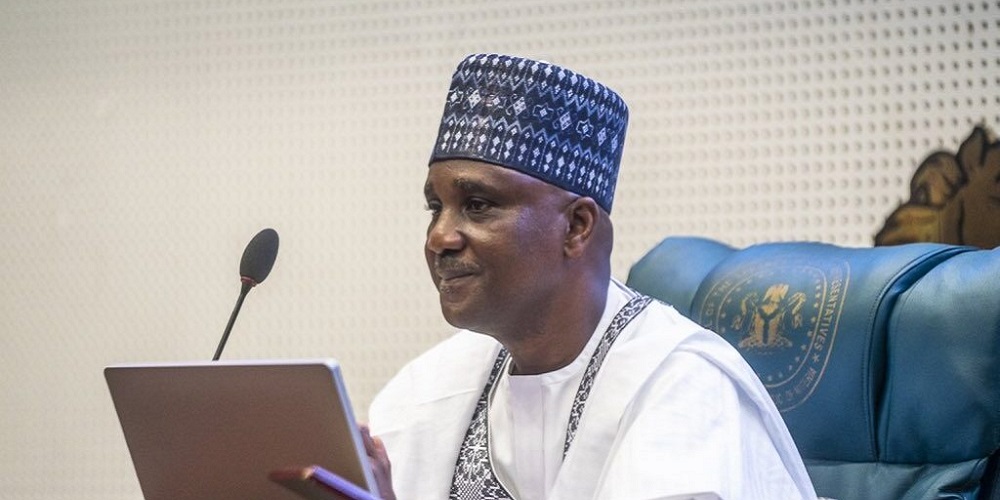
The Speaker of the House of Representatives, Tajudeen Abbas, has described Nigeria’s Value Added Tax collection as the lowest in the African continent.

This was as the Speaker attributed the development to what he referred to as significant inefficiencies in the nation’s tax system.
According to the Speaker, the House would continue to do its part to assist the Federal Government’s drive to reposition the nation’s economy.

Mr Abbas stated this on Tuesday in Abuja, while delivering a keynote address at the opening of a two-day retreat for members of the House.
The legislative retreat on economic transformation and development was organised by the House in collaboration with the Federal Inland Revenue Service and the Konrad Adenauer-Stiftung Foundation.
Speaking on the theme, “Navigating change: Legislative strategies for economic transformation”, Abbas noted that the House made a deliberate decision to focus on tax reforms and modernisation as well as a review of the implementation of the Petroleum Industry Reform Act (2021).
He said, ”Comparatively, Nigeria’s efficiency in collecting Value Added Tax is the lowest among its African peers, indicating significant inefficiencies in its tax system.
“This trend of low tax revenue, coupled with a continued dependency on the increasingly unstable oil revenue, presents a major risk to Nigeria’s fiscal sustainability. It also highlights an important area for potential reform to boost revenue and stabilise the country’s economic framework.
“The lack of growth in non-oil revenue sources and the volatile nature of oil income underscore the urgent need for Nigeria to diversify its revenue base and enhance its fiscal management to ensure economic stability and growth.”
The Speaker also expressed delight that the legislative retreat was taking place “at a point in our nation’s economic landscape when the current administration is diligently implementing policies and initiatives to steer our economy towards recovery, growth, and sustainable development.”
He continued, “As a critical arm of government, the legislature has a crucial role in shaping our nation’s economic transformation and development.
“Part of our law-making powers is the authority to enact tax reforms and strengthen resource governance mechanisms. By designing and implementing progressive tax policies, we strive to ensure a fair and efficient tax system that boosts revenue while fostering economic growth and equity.
“This involves not only broadening the tax base and simplifying tax codes but also enhancing compliance and minimising loopholes that benefit only the wealthy.
“Furthermore, the legislature’s oversight function is central in the governance of natural and financial resources. It ensures transparency and accountability in the exploitation and management of resources, which is essential for sustainable development.
“By holding government and private sectors accountable, the legislature helps prevent the mismanagement and corruption that can often undermine economic progress.”
While stating that Nigeria’s tax revenue struggles are primarily due to narrow bases for indirect taxes, low compliance rates among taxpayers, substantial tax exemptions, and generally low tax rates, the Speaker maintained that the situation was compounded by “a lack of enthusiasm and morale for tax compliance, contributing to the nation’s underwhelming fiscal performance.”
Speaker Abbas noted that several empirical studies had shown that Nigeria has the potential to further increase revenue if priority tax reforms are implemented. He stated that “the House stands ready to support the Executive to achieve its overall goal of reversing the negative trend.”
Another area of focus at the retreat, Speaker Abbas said, was the potential of digitalisation and technology to transform tax administrations by enhancing the efficiency, transparency, and fairness of tax systems. He said these advancements enable tax authorities to collect, process, and utilise information more effectively, leading to improved operational capacities.
For taxpayers, he stressed that integrating digital tools could simplify compliance, making it a more seamless part of everyday personal and business activities, thereby reducing friction and increasing ease of engagement with tax systems.

News
PFIPC: ICPC finally submits interim report to TInubu, wants Adeyemi to face prosection
The Independent Corrupt Practices and Other Related Offences Commission (ICPC) has submitted an interim report to President Bola Tinubu on its findings into the alleged fictitious Presidential Foreign Investment Promotion Council (PFIPC), recommending the prosecution of its alleged Director-General, Adeniyi Adeyemi.
ICPC’s Chairman, Musa Aliyu, disclosed this on Thursday after meeting President Tinubu at the Presidential Villa, Abuja, exactly 30 days after Tinubu directed the anti-corruption agency to conduct a thorough investigation into the PFIPC.
According to Aliyu, preliminary findings revealed that Adeyemi was never appointed by the Federal Government and that the purported appointment letter, gazette and other documents used to establish the agency were forged.
The case centres on an alleged corruption and forgery scandal involving the disputed government entity, PFIPC.
Speaking at the State House, Aliyu said the commission’s investigation established that Adeyemi was never appointed by the Federal Government and that the documents used to legitimise the agency were forged.
The ICPC boss said the investigation also revealed significant weaknesses in government verification and oversight processes, which were exploited to create the impression that the PFIPC was a legitimate government agency.
“Our interim report found that there are weaknesses in verification, inter-agency oversight and government processes. We discovered that those weaknesses were exploited by Adeniyi, with some level of negligence.
“Our investigation found that no Federal Government funds were approved or disbursed to the fake PFIPC/PEAC,” the ICPC chairman stated.
According to him, investigators also uncovered two additional agencies allegedly created by Adeyemi, the FCT Investment Promotion Agency (FIFA) and the Foreign Investment Promotion Agency and Public Private Partnership (PIPA-PPP).
Aliyu said the disputed DG “used forged legislative instruments styled as enabling acts, and used them to support opening of bank accounts.”
Recommendations
The ICPC chairman said the commission recommended Adeyemi’s prosecution, administrative sanctions against public officers whose negligence enabled the operation of the fake agency, and institutional reforms to strengthen internal controls across Ministries, Departments and Agencies (MDAs).
“Our recommendation is that Mr Adeniyi Adeyemi should be prosecuted. Administrative sanctions should also be imposed on public officers whose acts of omission and negligence facilitated the illegal operation of PFIPC/PEAC.
“There is also a need for institutional reforms so that the internal controls of MDAs can be strengthened to prevent this kind of illegal activity,” he stated.
Aliyu noted that the report submitted to the President is only an interim one, adding that investigations are continuing to identify other collaborators and build a stronger criminal case.
“We have continued with the investigation of the activities of Mr Adeniyi Adeyemi and his collaborators so that we can unravel more facts and file criminal charges that can stand the test of time before a court of competent jurisdiction,” he said.
The PFIPC scandal came to the fore after the Presidency disowned the council, describing it as a non-existent government agency despite its appearance in the 2026 Appropriation Act with a ₦1.3 billion budget allocation.
The Federal Government has since filed criminal charges against Adeyemi over allegations including forgery, impersonation and fraudulent misrepresentation, while separate investigations by the House of Representatives and the ICPC continue into how the fake agency operated within government institutions.
News
World Breastfeeding Week 2026: 14 Myths, Facts Every Nursing Mother Should Know
As the 2026 World Breastfeeding Week comes to a close on Friday, health experts are reminding mothers and families that misinformation about breastfeeding continues to prevent many babies from getting the best possible start in life.
This year’s theme: “Breastfeeding for a Sustainable Start in Life: Strengthen What Works,” highlights the need to expand proven support systems such as skilled breastfeeding counselling, family support and workplace policies that enable mothers to exclusively breastfeed for the first six months and continue breastfeeding up to two years and beyond.
Experts at the Federal Medical Centre (FMC), Abuja during an antenatal section, say many long-held beliefs about breastfeeding are simply myths with no scientific basis. They urge mothers to rely on evidence-based information rather than cultural misconceptions that may interfere with optimal infant feeding.
Here are some of the most common myths—and the facts every family should know.
Myth: Mothers who deliver through Caesarean section cannot breastfeed immediately
Fact: Mothers who have a Caesarean section can begin breastfeeding as soon as they are medically stable after surgery.
According to experts, early initiation of breastfeeding is possible after a C-section with adequate support from healthcare workers and family members.
Myth: Breastmilk alone is not enough for newborns
Fact: Breastmilk provides all the nutrients a healthy baby needs during the first six months of life.
Experts explain that crying after breastfeeding does not automatically mean a baby is still hungry. Babies may cry because of wet diapers, abdominal colic, reflux, discomfort or the need for comfort. As long as the baby is feeding well, properly attached to the breast and gaining weight, mothers should be reassured that their milk is sufficient.
Myth: Women with small breasts produce less milk
Fact: Breast size has nothing to do with milk production.
The amount of milk produced depends largely on how often the baby breastfeeds and how effectively the baby empties the breast—not the size or shape of the breasts.
Myth: Exclusively breastfed babies struggle to accept complementary foods
Fact: Babies can successfully transition to complementary feeding after six months.
Health experts advise introducing a variety of nutritious complementary foods while continuing breastfeeding. They note that patience and persistence are key, as babies may take time to accept new tastes and textures.
Myth: Some mothers’ breastmilk is unsuitable for their babies
Fact: Every mother’s breastmilk is specially designed for her baby.
Unless there is a clear medical reason, mothers should continue breastfeeding. Experts add that even when breastmilk appears brownish—a harmless condition known as “rusty pipe syndrome”—it is still safe for the baby.
Myth: Mothers must wash their breasts before every feeding
Fact: Routine washing before breastfeeding is unnecessary.
Experts say frequent washing may actually dry or irritate the nipples. Normal daily bathing is sufficient, as the nipples naturally contain beneficial bacteria and protective oils.
Myth: Mothers with fever should stop breastfeeding
Fact: Mothers should continue breastfeeding even when they are ill.
In most common illnesses, breastfeeding should continue because breastmilk contains antibodies that help protect babies from infections. Only a healthcare professional should advise stopping breastfeeding in rare medical situations.
Myth: Breastmilk becomes sour if breastfeeding stops for a few days
Fact: Breastmilk inside the breast does not become sour.
Experts say mothers can resume breastfeeding whenever possible. Although milk supply may reduce after a prolonged break, it can often be rebuilt with frequent feeding and proper support.
Myth: Babies should stop breastfeeding once they turn one or begin walking
Fact: Walking is not a sign that breastfeeding should end.
Following recommendations by the World Health Organization and UNICEF, babies should receive exclusive breastfeeding for six months, begin complementary foods thereafter and continue breastfeeding until at least two years of age or beyond.
Myth: Mothers should immediately stop breastfeeding once they become pregnant
Fact: Pregnancy does not automatically require stopping breastfeeding.
Experts advise mothers not to panic if pregnancy occurs while still nursing. Depending on the mother’s health and nutritional status, breastfeeding may continue, while gradual weaning over several months may be considered where necessary.
Myth: Breastmilk can treat eye infections
Fact: Breastmilk should never be used as eye medicine.
Although breastmilk has infection-fighting properties when consumed by babies, it is not a treatment for conjunctivitis or any eye infection. Babies with eye discharge should be examined by qualified healthcare professionals.
Myth: Drinking more milk or palm wine increases breastmilk production
Fact: There is no evidence that milk or palm wine boosts milk supply.
Experts say good nutrition, adequate hydration, enough rest, proper positioning and frequent breastfeeding are the real factors that promote successful lactation.
Myth: Babies with diarrhoea should not breastfeed
Fact: Breastfeeding should actually be increased during diarrhoea.
Breastmilk helps prevent dehydration, provides nutrition and supports recovery. Experts stress that breastfeeding reduces the overall risk of diarrhoeal diseases and should continue alongside appropriate medical care.
Myth: Mothers must stop breastfeeding for 24 hours after vaccination
Fact: Vaccination is not a reason to interrupt breastfeeding.
Experts say mothers can safely continue breastfeeding after receiving vaccines. Vaccination does not contaminate breastmilk or make it unsafe for healthy babies.
News
Tinubu condoles with Kemi Adeosun over husband’s death
President Bola Tinubu has extended deep sympathy to former Minister of Finance, Kemi Adeosun, over the passing of her husband, Anthony Adeniyi Adeosun, at 62.
The President condoled with the Adeosun family, friends and business associates over the loss, urging comfort in the legacies of steadfast faith, community service and charity that the devout Christian left behind.
President Tinubu noted the outpouring of testimonies on the life, times and good works of Mr Adeosun, particularly his dedication to supporting the less privileged.
He prayed that the Almighty God will grant the former minister and the Adeosun family strength and comfort at this very difficult time, and grant the deceased eternal rest.
-
News16 hours agoIgbo Muslim top army officer slain in Nasarawa as Sultan demands immediate probe
-
News16 hours agoBREAKING: “Your timing is wrong”, Tinubu orders EFCC to halt Osun account freeze
-
News16 hours agoJust in: Court sacks top APC candidate from contesting 2027 election
-
News17 hours agoNAMA Pushes for 56% Share of Aviation Revenue
-
News18 hours agoNamdas Applauds President Tinubu Over Military Welfare Package
-
News14 hours agoWAFCON 2026: Super Falcons to battle Cameroon in quarter-finals
-
News13 hours agoFayose To Be Inugurared REA Chairman Tomorrow (Photos)
-
News23 hours agoOsun guber: Your uncle will soon become jobless get him one – Uzodimma mocks Davido

Warning: Undefined variable $user_ID in /home/naijuinz/public_html/wp-content/themes/zox-news/comments.php on line 49
You must be logged in to post a comment Login